Highest Energy Return Running Shoes: Boost Your Run

The highest energy return running shoes combine PEBA foam, a rigid plate, low weight, and a smooth, efficient rocker.
Finding the highest energy return running shoes is not just about chasing the softest foam or the biggest stack. After comparing modern super shoes, race-day geometry, foam behavior, fit, stability, and real-world comfort, this guide explains which models return the most useful energy for different runners. You will also learn why lab claims can differ from what your legs feel on the road.
What energy return means in a running shoe
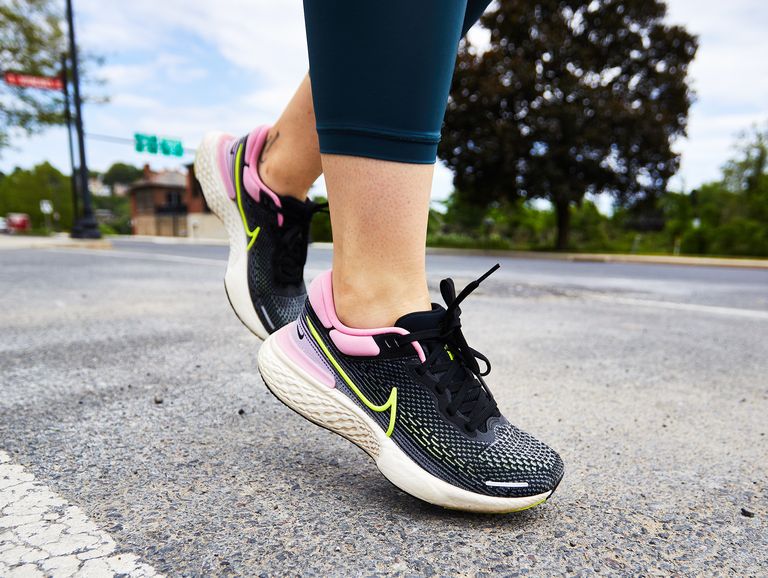
Energy return describes how much mechanical energy a shoe gives back after your foot compresses its foam. When your foot lands, the midsole acts like a spring. Some energy is lost as heat, while the rest helps push you into the next stride.
A shoe with high energy return does not make you run by itself. It can, however, reduce the energy you need to maintain a pace. This may help your legs feel fresher late in a race, especially during a half marathon or marathon.
The highest energy return running shoes usually share four key features:
• A lightweight foam with strong rebound
• A carbon fiber or composite plate
• A curved rocker that supports forward motion
• A tall midsole that stores and releases more energy
Energy return is not the same as softness. A soft shoe may feel pleasant but lose energy during compression. A highly responsive shoe feels more like a springboard. The best models balance bounce, control, comfort, and speed.
How energy return is measured
Energy return is often shown as a percentage. In simple terms, a test compresses a piece of foam and measures how much energy comes back. A foam that returns 85% gives back more energy than one that returns 70%.
This number can be useful, but it does not tell the whole story. A shoe is a system, not just a piece of foam. Its plate, upper, geometry, temperature, runner weight, and running speed all affect how it performs.
Lab tests also use controlled machines. Human runners are less predictable. We land at different angles, bend our toes in different ways, and prefer different levels of firmness. That is why one runner may call a shoe explosive while another calls it unstable.
When reviewing the highest energy return running shoes, look beyond a single percentage. Consider:
• Foam type and thickness
• Total shoe weight
• Plate shape and stiffness
• Heel-to-toe drop
• Torsional stability
• Road grip
• Fit and foot shape
• Your usual pace and distance
Research on advanced running shoes suggests that thick, compliant midsoles and stiff plates can improve running economy for many athletes. Still, the size of the benefit varies from person to person. A shoe that saves energy at 7:00 per mile may not feel as effective at a relaxed 10:00 pace.
The best highest energy return running shoes
The models below are among the strongest choices for runners who want maximum rebound and race efficiency. Each shoe has a different ride, so the best option depends on your feet, pace, and event.
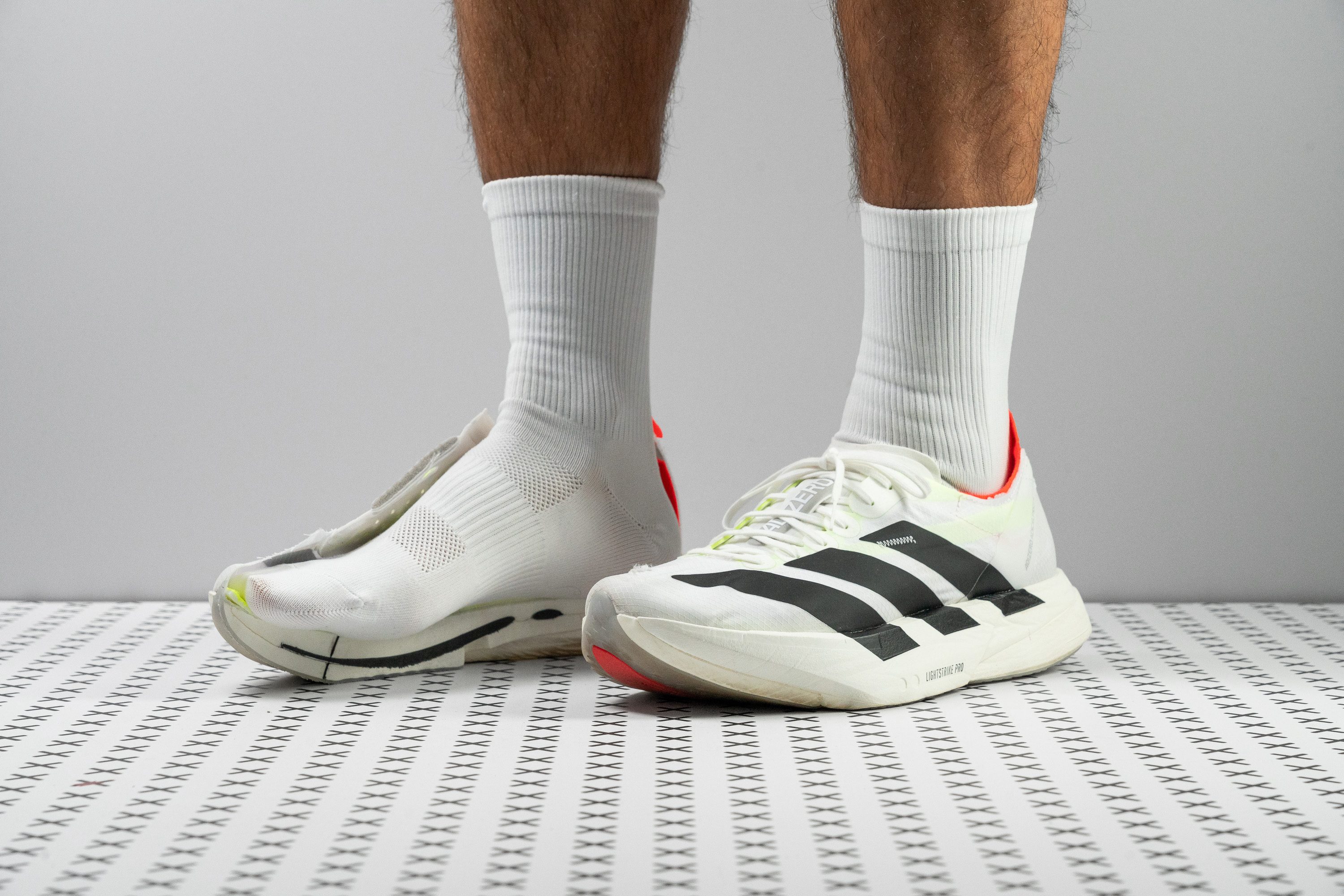
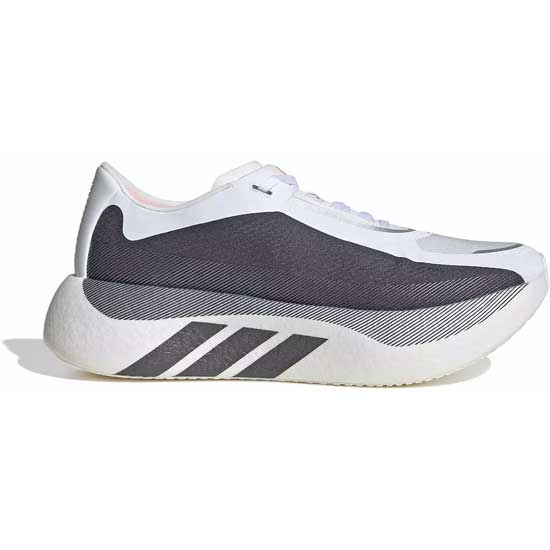
Adidas Adizero Adios Pro 4
The Adidas Adizero Adios Pro 4 is one of the strongest candidates for the highest energy return running shoes. It uses a highly responsive Lightstrike Pro midsole and EnergyRods that guide the foot through toe-off.
The shoe feels fast without being as harsh as some older carbon racers. Its rocker helps create a quick transition from landing to push-off. Many runners will notice that the shoe rewards a steady, efficient stride.
Best for:
• Half marathon and marathon racing
• Runners who like a lively, flexible-feeling super shoe
• Athletes seeking strong rebound with a smooth transition
Potential limits include a narrow or particular fit for some feet. It may also feel less stable if you need a broad, planted platform.
Nike Alphafly 3
The Nike Alphafly 3 is built for long-distance speed. Its design combines ZoomX foam, carbon fiber, and forefoot Air Zoom units. The result is a highly cushioned shoe with a powerful forward roll.
Among the highest energy return running shoes, the Alphafly 3 stands out for marathon comfort. It can protect tired legs because the foam stays soft and springy over long distances. The split sole also gives the shoe a distinctive feel during the transition.
Best for:
• Marathon runners
• Athletes who want maximum cushioning
• Runners with an efficient midfoot or forefoot landing
The Alphafly 3 is not ideal for everyone. It is tall, expensive, and can feel awkward at slow speeds. Some runners also need time to adjust to the forefoot pods.
Nike Vaporfly 3
The Nike Vaporfly 3 remains a leading choice for fast racing. It is lighter and more direct than the Alphafly. ZoomX foam provides a quick, springy ride, while the carbon plate helps create a forceful toe-off.
The Vaporfly often suits runners who want a sharp race shoe without too much bulk. It feels especially effective during intervals, 5K races, 10K races, and half marathons.
Best for:
• Fast racing from 5K to the half marathon
• Runners who prefer a lighter shoe
• Athletes who like a more direct, aggressive ride
The narrow platform may challenge runners who need more stability. The upper also has a performance-focused fit rather than a roomy daily-trainer shape.
ASICS Metaspeed Sky Paris
The ASICS Metaspeed Sky Paris is designed for runners who increase speed by lengthening their stride. Its FF TURBO PLUS foam and carbon plate create a firm, energetic platform.
It is one of the highest energy return running shoes for runners who like a crisp and controlled feel. The shoe does not sink deeply under the foot. Instead, it compresses quickly and sends you toward the next step.
Best for:
• Stride-based runners
• Racing from 5K through the marathon
• Athletes who prefer a firm, stable super shoe
The Metaspeed Sky Paris may feel too firm for runners who want a soft, plush ride. It also performs best when you are running with purpose rather than jogging slowly.
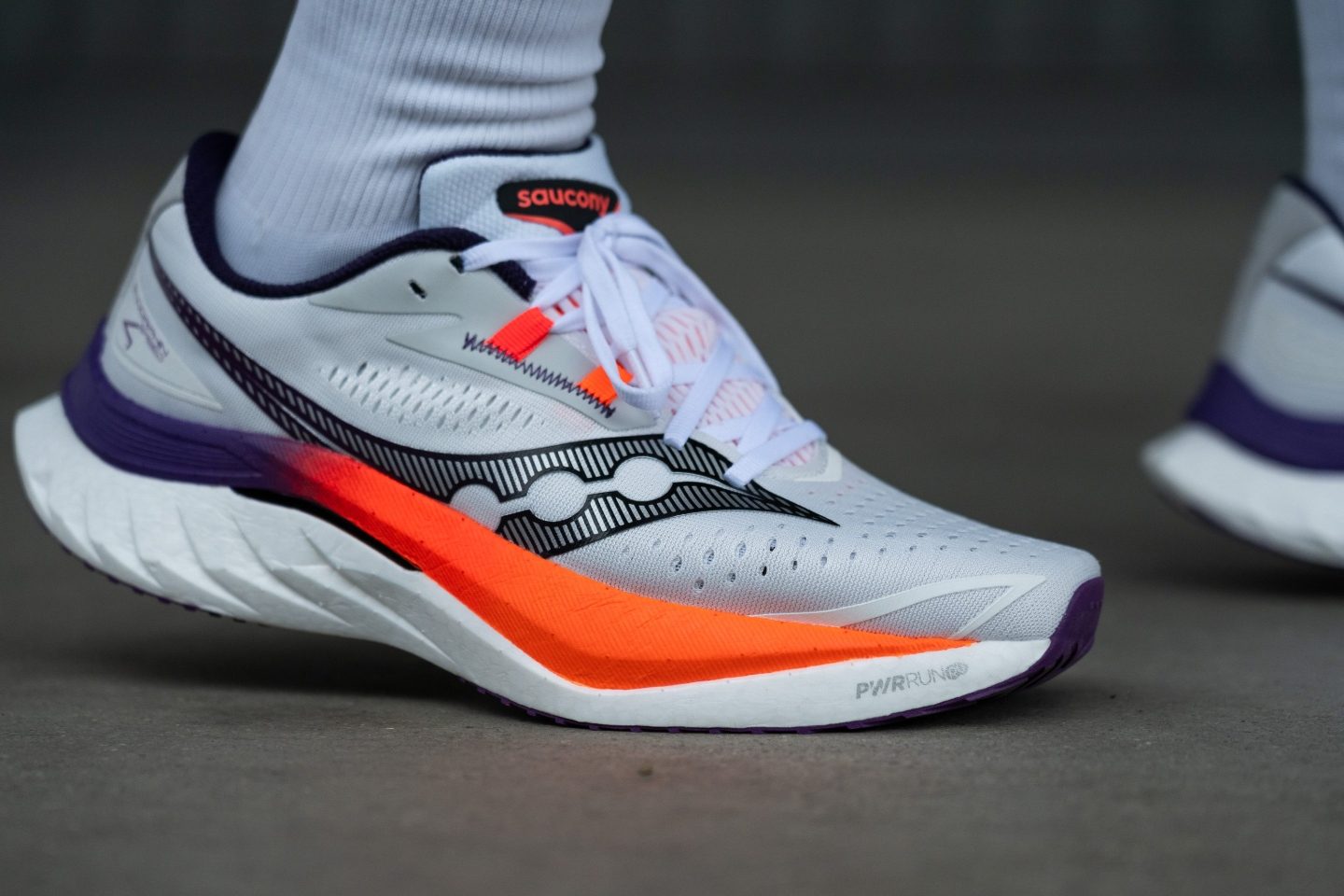
Saucony Endorphin Pro 4
The Saucony Endorphin Pro 4 offers a balanced super-shoe ride. It combines PWRRUN HG and PWRRUN PB foams with a carbon plate and a smooth Speedroll design.
This model is easier to handle than some extreme race shoes. It provides strong rebound but still feels stable enough for long training runs and race-pace workouts. That makes it a useful choice for runners who want one fast shoe for many types of sessions.
Best for:
• Runners new to carbon-plated shoes
• Long workouts and marathon racing
• Athletes who want a stable, smooth ride
It may not feel as explosive as the most aggressive racers. However, its balance can help you run well without fighting the shoe.
Puma Deviate Nitro Elite 3
The Puma Deviate Nitro Elite 3 uses a responsive Nitro Elite foam and a carbon composite plate. It has a fast ride, a relatively low weight, and excellent grip on many road surfaces.
This shoe can be a smart choice for runners who race in wet conditions or want more confidence during corners. Its energy return feels quick and controlled rather than overly bouncy.
Best for:
• Road racers who value grip
• Runners who prefer a lower, faster-feeling profile
• Training and racing at quick paces
The fit may not work for every foot shape. It also has less of the deep, protective cushion that some marathon runners prefer.
New Balance FuelCell SuperComp Elite v4
The New Balance FuelCell SuperComp Elite v4 focuses on soft cushioning, a carbon plate, and a smooth rocker. It has a comfortable upper and a forgiving feel for long races.
It may appeal to runners who want the highest energy return running shoes but dislike a harsh or narrow platform. The shoe feels protective under the foot, especially when fatigue builds.
Best for:
• Marathon runners
• Athletes who need a more forgiving fit
• Runners who prefer soft, high-stack cushioning
The soft ride can feel less precise during sharp turns. It may also feel slower for short, all-out efforts compared with lighter and firmer racers.
What makes PEBA foam so effective
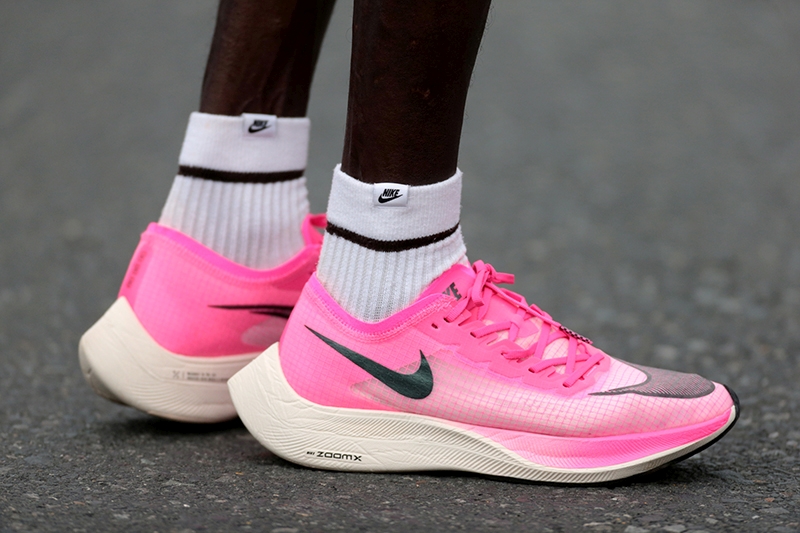
PEBA is a thermoplastic elastomer often used in modern racing shoes. It is light, flexible, and highly resilient. Compared with traditional EVA foam, PEBA can return more energy while staying light.
Many high-end shoes use PEBA or a blend that includes PEBA. Brands may use different names, but the goal is similar: create foam that compresses quickly and springs back with little energy loss.
PEBA also performs well across a range of temperatures. Cold conditions can make some foams feel harder, while heat may make them feel softer. The exact response still varies by formula and shoe design.
A high-energy midsole usually feels best when you run fast enough to compress it. At a slow pace, you may not activate the foam or plate in the same way. This explains why a racing shoe can feel magical during intervals but strange during an easy jog.
Carbon plates and rocker geometry
A carbon plate does not simply act like a spring. It also limits unwanted bending and helps guide the foot through the gait cycle. This can reduce motion at the toes and ankle for some runners.
The plate works with the foam. A stiff plate inside a low-energy foam would not create a great ride. The best racing shoes pair a rigid plate with a resilient midsole and a curved rocker.
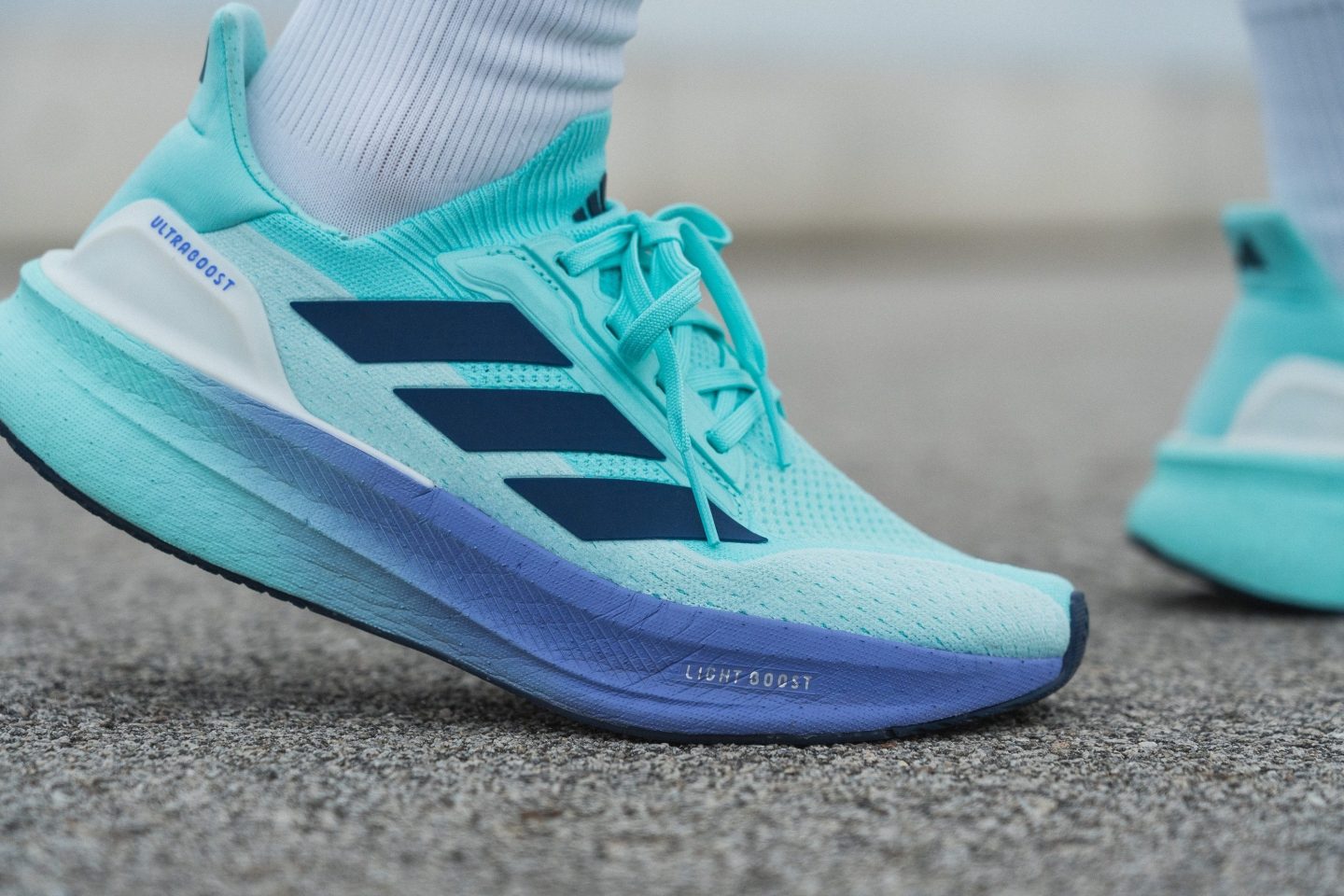
The rocker shifts the shoe’s balance forward. It can make the transition from heel or midfoot landing to toe-off feel faster. Some runners describe this as rolling downhill, even on a flat road.
The highest energy return running shoes often feel unusual at first because their geometry changes your normal stride. Start with short workouts. Do not wear a new super shoe for a 20-mile run without testing it first.

How to choose the right shoe for your running style
The fastest shoe on paper is not always the fastest shoe for you. A poor fit can cause blisters, sliding, calf strain, or loss of confidence. Comfort and control matter because discomfort changes your stride.
Use these factors to narrow your choice:
Choose by distance
• 5K and 10K: Pick a light, direct shoe with a quick transition.
• Half marathon: Look for a blend of speed, cushioning, and stability.
• Marathon: Prioritize comfort, protection, grip, and energy conservation.
Choose by foot shape
Runners with narrow feet may prefer a close, racing fit. Runners with wide feet should look for a broader toe box or a model with more upper stretch.
Your toes should have enough room to spread. Your heel should stay locked without pressure on the Achilles tendon. A shoe that feels tight in the store will often feel worse after several miles.
Choose by running pace
Fast runners often benefit from firm, aggressive geometry. Moderate-pace runners may prefer a softer shoe that remains stable and comfortable. Do not assume that a professional racer’s favorite model will work for your daily pace.
Choose by stability needs
Tall foam can feel unstable, especially on cambered roads or sharp turns. If you overcorrect or feel nervous in a shoe, its energy return will not matter much.
Try the shoe at several speeds. A stable model that feels slightly less explosive may help you run faster over a full race.
Personal lessons from testing super shoes
One lesson I have learned from comparing the highest energy return running shoes is that more bounce is not always better. A shoe can feel thrilling for the first mile but tiring after ten miles if it forces your calves or ankles to work in a new way.
I also learned not to judge a racing shoe during a slow warmup. Some models feel flat at an easy pace, then come alive when the pace increases. Test them with strides, tempo efforts, and longer race-pace blocks.
Another common mistake is choosing size based only on length. Your foot can swell during a long race, so the upper must hold the heel while allowing your toes to move. I recommend trying shoes late in the day, when your feet are slightly larger.
A practical test looks like this:
-
Walk for five minutes and check for pressure points.
-
Run easy for one mile.
-
Add four short strides.
-
Run several minutes at your goal race pace.
-
Check your heel, toes, arches, and calves afterward.
If the shoe feels unstable, painful, or difficult to control, move on. Saving energy means little if your body spends that energy fighting the shoe.
Benefits and limitations of high-energy running shoes
The highest energy return running shoes can offer several benefits:
• Lower perceived effort at faster paces
• Better protection during long races
• A smoother transition through toe-off
• More speed during intervals and tempo runs
• Reduced weight compared with older racing shoes
However, these shoes also have limits:
• They often cost more than standard trainers.
• Their tall midsoles may feel unstable.
• Carbon plates can irritate calves or feet during the adjustment period.
• Soft foam can wear faster under heavy use.
• Their benefits may be smaller at slow paces.
• They are not always suitable for people who need motion-control features.
A super shoe is a tool, not a shortcut. It cannot replace training, sleep, strength work, or a sensible race plan. It may help you use your fitness more efficiently, but the fitness still has to come from you.
How to train in high-energy return shoes
Do not use a new carbon-plated shoe for every run. Keep one or two reliable daily trainers for easy mileage. Use the super shoe for key workouts and races.
A simple introduction plan can help:
• Week one: Wear the shoes for four to six short strides.
• Week two: Use them for a short tempo session.
• Week three: Try a longer workout with race-pace sections.
• After that: Use them for selected long runs and races.
Rotate shoes when possible. Different midsoles place different demands on your feet and lower legs. A rotation can also extend the life of your expensive racing shoes.
Track how the shoes feel over time. If the foam loses its snap, the outsole becomes smooth, or the upper no longer holds your foot, replace them. Mileage limits vary widely, so your body and the shoe’s condition are better guides than a fixed number.
Are energy return claims always reliable?
Energy return figures can be useful, but brands do not always test shoes in the same way. Different machines, temperatures, compression speeds, and test samples can produce different results.
A high percentage also does not guarantee a faster race. Weight, fit, stability, traction, and geometry all affect running performance. A shoe that returns slightly less energy may still work better if it fits your foot and supports your stride.
The most honest approach is to combine lab information with real-world testing. Look for independent reviews, compare several models, and pay attention to how your legs feel after long efforts. Your own comfort and pace data are valuable evidence.
Frequently Asked Questions About Highest Energy Return Running Shoes
Which running shoes have the highest energy return?
The Adidas Adizero Adios Pro 4, Nike Alphafly 3, Nike Vaporfly 3, and ASICS Metaspeed Sky Paris are among the leading options. The best choice depends on your pace, foot shape, stability needs, and preferred ride.
Do carbon-plated shoes return more energy?
Carbon-plated shoes often improve efficiency by working with resilient foam and rocker geometry. The plate itself is not the only reason for the benefit, and some runners may not respond well to a very stiff shoe.
Are the highest energy return running shoes good for beginners?
They can be useful for beginners, but they are not required. New runners should first build strength and comfort in stable daily trainers before adding tall, stiff super shoes.
Are soft shoes better for energy return?
Not always. Soft foam may feel comfortable, but the highest energy return running shoes usually use foam that is both compliant and resilient, allowing it to compress and rebound quickly.
Can I wear high-energy return shoes for daily training?
You can, but many runners benefit from saving them for workouts and races. A daily trainer may offer better durability, stability, and value for easy mileage.
How long do high-energy running shoes last?
Many racing shoes provide their best feel for roughly 200 to 400 miles, but actual life depends on body weight, surface, gait, and outsole wear. Replace them when the foam feels flat or the shoe loses grip and control.
Conclusion
The highest energy return running shoes use resilient foam, a stiff plate, a rolling rocker, and a lightweight build to help you run efficiently. Top choices include the Adidas Adizero Adios Pro 4, Nike Alphafly 3, Nike Vaporfly 3, ASICS Metaspeed Sky Paris, Saucony Endorphin Pro 4, Puma Deviate Nitro Elite 3, and New Balance FuelCell SuperComp Elite v4.
Your best shoe is the one that fits well, feels stable, and keeps working when your legs get tired. Test your shortlist at easy, fast, and race-like paces before committing. Explore more running shoe guides, compare your options carefully, and share which model gives you the strongest finish.