How Tight To Tie Running Shoes: Find The Perfect Fit

Tie running shoes snugly enough to hold your heel, but never so tight that your foot feels numb.
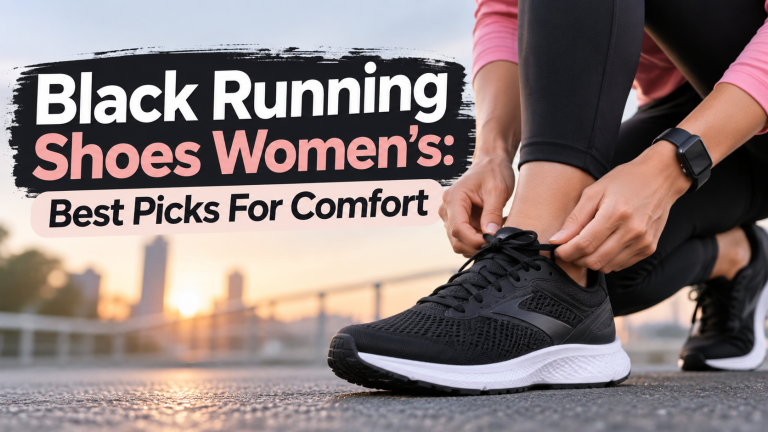
Knowing how tight to tie running shoes can improve comfort, control, and confidence on every run. The best fit holds your heel and midfoot in place while leaving your toes room to spread and your feet space to swell.
After helping runners adjust shoes for short jogs, long runs, and race days, I have seen one mistake often: people tighten the laces to stop movement, then create pressure, pain, or tingling. This guide explains how tight to tie running shoes, how to use different lacing methods, and how to spot a poor fit before it causes trouble.
How tight to tie running shoes for the best fit
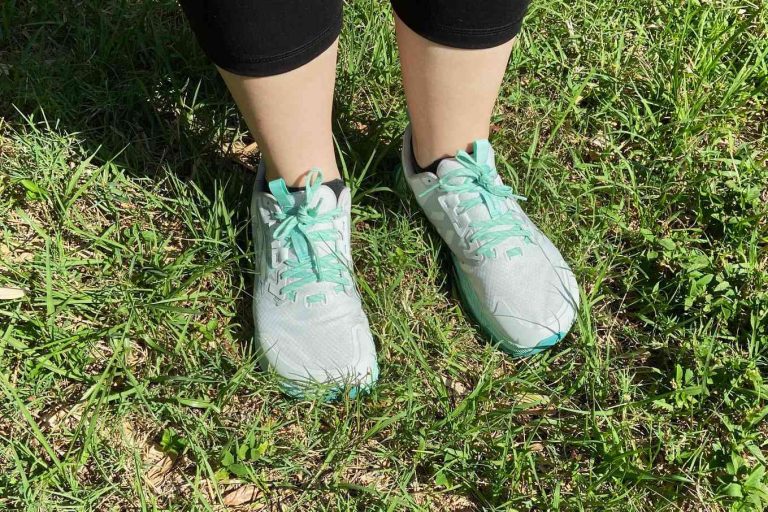
Running shoes should feel secure, not squeezed. Your foot should stay centered in the shoe, and your heel should not lift much when you walk or run. At the same time, your toes should move freely.
Think of the laces as a seat belt. They should hold you in place, but they should not press hard against your foot. A good running shoe fit usually has three key features:
• The heel feels locked in without rubbing.
• The midfoot feels supported without pressure or numbness.
• The toes can spread and move without touching the front of the shoe.
The right tension may change during a run. Feet often swell as distance, heat, and time increase. A lace setup that feels perfect at 6 a.m. may feel too tight after an hour in warm weather.
When deciding how tight to tie running shoes, start with even tension from the bottom eyelets to the top. Do not pull the lower laces very tight and then leave the upper laces loose. This can create pressure across the forefoot while failing to secure the heel.
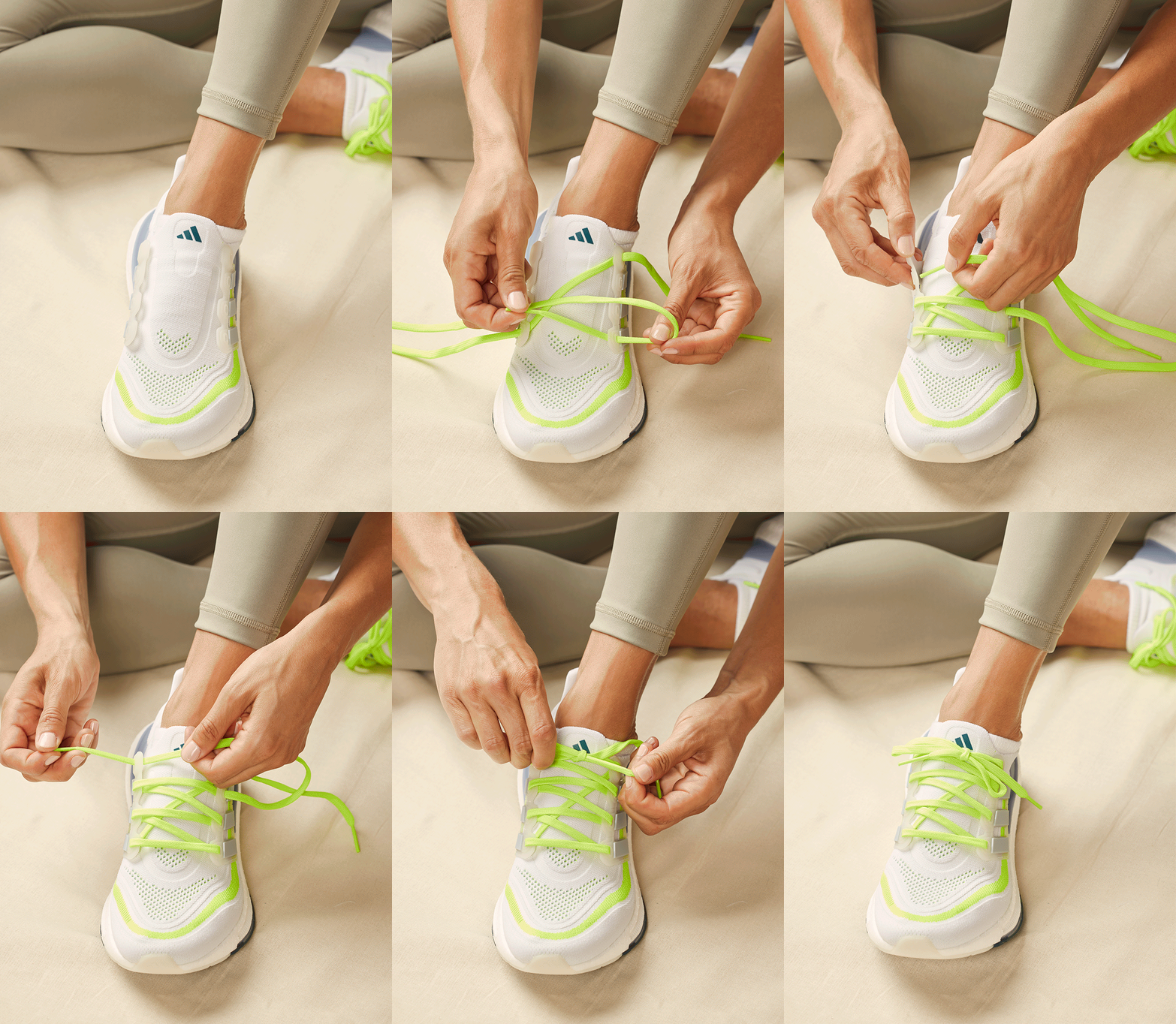
A simple step-by-step method for tying running shoes
Use this method before a training run or race. It takes less than a minute and can prevent many common fit problems.
-
Put on the socks you plan to run in.
-
Place your heel firmly in the back of the shoe. You can tap the heel on the floor once or twice while keeping your toes pointed forward.
-
Flatten your tongue. A folded tongue can create a pressure spot under the laces.
-
Tighten the lower eyelets with light, even pressure. These laces should feel secure but should not leave deep marks.
-
Tighten the middle eyelets until the shoe gently hugs your midfoot.
-
Pull the top eyelets enough to stop heel movement. Avoid pulling so hard that the shoe bends sharply across the ankle.
-
Tie a firm bow. Tuck the loops away from the ground if they come loose often.
-
Walk, jog, and flex your toes. Check the fit before starting your full run.
A useful test is the two-finger check. When the shoe is tied, you should be able to slide a finger under the laces with some effort. This is not a strict medical rule, since foot shape and shoe design vary, but it can help you avoid over-tightening.
The most important test is how your foot feels during movement. If you feel pressure, hot spots, tingling, or numbness, loosen the laces and try again. Learning how tight to tie running shoes often takes two or three small adjustments.
Signs your running shoes are too tight
Shoes that are too tight can cause discomfort during a run and may change the way you move. Tight laces can also compress the top of the foot, where small nerves and blood vessels pass close to the skin.
Watch for these signs:
• Numb or tingling toes
• A burning feeling across the top of the foot
• Deep lace marks that remain after removing the shoe
• Pain near the ankle or Achilles tendon
• A feeling that your toes cannot spread
• Cold toes or unusual color changes
• Pain that becomes worse as the run continues
• Blisters from pressure or rubbing
A small amount of pressure may seem harmless at first. Yet pain often grows with distance. This is why a shoe should be tested with a short walk and easy run before using it for a long race.
One mistake I often see is pulling the laces tighter after a few minutes because the runner feels mild foot movement. That movement may come from the wrong shoe size, a wide foot in a narrow model, or a heel shape that does not match the shoe. More tension cannot fix every fit problem.
If numbness continues after loosening the laces, stop running and assess the shoe. Ongoing pain, swelling, or color changes deserve advice from a qualified health professional.

Signs your running shoes are too loose
Loose laces create a different set of problems. Your foot may slide forward, your heel may lift, and your toes may hit the front of the shoe on downhills.
Common signs include:
• Your heel lifts with each step
• Your foot slides inside the shoe
• Your toes hit the front during downhill running
• You need to grip with your toes
• Your arch feels unsupported
• Blisters form around the heel
• The shoe twists around your foot
• Your ankle feels less stable on turns
Loose shoes can make a runner tighten their toes without noticing. This may lead to tired feet and awkward form. It can also increase rubbing because the foot moves more inside the shoe.
If the shoe feels loose even when the laces are tight, check the fit before changing your lacing style. The shoe may be too long, too wide, or poorly matched to your heel. A running shoe should not depend on extreme lace tension to stay on your foot.
How to use the runner’s loop for heel lock
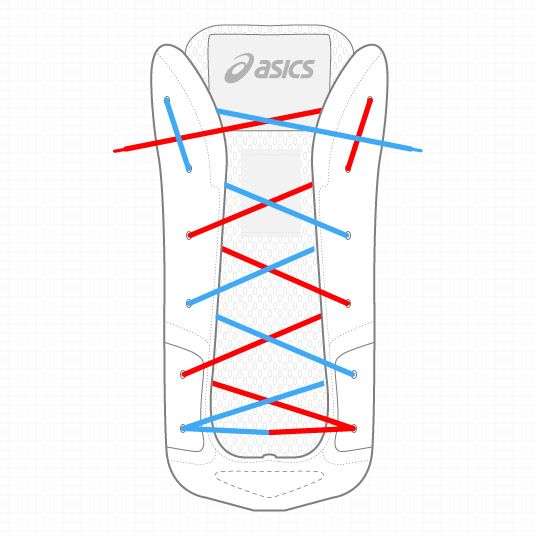
The runner’s loop, also called a heel-lock lacing method, can reduce heel lift. Most running shoes have a small extra eyelet near the top. It may look unused, but it is designed for this purpose.
Follow these steps:
-
Lace the shoe normally until you reach the second-to-last eyelet.
-
Feed each lace straight up into the final eyelet on the same side. This creates a small loop.
-
Cross the laces and pass each lace through the opposite loop.
-
Pull the laces back toward your heel until the fit feels secure.
-
Tie the shoe with steady, moderate tension.
The runner’s loop should hold the heel without crushing the ankle. If you feel pressure on the front of the ankle, loosen the top section while keeping the middle section snug.
This method works well for runners who have heel slip or who run on hills. It may not help if the shoe is the wrong size or if the heel collar does not match your foot shape.
When learning how tight to tie running shoes with a runner’s loop, focus on heel control rather than maximum tightness. The goal is less movement, not a painful squeeze.

Lacing methods for different foot shapes
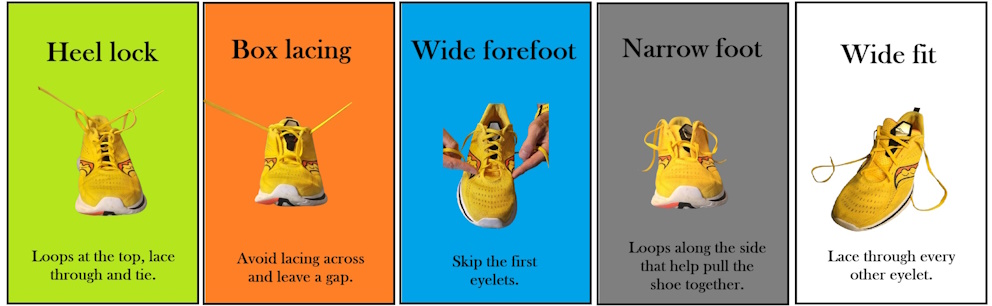
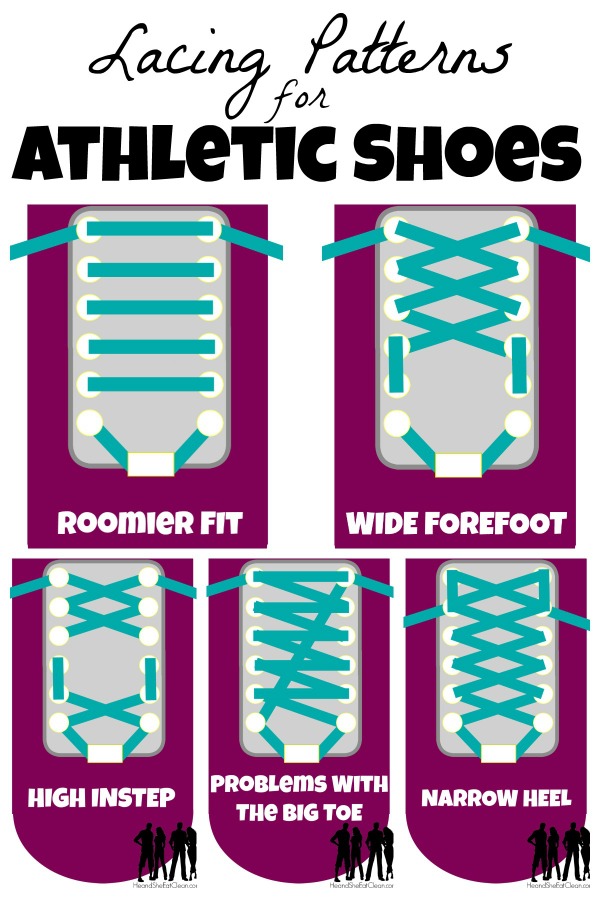
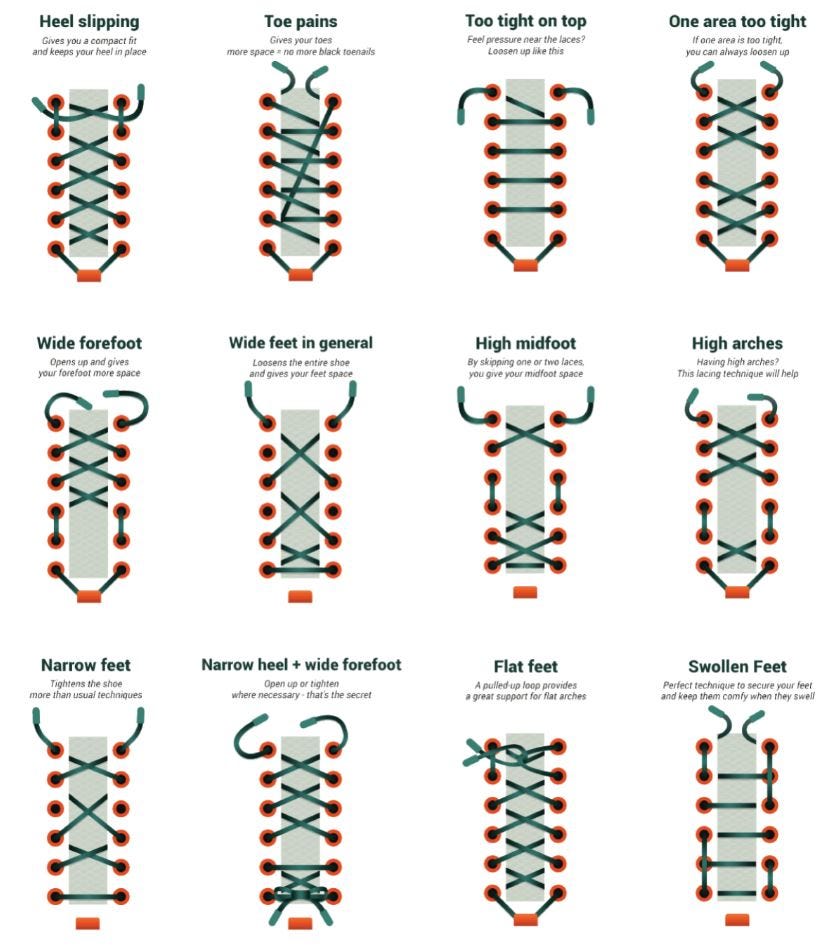
The standard crisscross pattern works for many runners, but small changes can improve comfort. Your foot shape, arch height, and swelling pattern all affect lace tension.
High instep or pressure on the top of the foot
Skip one set of eyelets over the sore area. This creates a small window that reduces pressure while keeping the rest of the shoe secure.
You can also loosen the lowest laces slightly and keep the upper laces snug. This gives the forefoot more space without making the heel loose.
Wide forefoot or toe pressure
Use a wide-foot lacing pattern. Start the laces one eyelet higher on each side, or skip eyelets near the front of the shoe. This can reduce pressure across the toes.
However, lacing cannot make a narrow shoe truly wide. If your toes still feel cramped, try a shoe with a wider toe box.
Narrow heel
Use the runner’s loop to improve heel hold. You can also keep the lower laces relaxed while adding a little more tension near the top.
A narrow heel in a wide shoe may still slip. In that case, a different shoe shape may work better than a tighter knot.
One foot larger than the other
Fit the larger foot first. Many people have one foot that is slightly longer or wider. Use different lace tension on each shoe if needed.
Do not force both feet to use the same lace tightness. Comfort and control matter more than perfect symmetry.
How tight to tie running shoes for long runs
Long runs need a little more room than short runs. Feet can swell due to heat, distance, increased blood flow, and fluid changes. A shoe that feels snug at the start may become restrictive later.
Before a long run, leave enough room for your toes to move. Your longest toe should not touch the front of the shoe when standing. Many runners prefer roughly a thumb’s width between the longest toe and the end of the shoe, though the ideal amount depends on foot shape and shoe design.
Try these tips:
• Tie the shoes securely, but avoid maximum tension.
• Test them during a short warm-up.
• Carry a plan for adjusting the laces during the run.
• Use moisture-wicking socks that do not bunch up.
• Avoid trying new lacing methods on race day.
On a long run, loosen the laces if your feet begin to feel numb or crowded. If your heel starts slipping after loosening them, the shoe may not have enough usable volume for your foot.
Runners often ask how tight to tie running shoes for a marathon. The safest answer is snug enough for control, with extra room for swelling. Test the exact shoes, socks, and lacing pattern during several long training runs first.

How tight to tie running shoes for speed workouts and races
Speed workouts create stronger forces and faster foot movement. Your shoes should feel secure, but fast running does not require painful lace tension.
For intervals, tempo runs, and races:
• Lock the heel with moderate tension.
• Keep the midfoot close without pressing the top of the foot.
• Leave room for toe movement.
• Use a double knot if your laces often come undone.
• Check that the bow does not sit on a pressure point.
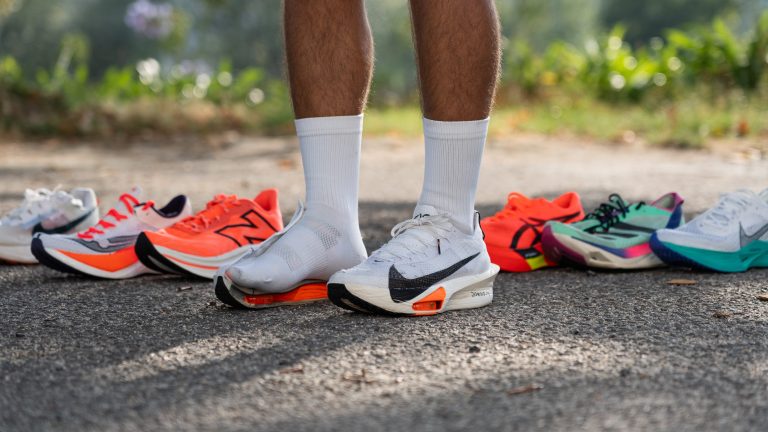
Racing shoes may have thinner uppers and less padding. They can feel more precise, but they may also show pressure problems sooner. Never tighten lightweight racing shoes simply because they feel less cushioned.
A good race-day fit should feel familiar. Wear the shoes for at least a few training sessions before racing in them. This helps you learn how tight to tie running shoes when your feet are warm, sweaty, and moving quickly.

Common mistakes when tying running shoes
Small lace mistakes can create big problems over time. Avoid these common errors:
• Tying the shoes while sitting with your foot relaxed. Stand up and place your weight on the foot before the final pull.
• Pulling every section as hard as possible. Even tension works better than extreme tension.
• Ignoring the tongue. A twisted or folded tongue can cause pressure and rubbing.
• Using thick socks to fix a loose shoe. Thick socks may increase heat and crowd the toes.
• Wearing shoes that are too short. No lacing method can create more toe space.
• Waiting for pain before checking the fit. Pressure often starts as a mild warning.
• Copying another runner’s lace setup. The best pattern depends on your foot and shoe.
I once saw a runner loosen only the top knot while leaving the lower laces extremely tight. The heel felt better, but the forefoot became numb. Adjusting each section evenly solved the problem. The lesson is simple: change the area causing the issue instead of tightening or loosening the entire shoe at once.
When lacing cannot solve the problem
Lacing helps with fit, but it has limits. A shoe that is too short, too narrow, or shaped differently from your foot may remain uncomfortable no matter how carefully you tie it.
Consider replacing or exchanging the shoes if:
• Your toes touch the front while walking downhill.
• Your foot goes numb in several different lace patterns.
• Your heel slips even with a runner’s loop.
• The shoe causes repeated blisters.
• Your toes overlap or feel compressed.
• Pain continues after changing socks and lacing tension.
Fit also changes as shoes wear out. Foam can compress, the upper can stretch, and the outsole can lose grip. A worn shoe may require tighter lacing, but that does not always make it safe or comfortable.
A trained running-shoe specialist, physical therapist, or podiatrist can help if you have persistent pain or a known foot condition. General fit advice is useful, but it cannot replace an individual assessment.
How to check your fit before every run
A quick pre-run check can save you from discomfort later. It also helps you notice changes in your feet, socks, or shoes.
Use this checklist:
-
Are your toes free to wiggle?
-
Does your heel stay down when you walk?
-
Is there pressure on the top of your foot?
-
Do the laces feel even from bottom to top?
-
Can you bend your ankle without a sharp pressure point?
-
Does the shoe feel secure without numbness?
-
Do both shoes feel comfortable, even if the lace tension differs?
Walk for two minutes before starting. Then jog briefly if possible. This is especially important when using a new shoe, new sock, or new lacing pattern.
Your feet give useful feedback. Treat discomfort as information, not as something you must simply tolerate.
Frequently Asked Questions About How Tight to Tie Running Shoes
Should running shoes be tight or loose?
Running shoes should feel snug and secure, but they should not squeeze your toes or cause numbness. Your heel should stay in place while your toes have room to move.
How much room should be in the front of running shoes?
Aim for enough space that your longest toe does not touch the front when you stand or walk downhill. A thumb’s width is a common guide, but foot shape and shoe design can change the ideal amount.
Why do my feet go numb when I tie my running shoes?
Numbness often comes from excessive pressure across the top of the foot or from a shoe that is too narrow. Loosen the laces in the pressure area, and consider a different shoe if the problem continues.
Does the runner’s loop make shoes tighter?
The runner’s loop makes the heel area more secure, but it should not tighten the entire shoe. Use moderate tension so your heel stays down without pressure on the ankle.
Should I tie running shoes differently for long runs?
You may need slightly less tension and more toe room for long runs because feet can swell. Test the setup during training rather than changing it for the first time on race day.
Can tight laces cause foot pain?
Yes, tight laces can create pressure, rubbing, tingling, and numbness. If pain remains after adjusting the laces, check the shoe size and shape or seek professional advice.
Should both running shoes have the same lace tension?
Not always. One foot may be wider, longer, or more sensitive than the other. Adjust each shoe for comfort and control rather than forcing identical tension.
Conclusion
The best answer to how tight to tie running shoes is simple: secure your heel and midfoot while giving your toes room to move. Use even lace tension, try a runner’s loop for heel slip, and loosen the pressure area if you feel tingling or numbness.
Test your shoes while standing, walking, and running. Remember that lacing can improve a good fit, but it cannot repair a shoe that is too short or too narrow. Adjust your shoes before your next run, then share your favorite lacing method or explore more practical running tips.