Best Running Shoes For Ice And Snow: Winter Traction Guide

The best running shoes for ice and snow pair secure traction, easy fit, weather-ready comfort, and a stable stride.
A winter run can change fast. A dry path may turn into hard ice at the next corner. Regular running shoes often slide on packed snow, while bulky boots can feel stiff and slow. I tested these traction options with comfort, grip, fit, and daily use in mind. These products fit over many shoes and boots, so you can adapt your normal running footwear for winter paths. Always check the fit before a long run, and use extra care on black ice.
See the differences between my top picks at a glance.
Yaktrax Walk Traction Cleats

The Yaktrax Walk is a simple choice for people who need more grip on snowy sidewalks and light ice. Its traction system uses steel coils around the sole. The coils add contact with the ground without turning a normal shoe into a heavy winter boot. I like this style for short walks, dog trips, and easy outdoor tasks.
This model works best when you want a fast, simple fit over a walking shoe. It is not my first choice for fast running or very hard ice. Still, it gives useful extra grip on packed snow and slippery paths. The medium size must match your footwear well, so measure your shoe before ordering.
Pros:
- Light design feels less bulky than many ice cleats
- Steel coils add grip on snow and light ice
- Stretch outer band fits over many everyday shoes
- Easy choice for walking and daily winter use
- Coils do not have sharp spikes that can catch as easily indoors
- Useful for people who want quick seasonal traction
Cons:
- Not designed as a dedicated high-speed running cleat
- Coils may feel less secure on smooth, hard black ice
- Fit can feel loose or tight if the shoe size is wrong
What Amazon Buyers Are Saying
Amazon buyers commonly like the quick fit and light feel. Many use this model for walks, errands, and snowy driveways. Review patterns also show that fit matters a great deal. Some buyers report strong results on packed snow, while others want more bite on polished ice or steep ground. That difference makes sense because steel coils suit general winter traction more than extreme ice climbing.
My Recommendation
I recommend the Yaktrax Walk for casual winter use and slow outdoor miles. It is a practical add-on for someone who already owns comfortable walking shoes. I would not choose it for racing, steep icy trails, or long runs where a secure running fit matters most. It earns a strong value score for basic snow traction.
Yaktrax Run Traction Cleats

The Yaktrax Run is the most direct match for runners in this guide. It uses a running-focused traction design rather than a general walking pattern. The outer band stretches over compatible running shoes and keeps the traction system close to the sole. That low-profile approach can help preserve a more natural stride than a large boot-style cleat.
I would consider this model first for runners who face packed snow, slush, and icy sections on regular routes. It still cannot remove every winter risk. Loose snow, deep ruts, and smooth black ice require slower steps and careful route choice. Check the size chart closely, since a secure fit helps prevent shifting during foot strikes.
Pros:
- Designed with running use in mind
- Better match for jogging than a basic walking cleat
- Stretch fit works over many running shoe shapes
- Helps add traction without replacing your favorite shoes
- Useful for mixed snow and ice routes
- Low-profile style can feel more natural than bulky overshoes
Cons:
- Large size may not fit smaller running shoes
- Traction still depends on surface and pace
- May not provide the same ice bite as tungsten spikes
What Amazon Buyers Are Saying
Amazon review patterns often praise this model for helping runners keep winter routines. Buyers commonly mention the easy over-shoe design and the useful grip on snowy roads. Some reviews point to sizing as the main issue. A few users also note that traction products can wear faster when used on bare pavement, which is common with many winter cleats. I suggest putting them on near the start of the route and removing them when the path turns dry.
My Recommendation
This is my top pick for most runners who want the best running shoes for ice and snow without buying a new winter shoe. It offers a better balance of running feel and winter grip than the walking models here. It is worth buying when your route includes regular snow or icy patches. My rating reflects its runner-focused design and practical use.
Yaktrax Walk 360-Degree Grip
This Yaktrax Walk version focuses on grip around the shoe, not only under the center of the foot. The product description lists 360-degree traction and 1.2 mm zinc-coated steel coils. It also includes an elastic outer band and an easy-on heel tab. Those details make it a useful choice for mixed winter surfaces and frequent daily use.
I see this model as a step up from a very basic traction aid for people who want broad contact around the sole. It suits walking, commuting, and slow snow outings better than fast running. The heel tab can make fitting easier when your fingers feel cold. As with all coil designs, I would avoid using it for long stretches on bare pavement.
Pros:
- 360-degree grip helps cover more of the shoe
- 1.2 mm zinc-coated steel coils are made for repeated winter use
- Elastic band supports a flexible over-shoe fit
- Heel tab makes putting the cleat on easier
- Suitable for snow, ice, and several mixed surfaces
- Rust-resistant design supports better storage life
Cons:
- Walking design may not feel ideal at a running pace
- Coils can lose effectiveness on very smooth ice
- Correct sizing remains important for a stable fit
What Amazon Buyers Are Saying
Amazon buyers often like the heel tab and the broad grip pattern. Many reviews describe this model as helpful for sidewalks, steps, driveways, and winter chores. Common concerns include wear when users walk on dry roads or indoor floors. Some buyers also expect any traction aid to work like a full crampon on polished ice. The review pattern suggests that this product works best when users match it to walking and light outdoor tasks.
My Recommendation
I recommend this model for people who want dependable walking traction across changing winter ground. It is not the best pick for a serious runner, but it can support warm-up walks and easy outings. Choose it over the basic Yaktrax Walk when the heel tab and wider grip pattern matter to you. I give it a strong rating for daily winter value.
ICETRAX V3 Tungsten Crampons
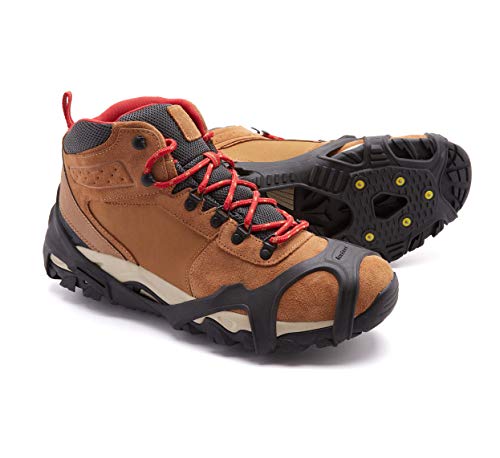
The ICETRAX V3 takes a more aggressive approach to winter traction. Its tungsten crampon points aim to bite into hard ice and packed snow. The reflective heel adds a useful visibility feature for early morning or evening walks. This design makes more sense when ice, rather than soft snow, creates the main problem.
These cleats can suit runners who accept a slightly more noticeable feel underfoot in exchange for stronger ice grip. I would use them for slow to moderate winter runs, icy sidewalks, and outdoor work. I would not wear sharp traction indoors or across long dry sections. Fit the cleat firmly and check that the heel sits in its proper place before moving fast.
Pros:
- Tungsten points offer a strong bite on hard ice
- Reflective heel can improve visibility in low light
- Works over many shoes and boots
- Better suited to icy paths than light coil-only designs
- Useful for winter walking, trail use, and careful running
- More aggressive traction helps on frozen, uneven ground
Cons:
- Sharp points can damage indoor floors
- May feel less natural than a low-profile running cleat
- Metal points can wear when used on bare pavement
What Amazon Buyers Are Saying
Amazon buyers commonly value the strong grip on ice and the reflective heel. Many reviews point to use on frozen sidewalks, driveways, and snowy outdoor routes. Some buyers report that the cleats feel secure when the size matches the shoe well. Other comments focus on the need to remove them before entering a building. A few users also mention that no traction device replaces care on steep or uneven ice.
My Recommendation
I recommend the ICETRAX V3 when hard ice is your main concern. It offers more bite than the coil-based options in this guide. It may be more traction than you need for soft snow or clear pavement, so choose it for the conditions you face most. For careful winter runners, it is a strong alternative to the Yaktrax Run. My rating reflects its grip and visibility features.
Aliglow Ice Snow Grips
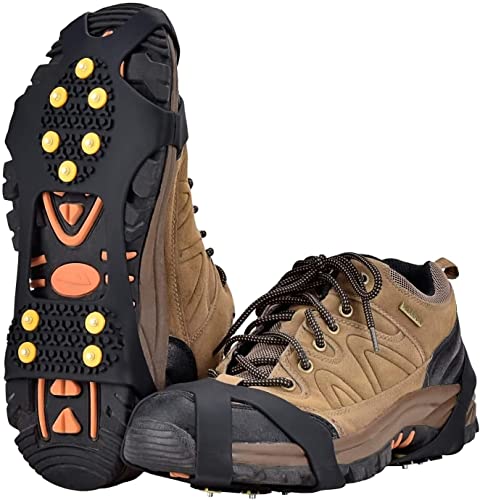
The Aliglow Ice Snow Grips offer a simple over-shoe way to add metal traction. Their stretch design can fit over selected shoes and boots. This makes them useful for buyers who want an affordable winter grip option without changing their main footwear. The metal spikes target snow and ice rather than indoor or dry surfaces.
I see this product as a budget choice for short walks, yard work, and occasional winter runs. It can help when a route has icy patches, but I would inspect the fit before trusting it on a longer run. A loose grip can shift and change how your foot lands. Use a slow pace at first and test it on a safe outdoor section.
Pros:
- Affordable way to add traction to existing footwear
- Over-shoe design avoids buying a separate winter boot
- Metal spikes can help on snow and icy ground
- Useful for occasional winter use
- Works with many types of shoes and boots when sized correctly
- Compact option for keeping in a car or entryway
Cons:
- Not a dedicated running design
- Fit and stability can vary with shoe shape
- Spikes require care around indoor floors and dry pavement
What Amazon Buyers Are Saying
Amazon review patterns often highlight the low price and basic ice grip. Buyers use these grips for sidewalks, steps, driveways, and outdoor work. Fit receives mixed comments, which is common with stretch over-shoe products. Some users find the cleats secure, while others say the product works best when matched to a supportive shoe. Buyers also remind others to remove the grips before walking indoors.
My Recommendation
I recommend the Aliglow grips for occasional use and tight budgets. They can be a sensible first step for someone who needs extra traction but does not run on ice every day. Serious runners may prefer the Yaktrax Run, while hard-ice users may prefer the ICETRAX V3. I rate this model well for price, but not as the most refined running option.
How to Choose the Best Running Shoes for Ice and Snow
Choosing the best running shoes for ice and snow means matching the traction aid to your route. No single cleat works perfectly on every winter surface. Think about ice type, running speed, shoe fit, and how often you will use the product. Also remember that traction helps reduce slips, but it cannot make unsafe ice safe.
1. Match the Traction to Your Winter Route
Start by looking at the ground you meet most often. Steel coils work well for general snow, packed paths, and light ice. They often feel smooth during easy walking. Tungsten or metal spikes offer a sharper bite on hard ice. They can suit frozen sidewalks and icy trails, but they feel more noticeable on clear ground.
If your route changes from snow to pavement, choose a product that you can remove with ease. Walking across long dry sections can wear metal parts. It can also make each step feel less stable. For runners, a low-profile running cleat usually feels better than a large walking aid. For walkers, broad coverage and a heel tab may matter more.
2. Check Fit, Foot Control, and Running Feel
Fit is one of the most important parts of winter traction. A cleat should sit evenly over the shoe. The heel should stay in place. The front should not fold under your toes. If the grip shifts, it can affect your foot strike and create a new trip risk.
Measure the shoe you plan to wear. Do not assume your normal street-shoe size will match your running-shoe size. Wide soles, thick midsoles, and trail shoes may need a different cleat size. Put the cleats on both shoes and walk indoors on a safe surface before your first outdoor run. Check for loose bands, twisted coils, or points that sit in the wrong place.
Also think about pace. A running cleat should let you keep a steady stride. A walking cleat may work well for slow steps but feel awkward during faster movement. If you run before sunrise, a reflective heel or bright clothing adds another useful safety layer.
3. Compare Durability, Care, and Overall Value
Look for materials that fit your winter conditions. Zinc-coated steel coils can help resist rust when you clean and dry them after use. Metal spikes can provide strong grip, but they need care. Keep them away from indoor floors, wood surfaces, and long stretches of bare pavement.
After each use, remove snow and salt from the traction aid. Let it dry before storage. Store it away from heat and sharp objects that could damage the elastic band. These small steps can help the product last longer.
Value depends on more than the lowest price. A low-cost grip may work well for one or two storms each year. A runner who trains outdoors all winter may gain more from a running-specific model. In my view, the Yaktrax Run offers the best balance for most runners. The ICETRAX V3 offers stronger ice focus, while the Yaktrax Walk and Aliglow models suit slower, less demanding use.
Final Verdict: Which Should You Buy?
The Yaktrax Run is my top choice for most people seeking the best running shoes for ice and snow. Choose ICETRAX V3 for hard ice, or Yaktrax Walk for casual use.
Match the cleat to your route, check the fit, and slow down on risky ground. The right traction aid can make winter miles more confident and comfortable.
FAQs Of best running shoes for ice and snow
Are traction cleats better than regular running shoes on ice?
Yes. Traction cleats add coils or spikes that regular running-shoe soles may lack. They can improve grip, but they do not remove all slipping risk.
What are the best running shoes for ice and snow?
The Yaktrax Run is the best overall choice in this guide for running on mixed snow and icy paths. The ICETRAX V3 is better for hard ice.
Can I wear ice cleats on bare pavement?
Use caution. Bare pavement can wear coils and spikes, and the cleats may feel unstable. Remove them when you reach a long dry section.
How should winter running cleats fit?
They should sit firmly over the shoe without twisting or sliding. The heel must stay in place, and the front should not fold under the toes.
Are coil traction cleats good for black ice?
Coils can help on light ice, but sharp spikes often provide a stronger bite on smooth, hard black ice. Always slow down and test the surface first.