Paragon Sports Running Shoe Fitting Gait Analysis: Expert Guide

Stepping into the right pair of running shoes can change everything: comfort, performance, injury risk, and even your enjoyment of running. At the heart of this process is running shoe fitting and gait analysis—two services that Paragon Sports in New York City has perfected over decades. But what really happens during a professional shoe fitting? How does gait analysis work, and why does it matter? This guide walks you through the entire experience at Paragon Sports, explains the science behind shoe fitting, and helps you understand what to expect, whether you’re a beginner or a seasoned runner.
Why Proper Running Shoe Fitting Matters
Choosing running shoes is much more than picking a size and a color. Every runner’s foot is unique, and the wrong shoe can lead to blisters, black toenails, knee pain, or even chronic injuries like plantar fasciitis. According to the American Academy of Podiatric Sports Medicine, up to 65% of runners experience a running-related injury each year, often linked to poor footwear choices.
A professional fitting considers:
- Foot length and width
- Arch height
- Pronation type (how your foot rolls)
- Running goals and surfaces
The right shoes can reduce injury risk, improve efficiency, and make each stride feel lighter. Paragon Sports is known for combining expert shoe fitting with advanced gait analysis, ensuring shoes fit not just your feet, but your body and running style.
Proper fitting is also important for runners at every level. Beginners sometimes believe that any athletic shoe will work, but the difference between a casual sneaker and a running shoe is significant. Running shoes are designed to absorb shock, guide your stride, and protect sensitive areas like your Achilles tendon.
For more experienced runners, the fit can influence how fast you recover from tough runs or races.
Another overlooked aspect is how feet change over time. Pregnancy, weight changes, and aging can alter your foot shape and arch height. Even old injuries can affect your gait and size. That’s why regular fittings are recommended, not just a one-time check.
A good shoe fitter will ask not only about your running but about any changes in your lifestyle, helping you adapt your footwear as your needs evolve.
Paragon Sports: A New York Institution
Paragon Sports has served runners since 1908. Located near Union Square, it is more than a store—it’s a hub for NYC’s running community. The staff are not just salespeople but runners, coaches, and certified shoe fitters. Paragon partners with brands like Brooks, Asics, New Balance, and Nike to offer the latest shoe models and fitting technology.
What Sets Paragon Apart?
- Personalized service: Staff spend time understanding your needs and history.
- State-of-the-art technology: Gait analysis tools and pressure mapping.
- Extensive inventory: Hundreds of models for every foot type and running style.
Many runners—even those who buy shoes elsewhere—visit Paragon just for the fitting and analysis experience.
The store’s legacy means they understand trends and innovation. For example, Paragon was one of the first in NYC to offer pressure mapping technology, long before it became standard. Their partnership with shoe brands ensures that staff receive regular training on new models and technologies, so advice is always current.
Paragon also understands the needs of urban runners. NYC’s surfaces range from concrete streets to park paths, and weather can change quickly. The staff know which shoes work in wet, cold, or hot conditions and can advise on features like water resistance, breathability, and grip.
This local knowledge is part of what makes Paragon unique.

Credit: protrustconsulting.co.uk
The Shoe Fitting Process At Paragon Sports
Walking into Paragon, you might expect a quick measurement and a few shoe options. The reality is more detailed and interactive, often taking 30–45 minutes. Here’s what to expect:
1. Initial Conversation
Before touching a shoe, the fitter asks about your:
- Running history (miles per week, injuries, goals)
- Current shoes (what works, what doesn’t)
- Foot problems or pain (bunions, blisters, arch pain)
This helps the fitter narrow down potential shoe types and anticipate special needs.
The initial conversation also covers your running environment. Are you mostly on roads, trails, treadmills, or tracks? Do you run year-round, or only in certain seasons? These details influence the best shoe choice. For instance, a runner training for their first marathon will need more guidance and possibly more cushioning than someone who runs casually once a week.
Fitters sometimes ask about your activities beyond running—walking, gym workouts, or sports—which can affect shoe selection. If you use your running shoes for multiple activities, they might suggest a versatile model or recommend different shoes for each purpose.
2. Foot Measurement
Most runners think they know their size, but feet change over time. Paragon uses the Brannock Device (metal foot measuring tool) to check:
- Length
- Width
- Arch length
It’s common for one foot to be larger than the other. Paragon staff often recommend sizing based on the bigger foot, with enough space to avoid toenail trauma.
They also check how your toes spread and whether your feet swell during exercise. If you run in hot weather or long distances, your feet can swell up to half a size. Fitters account for this by recommending slightly larger shoes or shoes with a flexible upper.
Some customers have unique needs—such as orthotics or medical inserts. Paragon fitters measure with these in place to ensure a proper fit. This is a detail many runners miss when shopping online.
3. Arch Assessment
Arch type affects shoe choice. Paragon uses two main methods:
- Visual inspection: Looking at foot shape and arch height.
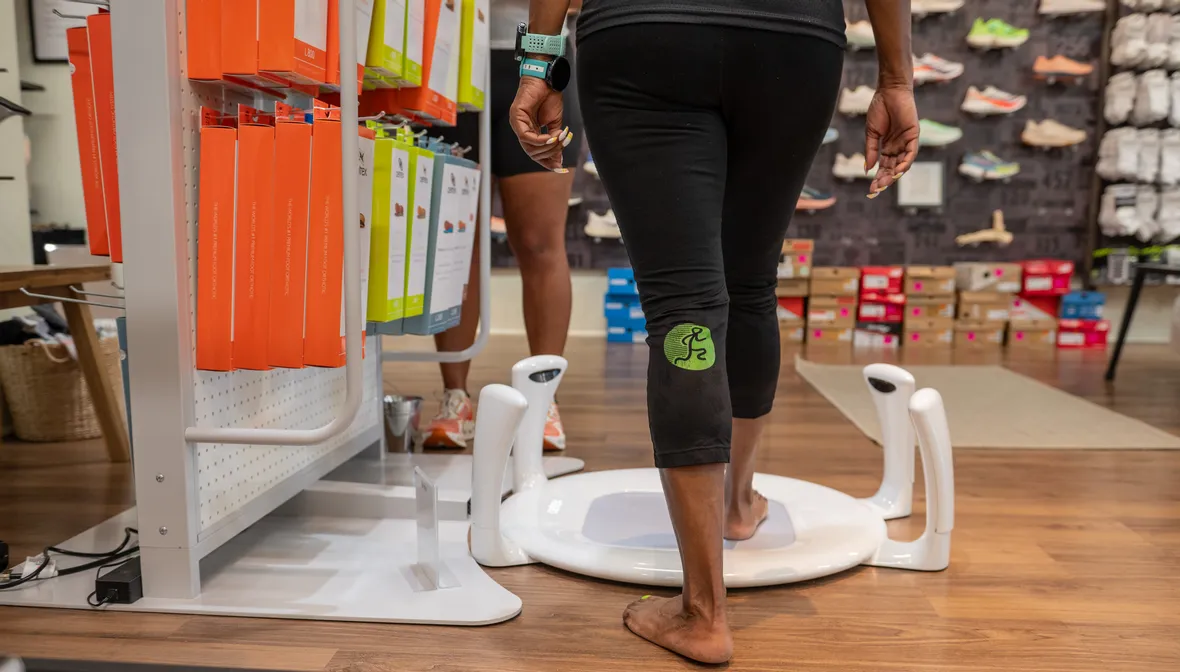
- Pressure mapping: Some fitters use a digital mat that shows pressure distribution when you stand.
Low, normal, or high arches each need different support. About 20% of people have high arches, while 60% are neutral, and 20% are flat-footed.
Pressure mapping is especially useful for people who have trouble describing their foot shape. The digital mat provides a visual print, showing where your foot bears the most weight. This can reveal hidden arch issues or pressure points that cause pain.
Fitters might show you the results and explain how certain shoes can relieve pressure or support weak areas.
Visual inspection also includes watching your feet as you stand and walk. Some fitters ask you to stand on one leg, which reveals balance and arch stability. These insights help tailor the shoe choice.
4. Gait Analysis
This is Paragon’s signature service. Gait analysis goes beyond foot shape—it examines how your whole body moves while running or walking.
How Gait Analysis Works
- Video recording: You walk or jog on a treadmill while a camera films your feet and legs.
- Slow-motion review: The fitter analyzes your stride, foot strike (heel, midfoot, forefoot), and how your ankles move.
- Pronation assessment: Do your feet roll in (overpronate), stay neutral, or roll out (supinate)?
The goal is to match your movement with the right level of support and cushioning.
A typical gait analysis at Paragon includes several angles. Cameras are set up to view from the side and the back, so the fitter can see how your hips, knees, and ankles move. Sometimes, they’ll ask you to run at different speeds to observe changes in your stride.
They also look for asymmetries—maybe your left leg strikes the ground differently than your right. Even small differences can cause injuries over time. Fitters explain these findings and suggest shoes that help correct or accommodate your stride.
Example: Pronation Types
| Pronation Type | Foot Movement | Best Shoe Type |
|---|---|---|
| Neutral | Even roll inward | Cushioned or neutral shoes |
| Overpronation | Excess roll inward | Stability or motion control shoes |
| Supination | Roll outward | Flexible, cushioned shoes |
Understanding your pronation can make a big difference. For example, runners who overpronate often buy shoes with extra stability, but if their overpronation is mild, a neutral shoe might work better. Fitters can explain these subtleties and help you avoid over-correcting.
5. Shoe Selection And Testing
Based on your measurements and gait, the fitter brings out several models. You’ll try them on, walk or jog in-store, and give feedback.
Common tips from Paragon fitters:
- Try shoes with your running socks.
- Test both feet.
- Leave a thumb’s width in the toe box.
- Check for heel slipping or tightness.
You might repeat this step with 3–6 pairs until you find the best match.
Fitters sometimes suggest walking or jogging outside the store, or on different surfaces. This helps you feel how the shoes perform on pavement, carpet, or treadmill. They might recommend shoes with features you haven’t considered, like extra eyelets for secure lacing or a softer heel collar for Achilles comfort.
If you have a special need—wide feet, bunions, or previous injuries—the fitter will check how each shoe feels around problem areas. They might suggest shoes with mesh uppers or seam-free interiors to prevent irritation. Testing is not rushed; fitters want you to feel confident before making a choice.
6. Final Fit Adjustments
If you need extra support, Paragon offers:
- Custom insoles or inserts
- Lacing techniques for wide/narrow feet or heel slip
- Advice on breaking in new shoes
The process is not just about selling a shoe—it’s about education and confidence.
Fitters often demonstrate how to lace shoes to relieve pressure points or prevent heel slipping. For example, “runner’s loop” lacing can stop your heel from moving, while skipping eyelets can create more room for high arches.
Custom insoles can be molded to your foot shape, providing extra arch support or cushioning. Paragon’s staff explain how to use them and when to replace them. They also give tips on breaking in new shoes, such as wearing them for short walks before longer runs, and checking for hotspots or blisters early.
The Science Of Gait Analysis
Gait analysis is more than a buzzword. It uses biomechanics to spot movement patterns that might cause injury. Here’s why it matters:
Identifying Imbalances
Many runners have subtle differences between their left and right stride. This can lead to:
- Uneven wear on shoes
- Increased injury risk
- Lower running efficiency
A good analysis catches these early.
Imbalances can also affect your running goals. For example, if you’re training for speed, a slight limp or tightness can slow you down or lead to pain over time. Gait analysis helps you spot these issues before they become problems.
Spotting Overpronation And Supination
Overpronation is common among runners with flat feet. Their ankles roll inward, causing stress up the leg. Supination (or underpronation) is rarer but can cause ankle sprains and stress fractures, especially in runners with high arches.
Fitters explain how the right shoe can help compensate for these movements. Stability shoes support overpronators, while cushioned shoes help supinators absorb impact. Knowing your tendency prevents buying shoes that make problems worse.
The Data Behind Gait Analysis
A 2020 study in the *Journal of Sports Sciences* found that personalized shoe fitting based on gait analysis reduced injury rates by 31% compared to standard sizing. Another research from the British Journal of Sports Medicine showed that runners using gait analysis-selected shoes reported higher comfort and satisfaction scores over a 6-month period.
The science is clear: matching shoes to your gait keeps you safer and happier. It also helps you run longer without discomfort, which is important for marathoners and casual runners alike.
Technology At Paragon
Paragon uses video analysis, sometimes paired with pressure mats that show a color map of pressure points. This helps both the fitter and the runner see how weight shifts during each step.
Fitters explain how pressure mapping shows areas of high stress—often under the heel or ball of the foot. If you have pain in these spots, the right shoe can help distribute pressure more evenly.
Here’s a quick comparison of analysis methods:
| Method | What It Shows | Accuracy |
|---|---|---|
| Visual (naked eye) | General stride, foot roll | Good for obvious issues |
| Video analysis | Detailed foot & leg movement | High, slow-motion helps spot subtle problems |
| Pressure mat | Weight distribution & pressure points | Very high, shows invisible issues |
Fitters may use more than one method for the most complete picture. For example, if you have persistent knee pain, they’ll combine video and pressure mapping to find the cause.
Common Foot Types And Shoe Categories
Not all running shoes are created equal. Matching shoe to foot type is key.
Foot Types
- Flat feet: Little or no arch, tend to overpronate.
- Neutral feet: Moderate arch, even weight distribution.
- High arches: Less foot contact, often supinate.
Some runners have mixed features, such as one flat foot and one neutral. Fitters at Paragon help choose shoes that balance these differences, sometimes recommending custom insoles for extra support.
Shoe Categories
| Shoe Type | Best For | Features |
|---|---|---|
| Cushioned | Neutral/supinated feet | Soft midsoles, shock absorption |
| Stability | Mild overpronators | Denser foam, medial support |
| Motion Control | Severe overpronators | Rigid, reinforced structure |
| Minimalist | Natural running, strong feet | Low drop, less cushioning |
Paragon fitters often explain these differences, helping you avoid common mistakes like buying trendy shoes that don’t suit your foot.
Minimalist shoes are popular for runners who want a more natural feel, but they require stronger feet and careful transition. Fitters at Paragon warn about starting slowly with minimalist shoes, as sudden changes can cause injuries.
Motion control shoes are best for runners with severe overpronation or large body weight. They’re heavier but provide maximum support. Fitters explain when these are necessary, and when a lighter stability shoe might work.
Mistakes Runners Make When Choosing Shoes
Runners often make errors that can lead to injury or wasted money. Paragon fitters see these issues daily:
- Buying by size only: Shoe sizing varies by brand. Always try before buying.
- Ignoring foot width: Many runners need wide or narrow options, not just standard.
- Choosing for looks, not fit: Bright colors don’t prevent blisters!
- Skipping gait analysis: Even experienced runners can miss subtle changes in their stride.
- Not updating shoes: Running shoes last 300–500 miles. After that, support breaks down.
- Wearing old socks: Thin or worn-out socks change the fit and can cause blisters.
- Testing only one foot: Many people have different-sized feet—always try both.
Two non-obvious insights beginners miss:
- Your running surface matters: Trail shoes and road shoes have different tread and cushioning.
- Your weight affects cushioning needs: Heavier runners may need more shock absorption, lighter runners can use firmer shoes.
Another mistake is ignoring injuries. If you have pain in your knees, hips, or feet, don’t assume it’s normal. A proper shoe fitting can reveal the cause and suggest a shoe that helps. Paragon fitters often ask about injuries and adapt their recommendations.
Some runners buy shoes too tight, thinking they’ll stretch. Running shoes should fit snug but not squeeze. Fitters check for space in the toe box, and explain why tight shoes can cause black toenails or blisters.

Credit: paragonsports.com
What Sets Paragon Sports Apart?
Many stores offer shoe fitting, but Paragon’s experience stands out for several reasons:
Expertise Of Staff
- Most fitters are trained runners or certified fit specialists.
- They stay updated on new shoe models and fitting techniques.
- Fitters listen more than they talk—understanding your needs first.
Staff often share their own running stories, making the process more personal. If you’re nervous or unsure, they’ll explain each step and answer questions.
Technology In Use
- Paragon invests in the latest gait analysis tools.
- Digital pressure mapping is available for advanced cases.
- Video analysis provides slow-motion feedback.
Fitters explain technology in simple terms, so you understand what you’re seeing. They show video or pressure maps, highlighting areas of concern.
Community Connection
- Paragon hosts running clubs, clinics, and events.
- Fitters often remember repeat customers and track their running journey.
- The store works with local coaches and physical therapists for referrals.
If you join a club or clinic, you can get ongoing advice and support. Paragon’s community ties make it easy to stay motivated and learn from others.
Product Range
- Hundreds of shoes in stock, including wide/narrow sizes and specialty models.
- Access to new releases before many competitors.
- In-house custom insole fitting for unique foot shapes.
Fitters explain why some shoes are better for certain goals—speed, distance, comfort, or recovery. They help you choose shoes that fit your lifestyle, not just your feet.
Aftercare
- Free lacing adjustments and fit check-ups.
- Advice on shoe care, replacement, and injury prevention.
- Encouragement to come back for follow-up fittings as your running progresses.
Paragon’s aftercare means you’re never alone. If your feet change, or you start training more, you can return for a new fitting. Staff help you track your shoe mileage and recommend when to replace.
Real-world Experience: What Customers Say
Many runners share their Paragon experience online. Here are a few real-world stories:
- Amy, NYC marathoner: “I thought I needed stability shoes but learned I’m neutral. My new shoes feel lighter and I haven’t had shin pain since.”
- Mark, beginner: “I was embarrassed by my flat feet, but the fitter showed me options that felt great. They explained every step, so I learned a lot.”
- Luis, trail runner: “I always bought road shoes, but the staff explained how trail shoes would help with grip and support. Big difference on rocky paths.”
A common theme: runners leave more confident, informed, and excited to run.
Some customers mention learning about their foot shape for the first time. Others appreciate how fitters helped them avoid repeating past mistakes. The store’s reputation is built on these personal experiences, not just sales.
Frequently Asked Questions
How Often Should I Have My Gait Analyzed?
It’s smart to get a new gait analysis every time your running changes—such as after an injury, if you increase mileage, or if you notice pain. For most runners, once a year is enough, but high-mileage runners or those training for a marathon should check every 6 months.
If you notice new aches, or your shoes wear out differently, book an analysis sooner. Feet and stride can change quickly, especially after injury or weight change.
Can Gait Analysis Help Prevent Injuries?
Yes. By identifying biomechanical problems like overpronation or uneven stride, gait analysis helps you choose shoes that reduce stress on your joints and muscles. Studies show it can cut injury risk by up to 30%.
Gait analysis can also help you run more efficiently. If you’re preparing for a race or increasing distance, a small adjustment in shoe or stride can save energy and prevent fatigue.
What If I Buy Shoes Elsewhere—can I Still Get Fitted At Paragon?
Absolutely. Paragon offers shoe fitting and gait analysis as a standalone service. Many runners use the fitting service and then buy shoes online or from another store. However, the staff can’t guarantee other stores’ stock or authenticity.
Fitters encourage customers to ask questions and return for follow-up fittings, even if they didn’t buy shoes at Paragon. The service is about education and safety, not just sales.
How Do I Know If My Shoes Are Worn Out?
Common signs include:
- Soles are flat or unevenly worn
- You feel less cushioning
- Aches return after running
- Shoes feel loose or unsupportive
Replace running shoes every 300–500 miles, depending on your weight and running surfaces.
If you’re unsure, bring your shoes to Paragon for a quick check. Fitters can spot wear patterns and suggest when to replace.
Is There An Extra Cost For Fitting Or Gait Analysis At Paragon Sports?
Usually, gait analysis and shoe fitting are free when you purchase shoes at Paragon. For advanced services like custom insoles or pressure mapping, there may be a small fee. Always ask before your session.
Fitters explain costs up front and help you choose the best service for your needs.
Taking The Next Step Toward Better Running
Every runner deserves shoes that fit—not just in size, but in support, feel, and function. Paragon Sports’ combination of running shoe fitting and gait analysis goes beyond the basics, blending personal attention with cutting-edge technology. Whether you’re a new runner or chasing a marathon PR, the right shoes can make all the difference.
Remember, what you learn during a fitting is as valuable as the shoes themselves. Be open, ask questions, and use your Paragon experience to run smarter, healthier, and happier. If you want to explore more about running biomechanics, check out resources like the Runner’s World Guide to Gait Analysis for further reading.
Choosing the right running shoes is not just a purchase—it’s an investment in your journey. Take your time, trust the process, and let your next run show the results.
Credit: protrustconsulting.co.uk