How to Play Pickleball in 5 Minutes: Quick Start Guide 2026

Pickleball is winning hearts across the world. It’s fast, social, and easy to learn—even if you have no background in racket sports. What’s more, you can start playing pickleball in just five minutes if you know the basic rules and have the right gear.
Whether you’re looking for a new hobby, a way to stay active, or a sport that you can enjoy with family and friends, pickleball is a smart choice. This guide will show you how to play pickleball in five minutes, making it simple for anyone to join a game quickly and confidently.
You don’t need to read a whole rulebook before stepping onto the court. But if you want to get the most fun (and avoid rookie mistakes), you should understand the essentials. In this article, we’ll break down everything you need to start playing pickleball in five minutes—covering the court, equipment, rules, scoring, and tips for quick improvement.
If you’re ready to jump in, let’s get started!
What Is Pickleball?
Pickleball is a paddle sport that combines elements of tennis, badminton, and ping-pong. It’s played on a small court with a low net, using a solid paddle and a lightweight plastic ball with holes. Games can be singles (one versus one) or doubles (two versus two), but most beginners start with doubles because it’s more social and forgiving.
Pickleball’s popularity is booming—especially in the United States. According to the Sports & Fitness Industry Association, there were over 8.9 million players in the US in 2023, making it the country’s fastest-growing sport for the third year in a row.
The 5 Key Steps To Start Playing Pickleball In 5 Minutes
To make learning fast and clear, we’ll divide the process into five simple steps:
- Know the Court and Setup
- Get the Right Equipment
- Understand the Basic Rules
- Learn How to Score
- Start Playing (and Improve Fast)
Let’s dive into each area so you can confidently start playing in just five minutes.
—
Credit: www.playpickleball.com
1. Know The Court And Setup
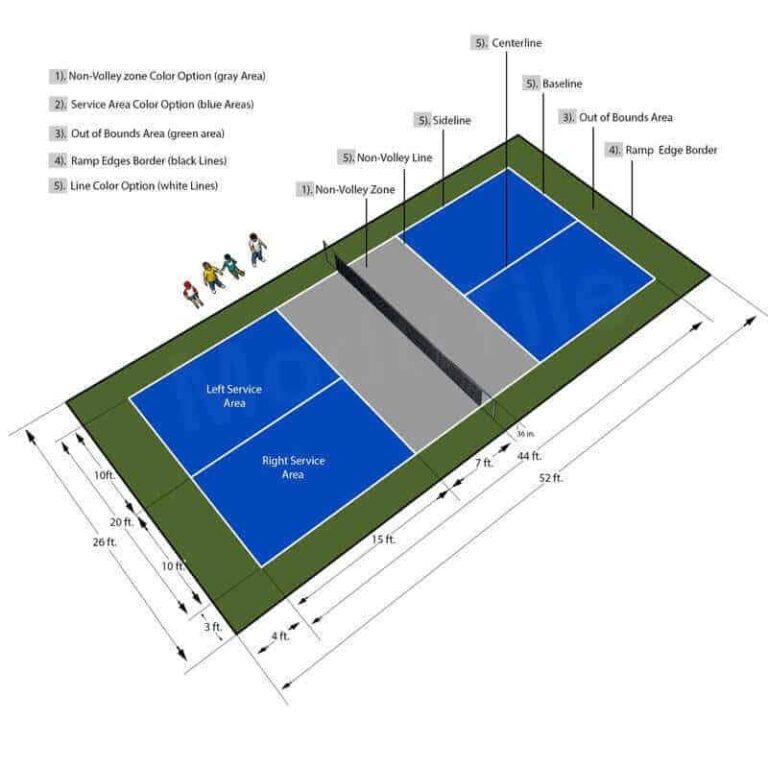
Before you pick up a paddle, you should know how a pickleball court looks and how it’s set up. This helps you understand where to stand, where to hit the ball, and what the boundaries are.
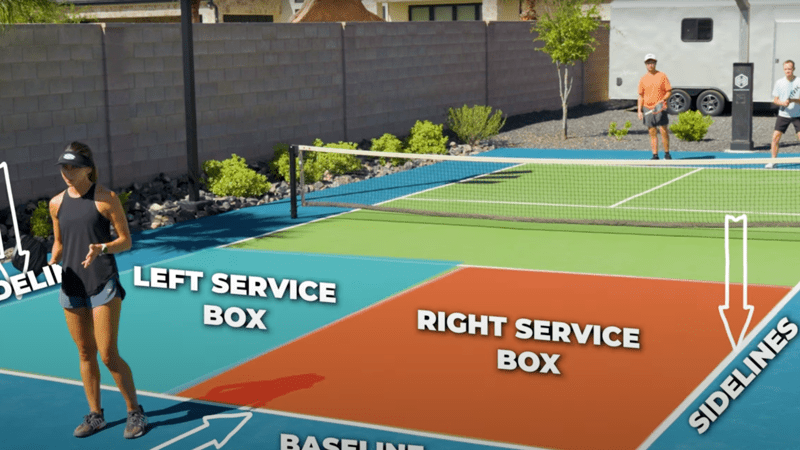
A pickleball court is 20 feet wide by 44 feet long for both singles and doubles. The net is 36 inches high at the sidelines and 34 inches at the center. There are several key areas on the court:
- Baseline: The line at the far ends of the court.
- Sidelines: The lines running lengthwise on each side.
- Non-volley zone (“kitchen”): A 7-foot area on both sides of the net where you cannot volley the ball (hit it in the air before it bounces).
- Service courts: The area between the non-volley zone and the baseline, divided into left and right service boxes.
Here’s a side-by-side comparison of a pickleball court and a tennis court for perspective:
| Court Type | Width | Length | Net Height (Center) | Non-volley Zone |
|---|---|---|---|---|
| Pickleball | 20 ft | 44 ft | 34 in | 7 ft from net |
| Tennis (Singles) | 27 ft | 78 ft | 36 in | N/A |
Key insight: The smaller court means less running and quicker rallies, making pickleball easier and more social than tennis for most beginners.
2. Get The Right Equipment
Starting pickleball doesn’t mean you need expensive gear. In fact, many community centers rent or loan equipment if you want to try before you buy. Here’s what you need:
- Paddle: Made of wood, composite, or graphite. Weight is about 6-9 ounces. Pick a grip size that feels comfortable.
- Ball: A plastic ball with holes (like a wiffle ball). Indoor balls are lighter and have fewer holes; outdoor balls are heavier and have more holes.
- Shoes: Court shoes or tennis shoes work best. Avoid running shoes as they don’t support side-to-side movement.
- Net: Most public courts have permanent nets, but you can buy portable nets if you’re setting up your own court.
Here’s a comparison of pickleball balls used indoors and outdoors:
| Ball Type | Material | Weight | Number of Holes | Best For |
|---|---|---|---|---|
| Indoor | Softer plastic | 0.8 oz | 26 | Gyms, smooth surfaces |
| Outdoor | Harder plastic | 0.9 oz | 40 | Asphalt, concrete |
Beginner tip: Don’t stress about buying the “best” paddle right away. Try a few if you can. Comfort and control are more important than price for your first games.
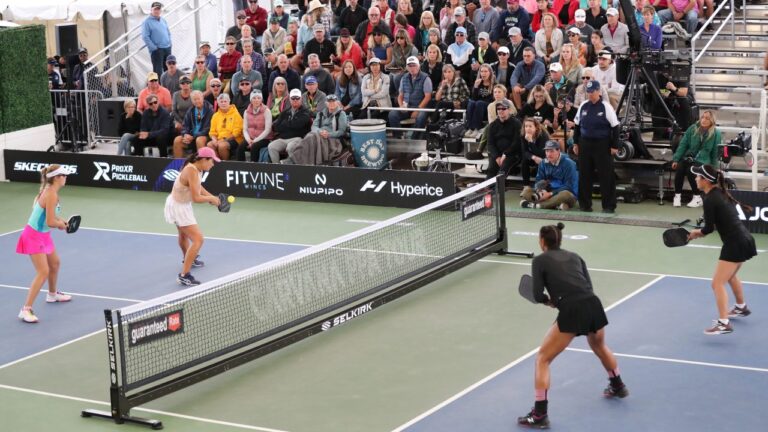
Credit: www.playpickleball.com
3. Understand The Basic Rules
Pickleball has a few key rules that are different from tennis or badminton. Knowing these will help you avoid confusion and get playing quickly.
Serving
- The serve must be underhand and hit below the waist.
- The server stands behind the baseline and serves diagonally to the opponent’s service court.
- The ball must clear the net and land in the correct service box.
- Only one serve attempt is allowed (unless there’s a “let,” when the ball touches the net but lands in the correct box).
Double Bounce Rule
- After the serve, the ball must bounce once on each side before players are allowed to volley (hit in the air).
- This prevents players from rushing the net immediately.
Non-volley Zone (“kitchen”)
- Players cannot volley the ball while standing inside the non-volley zone (the 7-foot area next to the net).
- You can step into the kitchen to play a ball that has bounced there, but you must exit before volleying again.
Faults
A fault ends the rally. Common faults include:
- Hitting the ball out of bounds
- Not clearing the net
- Volleying from inside the kitchen
- Serving into the wrong area
Here’s a quick summary of what’s allowed and not allowed during play:
| Action | Allowed? | Notes |
|---|---|---|
| Underhand Serve | Yes | Below waist, behind baseline |
| Overhand Serve | No | Must be underhand |
| Volley in Kitchen | No | Must let ball bounce first |
| Step in Kitchen (after bounce) | Yes | To play short balls |
Non-obvious insight: Many beginners accidentally volley while standing in the kitchen. Always check your feet before swinging at a ball near the net.
4. Learn How To Score
Pickleball uses a unique scoring system. It’s simple once you see it in action, but it can be confusing at first—especially in doubles.
Basic Scoring Rules
- Only the serving team can score points.
- Games are usually played to 11 points (win by 2).
- In doubles, the server’s score is announced first, then the receiver’s score, then the server number (1 or 2).
How To Call The Score
For example, if the serving team has 3 points, the receiving team has 2 points, and the first server is serving, the score is called: 3-2-1.
Rotation In Doubles
- Both players on the serving team get a turn to serve before the serve passes to the other team.
- After scoring a point, the serving team switches sides.
- When a team loses a point on serve, the serve passes to the partner (in doubles). When both lose, the other team serves.
Example Of Scoring A Point
Suppose Team A serves and wins the rally—their score increases by one, and they keep serving. If Team B wins the next rally, Team A’s other player serves. If Team B wins again, they get to serve.
Common mistake: Beginners often forget only the serving team can win points. If you lose a rally while receiving, the score does not change.
5. Start Playing (and Improve Fast)
Once you know the court, have the gear, and understand the rules and scoring, you’re ready to play. The best way to learn is by doing. Here’s how to get started and quickly improve:
Step 1: Warm Up And Practice Serving
Start by hitting a few serves with a partner. Focus on:
- Serving underhand with the paddle below your waist.
- Aiming diagonally into the correct service box.
- Keeping your feet behind the baseline.
Step 2: Practice The Double Bounce Rule
Serve the ball, let it bounce, then the receiver returns the ball and lets it bounce again before hitting. Do this a few times to get the feel.
Step 3: Play Short Rallies
Begin with gentle rallies. Don’t worry about power—aim for control. Try to keep the ball in play and get used to court movement.
Step 4: Learn To Move As A Team (in Doubles)
Move together with your partner. Cover the middle and communicate about who will take shots. This teamwork is key to winning doubles games.
Step 5: Watch For The Kitchen
Practice hitting balls near the net without stepping into the kitchen unless the ball bounces first. Developing this habit early prevents faults and builds good court awareness.
Quick Tips For Faster Improvement
- Keep your paddle up and ready between shots for faster reaction.
- Aim for the middle when unsure—this causes confusion for opponents.
- Watch your feet around the kitchen to avoid faults.
- Play with better players—you’ll learn more by watching and asking questions.
- Stay relaxed—pickleball is meant to be fun. Don’t worry about mistakes.
Non-obvious insight: Many beginners grip the paddle too tightly. A relaxed grip improves control and reduces arm fatigue.
Why Pickleball Is So Popular
Pickleball’s popularity is not just a trend. Here’s why so many people are picking up a paddle:
- Low impact: Easy on the joints, suitable for all ages.
- Social: Small courts make it easy to talk and have fun.
- Quick games: Most games last 10-20 minutes.
- Easy to learn: You can start playing after just a few minutes of instruction.
- Accessible: Public courts are popping up in cities and suburbs everywhere.
According to the USA Pickleball Association, there are now over 10,000 places to play in the US, and courts are growing worldwide.
Common Beginner Mistakes (and How To Fix Them)
Learning any new sport comes with mistakes. Here are the most common ones and how to avoid them:
- Standing too far back: Move forward after the double bounce to control the net.
- Swinging too hard: Focus on control, not power.
- Forgetting the double bounce rule: Always wait for the second bounce before volleying.
- Poor footwork: Stay light on your feet and ready to move in any direction.
- Neglecting communication: In doubles, talk to your partner to avoid confusion.
Fixing these habits early will help you have more fun and win more games.
How Pickleball Compares To Other Sports
If you’ve played tennis, badminton, or table tennis, you’ll notice some similarities and differences. Here’s a quick comparison:
| Sport | Paddle/Racket Type | Court Size | Game Length | Skill Learning Curve |
|---|---|---|---|---|
| Pickleball | Solid paddle | Small (20×44 ft) | 10-20 min | Very easy |
| Tennis | Strung racket | Large (27×78 ft) | 1+ hour | Moderate to hard |
| Badminton | Strung racket | Medium (20×44 ft) | 20-30 min | Moderate |
| Table Tennis | Small paddle | Table (5×9 ft) | 5-10 min | Easy to moderate |
Key takeaway: Pickleball is the easiest to learn among these sports, with a short learning curve and fast gameplay.
Where To Play Pickleball
You can find pickleball courts at community centers, parks, gyms, and even some schools. Many tennis courts are now lined for pickleball as well. To find a court near you, check out the official USA Pickleball court locator at places2play.org.
Tip: If you can’t find a dedicated pickleball court, you can set up a temporary court on any flat surface using tape and a portable net.
Pickleball Etiquette For New Players
Pickleball is known for being friendly and welcoming. Following some simple etiquette will help you fit right in:
- Call the score clearly before serving.
- Wait for your turn if courts are busy.
- Compliment good shots—even your opponents’.
- Return balls promptly to other courts.
- Be patient with new players and offer encouragement.
Small gestures of sportsmanship make the game more enjoyable for everyone.
How To Keep Improving Your Game
After your first games, you’ll want to get better. Here’s how you can keep improving:
- Take a beginner class: Many parks and clubs offer free or low-cost lessons.
- Watch tutorial videos: Visual learning speeds up your progress.
- Play with different people: You’ll face new challenges and pick up tactics.
- Practice key shots: Like the dink (a soft shot just over the net) and the lob.
Advanced tip: Try playing with your non-dominant hand for a few minutes each session. It improves coordination and highlights weaknesses in your footwork.
Health Benefits Of Playing Pickleball
Playing pickleball is not only fun—it’s great for your health. Here’s what you gain:
- Cardiovascular fitness: Increases your heart rate without high-impact stress.
- Balance and agility: The quick movements and reflexes improve coordination.
- Mental sharpness: Fast decision-making keeps your brain active.
- Social interaction: Reduces stress and builds friendships.
A study published in the *International Journal of Research in Exercise Physiology* found that playing pickleball three times a week for 30 minutes improved blood pressure, cholesterol, and overall fitness in older adults.

Credit: www.youtube.com
Pickleball For All Ages
One reason pickleball is booming: it’s accessible for kids, adults, and seniors. The small court, light equipment, and easy rules make it perfect for mixed ages and abilities. Many families play together, and seniors find it easier on their bodies than tennis or racquetball.
Non-obvious insight: Local leagues often have age brackets or “open play” for all skill levels. Don’t be shy about joining—they’re used to welcoming new players.
Frequently Asked Questions
What Is The “kitchen” In Pickleball?
The kitchen is the non-volley zone—a 7-foot area on both sides of the net where players are not allowed to volley the ball (hit it in the air before it bounces). You can step into the kitchen to play a ball that has bounced but must exit before volleying again.
How Many People Play Pickleball On One Court?
Pickleball is usually played as doubles (2 vs 2), but you can also play singles (1 vs 1). Most beginners start with doubles because it’s more social and less demanding physically.
Can You Play Pickleball On A Tennis Court?
Yes, you can use a tennis court for pickleball. Many tennis courts now have pickleball lines painted on them. If not, you can use tape to mark a temporary court and set up a portable net.
What Kind Of Paddle Should A Beginner Use?
Beginners should choose a lightweight paddle (7-8 ounces) with a comfortable grip. Wood paddles are cheapest but heavier; composite or graphite paddles offer better control. Try a few before buying if possible.
Where Can I Find Official Pickleball Rules?
The official rules are published by the USA Pickleball Association. You can read or download them at usapickleball.org for free.
Pickleball is easy to start and hard to put down. With these five steps, you’ll be ready to play in five minutes—no experience required. The best way to improve is to play, have fun, and keep learning from others. So grab a paddle, find a court, and see why pickleball is America’s fastest-growing sport!