
Extra Wide Trail Running Shoes: Top Picks For 2026

Extra wide trail running shoes give roomy toe space, stable fit, and fewer blisters.
If you have wide feet, bunions, swelling, or you use orthotics, the right shoe can change your trail days from sore to smooth. In this guide, I share tested advice on extra wide trail running shoes from years of muddy miles, gear testing, and helping runners dial in fit. You will learn how sizing works, who benefits, what features matter, and which models to try now.

What Makes Extra Wide Trail Running Shoes Different?
Extra wide trail running shoes are built on a broader last. That means more volume at the forefoot and midfoot. The toe box allows your toes to spread, which helps balance on uneven ground.
Sizing words can confuse buyers. For men, D is standard, 2E is extra wide, and 4E is extra-extra wide. For women, B is standard, D is wide, and 2E is extra wide. Many trail brands offer wide or extra wide, but true 4E is rare.
Trails add more needs than road runs. You want traction, a tough upper, and secure lockdown without squeezing your foot. Extra wide trail running shoes solve pressure points while still holding your heel in place. That balance is key on rocks, roots, and off-camber paths.
Benefits: Who Needs Extra Width and Why It Helps
A roomy fit lowers hot spots. It also lets your toes splay for better grip and shock spread. That can reduce fatigue on long climbs and descents.
People who often benefit include:
- Runners with bunions, tailor’s bunions, or Morton’s neuroma. Extra width eases pressure on nerves and joints.
- Runners with swelling in heat or at ultra distances. More volume keeps blood flow open.
- Runners using custom orthotics. Extra width makes space without forcing you to size up in length.
- Runners with high-volume feet or flat arches. A wider platform reduces side squeeze.
In testing, I found fewer blisters and less nail trauma when my toes could move. Research on toe splay supports better balance and comfort when forefoot space increases. Extra wide trail running shoes also feel more stable on slanted trails because your foot sits down into the platform, not over the edge.

How To Choose The Right Pair
Start with foot measuring. Measure both feet, standing at day’s end when swelling peaks. Use your longest foot for length, but match width to the broader one.
Key features to check:
- Toe box shape: Look for a natural or foot-shaped front, not a tapered one.
- Midsole foam: Lighter foams like PEBA feel lively; EVA feels steady. Pick what your joints like.
- Stack and drop: Higher stack adds cushion, lower drop feels stable and agile. Many trail shoes sit between 4 mm and 8 mm drop.
- Rock plate: Helps on rocky routes. If you run smooth dirt, you may not need it.
- Outsole rubber and lugs: Deep lugs grip mud; shallower lugs roll better on hard pack. Vibram compounds excel on wet rock.
- Upper and lockdown: Seek gusseted tongue, solid heel counter, and midfoot wraps that hold without pinch.
- Width options: Confirm the exact width. Men’s 2E or women’s D/2E often marks extra wide.
- Orthotic fit: Remove the stock insole and test depth with your orthotic installed.
Try this quick fit test:
- Lace up and stand. You should have a thumb’s nail of length in front of the big toe.
- Wiggle toes. They should move freely, with no side rub.
- Do a downhill squat. Your toes should not slam the front.
- Traverse a slanted curb. Your foot should not roll off the footbed.
Common pitfalls to avoid:
- Sizing up too long to get width. This causes toe bang and sloppy steering.
- Ignoring volume. You may need more depth, not just side width.
- Over-tight lacing to fix heel slip. Use better lacing patterns instead.
Are extra wide trail running shoes better for bunions?
Yes. Extra width eases pressure on the big-toe joint. Pair it with a soft, unstitched bunion panel to avoid rub.
Can wider shoes cause ankle rolls?
Only if the fit is sloppy. Secure midfoot wrap and firm heel hold prevent wobble while keeping the forefoot roomy.
Should I go with a lower drop if I need stability?
Often yes. A moderate or low drop lowers your center of mass. It can feel steadier on technical ground as long as your calves tolerate it.

Top Models and Brands To Consider Now
Availability changes by season, but these brands often support wide feet well. Check current width codes before you buy.
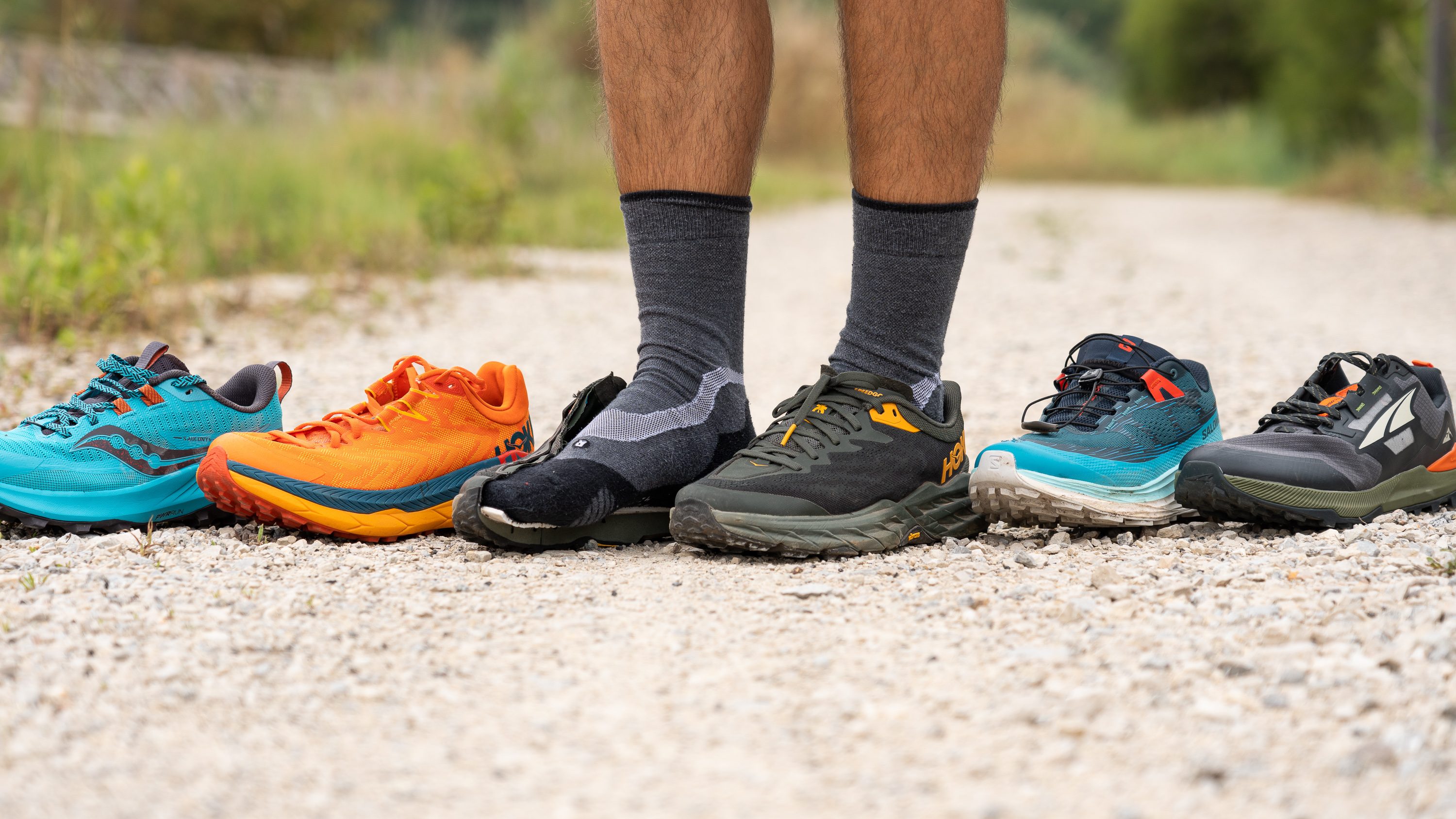
- Hoka: Speedgoat Wide and Challenger Wide offer soft cushion with solid grip. They are not 2E on paper but run quite generous.
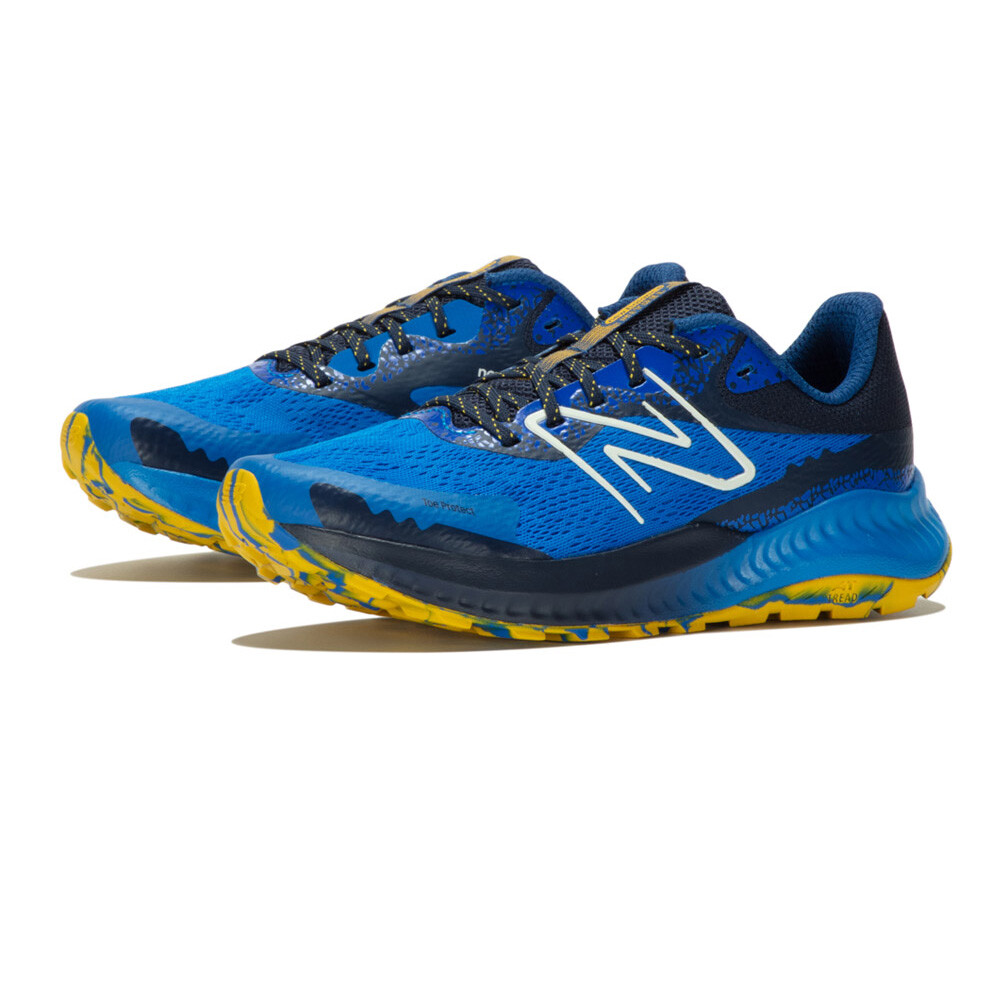
- New Balance: Fresh Foam Hierro often comes in 2E for men and D for women. It has a plush ride with a durable outsole.
- Brooks: Cascadia and sometimes Caldera offer wide options in current lines. Stable platforms and protective builds suit mixed trails.
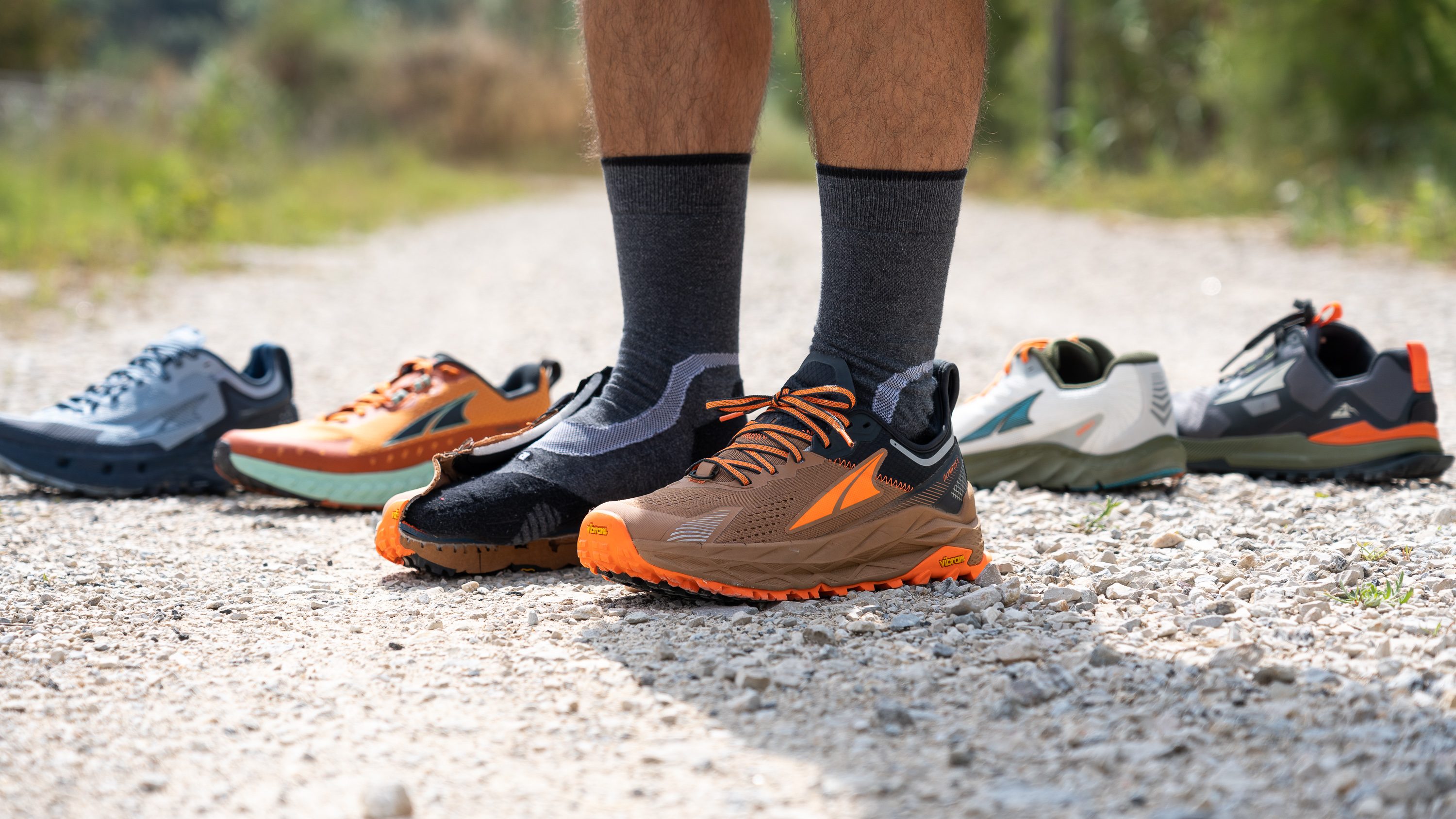
- Altra: Not always labeled extra wide, but the FootShape toe box is naturally broad. Models like Lone Peak and Timp give toe splay without heel slop if sized right.
- Topo Athletic: Foot-shaped toe boxes with some wide options. Good lockdown with lighter builds.
- Salomon: Select models now come in Wide versions. Look for Sense Ride or Ultra lines marked Wide in current releases.
- Asics: Trabuco lines may include wide versions in some regions. Check product specs each season.
Note on 4E: True 4E trail options are rare. If you need 4E, try brands known for wide road lasts and test their trail siblings, or size your insole and upper volume with care. Extra wide trail running shoes vary a lot by model year, so verify the width code and try them on if you can.
Fit And Lacing Tips For Wide Feet On Trails
Good fit is a system. Shoe, sock, insole, and lacing must work together.
Try these lacing tricks:
- Runner’s loop at the top eyelets: Locks the heel without crushing the midfoot.
- Window lacing: Skip the eyelets over a pressure spot to reduce top-of-foot pain.
- Midfoot wrap: Cross-lace only the lower eyelets tighter, then relax pressure near the forefoot.
Sock tips:
- Use thin, wicking socks in heat to limit swelling. Use medium cushion in cold or on long days.
- Seamless toe socks can reduce friction if your toes rub.
Orthotic and insole notes:
- If your orthotic lifts your foot too high, remove the stock insole or use a thinner one.
- Confirm forefoot room with the orthotic installed. Extra wide trail running shoes should still allow toe splay.
Care, Durability, And Common Mistakes
Clean shoes with cool water and a soft brush. Air dry at room temp. Heat breaks down glue and foam.
Rotate pairs if you run often. Foams rebound better with rest. This keeps cushion and shape longer.
Avoid these mistakes:
- Buying length for width. Get the right width code instead.
- Letting mud dry hard on the upper. It shortens lifespan.
- Ignoring outsole wear. If lugs round off, grip drops fast on wet roots.
Extra wide trail running shoes last about 300 to 500 miles for most foams and lugs. Grit, heat, and runner weight change that range.

Real-World Testing Insights
On a rocky loop near my home, I A/B tested a standard width versus an extra wide trail running shoe. The extra wide pair cut my pinky-toe rub to zero and gave better edge hold on off-camber slabs. My downhill speed rose because my toes could spread and stabilize.
In summer ultras, swelling is real. Extra wide trail running shoes kept blood flow open. I could loosen the forefoot a notch mid-race and keep the heel snug. That small change saved my toenails on a 3,000-foot descent.
Lesson learned: roomy does not mean sloppy. Lock the heel, then allow space upfront. When that balance is right, your stride feels calm, even on chaos trails.
Budget And Smart Buying Tips
Set a budget range first. Many extra wide trail running shoes cost more due to lower volume and added materials.
Smart saves:
- Shop last season’s colorway. Same midsole, lower price.
- Use stores with free returns. Order two sizes to compare at home.
- Bring your socks and orthotics to the shop. Test on a small incline board if they have one.
Before you commit:
- Wear the shoes indoors for an hour. Heat and time reveal hot spots.
- Check the insole imprint. If your toes spill over the foam shape, you need more width or a different last.
Safety And Injury Prevention
A wider platform can reduce nerve pressure and toe overlap. That helps with numbness and bunion pain. Studies on foot mechanics show that toe splay supports balance and shock spread on uneven ground.
But width has a limit. Too much room leads to shear and blisters. Aim for a snug heel, secure midfoot, and free toes. Extra wide trail running shoes should feel stable when you pivot, not swimmy.
If you switch from narrow to extra wide trail running shoes, ease in. Start with short runs. Let your foot muscles adapt to new toe splay and stance.
Frequently Asked Questions
How do I know if I need extra wide trail running shoes?
If your toes press the side, you get bunion pain, or you size up only for width, you likely need extra width. A Brannock measure or a good fitter can confirm.
What is the difference between wide and extra wide in trail shoes?
For men, wide is usually 2E and extra wide can mean more volume or a specific 2E labeling by brand. For women, D is wide and 2E is extra wide, but check each brand’s chart.
Can I use orthotics in extra wide trail running shoes?
Yes. Extra width and volume help orthotics sit flat without crowding. Remove the stock insole and ensure the heel sits deep.
Will a wide toe box reduce black toenails?
Often yes. Space prevents front impact and nail lift on descents. Pair it with proper length and downhill lacing.
Are zero-drop wide trail shoes better for stability?
Not always. Lower drop can feel stable, but overall fit, stack, and outsole grip matter more. Test what your calves and ankles tolerate.
Do extra wide trail running shoes affect speed?
They can help by reducing pain and improving toe splay. A secure fit with the right foam often feels faster over time.
Conclusion
The right fit can change your trail life. Extra wide trail running shoes give your foot room to work while holding you steady on rough ground. Focus on toe box shape, secure heel, midfoot wrap, and the exact width code that matches your feet.
Test with your socks and orthotics, use smart lacing, and ease into new models. Your feet will feel calmer, and your runs will feel smoother and safer. Ready to find your match? Explore current wide models, try them side by side, and share your fit wins or questions in the comments.
One Comment