La Sportiva Trail Running Shoes Womens: Best Fit Guide

For runners in the United States, the best La Sportiva trail running shoes for women depend on the trail, distance, weather, and fit—not just the shoe name. The Bushido III suits rocky, technical trails. The Jackal II fits long runs that need more cushion. The Akasha II offers a balanced option for distance and rough ground. The Mutant is better for steep, loose, or wet mountain routes.
La Sportiva makes many shoes in women’s versions, but the fit can vary by model. Check the current La Sportiva US product page, size chart, and return policy before you buy. Product names, colors, materials, and stock can change.

Quick answer: Which La Sportiva women’s trail shoe is right for you?
Use this simple guide:
| Your main need | La Sportiva model to consider | Why it may fit |
|---|---|---|
| Rocky, technical day runs | Bushido III | Low, stable feel and strong grip |
| Long trail runs | Jackal II | More cushioning and foot protection |
| Mixed trails and ultra-distance training | Akasha II | Cushion, grip, and support in a balanced design |
| Steep mountain trails | Mutant | Secure upper and aggressive outsole |
| Fast runs on smoother trails | Prodigio | Softer, more rolling ride |
| Wet or snowy conditions | A GTX version, when offered | Waterproof lining helps block outside moisture |
These are starting points, not universal rankings. A runner with a wide forefoot may prefer one model in a larger size, while another runner may find the same model too loose. Try shoes with the socks and footbeds you plan to use on the trail.
What makes La Sportiva trail running shoes different?
La Sportiva trail shoes are built around grip, foothold, and mountain use. The company is known for climbing and mountain footwear, and many of its trail models reflect that background.
Three parts matter most:
- Outsole: The rubber and lug pattern control traction.
- Midsole: The foam controls cushioning, rebound, and ground feel.
- Upper: The mesh, overlays, tongue, and lacing system control fit and protection.
La Sportiva often uses its own outsole compounds, such as FriXion rubber, and may pair them with different lug patterns. The exact rubber and tread can vary by model and revision. Always confirm the current US specification before purchase.
A shoe with deep lugs can grip loose dirt and mud well. It may feel less smooth on pavement. A shoe with a lower, firmer midsole can feel precise on rock. It may feel less comfortable during a long road section.
Women’s fit does not mean one shape fits all women
A women’s version may use a different last, volume, heel shape, or color range. However, “women’s” does not tell you whether the shoe will fit your foot.
Pay attention to:
- Forefoot width
- Toe-box height
- Heel width
- Arch contact
- Midfoot volume
- Swelling during long runs
- Sock thickness
- Whether you use custom orthotics
La Sportiva shoes can feel snug compared with some US running brands. That can help on steep trails, but a tight fit can cause numb toes, black toenails, or hot spots.
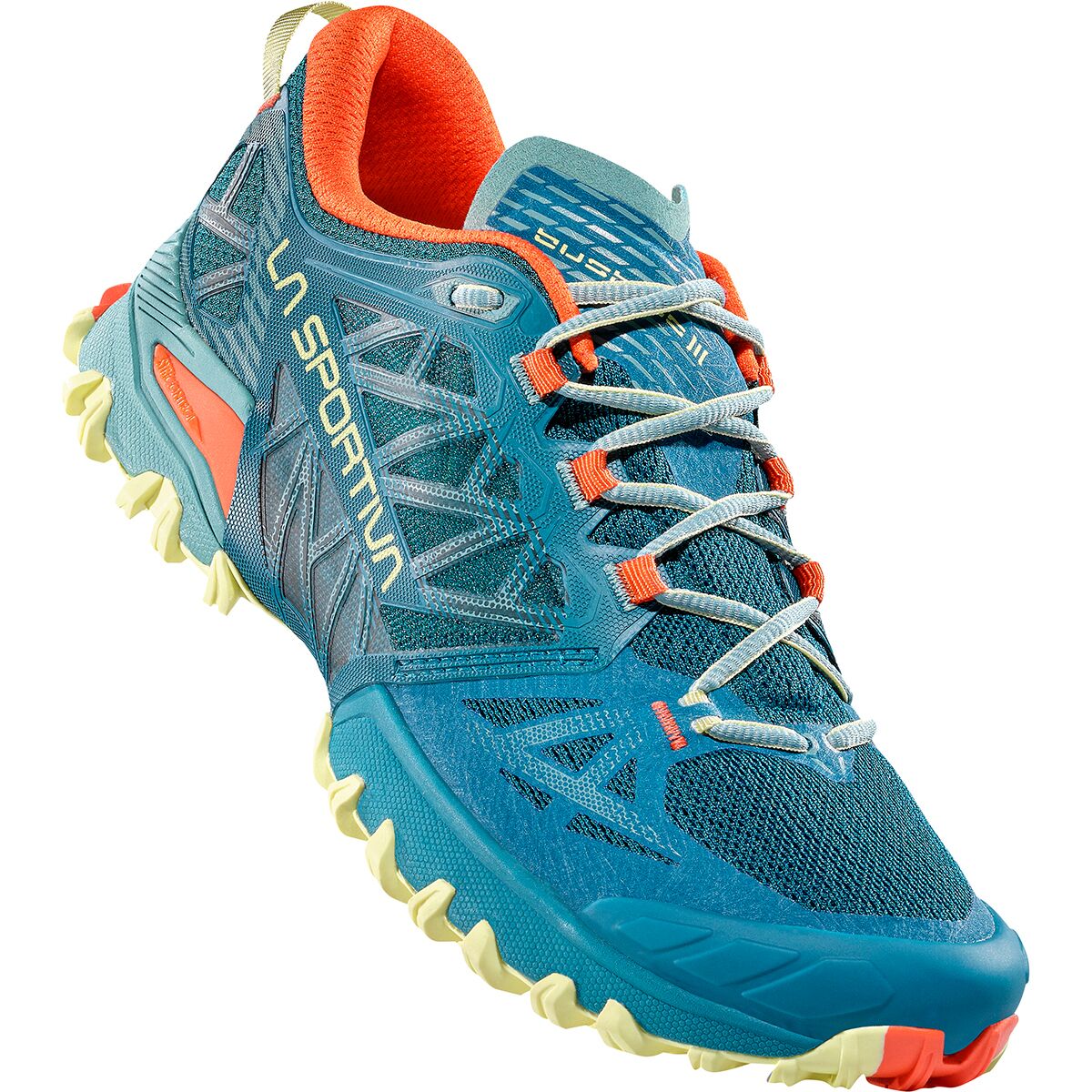
Best La Sportiva women’s trail shoes by use
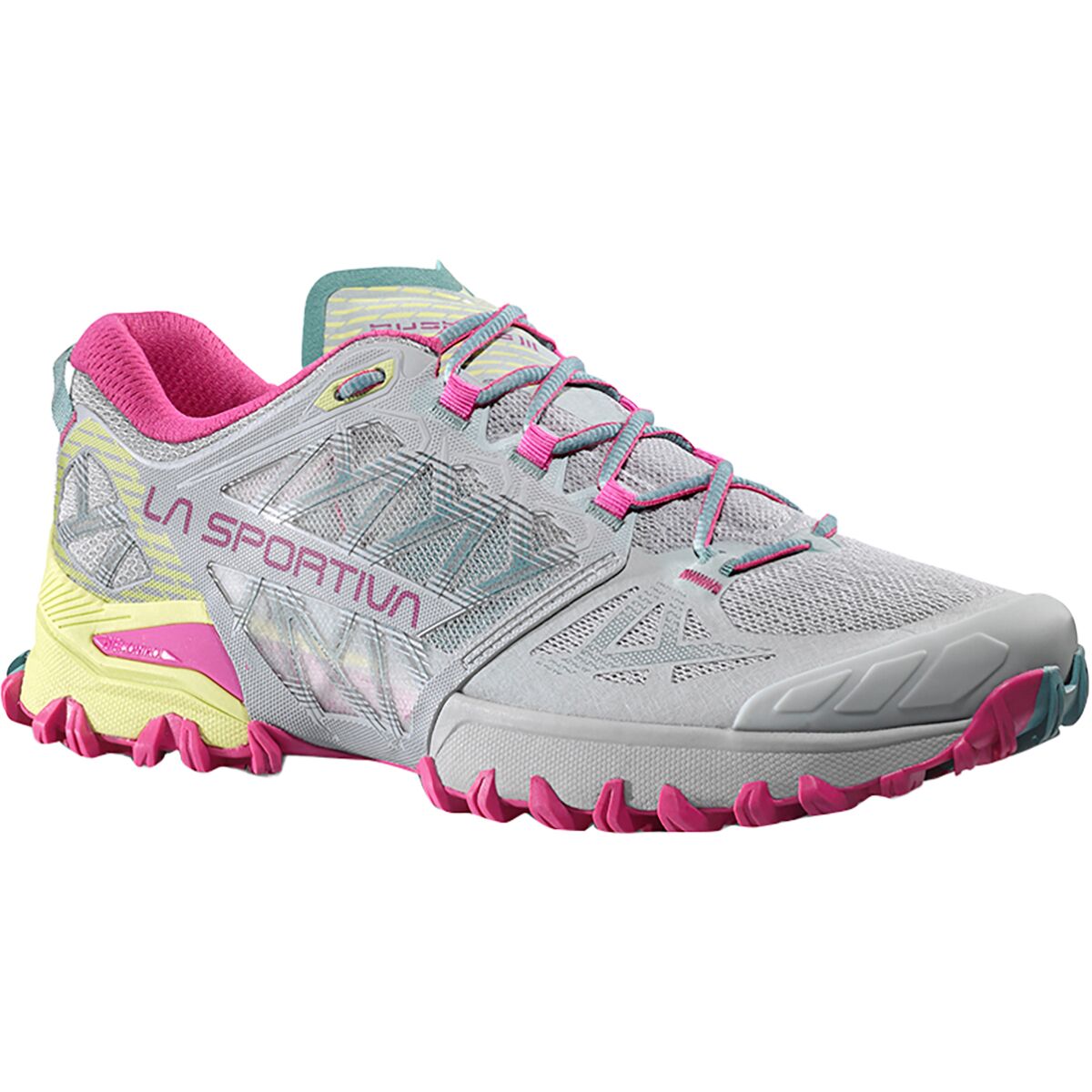
Bushido III: best for technical trails and precise footing
The Bushido line is aimed at runners who want a close-to-the-ground feel. It is a strong option for rocky trails, narrow paths, and routes with frequent turns.
Choose the Bushido III when you value:
- Stable footing
- A secure fit
- Good contact with uneven ground
- Moderate cushioning
- Grip on rock and firm dirt
Its lower, more precise design may suit short and medium trail runs. It can also work for mountain races when the runner prefers control over a soft ride.
The trade-off is comfort over long, hard surfaces. If your route includes many miles of pavement or you want a soft shoe for long-distance training, a more cushioned model may work better.
Jackal II: best for long trail runs
The Jackal II is designed for runners who want more cushioning for long trail efforts. It can make sense for ultra-distance training, long weekend runs, and rough routes where the feet need added protection.
Consider it if you want:
- More underfoot cushioning
- A smoother ride than a low-profile technical shoe
- Protection for long miles
- A trail shoe for varied terrain
More cushion does not automatically mean more stability. On steep side slopes or loose rock, some runners prefer the firmer and lower feel of the Bushido line.
The Jackal II may also feel larger inside than a close-fitting technical shoe. Check heel hold and midfoot security before taking it on a long run.
Akasha II: best all-around option for distance and rough trails
The Akasha II sits between a precise mountain shoe and a highly cushioned long-distance shoe. It is worth considering for runners who want comfort, protection, and traction without choosing the most minimal or most maximal option.
It may suit:
- Long day runs
- Rocky desert trails
- Mountain paths
- Trail races
- Daily trail training
The Akasha II is not the right answer for every surface. Its trail outsole may feel excessive on mostly paved routes. For smooth dirt roads, a lighter road-to-trail shoe can roll more easily.
Mutant: best for steep and loose mountain terrain
The Mutant is made for demanding mountain terrain. Its secure upper and aggressive tread can help when the trail becomes steep, loose, or wet.
It may be a good match for:
- Steep climbs and descents
- Loose soil
- Muddy sections
- Rocky mountain routes
- Technical trails with uneven footing
The same features that help on mountain terrain can feel heavy or stiff on flat paths. It may also be too much shoe for runners who mainly use packed gravel or smooth park trails.
Prodigio: best for a softer, faster trail feel
The Prodigio is positioned as a more modern, cushioned trail option. It is aimed at runners who want a responsive ride for longer or faster trail runs.
Consider it when you want:
- A softer ride
- More foam underfoot
- A smoother transition
- Comfort on long trail efforts
- A shoe for less technical sections
Confirm the current US version and fit before buying. Newer models can change in foam, upper, and outsole design. A shoe that feels fast on smooth dirt may not provide the same precise control as a lower mountain shoe on sharp rock.
GTX versions: useful in cold, wet conditions
Some La Sportiva trail shoes are offered in Gore-Tex or another waterproof version. A waterproof membrane can block outside water from rain, wet grass, and shallow puddles.
It does not make the shoe fully waterproof. Water can enter over the collar. Sweat and heat can also build up inside.
A waterproof model makes more sense for:
- Cold rain
- Wet spring trails
- Snowy paths
- Short runs in damp conditions
A non-waterproof mesh shoe often dries faster after a deep stream crossing. For warm US climates, it may also feel cooler.

How to choose the right model for your trail
Start with the surface you run on most. Do not choose by distance alone.
| Trail condition | Features to prioritize | Features to question |
|---|---|---|
| Hard-packed dirt | Moderate lugs, flexible ride | Very deep lugs |
| Mud and loose soil | Deep, spaced lugs | Smooth outsole |
| Wet rock | Sticky rubber, secure upper | Weak heel hold |
| Sharp rock | Protective midsole, durable upper | Thin, flexible platform |
| Long gravel routes | Cushion, smooth transition | Heavy mountain build |
| Steep descents | Toe protection, heel hold, braking grip | Loose upper |
| Road-to-trail routes | Flexible outsole, moderate tread | Aggressive lugs |
Your local terrain changes the answer. A runner in Colorado may need rock grip and steep-descending control. A runner in the Pacific Northwest may care more about mud, rain, and wet roots. A runner in Arizona may need heat management, dust control, and protection from sharp rock.
Consider distance, but do not use mileage as a fixed rule
A short technical race can place more stress on the feet than a long run on smooth dirt. Terrain, pace, elevation, and foot strength all affect shoe choice.
Use this general guide:
- Short technical runs: Prioritize fit, grip, and control.
- Medium trail runs: Balance traction, cushion, and protection.
- Long runs: Prioritize comfort, swelling room, and stable cushioning.
- Ultra-distance events: Test the shoe over long training runs before race day.
These are practical categories, not medical or performance rules.
Match the shoe to your running style
A runner who lands lightly and values ground feel may like the Bushido III. A runner who wants a softer ride may prefer the Jackal II or Prodigio.
If you often roll your ankle, do not assume a high shoe will solve the problem. Shoe height cannot replace strength, balance, careful pacing, or terrain awareness. A secure fit and stable platform can help, but they do not prevent every injury.

How should La Sportiva women’s trail shoes fit?
La Sportiva trail shoes should feel secure without squeezing the toes. Your heel should stay in place when you walk downhill, and your toes should not strike the front of the shoe.
Use this fit process:
- Try shoes late in the day. Feet often swell after hours of activity.
- Wear your trail socks. Thick socks can change the fit.
- Stand and walk downhill if possible. Your toes need room when your foot slides forward.
- Check the heel. Mild movement is normal; repeated lifting is not.
- Check the forefoot. Your toes should spread without pressure at the sides.
- Bend and flex the shoe. Look for a natural flex point near the ball of the foot.
- Test both shoes. Feet are not always the same size.
A useful rule is to leave some space in front of the longest toe. The exact amount varies by foot shape and terrain. Downhill runners often need more room than runners who stay on flat paths.
Do not size up to solve a width problem if the heel becomes loose. A wider model, different model, or different brand may be safer and more comfortable.
Wide feet and high-volume feet
Some La Sportiva models may feel narrow in the toe box or midfoot. If you have a wide forefoot, bunions, or swelling, focus on pressure rather than the number printed on the box.
Signs the shoe is too narrow include:
- Tingling or numb toes
- Pressure on the little toe
- A hot spot under the big-toe joint
- Toenail pain
- A burning feeling that grows during the run
Do not expect the shoe to stretch enough to fix severe pressure. Synthetic uppers may soften, but they may not create useful extra width.

Cushioning, stability, and trail feel
Cushioning reduces the amount of impact you feel through the shoe. It does not remove impact from running, and it does not guarantee fewer injuries.
A highly cushioned shoe can feel comfortable on long runs. It can also feel less stable on uneven ground if the platform is tall or soft. A lower shoe can offer better trail feedback, but it may feel harsher over sharp rocks.
Think of the choice as a balance:
- More cushion: Usually more comfort for long miles.
- Less cushion: Often more ground feel and precision.
- Firmer foam: May feel stable and controlled.
- Softer foam: May feel smoother and more forgiving.
- Wider platform: May feel more planted.
- Lighter build: May feel quicker but offer less protection.
No single setup is best for all runners. Test the model on the terrain where you plan to use it.

How much grip do you need?
Grip comes from rubber compound, lug shape, lug depth, and how the outsole contacts the ground. Lug depth alone does not tell you how well a shoe will grip wet rock.
Look for:
- Closely spaced lugs on firm ground
- Deep, open lugs in mud and loose soil
- Sticky rubber for rock
- A braking zone under the heel for descents
- A climbing zone near the forefoot for steep ascents
Trail grip has limits. Wet roots, smooth stone, ice, and loose scree can defeat even an aggressive outsole. Slow down when the surface exceeds the shoe’s traction.
Shoes with deep lugs also wear faster on pavement. If you run several miles of road before reaching the trail, consider a model with a more moderate outsole.

Weight, waterproofing, and weather
A light shoe can reduce the effort needed to lift each foot. A protective shoe can feel better when the trail is rough. These goals often conflict.
Choose a lighter model when:
- You run short or medium distances
- The trail is smooth
- You value speed and flexibility
- The weather is warm and dry
Choose more protection when:
- You run on sharp rock
- You spend many hours outside
- You carry a pack
- Your feet bruise easily
- The trail has roots, talus, or rough debris
For US weather, consider the season as well as the region. Waterproof shoes can be useful in cold rain in the Northeast or Pacific Northwest. They may feel too warm for summer desert trails or humid Southern routes.

How to break in La Sportiva trail shoes
Do not take a new pair straight into a long race. Break them in over several short sessions.
- Wear them indoors for a short period.
- Walk on flat ground.
- Run for 20 to 30 minutes on an easy trail.
- Check your feet after the run.
- Increase time only when the fit stays comfortable.
- Test them on hills before a race or long outing.
Stop if you feel sharp pain, numbness, or a growing hot spot. A small fit issue can become a blister after several hours.
A shoe does not need a painful break-in period. If the upper causes strong pressure from the first use, return or exchange the shoes if the retailer allows it.

Common mistakes when buying women’s La Sportiva trail shoes
Choosing by color or name
A familiar model may not suit your foot or terrain. Read the current specifications and test the fit.
Buying the same size as a road shoe
Trail shoes from different brands can use different lasts and sizing. Compare measurements with the current La Sportiva US chart.
Ignoring downhill fit
A shoe can feel fine uphill and fail on the descent. Test heel hold and toe space on a slope.
Using aggressive lugs on pavement
Deep lugs can feel awkward and wear quickly on hard surfaces.
Wearing waterproof shoes in hot weather
Waterproof membranes can increase heat and reduce drying speed. Choose them for the conditions that need them.
Waiting for pain to change a bad fit
Pain is useful feedback. Do not assume the shoe will become comfortable after many runs.
Relying on reviews without checking the version
A review may describe an earlier model, another region, or a different upper. Confirm the exact version and release shown by the US seller.
How long do La Sportiva trail shoes last?
There is no reliable mileage number for every runner. Service life depends on body weight, gait, terrain, weather, pace, and outsole compound.
Replace trail shoes when you see one or more of these signs:
- The tread is badly worn
- The outsole separates
- The midsole feels flat or uneven
- The upper no longer holds the foot
- Cushioning feels harsh compared with a new pair
- You develop new pain after normal runs
- The heel counter collapses
Inspect the shoes after muddy or wet runs. Remove dirt, let them dry at room temperature, and avoid high heat such as a dryer or radiator. High heat can damage adhesives and materials.
Do not judge a shoe only by appearance. A clean upper can hide a tired midsole, while a dirty outsole can still work well.

Where to buy La Sportiva women’s trail shoes in the United States
Start with the official La Sportiva US website to confirm the current model, version, sizing information, and warranty terms. Large outdoor retailers and local running stores may offer easier exchanges or in-person fitting.
Before ordering, check:
- US women’s sizing
- Return and exchange period
- Whether the shoe was used outdoors
- Final-sale conditions
- Current model year
- Waterproof or non-waterproof version
- Available width and color
- Retailer authenticity
A local specialty running store can help compare heel hold and forefoot shape. Bring your normal trail socks and any orthotics you use.
Do not buy a discounted older model without checking its condition. Clearance can be good value, but old stock may have different materials, fit, or outsole design than the current version.

Key takeaways
- Choose the Bushido III for precise footing on technical trails.
- Choose the Jackal II for more cushioning on long trail runs.
- Choose the Akasha II for a balanced mix of comfort, grip, and protection.
- Choose the Mutant for steep, loose, or demanding mountain terrain.
- Consider the Prodigio for a softer and faster ride on less technical trails.
- Fit matters more than the label “women’s.”
- Leave room for downhill movement and foot swelling.
- Test new shoes before using them for a race or long run.
- Confirm current US sizing, specifications, and return terms before purchase.
Frequently asked questions
Are La Sportiva trail shoes good for women?
They can be a good choice for women who want strong trail grip, secure foothold, and mountain-oriented designs. The best model depends on foot shape and terrain. Some runners may find certain models too narrow or too technical for their needs.
Do La Sportiva women’s shoes run small?
Some runners find La Sportiva shoes snug compared with other US brands. That does not mean every model runs small. Use the current US size chart and check toe space, heel hold, and forefoot pressure in both shoes.
Which La Sportiva women’s shoe is best for beginners?
A beginner who runs on smooth, moderate trails may prefer a cushioned and comfortable model such as the Akasha II or Prodigio. A beginner on steep, rocky trails may need the grip and secure fit of the Bushido III. Terrain should guide the choice.
Are La Sportiva trail shoes suitable for road running?
They can handle short road sections, but most trail models are not designed as daily road shoes. Aggressive lugs may feel rough on pavement and wear faster. Use a road-to-trail model for routes with substantial asphalt.
Can I use La Sportiva trail shoes for hiking?
Yes, many can work for day hiking if the fit, grip, and protection suit the route. For heavy packs, prolonged scrambling, or very rough terrain, a hiking shoe or boot may offer more structure and durability.
Should I choose a waterproof La Sportiva trail shoe?
Choose waterproofing for cold, wet conditions when staying dry matters. Choose a breathable non-waterproof shoe for hot weather, humid climates, or routes with frequent deep water crossings where fast drying is more useful.
Conclusion
The best La Sportiva trail running shoes for women are the ones that match your terrain and hold your foot without pressure. Use the Bushido III for technical control, the Jackal II for long-run cushioning, the Akasha II for balanced trail use, and the Mutant for steep mountain routes. Consider the Prodigio when you want a softer, smoother ride.
Your next step is simple: identify your most common trail surface, measure your feet, and try the shoe with your trail socks. Walk downhill before committing. A shoe that feels secure, comfortable, and suited to your local US trails is a better choice than one selected by reputation alone.