Pickleball Rules And Scoring for Beginners: Easy Guide to Win

Pickleball is one of the fastest-growing sports in the United States, attracting people of all ages. If you’re new to pickleball, you might find the rules confusing at first—especially if you’ve played tennis, badminton, or ping pong before. But the good news? Pickleball rules are simple, and once you understand the basics, you’ll be able to enjoy playing with confidence. This guide will walk you through everything you need to know about pickleball rules and scoring for beginners. By the end, you’ll be ready to step on the court and start having fun.
What Is Pickleball?
Pickleball is a paddle sport that combines elements of tennis, badminton, and table tennis. It’s played on a court similar in size to a doubles badminton court, with a net that’s a bit lower than a tennis net. The game can be played as singles (one player per side) or doubles (two players per side).
One reason pickleball is popular is that it’s easy to learn and doesn’t require the same level of speed or power as some other racquet sports. The equipment—paddles and a plastic ball with holes—is lightweight, making the game accessible for children and older adults.
The Pickleball Court: Size And Markings
Before diving into the rules, it’s important to understand the court layout. Here’s a quick breakdown:
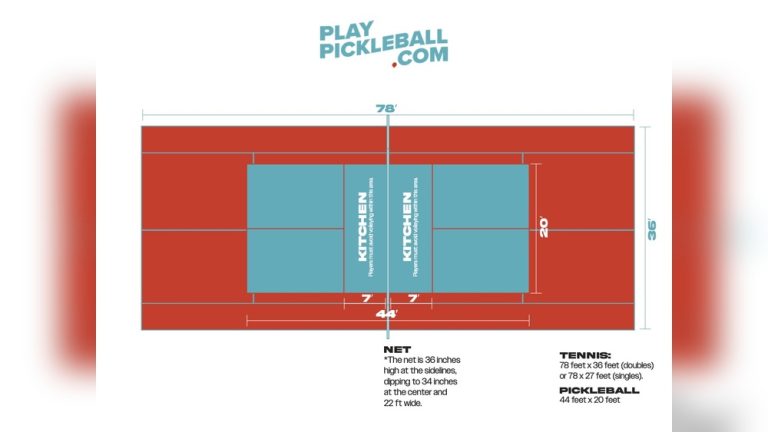
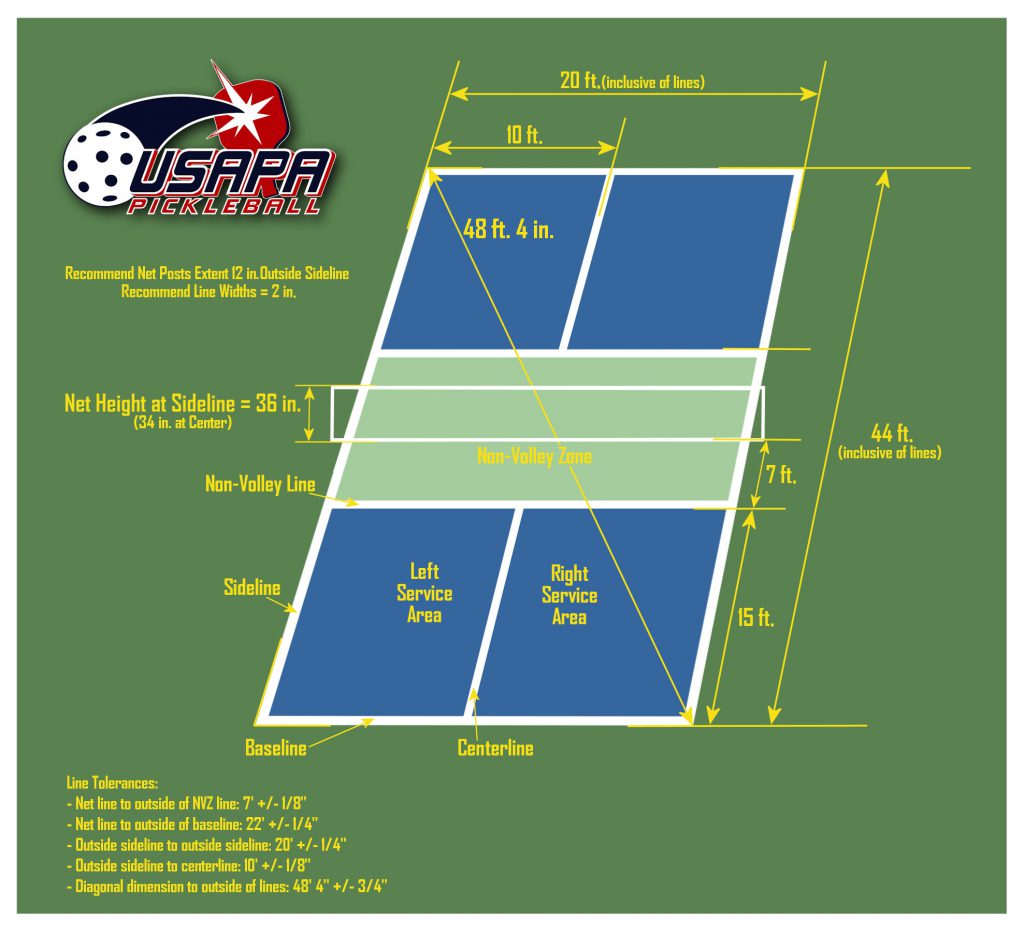
- The court is 20 feet wide and 44 feet long for both singles and doubles.
- The net is 36 inches high at the sidelines and 34 inches high in the center.
- The non-volley zone (often called the “kitchen”) extends 7 feet from the net on each side.
- The service areas are divided into left and right service courts, separated by a centerline.
The lines are usually 2 inches wide, and all lines are part of the area they define. For example, a ball landing on the line of the non-volley zone is in the kitchen.
Court Dimensions At A Glance
| Feature | Measurement | Description |
|---|---|---|
| Full court size | 20 ft x 44 ft | Same for singles and doubles |
| Net height (center) | 34 inches | Lower than tennis |
| Non-volley zone | 7 feet from net | “Kitchen” on both sides |
Understanding the court helps you know where to serve, where to stand, and where you can volley the ball.
Basic Equipment Needed
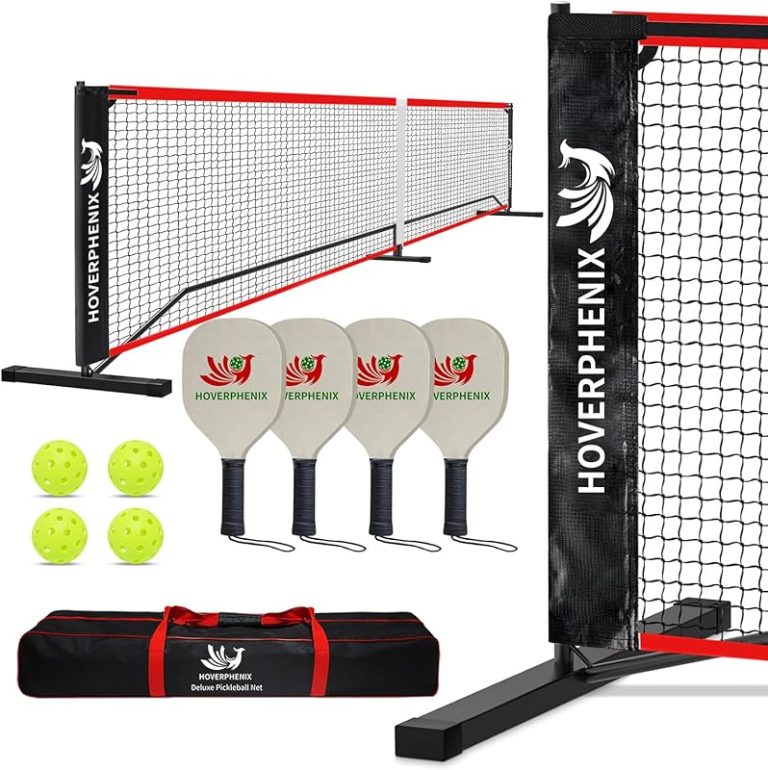
To play pickleball, you need just a few items:
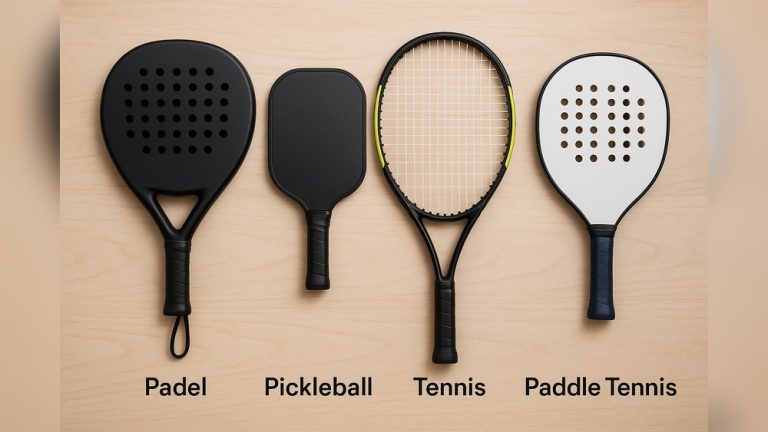
- Pickleball paddle – Larger than a ping-pong paddle, smaller than a tennis racquet. Usually made from wood, composite, or graphite.
- Pickleball – A lightweight plastic ball with holes. Outdoor balls have smaller holes and are heavier; indoor balls have larger holes and are lighter.
- Net – Usually 34 inches high in the center.
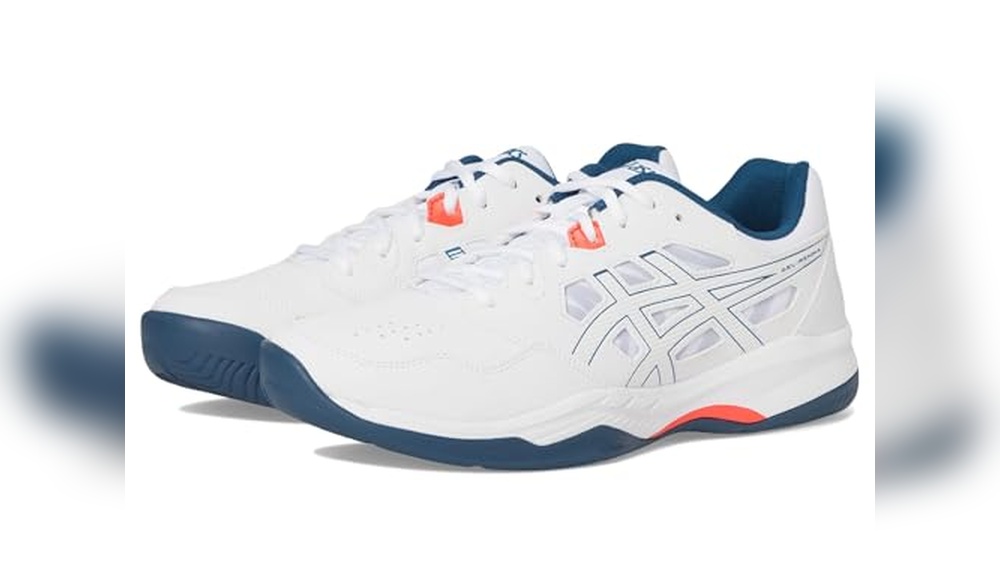
- Court shoes – Non-marking athletic shoes are recommended for safe movement.
Some public parks and recreation centers provide equipment for free or a small fee. Make sure your paddle and ball are approved by the USA Pickleball Association if you plan to play in tournaments.
How To Start: The Serve
The serve is how every point begins in pickleball. There are specific rules to follow:
- The serve must be underhand. The paddle must contact the ball below the waist.
- The server must have at least one foot behind the baseline when serving.
- The ball is served diagonally into the opponent’s service court.
- The serve cannot land in the non-volley zone (kitchen) or on the kitchen line.
- Only one serve attempt is allowed (except in the rare case of a “let”—when the ball hits the net but lands in the correct service court; in recreational play, lets are often replayed, but in official tournaments, lets are considered in play).
Serving Sequence In Doubles
In doubles, only one player on the serving team starts with the serve. After the first fault, the serve goes to the second player on the same team. When both players have lost their serve, the serve goes to the opposing team.
This is called a “side out. ” The serving sequence then continues in this pattern.
Example Of A Proper Serve
Imagine you’re serving from the right side. You must aim diagonally to the left service court on your opponent’s side. Both feet must be behind the baseline until you hit the ball. If the ball lands in the kitchen, it’s a fault.

Credit: sbpickleballshop.com
The Two-bounce Rule
One of the unique features of pickleball is the two-bounce rule. Here’s how it works:
- After the serve, the receiving team must let the ball bounce once before returning it.
- The serving team must also let the ball bounce once before returning it.
- After these two bounces (one on each side), both teams can either volley (hit in the air) or play the ball off a bounce.
This rule prevents players from rushing the net right after serving and keeps the game fair for both sides.
Why Is The Two-bounce Rule Important?
Many beginners forget to let the ball bounce after the serve. If you volley the ball before it bounces on your side, you lose the point. This rule slows down the action at the start and gives both sides a fair chance.
Non-volley Zone (the Kitchen)
The “kitchen” is a 7-foot area on both sides of the net. Here are the key rules:
- Players cannot volley (hit the ball in the air) while standing in the kitchen.
- If your foot touches the kitchen line or inside the kitchen while volleying, it’s a fault.
- You can step into the kitchen to play a ball that bounces there, but you must exit before volleying again.
This rule encourages longer rallies and prevents players from dominating the net with smashes.
Common Kitchen Mistakes
Many beginners step into the kitchen when volleying without realizing it. Always be aware of your feet. If you lose balance after a volley and fall into the kitchen, it’s still a fault—even if the ball is already dead.
Credit: avalonbeachpickleball.org.au
Scoring In Pickleball
Pickleball scoring is simple but has a few unique features, especially in doubles. Here’s how it works:
- Points are only scored by the serving team.
- Games are usually played to 11 points, and you must win by at least 2 points.
- In tournaments, games may go to 15 or 21, but the “win by 2” rule still applies.
How To Call The Score
In doubles, the server must call three numbers before serving:
- Serving team’s score
- Receiving team’s score
- Server number (either “1” or “2”)
For example, “4-6-1” means the serving team has 4 points, the receiving team has 6, and the first server is serving.
In singles, only two numbers are called: server’s score and receiver’s score.
Understanding Side Outs
A “side out” occurs when both players on the serving team lose their serve. Then, the serve passes to the other team, and only the serving team can score points.
Example Scoring Sequence
- Team A serves and wins a point (score: 1-0-1).
- Team A continues to serve and loses the next rally (score: 1-0-2).
- The second server on Team A now serves.
- If Team A loses again, it’s a side out, and Team B gets the serve.
Common Scoring Mistakes
Beginners often forget to switch sides after scoring in doubles. The serving team always switches sides after scoring a point, but the receiving team does not. This detail can confuse new players.
Faults And Violations
A “fault” is any action that stops play because of a rule violation. Faults result in loss of serve or a point for the other team. Here are common faults:
- Serving the ball out of bounds.
- Letting the ball bounce twice on one side.
- Volleying from inside the kitchen or touching the kitchen during a volley.
- Hitting the ball into the net.
- Serving before the score is called.
- Stepping on or over the baseline during a serve.
Faults Vs. Dead Balls
A “dead ball” means the rally has ended and no further play can occur. Not all dead balls are faults; for example, a let serve that hits the net but lands in the correct area is a dead ball but not a fault in recreational play.
Singles Vs. Doubles: Key Differences
Pickleball can be played as singles or doubles. Here are the main differences:
- Court size is the same for both.
- In singles, each player serves from the right when their score is even and from the left when odd.
- In doubles, serving order and switching sides after scoring are more complicated.
Comparison Of Singles And Doubles
| Aspect | Singles | Doubles |
|---|---|---|
| Players per side | 1 | 2 |
| Serve sequence | Alternates sides based on score | Both players serve before side out |
| Scoring call | Two numbers | Three numbers |
| Movement | More ground to cover per player | Teamwork and communication needed |
Playing doubles is the most common format, especially for social and recreational games.
Strategies For Beginners
Learning the rules is just the start. To enjoy pickleball, consider these strategies:
- Stay out of the kitchen when volleying. This reduces faults.
- Communicate with your partner. Call “mine” or “yours” to avoid confusion.
- Serve deep and return deep. This keeps opponents back and gives you more time.
- Move to the net after the two-bounce rule. Most points are won close to the net.
- Keep the ball low. Low shots are harder to attack.
- Be patient. Don’t try to win every point with a hard shot. Let your opponent make mistakes.
Non-obvious Insights
Many beginners focus too much on power. In reality, placement and consistency win more points. Another common mistake: ignoring the importance of “dinking”—soft shots played into the kitchen. These shots force your opponent to hit up, making it harder for them to attack.
Serving And Receiving Position
Where you stand when serving or receiving is important. Here are some tips:
- The server should stand behind the baseline and toward the center to cover the court.
- The receiver should be just behind the baseline and ready to step forward to meet the ball.
- After serving, move forward toward the net (but not into the kitchen until after the two bounces).
Positioning Example
If you’re playing doubles, both players on the serving team start behind the baseline. After the serve, the server’s partner can move up to the net to take advantage of volleys.
Essential Pickleball Terms
Here are some terms you’ll hear often:
- Volley: Hitting the ball in the air without letting it bounce.
- Dink: A soft shot that drops into the kitchen.
- Kitchen: The non-volley zone.
- Side out: When the serve passes to the other team.
- Let serve: Serve that hits the net but lands in the correct service area.
- Rally: Continuous play until a fault occurs.
- Paddle tap: A friendly tap of paddles after a game to show sportsmanship.
Knowing these terms helps you follow instructions and communicate on the court.
Advanced Rules And Special Situations
As you improve, you’ll encounter special rules that add depth to the game.
Double Hits
If a player unintentionally hits the ball twice with one swing, it’s legal as long as it is one continuous motion. However, hitting the ball twice with two separate swings is a fault.
Carry Or Sling
The ball must not be “carried” or “slung” with the paddle. The contact should be clean and quick.
Out Of Bounds
If the ball lands outside the lines, it’s out. But if it touches any part of the line, it’s in.
Code Of Conduct
Pickleball is known for friendly play. Arguing or unsportsmanlike behavior is discouraged and can lead to penalties in tournaments.
Common Mistakes Beginners Make
Learning pickleball takes practice. These are the most frequent mistakes:
- Stepping into the kitchen during a volley. Many players are unaware their foot is in the non-volley zone.
- Not following the two-bounce rule. Beginners often try to volley too soon.
- Incorrect serving technique. Serving overhand or from inside the baseline is not allowed.
- Switching sides incorrectly. In doubles, only the serving team switches sides after scoring.
- Poor communication with partner. This leads to missed shots and confusion.
- Standing too far back. After the serve and return, move up to the net for better control.
Two Insights Most Beginners Miss
First, many new players don’t realize how much the serve and return depth matter. A deep serve or return makes it harder for your opponent to attack. Second, the importance of “resetting” the rally with a soft dink is often overlooked.
If you’re under pressure, a dink can neutralize aggressive play.
How To Keep Score: Step-by-step Example
Let’s walk through a typical doubles scoring sequence for clarity:
- Player A1 serves from the right side. The score is 0-0-2 (since the second server serves first at the start of each game).
- Team A wins the rally. Score becomes 1-0-2. Both players switch sides.
- Player A1 serves again from the left side. Team A loses the rally.
- Now, Player A2 serves (from the side they are currently on). Score is 1-0-1.
- Team A loses the rally. It’s a side out. Team B gets the serve.
This format can be confusing at first, but after a few games, it becomes automatic.
Pickleball Rules For Tournaments
If you play in a tournament, some rules may be stricter:
- Time limits may be enforced.
- Referees may call faults and keep score.
- Let serves are in play (not replayed).
- Unsportsmanlike conduct can lead to warnings or disqualification.
For the latest official rules, always check the USA Pickleball Rulebook on their website.

Credit: hubsportsboston.com
Comparing Pickleball To Other Sports
Pickleball shares similarities with tennis, badminton, and ping pong, but it also has important differences.
| Sport | Serve | Net Height | Court Size | Unique Rule |
|---|---|---|---|---|
| Pickleball | Underhand | 34 in (center) | 20 x 44 ft | Two-bounce rule |
| Tennis | Overhand | 36 in (center) | 27 x 78 ft | No kitchen |
| Badminton | Underhand or flick | 61 in | 20 x 44 ft | Shuttlecock, not ball |
| Ping Pong | Any way | 6 in | 9 x 5 ft | Table sport |
This comparison shows why pickleball appeals to players from different backgrounds.
Getting Started: Joining A Game
Ready to play? Here’s what to do next:
- Find a local court. Many parks and recreation centers have free courts.
- Bring your own paddle and ball if possible.
- Introduce yourself to other players. Pickleball communities are friendly.
- Watch a few games to learn the flow and scoring.
- Ask to join as a beginner. Most players are happy to teach newcomers.
Many cities have beginner clinics or open play sessions for new players.
Where To Learn More
If you want to dive deeper, visit the official USA Pickleball website. They have free resources, rulebooks, and event listings. Watching videos online or attending local clinics can also speed up your learning.
Final Thoughts
Pickleball is fun, easy to learn, and offers great exercise for all ages. The rules might seem detailed at first, but with practice, they become second nature. Remember the main points: serve underhand, let the ball bounce twice before volleying, avoid the kitchen on volleys, and communicate with your partner. Don’t worry if you make mistakes—everyone does at the start.
With this guide, you’re ready to play your first game or improve your skills. Grab a paddle, find a court, and enjoy the game. Pickleball’s friendly spirit and simple rules make it a sport you’ll want to play again and again.
Frequently Asked Questions
What Happens If The Ball Hits The Net On A Serve?
If the serve hits the net but lands in the correct service court, it’s called a “let. ” In most recreational games, the serve is replayed. However, in official tournaments, the ball is live and play continues.
Can You Score A Point If You Are Not Serving?
No, only the serving team can score points in pickleball. If the receiving team wins a rally, they gain the serve but not a point.
What Is The Kitchen And Why Is It Important?
The “kitchen” is the non-volley zone—a 7-foot area on both sides of the net. Players cannot volley the ball from this area. This rule prevents players from standing too close to the net and smashing every ball, making rallies longer and more fun.
How Do I Know If A Ball Is “in” Or “out”?
A ball is “in” if it touches any part of the line. If the ball lands completely outside the lines, it is “out. ” In close situations, the benefit of the doubt is usually given to the opponent.
Is Pickleball Good For Beginners And Older Adults?
Yes! Pickleball is low-impact, easy to learn, and can be played at almost any age or skill level. Many communities have groups specifically for beginners and seniors, making it a welcoming sport for all.
If you want to master the rules and improve your game, keep practicing and stay curious. The more you play, the more you’ll enjoy everything pickleball has to offer!