How to Serve in Pickleball Step by Step: Master the Basics

Serving in pickleball is crucial. It’s the first shot in every rally.
Mastering it can improve your game greatly. Pickleball is gaining popularity fast. Whether you’re new or experienced, understanding how to serve correctly is essential. A good serve sets the tone for the rally and can give you an advantage. In this guide, we will break down the serving process step by step.
You’ll learn the basics, the rules, and some tips to perfect your serve. By following these steps, you can serve confidently and start each rally on the right foot. Ready to enhance your pickleball skills? Let’s dive in and explore the essential steps to serve in pickleball.
Introduction To Pickleball
Pickleball is a fun and exciting sport that combines elements of tennis, badminton, and ping-pong. It is played with a paddle and a plastic ball with holes, on a court similar to a badminton court. The game can be enjoyed by people of all ages and skill levels, making it a popular choice for both casual and competitive players.
What Is Pickleball?
Pickleball is a paddle sport that can be played as singles or doubles. The court is divided by a net, and the objective is to hit the ball over the net and into the opponent’s court. Players score points when the opposing team fails to return the ball or commits a fault.
The game starts with a serve, which must be hit underhand. Each team gets a chance to serve and score points. The first team to reach 11 points, with at least a 2-point lead, wins the game.
Popularity And Growth
Pickleball has seen a rapid increase in popularity in recent years. It started in the United States and has now spread to many countries around the world.
One reason for its growth is its accessibility. Pickleball can be played by people of all ages, from young children to seniors. It is also relatively easy to learn, making it a great option for beginners.
Communities and recreational centers are adding pickleball courts to meet the growing demand. Tournaments and leagues are also becoming more common, providing opportunities for players to compete and improve their skills.
With its simple rules and engaging gameplay, pickleball continues to attract new players and grow in popularity.

Credit: www.youtube.com
Equipment Needed
Before you can serve in pickleball, you’ll need the right equipment. Having the proper gear ensures a smooth, enjoyable game. Let’s explore the essential items you need to get started.
Paddle
The pickleball paddle is crucial. It impacts your gameplay and comfort. When choosing a paddle, consider the material. Common materials include wood, composite, and graphite.
- Wood: Budget-friendly, heavier, and durable.
- Composite: Mid-range, balanced weight, and good control.
- Graphite: Lightweight, high performance, and more expensive.
Ensure the paddle has a comfortable grip. A good grip prevents slips and improves control. Try different paddles to find the best fit for you.
Ball
The pickleball is unique. It’s similar to a wiffle ball but slightly smaller. There are two types of balls: indoor and outdoor.
| Type | Characteristics | Best For |
|---|---|---|
| Indoor | Softer, larger holes | Indoor courts |
| Outdoor | Harder, smaller holes | Outdoor courts |
Choose the right ball based on your playing environment. Using the correct ball ensures optimal performance.
Court
A pickleball court is smaller than a tennis court. It measures 20 feet wide and 44 feet long.
- Net: The net is 36 inches high at the sidelines and 34 inches at the center.
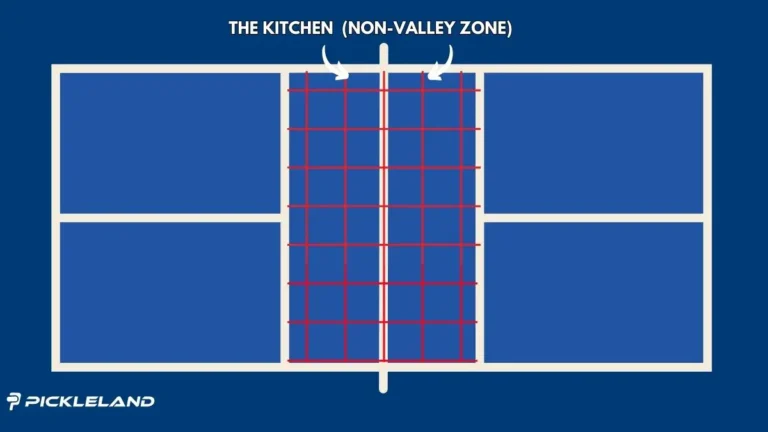
- Lines: The court has several lines: baseline, service line, and non-volley zone.
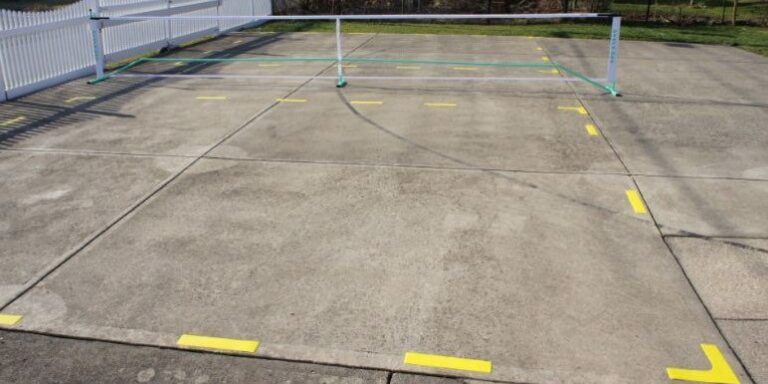
- Surface: Common surfaces include asphalt, concrete, and gym floors.
Ensure the court is well-maintained. Clean, clear lines and a stable surface make for a better game experience.
Basic Rules Of Pickleball
Pickleball is a fun, easy-to-learn sport. It combines elements of tennis, badminton, and ping-pong. Understanding the basic rules is key to enjoying the game. These rules ensure fair play and keep the game structured. Let’s explore the essential rules of pickleball.
Scoring System
In pickleball, points are scored only by the serving team. Games are usually played to 11 points. A team must win by 2 points. If the score is tied at 10-10, play continues until one team leads by 2 points. This keeps the game exciting and competitive.
Serving Rules
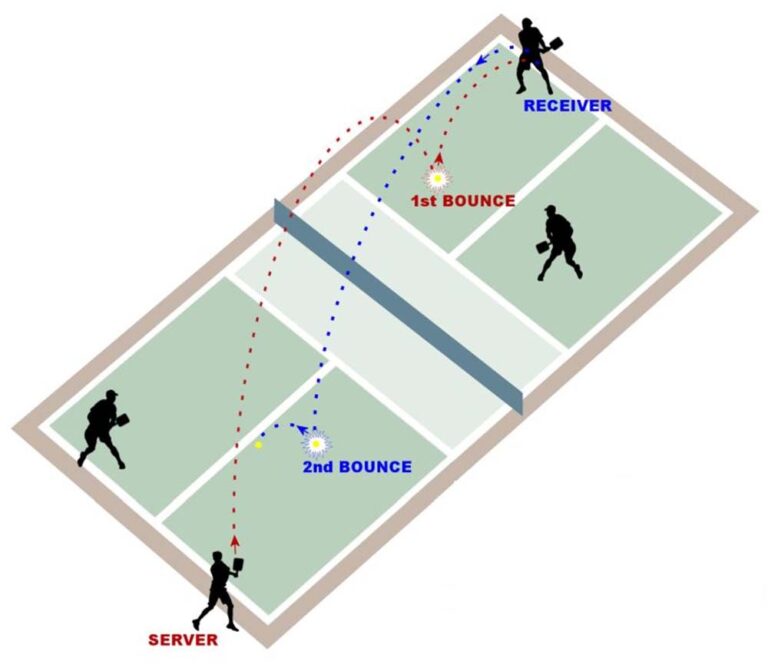
The serve must be made underhand. The paddle must contact the ball below the server’s waist. The server must stand behind the baseline. Both feet must be behind the line at the time of the serve. The serve must clear the net and land in the opposite diagonal court. If the serve hits the net and lands in the correct court, it is a “let” and is replayed.
Each team gets one serve attempt, except in the case of a let. The first serve always starts on the right side of the court. The serving team switches sides after each point scored. The receiving team does not switch sides.
The serve must be made with an upward motion. The paddle head must be below the wrist. This rule ensures a fair and consistent serve for all players. Understanding these serving rules is crucial for new players. It helps to keep the game fair and fun for everyone.

Credit: www.justpaddles.com
Importance Of A Good Serve
The serve is a crucial element in pickleball. It sets the pace for the game. A good serve can give you an edge over your opponent. It can disrupt their rhythm and put you in control. Understanding the importance of a good serve is key to improving your game.
Setting The Tone
A strong serve sets the tone for the match. It shows your opponent you are prepared. Confidence in your serve can be intimidating. A well-executed serve can make your opponent feel pressured. This pressure can lead to mistakes and give you an early advantage.
Gaining Advantage
Gaining an advantage with your serve is about placement and consistency. Aim for the corners of the service box. This forces your opponent to move and creates openings. Consistent serves reduce the chance of faults. They ensure you stay in control and dictate the pace.
Serving Techniques
Learn how to serve in pickleball step by step. Start with a balanced stance. Hold the paddle correctly. Focus on hitting the ball below the waist. Practice for better accuracy.
Serving in pickleball is a crucial skill. It sets the tone for the game. Mastering different serves can give you an edge over your opponents. Here, we’ll discuss two primary serving techniques: the Underhand Serve and the Overhead Serve.Underhand Serve
The underhand serve is the most common serve in pickleball. It’s beginner-friendly and easy to execute. Start with your feet shoulder-width apart. Hold the paddle in your dominant hand. Hold the ball in your non-dominant hand. Extend your non-dominant hand to drop the ball. Swing the paddle underhand, making contact with the ball below your waist. Aim for the ball to land in the opponent’s diagonal service court.Overhead Serve
The overhead serve is less common. It’s more advanced but effective. Stand with your feet shoulder-width apart. Hold the paddle in your dominant hand. Toss the ball slightly above your head. Swing the paddle overhand, hitting the ball at its highest point. Ensure the ball lands in the opponent’s diagonal service court. This serve can add power and speed to your game. “`Step-by-step Serving Guide
Serving in pickleball can seem tricky at first. But breaking it down into simple steps makes it easier. This guide will help you master the basics. Let’s start with your grip and stance. Then, we’ll move to the swing and follow-through.
Grip And Stance
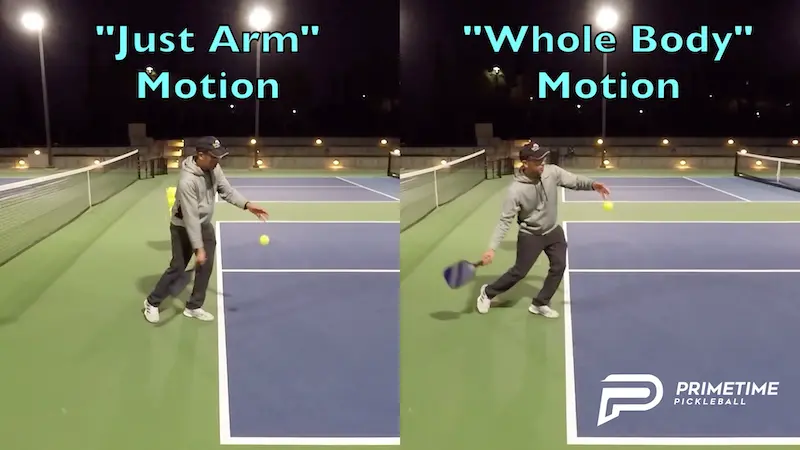
First, hold the paddle like a handshake. This grip gives you control. Stand behind the baseline. Your feet should be shoulder-width apart. Place your non-dominant foot forward. Bend your knees a bit. This stance keeps you balanced.
Swing And Follow-through
Next, focus on your swing. Start with the paddle below your waist. Swing it forward in an upward motion. Aim to make contact with the ball below your waist. Follow through with your swing. Your paddle should end up pointing where you want the ball to go. This helps with accuracy.
Common Mistakes To Avoid
Serving in pickleball might seem simple, but many players make common mistakes. Avoiding these errors can improve your game significantly. Let’s discuss some of the most frequent mistakes to avoid while serving.
Foot Faults
One common mistake is committing foot faults. This occurs if your feet cross the baseline before you hit the ball. Make sure both feet stay behind the line until after contact. Practice this to build muscle memory.
Incorrect Ball Contact
Another mistake is making incorrect ball contact. The ball must be hit below the waist. Striking the ball too high can lead to a fault. Also, ensure the paddle head stays below your wrist at contact. This helps maintain control and accuracy.
Credit: primetimepickleball.com
Practice Drills
Practice drills are essential for improving your pickleball serve. They help you build muscle memory and increase your accuracy. In this section, we will cover two types of drills: repetition drills and accuracy drills.
Repetition Drills
Repetition drills are designed to help you get comfortable with the serving motion. These drills involve repeating the same serve multiple times to build consistency.
- Basic Serve Drill: Stand in the service area. Serve the ball 50 times without worrying about accuracy.
- Target Drill: Place cones on the opposite side. Aim for the cones as you serve. Repeat 30 times.
- Footwork Drill: Practice your foot placement. Serve 20 times while focusing on your feet.
Accuracy Drills
Accuracy drills help you improve your aim. These drills focus on hitting specific targets on the court.
- Corner Targets: Place targets in the corners. Serve the ball to hit these targets. Do this 20 times.
- Service Box Drill: Aim to serve into the service box. Repeat this 40 times.
- Height Control Drill: Aim for a target at net height. Serve 30 times while focusing on the ball height.
By practicing these drills, you will improve your serve. Consistency and accuracy will become second nature.
Advanced Serving Strategies
Advanced serving strategies can significantly enhance your pickleball game. These techniques require practice and precision. Understanding different types of serves helps you become a more unpredictable and effective player. Let’s explore two advanced serving strategies: spin serves and power serves.
Spin Serves
Spin serves add an element of surprise. They make the ball move unpredictably. To execute a spin serve, hold the paddle with a firm grip. As you serve, brush the ball with the paddle. This action creates spin. Practice different spins to see what works best. Topspin causes the ball to dip quickly. Backspin makes the ball bounce lower. Sidespin can make the ball curve. Experiment with these to keep your opponent guessing.
Power Serves
Power serves rely on speed and strength. They can be hard to return. Stand with your feet shoulder-width apart. Use your dominant hand to hold the paddle. Swing the paddle with force. Make sure to hit the ball at its highest point. This generates more power. Follow through with your swing to maintain control. A good power serve can put your opponent on the defensive quickly. Practice to improve your accuracy and strength.
Frequently Asked Questions
What Is The Correct Way To Serve In Pickleball?
To serve correctly, stand behind the baseline. Use an underhand motion. Make sure the paddle contacts the ball below the waist.
How Do You Improve Your Pickleball Serve?
Practice regularly to improve consistency. Focus on placement and aim for deep serves. Experiment with spin and speed.
Can You Use Overhand Serve In Pickleball?
No, overhand serves are not allowed in pickleball. The serve must be made with an underhand motion.
What Is A Legal Serve In Pickleball?
A legal serve must be hit below the waist and made with an underhand motion. The ball must land in the opponent’s diagonal service court.
Conclusion
Mastering the pickleball serve takes practice and patience. Start with the basics. Follow each step carefully. Consistency is key. Practice regularly to improve your skills. Focus on your form and technique. Over time, your serve will become stronger. Enjoy the process and have fun.
Remember, improvement comes with dedication. Keep playing and refining your serve. Soon, you’ll see progress in your game. Happy playing!