Good Running Shoes For Bunions: Best Comfortable Guide

Good running shoes for bunions have a wide toe box, soft upper, stable cushioning, and a secure, flexible fit.
Bunions can make running feel like a battle between your feet and your shoes. The right pair should give your big toe room to move, reduce pressure on the bunion joint, and support your stride without feeling bulky. After reviewing shoe design, foot mechanics, and common fit problems, I’ve found that comfort starts with shape—not brand names or flashy features.
This guide explains how to choose good running shoes for bunions, which features matter most, what mistakes to avoid, and how to test a pair before committing to long runs.
What Are Bunions?
A bunion is a bony bump that forms at the base of the big toe. It develops when the big toe angles toward the other toes and the joint shifts outward. The medical term is hallux valgus.
Bunions may cause:
• Pain or soreness near the big toe joint
• Redness and swelling
• A burning feeling inside narrow shoes
• Corns or calluses
• Stiffness in the big toe
• Less room for the other toes
Running does not usually cause a bunion by itself. However, tight shoes can press on the joint and make symptoms worse. Repeated impact may also increase pain when the foot lacks enough support.
A bunion is not the same as a blister or simple shoe irritation. It changes the shape of the foot, so a shoe designed for a narrow foot may feel uncomfortable even when the length seems correct.
Why Running Shoes for Bunions Need a Different Fit
Most running shoes taper toward the front. This shape may look sleek, but it can squeeze the big toe and push it farther toward the smaller toes. For someone with bunions, that pressure can turn a comfortable jog into a painful workout.
Good running shoes for bunions should follow the natural shape of your foot. The front should look more like a fan than a triangle. Your toes should have space to spread without touching the sides of the shoe.
A well-fitted shoe can help by:
• Limiting pressure on the bunion bump
• Giving the big toe room to move
• Reducing rubbing and hot spots
• Improving comfort during long runs
• Supporting a more natural foot strike
Shoes cannot remove a bunion. They also cannot correct every cause of foot pain. Their main role is to reduce irritation and help you move with less discomfort.
Key Features to Look For
A Wide or Anatomical Toe Box
The toe box is the front part of the shoe. It should be wide enough for your toes to spread naturally.
Look for:
• A rounded front
• Extra space around the big toe joint
• Room above the toes
• A shape that matches your foot
• Wide and extra-wide sizing options
Width is not the same as length. A longer shoe may still squeeze your bunion if the toe box is narrow.
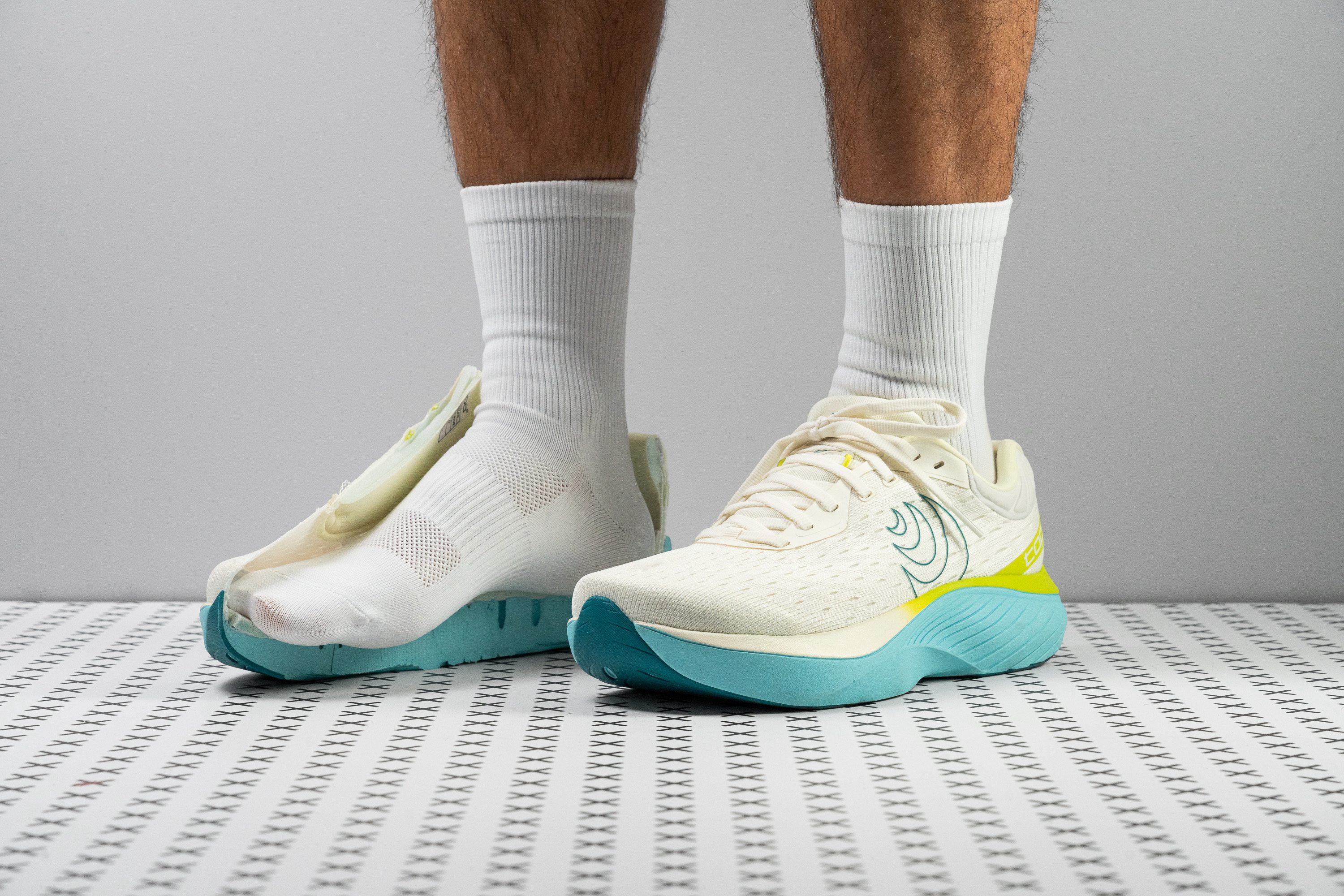
One useful test is to remove the insole and stand on it. Your foot should not spill over the sides. You should also see space around the widest part of your foot.
A Soft, stretchy Upper
The upper is the material around the top and sides of the foot. Soft mesh, knit fabric, and flexible engineered materials can adapt to a bunion better than stiff leather or rigid synthetic panels.
A stretchy upper may reduce pressure while still holding the foot in place. Look for smooth materials with few seams near the big toe joint.
However, very loose fabric can allow your foot to slide. The best fit feels gentle around the bunion but secure around the midfoot and heel.
Enough Toe Length
Your longest toe should sit about half an inch from the end of the shoe. This space helps prevent your toes from hitting the front during downhill runs or when your feet swell.
Try shoes later in the day. Feet often become slightly larger after walking or standing. This simple step can reveal whether a shoe will feel tight during a longer run.
Cushioning That Matches Your Needs
Cushioning helps reduce the feel of pavement under your feet. It may also make walking and running more comfortable when your bunion is sensitive.
There is no perfect level of cushioning for everyone. Some runners prefer a soft, cushioned shoe. Others feel more stable in a firmer model.
Choose cushioning based on:
• Your body weight
• Your running surface
• Your weekly mileage
• Your comfort preference
• Any knee, hip, or heel concerns
Very soft foam can feel comfortable at first but may feel unstable if your foot moves too much. A balanced shoe often works better than the softest shoe on the shelf.
A Stable Heel and Midsole
Stability can help your foot feel controlled during each step. This does not mean you need a heavy motion-control shoe.
Look for a shoe with:
• A steady heel counter
• A broad base
• A midsole that does not twist too easily
• Smooth transitions from heel to toe
• Secure lacing around the midfoot
If your foot rolls inward, a gait assessment may help you choose the right level of support. Do not select a strong stability shoe only because you have bunions. The two issues are related in some runners, but they are not the same.
A Flexible Forefoot
The front of the shoe should bend where your toes bend. This allows your foot to move through the stride without forcing the big toe joint to work against a stiff sole.
Some runners with bunions like a mild rocker sole. A rocker shape can help the foot move forward with less bending at the big toe. Still, the shoe should feel natural when you walk. A rocker that feels awkward may create new strain.
:max_bytes(150000):strip_icc()/vwh-best-shoes-bunions-test-hoka-ora-recovery-sidney-burds-5-16009b1a29d741319b976e3eb70032de.jpeg)
Best Types of Running Shoes for Bunions
The best shoe type depends on your foot shape, pain level, running style, and training surface. These categories can help narrow your search.
Wide-Toe-Box Road Running Shoes
These shoes suit runners who spend most of their time on sidewalks, roads, or treadmills. They usually offer a mix of cushioning, traction, and everyday comfort.
Choose a road shoe with a wide or extra-wide front if your bunion presses against standard shoes. A broad toe box is often more important than a soft color or a low price.
Neutral Cushioned Shoes
Neutral shoes work well for runners who do not need added support for overpronation. They can feel light and flexible, especially when paired with a roomy front.
A neutral shoe may be a good choice if your stride feels balanced and your main problem is pressure around the bunion.
Stability Running Shoes
Stability shoes may help runners whose feet roll inward during each step. Some models use firmer foam, sidewalls, or a wider base to guide movement.
Be careful with models that have firm support directly under the big toe area. That design may feel restrictive if the bunion is stiff or tender.
Max-Cushion Shoes
Max-cushion shoes have thick midsoles that soften the feel of hard surfaces. They may help runners who experience foot fatigue or joint soreness.
Their tall soles can feel less stable for some people. Walk and jog in them before using them for a long run.
Zero-Drop or Minimalist Shoes
Zero-drop shoes have little or no height difference between the heel and toe. Minimalist shoes have less cushioning and structure.
Some runners enjoy the roomy shape found in certain zero-drop models. Others find that the reduced support places more stress on the calf, arch, or big toe. If you are new to this style, change slowly and stop if pain increases.
How to Find the Right Fit
Finding good running shoes for bunions is more than picking a wide size. Use this step-by-step process when shopping.
-
Measure both feet while standing. One foot may be longer or wider than the other.
-
Shop later in the day when your feet are slightly swollen.
-
Wear the socks you use for running.
-
Check the toe box from above. It should not point inward like a narrow triangle.
-
Make sure the bunion does not press against a seam or stiff panel.
-
Walk, jog, and turn in the shoes.
-
Check that your heel stays in place without tight lacing.
-
Keep the shoes on for at least 10 minutes before buying them.
Your toes should move freely. Your heel should feel secure. The middle of the shoe should hold your foot without squeezing it.
Do not expect a painful shoe to “break in.” Some materials soften, but the basic shape stays the same. If a shoe hurts in the store, it is unlikely to become perfect after several runs.
Lacing Tips for Bunions
Lacing can change how a shoe feels. A simple adjustment may reduce pressure without buying a new pair.
Try skipping the eyelet closest to the bunion. This creates more space over the sore area. You can also use a window lacing pattern, which loosens the middle section while keeping the heel and ankle secure.
For a secure fit:
• Lace the heel and ankle firmly
• Keep the front laces relaxed
• Avoid pulling the laces tight across the bunion
• Use thin running socks if thick socks add pressure
• Retie your shoes during long runs if your feet swell
The goal is to hold the foot in place without turning the shoe into a clamp.
Socks and Insoles Matter Too
Shoes are only one part of the comfort system. Seamless or low-seam running socks can reduce rubbing around the bunion. Moisture-wicking fabric may also help prevent blisters.
Choose socks that fit smoothly. Extra fabric can bunch near the toes and create pressure.
Insoles may improve comfort if the shoe has enough depth. A supportive insole can help spread pressure across the foot, but it should not reduce toe room. If the insole makes your bunion touch the upper, it is not the right choice.
Custom orthotics can help some foot problems. They should be fitted by a qualified professional, especially if you have severe pain, diabetes, arthritis, or a history of foot injury.
Common Mistakes to Avoid
Many runners focus on the shoe brand and forget the shape of their own foot. This is one of the most common mistakes I see in advice about good running shoes for bunions.
Avoid these errors:
• Buying a longer shoe instead of a wider shoe
• Choosing style over comfort
• Ignoring pressure from seams
• Wearing thick socks in a tight shoe
• Using a new pair for a long race
• Assuming expensive shoes always fit better
• Changing to minimal shoes too quickly
• Running through sharp or worsening pain
Another mistake is testing shoes only while sitting. Your feet spread when you stand, so always check the fit with your full body weight on them.
I also recommend keeping your first run short. A 15 to 20-minute test run can reveal rubbing, sliding, or joint pressure before these problems become serious.
:max_bytes(150000):strip_icc()/shp-best-shoes-bunions-test-keen-womens-wk400-leather-walking-michele-hans12-bcdec020b7204528b99eb4bf3d278d1c.jpeg)
How to Break In New Running Shoes
Modern running shoes should feel comfortable from the start. You do not need to suffer through painful blisters to break them in.
Use this gradual plan:
-
Wear the shoes indoors for 20 to 30 minutes.
-
Take a short walk and check for pressure points.
-
Run for 15 to 20 minutes on an easy day.
-
Increase distance only if your bunion feels calm afterward.
-
Wait until the next day before judging the shoe fully.
Pain that fades quickly may come from mild muscle adjustment. Sharp joint pain, swelling, numbness, or lasting soreness deserves attention.
A simple note on your phone can help. Record the shoe, distance, surface, and symptoms. Patterns become easier to see after a few runs.
When to Replace Running Shoes
Even good running shoes for bunions lose their cushioning and shape over time. Replacement timing depends on the shoe, runner, surface, and training load.
Signs that your shoes may need replacing include:
• New pain during normal runs
• Flattened or uneven foam
• Worn outsole rubber
• A tilted heel
• Less support than before
• New rubbing around the bunion
Many running shoes last roughly 300 to 500 miles, but this is only a general guide. A heavier runner, frequent road runner, or person with uneven wear may need to replace shoes sooner.
Do not wait for a hole in the upper. The cushioning can fade before the outside looks damaged.
When to See a Medical Professional
A shoe can reduce pressure, but it cannot treat every cause of bunion pain. See a podiatrist or other qualified medical professional if you have:
• Pain that limits daily activities
• A rapidly worsening bump
• Severe swelling or redness
• Numbness or tingling
• A stiff big toe
• Repeated skin sores
• Pain that continues after rest and shoe changes
A clinician can check for arthritis, tendon problems, stress injuries, or other conditions that may look like bunion pain.
Early care often gives you more options. Treatment may include activity changes, exercises, pads, medication advice, or other support. Surgery is not the first step for every bunion, and it should be discussed with a qualified specialist.
:max_bytes(150000):strip_icc()/hoka-bondi-9-recommended-sneaker-for-bunions-7a9a64ce2fa84c16bc26c78c52f41618.jpg)
A Simple Buying Checklist
Before buying good running shoes for bunions, ask these questions:
• Is the toe box wide enough for both feet?
• Does the upper stretch over the bunion?
• Can I move my toes freely?
• Is there about half an inch of space in front?
• Does the heel stay secure?
• Does the shoe bend naturally?
• Does it feel comfortable right away?
• Can I return it after testing it indoors?
A return policy is valuable. Even a shoe that feels great for five minutes may feel different after a full run.
If possible, visit a specialty running store. Staff may watch your walking pattern, measure your feet, and suggest several widths. Their advice is useful, but your comfort still matters most.
Frequently Asked Questions About Good Running Shoes for Bunions
Are wide shoes better for bunions?
Wide shoes can help when they provide more room around the bunion and toes. Choose a shape that matches your foot rather than simply buying the widest size available.
Can running shoes make bunions worse?
Tight or pointed running shoes can increase pressure, rubbing, and pain around a bunion. Roomy shoes may reduce irritation, but they cannot reverse the structural change in the joint.
Should I choose a soft or firm running shoe for bunions?
The best choice depends on your stride and comfort. Soft cushioning can reduce impact, while moderate firmness may provide better stability and control.
Is a zero-drop shoe good for bunions?
A zero-drop shoe may work for some runners if it has a roomy toe box and feels stable. Transition slowly because the design may increase stress on the calves, arches, or big toe.
How much toe room should running shoes have?
Aim for about half an inch between your longest toe and the end of the shoe. You also need enough width for your toes and bunion to avoid touching the sides.
Can bunion pads help while running?
Bunion pads may reduce rubbing by creating a soft barrier between the skin and shoe. They should not make the shoe feel tighter, and they do not correct the bunion itself.
Should I size up for a bunion?
Sizing up may add length but not enough width at the bunion. Try a wider or extra-wide option first, and check the actual shape of the toe box.
Conclusion
Good running shoes for bunions should give your toes room, protect the bunion from pressure, and support a smooth stride. Focus on a wide toe box, flexible upper, secure heel, suitable cushioning, and a fit that feels comfortable from the first wear.
Test shoes later in the day, use your usual socks, and start with short runs. If pain continues or worsens, seek professional advice instead of trying to push through it. Use this guide to compare your options, and share your favorite bunion-friendly running shoe or fitting tip in the comments.