E Width Shoes For Women: Stylish Comfort Guide

In the United States, women’s E width shoes are usually considered wide shoes. They give the foot more room than a standard women’s B width. They may help if your toes feel cramped, your feet spill over the sole, or your shoes leave pressure marks.
Still, an E width is not the same in every brand. Shoe makers use different lasts, materials, and size charts. The best fit depends on both length and width, plus the shape of your heel, arch, and toes.

What Does E Width Mean in Women’s Shoes?
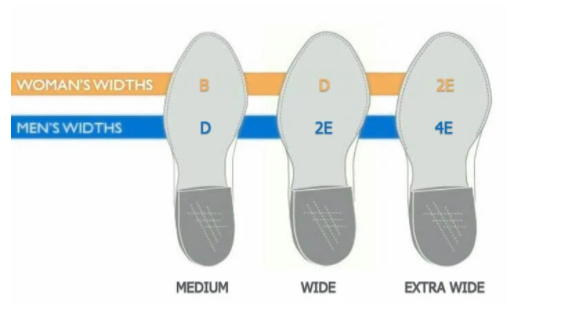
A women’s E width is a wide shoe size. In most US women’s footwear, the width scale works like this:
| Width label | Common meaning |
|---|---|
| AA | Narrow |
| B | Standard or medium |
| C | Slightly wide |
| D | Wide in some brands |
| E | Wide to extra wide |
| EE or 2E | Extra wide |
| 4E | Very extra wide |
These labels are not fully standardized. One brand’s E may feel close to another brand’s D or EE. The shoe’s shape also matters. A soft knit upper may stretch more than leather. A round toe box may feel wider than a pointed one, even when both shoes carry the same width label.
For many US women’s shoes, B is the standard width and E is a wider option. In men’s shoes, E often means extra wide. This difference can cause confusion when shoppers compare women’s and men’s sizes.
Is E the same as wide?
Usually, yes. Women’s E shoes are often sold as wide, wide fit, or W shoes. Some brands use W instead of E. Others use EE, 2E, or 4E for wider options.
Always check the brand’s own width chart. The letter alone does not tell you the exact measurement.
Is women’s E the same as women’s EE?
No. EE is normally wider than E. However, not every brand makes both widths. Some brands call E “extra wide,” while others reserve that term for EE or 2E.
This is why a measurement is more useful than the label alone.
Who Should Consider E Width Women’s Shoes?
E width shoes may suit women with naturally broad feet or feet that have changed over time. They can also help when a standard shoe causes clear fit problems.
You may need a wide or E width if:
- Your toes touch the sides of the toe box.
- Your little toe rubs against the upper.
- Your foot hangs over the edge of the outsole.
- You develop red spots after a short walk.
- The shoe feels tight even when the length is correct.
- Your feet swell during the day.
- You have bunions, hammertoes, or a broad forefoot.
- You need room for an insert or brace.
- Your feet are different sizes or widths.
A wide shoe should not feel loose at the heel. The goal is more room at the forefoot while keeping the heel secure.
Common signs that your shoes are too narrow
Pain is a clear warning sign. Other clues may appear before pain starts:
- Numb toes
- tingling
– Blisters on the sides of the feet - Corns or calluses near the toes
- A bunion pushed against the shoe
- Toes that overlap or curl
- A foot that bulges over the sole
These signs can have more than one cause. A medical condition may also cause foot pain or numbness. If symptoms continue after changing shoes, ask a podiatrist or other qualified clinician for advice.
Wide feet are not always the same from heel to toe
Some people need a wider toe box but a normal-width heel. Others need extra room through the entire shoe. Look for designs with:
- A wide forefoot
- A rounded or square toe box
- A stable heel counter
- Adjustable laces, straps, or fasteners
- A removable insole
- A flexible upper that does not press on sore areas
A shoe that is wide everywhere may slip at the heel. A shoe with a roomy toe box and a snug heel can provide a better match.

How to Measure Your Feet for E Width Shoes
Measure your feet at the end of the day. Feet often expand after standing and walking. Wear the socks you plan to use with the shoes.
What you need
- A sheet of paper
- A pencil
- A ruler or measuring tape
- The socks you will wear
- A flat floor
- A wall
Follow these steps
- Place the paper on a hard floor near a wall.
- Stand with your heel lightly touching the wall.
- Keep your weight evenly on both feet.
- Ask someone to trace around your foot, or mark the longest toe and the widest part of the foot.
- Measure both feet.
- Record the longer length and the greater width.
- Compare those numbers with the brand’s US size chart.
Do not measure while sitting. Your foot may spread more when it supports your body weight.
Your longest toe may not be your big toe. The second toe can extend farther on some feet. Measure from the heel mark to the longest toe mark.
A simple width check at home
If you do not have a foot-measuring device, trace both feet and measure the widest point across the forefoot. Use the result as a guide, not as a universal E-width standard. Brands set their own measurements, and shoe shape affects fit.
A professional fitting with a Brannock Device can measure length, width, and arch length. The Brannock Device Company explains that its device measures more than foot length. A store fitting can be useful, but you should still walk in the shoes and check the brand’s return policy.
Measure both feet
Many people have one foot that is slightly longer or wider. Choose shoes that fit the larger foot. You can add a thin insole or heel grip to improve the fit on the smaller foot. Do not buy a shoe that is too short for either foot.
How Should E Width Shoes Fit?
A well-fitting E width shoe should feel comfortable at once. Shoes may soften with wear, but they should not require a painful break-in period.
Check these areas:
Toe room
Leave about a thumb’s width between your longest toe and the front of the shoe. This is a general fitting guide, not a strict rule. Your toes should move freely without touching the front when you walk downhill or stop.
Forefoot width
The widest part of your foot should rest near the widest part of the shoe. Your foot should not bulge over the outsole. The upper should not press into a bunion or the side of your little toe.
Heel fit
Your heel should stay in place with normal lacing. A small amount of movement can occur, but your heel should not lift with every step. Try a heel-lock lacing method if the shoe has laces. If the heel still slips, the shoe may be too wide or shaped poorly for your foot.
Arch position
The shoe’s arch support should sit under your arch, not behind it or under the ball of your foot. Removable insoles can help if the built-in support does not match your foot.
Walking test
Walk on a clean indoor surface for several minutes. Try stairs if possible. Check for rubbing, pressure, slipping, or toe contact. Do not judge fit only by standing still.
The American Podiatric Medical Association offers general footwear guidance through its foot health resources. Its advice supports choosing shoes that fit well and do not force the foot into a painful position.

Women’s E Width Shoe Types
E width shoes are available in many styles. The best type depends on how you use the shoe and where you need room.
| Shoe type | What to look for |
|---|---|
| Walking shoes | A stable sole, secure heel, and roomy toe box |
| Running shoes | Enough forefoot room for swelling and foot movement |
| Work shoes | Cushioning, slip resistance where needed, and adjustable fit |
| Dress shoes | A lower heel, soft upper, and rounded toe |
| Boots | Room for socks and enough calf or ankle adjustment |
| Sandals | Adjustable straps and a footbed that supports the whole foot |
| Slippers | A secure heel and enough space without loose lining |
| Orthopedic shoes | Removable insoles and space for medical inserts |
The widest part of the shoe matters more than the label. Some athletic shoes have a wide toe box but a normal heel. Some dress shoes labeled wide still taper at the toes.
High heels also change how pressure moves across the foot. A wider size may reduce side pressure, but it does not remove the added stress caused by heel height. If a shoe causes pain, choose a lower heel or a different shape.

E Width vs. Extra Wide Shoes
Choose E width when a standard shoe feels tight but your foot fits fully on the sole. Consider EE, 2E, or 4E when an E shoe still presses on the forefoot or your foot extends beyond the outsole.
Use this decision guide:
| Fit problem | Likely next step |
|---|---|
| Toes touch the front | Try a longer size or a different toe shape |
| Sides feel tight | Try E or a wider toe box |
| E still feels tight | Try EE or 2E |
| Heel slips in E | Look for a wide forefoot with a narrower heel |
| Length is right but width is wrong | Change width, not just length |
| One foot is larger | Fit the larger foot first |
| Swelling varies | Choose adjustable closures and shop later in the day |
Do not solve width problems by buying a much longer shoe. Extra length can make the foot slide forward and may increase tripping risk.
Materials and Features That Affect Width
The width label is only one part of the fit. Material and construction can change how a shoe feels.
Stretch fabrics
Mesh, knit, and some synthetic fabrics may adapt to the foot. They can reduce pressure on a broad forefoot. They may not provide enough support for every activity.
Leather
Leather may soften with use, but it should not be counted on to stretch enough to fix a severe size problem. Tight leather shoes can still cause blisters and pressure points.
Adjustable closures
Laces, hook-and-loop straps, and buckles let you change the fit during the day. They can help when feet swell or when one foot is wider.
Removable insoles
A removable insole creates more depth and may make room for an orthotic. Check that the replacement insert does not raise your heel too much or push your toes into the upper.
Toe box shape
A wide toe box is not always the same as a wide shoe. A shoe may have room at the toes but a narrow midfoot. Look for the area that matches your foot shape.

Common Mistakes When Buying E Width Shoes
Many fit problems come from choosing by the size number alone.
Mistake 1: Assuming every E width is identical
Width letters vary by brand and style. Read the brand chart and check the stated return policy.
Mistake 2: Measuring only one foot
The smaller foot may hide the correct fit for the larger one. Measure both feet each time your size changes.
Mistake 3: Shopping early in the morning
Your shoes may feel fine at 8 a.m. and tight at 5 p.m. Try them later in the day.
Mistake 4: Ignoring socks and inserts
Thick socks and orthotics take up space. Wear them during the fitting.
Mistake 5: Expecting shoes to stretch everywhere
A shoe may soften, but it cannot reliably gain a full width. Buy a shape that fits from the start.
Mistake 6: Keeping painful shoes
Pain, numbness, and repeated blisters are signs to stop and reassess. Do not keep wearing a shoe because its color or style is hard to replace.
Mistake 7: Buying men’s E shoes without checking conversion
Men’s and women’s width labels do not match in a simple way. Compare the actual measurements and the brand’s conversion chart.

Are E Width Shoes Better for Bunions or Swollen Feet?
E width shoes may reduce pressure on a bunion or swollen forefoot, but they do not treat the underlying condition. A shoe with a wide, soft toe box can feel better than a narrow shoe. Adjustable closures can also help as foot size changes during the day.
Avoid shoes that press directly on a sore joint. Do not cut holes in the upper unless a qualified professional recommends a safe modification. If swelling is sudden, affects one foot, or comes with warmth, redness, severe pain, or shortness of breath, seek medical care promptly.
People with diabetes, reduced sensation, poor circulation, or a history of foot ulcers need extra care. A small blister can become a serious wound when sensation is reduced. The American Diabetes Association advises regular foot care and professional guidance for diabetes-related foot risks.
Key Takeaways
- Women’s E width shoes are generally wide shoes in the US.
- Width letters vary by brand, so use the brand’s measurement chart.
- Measure both feet while standing and wear the socks or inserts you plan to use.
- Fit the larger foot. Your toes should move, and your heel should stay secure.
- Choose a wide toe box when bunions or forefoot pressure are the main problem.
- Try EE, 2E, or 4E if E width still feels tight.
- Do not use a longer shoe to solve a width problem.
- Stop wearing shoes that cause pain, numbness, blisters, or lasting red marks.
Frequently Asked Questions
What is the most common women’s shoe width?
B is commonly used as the standard women’s width in the United States. E is wider. The exact fit varies by brand and shoe style.
Can I wear men’s shoes if women’s E shoes do not fit?
Yes, some women choose men’s shoes for their shape or width. Check the full size chart, heel fit, toe shape, and return policy. A men’s shoe may have a different heel shape, upper height, or length balance.
Are wide shoes the same as extra-wide shoes?
No. Wide may refer to D or E in different brands. Extra-wide may refer to E, EE, 2E, or 4E. Use the brand’s chart instead of relying on the word alone.
Do E width shoes come in half sizes?
Many brands offer half sizes, but availability differs by style. A half size changes length, not necessarily width. If the length is right but the shoe is tight, try a wider width.
How can I tell if a shoe is too wide?
A shoe may be too wide if your foot slides from side to side, your heel lifts often, or you must tighten the laces fully to keep the shoe on. Try a narrower width or a shoe with a roomy toe box and a more secure heel.
Conclusion
E width shoes for women are a useful choice when standard-width shoes feel tight across the forefoot. The best pair gives your toes room, keeps your heel steady, and matches the shape of your foot.
Start by measuring both feet late in the day. Then compare the measurements with the brand’s US chart. Try the shoes with your usual socks or inserts, walk indoors, and return them if they cause pressure or pain. If foot symptoms continue, seek advice from a podiatrist or another qualified health professional.