Pickleball Singles Court Size: Master the Dimensions for Success

Pickleball is a fast-growing sport enjoyed by many. Singles play in pickleball adds a unique challenge.
Understanding the right court size for singles pickleball is crucial. The dimensions of the court impact the game’s pace and strategy. Many new players wonder how singles differ from doubles in terms of court layout. Knowing the correct size helps in setting up the court properly and ensures fair play.
In this blog, we will dive into the exact measurements and why they matter. Whether you are a beginner or seasoned player, getting the court size right is key to enjoying the game. Let’s explore the specifics of pickleball singles court size and enhance your playing experience.
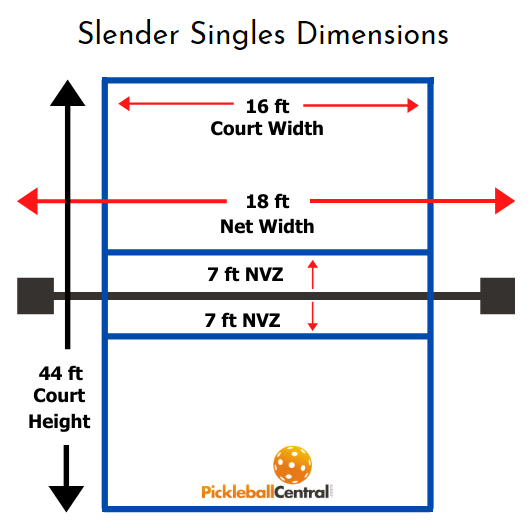
Credit: pickleballcentral.com
Introduction To Pickleball Singles
Pickleball singles require a smaller court than doubles. The dimensions are 20 feet wide and 44 feet long. This compact size makes the game fast-paced and exciting.
Pickleball singles is a thrilling variant of the popular sport. It offers a fast-paced, competitive experience. The game is played on a smaller court compared to doubles. Understanding the court size is key to mastering the game.Brief History
Pickleball started in 1965. Three dads created it to entertain their kids. They used a badminton court, a net, and a perforated ball. Over time, the sport evolved. It became popular among all ages. The rules adapted, and the game grew in complexity. Singles play emerged as a challenging variation.Popularity And Growth
Pickleball’s popularity has soared in recent years. More people are discovering its fun and health benefits. Singles play is gaining traction among enthusiasts. Tournaments now feature singles matches. This growth has spurred more interest in understanding the singles court size. Pickleball is now played in schools, parks, and clubs. It’s easy to learn, making it accessible to many. The sport’s community continues to grow. Players enjoy the camaraderie and competitive spirit. Pickleball singles is an exciting part of this expanding sport. “`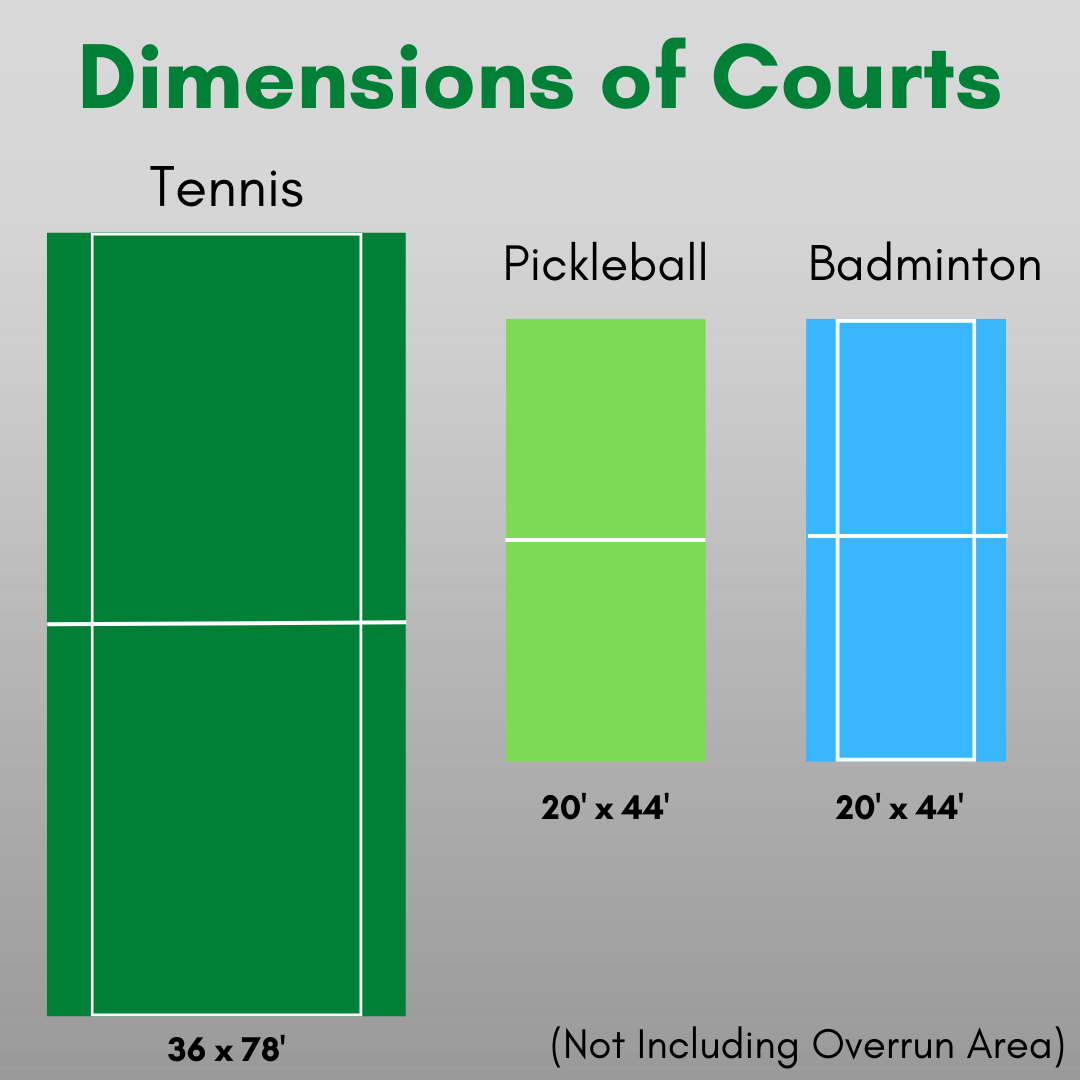
Credit: productiveparks.com
Standard Court Dimensions
Understanding the standard court dimensions is essential for playing pickleball singles. It ensures fair play and helps players prepare for official matches. Let’s dive into the specifics of the court size.
Length And Width
The standard court size for pickleball singles is 20 feet wide. It is 44 feet long. These dimensions include the lines, which are part of the court. The sideline and baseline widths are both 2 inches.
Net Height
The net height is crucial for the game. At the sidelines, the net stands at 36 inches. At the center, it dips to 34 inches. This slight dip is intentional. It ensures a balanced game for both players.
Boundary Lines
Understanding the boundary lines of a pickleball singles court is crucial. These lines define the playable area. They ensure fair play and help avoid disputes. Let’s dive into the specifics of each boundary line.
Baselines
The baselines are the boundary lines at each end of the court. They run parallel to the net. In singles play, the baselines measure 20 feet in length. Players must serve behind this line. They must also avoid stepping on it while serving. A good understanding of the baseline helps in accurate serves and returns.
Sidelines
The sidelines are the boundary lines that run perpendicular to the net. They extend from one baseline to the other. For singles play, the sidelines measure 44 feet in length. These lines mark the width of the court. Staying within the sidelines ensures the ball is in play. Knowing the sidelines helps in positioning and shot placement.
| Boundary Line | Length |
|---|---|
| Baselines | 20 feet |
| Sidelines | 44 feet |
Clearly marking the baselines and sidelines is important. Accurate boundary lines make the game fair and enjoyable. Remember these measurements for a well-structured pickleball court.
Credit: www.reddit.com
Service Areas
The service areas in a Pickleball singles court are essential for fair play. Understanding these areas helps players serve correctly and avoid faults. Let’s dive into the details of the service boxes and the non-volley zone.
Service Boxes
The service boxes are where players serve the ball. Each side of the court has two service boxes. They are separated by the centerline and the net. The server must hit the ball diagonally. This means from their right service box to the opponent’s left service box and vice versa.
Standing behind the baseline is crucial. The server cannot step on or over the baseline before hitting the ball. If the serve lands outside the service box, it is a fault. Knowing the exact size and position of the service boxes helps players serve accurately.
Non-volley Zone
The non-volley zone, also known as the kitchen, is the area closest to the net. It extends 7 feet from the net on both sides. Players cannot volley the ball while standing in this zone. This rule prevents players from dominating the game at the net.
Understanding the non-volley zone is vital for strategy. Players can only enter the zone to hit a ball that has bounced. Mastering this rule ensures fair play and adds an exciting challenge to the game. It keeps players on their toes and adds to the fun of Pickleball singles.
Importance Of Court Size
Pickleball singles court size plays a key role in the game. It affects strategy, player movement, and overall performance. Understanding court dimensions can help players improve their skills.
The standard size for a pickleball singles court is 20 feet by 44 feet. This size allows for a balanced game. It ensures fairness and consistency. Let’s explore how court size impacts different aspects of the game.
Game Strategy
Court size directly influences game strategy. A smaller court encourages close net play. Players can take advantage of quick volleys. They can also use precise shots to control the pace.
A larger court requires more strategic planning. Players need to cover more ground. They must anticipate their opponent’s moves. This adds an extra layer of complexity to the game.
Player Movement
Player movement is affected by the court size. A smaller court means less running. It demands quick reflexes and fast decision-making. Players must stay alert and agile.
A larger court requires more stamina. Players must be ready to move quickly. They need to cover all areas of the court. This can be challenging but also rewarding.
Understanding the importance of court size can enhance your pickleball experience. It allows for better game strategy and improved player movement.
Modifying Court Size
Modifying the court size for pickleball singles can make the game more accessible and enjoyable. This is especially true for different groups of players. Adjusting the court size can benefit youth players and improve practice drills. Let’s explore how modifying court size can make a difference.
Youth Players
Youth players often find the standard court size challenging. Their smaller size and developing skills can make it hard to cover the entire court. Reducing the court size can help young players focus on technique without feeling overwhelmed. A smaller court allows them to engage more actively and build confidence. They can learn the game’s fundamentals without unnecessary frustration.
Practice Drills
Practice drills are crucial for improving skills in pickleball singles. Adjusting the court size can make drills more effective. Smaller courts can help players focus on specific techniques. For example, working on quick footwork or accurate shots. Smaller spaces mean faster reactions. This can lead to better overall performance on a standard court. Modifying the court size can also keep practice interesting. This variety can help maintain player engagement and motivation.
Common Mistakes
Understanding the correct pickleball singles court size is crucial. Many players make mistakes that affect their game. Here are some common mistakes to avoid.
Incorrect Measurements
One common mistake is using incorrect measurements. The standard pickleball singles court measures 20 feet by 44 feet. Failing to measure correctly can lead to a smaller or larger court. This affects gameplay and can create an unfair advantage.
Improper Markings
Another mistake is improper markings. Proper court markings are essential for a fair game. The baseline, sidelines, and non-volley zone must be clearly marked. Inaccurate markings can confuse players and lead to disputes.
Tips For Success
Excelling in pickleball singles requires skill and strategy. The court size plays a significant role in how you approach the game. Here are some essential tips for success.
Effective Practice
Practicing on a regulation-size court is crucial. This ensures you get accustomed to the actual playing conditions. Use drills to improve your footwork, shot accuracy, and reaction time.
- Footwork Drills: Practice moving swiftly across the court.
- Shot Accuracy: Aim for specific spots on the court to enhance precision.
- Reaction Time: Engage in fast-paced drills to boost reflexes.
Court Maintenance
A well-maintained court can improve your performance. Regularly check the court surface for any damage or debris. This ensures a smooth playing experience.
| Maintenance Task | Frequency |
|---|---|
| Check for cracks | Weekly |
| Clean the surface | Bi-weekly |
| Inspect the net | Monthly |
Keep the net at the correct height. This helps maintain fair play and accurate practice conditions.
Frequently Asked Questions
What Is The Size Of A Pickleball Singles Court?
A pickleball singles court measures 20 feet wide by 44 feet long. This is the same size used for doubles play.
How Wide Is The Pickleball Singles Court?
The width of a pickleball singles court is 20 feet. This measurement remains consistent with doubles courts.
Is The Pickleball Singles Court Size Different From Doubles?
No, the pickleball singles court size is the same as for doubles. Both use a court measuring 20 feet wide and 44 feet long.
What Are The Dimensions Of A Pickleball Singles Court?
The dimensions of a pickleball singles court are 20 feet in width and 44 feet in length. These dimensions are standardized for all official games.
Conclusion
Understanding the pickleball singles court size is essential for better play. Smaller courts make the game fast and exciting. Measure your court accurately for fair matches. Proper dimensions ensure a level playing field. Practice on the right-sized court to improve skills.
Enjoy pickleball more with the correct court setup. Happy playing!