
Do Black Shoes Go With Everything: Style Guide

Introduction
Across U.S. wardrobes, black shoes are one of the easiest styles to wear. They work with many colors, dress codes, and seasons. But they do not match every outfit equally well.
Black shoes go with most outfits, but not everything. They look best with dark, cool, and neutral colors. They can look too harsh with soft pastels, warm earth tones, or relaxed outfits made from light fabrics. The shoe style also matters. A black sneaker, loafer, boot, and dress shoe each send a different message.
This guide explains when black shoes work, when another color is better, and how to choose the right pair for work, weekends, events, and daily wear in the United States.
Why Black Shoes Are So Versatile
Black is a neutral color. It has no strong hue, so it can sit beside many other colors without fighting them. This makes black shoes useful with black, gray, white, navy, denim, and many jewel tones.
Black also adds visual weight. The eye often notices a dark shoe first, especially when the rest of the outfit is light. That can make an outfit look sharp and grounded. It can also make a soft outfit feel too heavy.
The shoe’s material changes the effect:
- Black leather looks polished and formal.
- Black suede looks softer and more relaxed.
- Black canvas feels casual and light.
- Black patent leather looks formal and bold.
- Black athletic mesh fits casual and sporty outfits.
- Black rubber boots work well for rain, work, and outdoor use.
The shape matters, too. A slim black loafer can work with tailored pants. A thick black sneaker may look better with jeans or wide-leg pants.
The basic rule
Use black shoes when you want one of these effects:
- A clean, classic look
- A strong contrast
- A formal finish
- A simple match with dark clothing
- A visual link to a black belt, bag, watch, or jacket
Choose another shoe color when you want:
- A softer outfit
- A warm, natural look
- A light summer feel
- A low-contrast appearance
- A more relaxed match with tan, cream, or light brown clothing

What Colors Go Best With Black Shoes?
Black shoes pair well with many clothing colors, but the result depends on contrast and formality.
| Clothing color | How black shoes look | Best use |
|---|---|---|
| Black | Sleek and formal | Evening wear, tailored outfits |
| White | High contrast and crisp | Casual wear, smart-casual looks |
| Gray | Balanced and modern | Office wear, daily outfits |
| Navy | Classic and polished | Business and formal outfits |
| Blue denim | Casual and grounded | Jeans, jackets, weekend wear |
| Red or burgundy | Bold and refined | Evening or fashion-forward outfits |
| Green | Strong and stylish | Olive, forest, or emerald clothing |
| Tan or camel | High contrast and sometimes harsh | Use with care |
| Beige or cream | Sharp but heavy | Better with casual black shoes |
| Pastels | Strong contrast | Works best with simple shoe shapes |
| Orange or rust | Warm contrast | Brown shoes often look more natural |
Black shoes with black clothing
black shoes are the easiest choice with black clothing. They create a long, clean visual line. Matching shades can make an outfit look sleek.
The main risk is a flat, all-black look. You can add depth with different textures. Try wool trousers with a smooth leather shoe, or denim with suede boots. A gray, silver, white, or colored accessory can also break up the outfit.
Black shoes with white clothing
Black and white create strong contrast. This pairing looks fresh and clear, but the shoe should match the outfit’s mood.
Black sneakers work well with white jeans, white shirts, and casual dresses. Black loafers or sandals can work with a white outfit when the rest of the look is polished. Heavy black boots may overpower very light clothing unless the outfit includes another dark item.
Black shoes with gray clothing
Gray and black are among the safest combinations. Light gray creates contrast. Charcoal gray creates a smooth, understated look.
Black dress shoes often work well with charcoal suits. Black boots can pair with gray jeans, gray coats, and knitwear. Gray clothing also gives black shoes room to stand out without looking too bold.
Black shoes with navy clothing
Black shoes can work with navy. The old rule that black and navy never match is too strict. The colors look best when the outfit has clear contrast or a polished structure.
For example, black loafers can work with navy trousers and a white shirt. Black sneakers can work with navy chinos and a gray sweatshirt. Very dark navy and black may blend together, so add a lighter shirt, belt, or accessory when needed.
Black shoes with denim
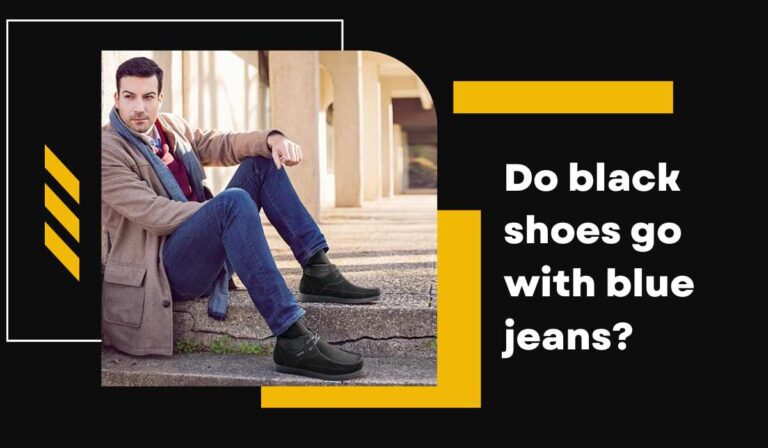
Black shoes and blue jeans make a reliable casual pairing. The best shoe depends on the cut and wash of the jeans.
- Black sneakers suit slim, straight, and relaxed jeans.
- Black Chelsea boots suit dark denim.
- Black work boots suit rugged or raw denim.
- Black loafers suit neat, cropped, or tailored jeans.
- Black sandals suit light denim in warm weather.
Dark jeans usually look more polished with black shoes. Light-wash jeans create a brighter contrast and work best with casual shoe styles.
Black shoes with brown, tan, and camel
Black shoes can work with brown clothing, but the shades and materials matter. Black next to light tan creates a sharp contrast. That contrast may look intentional with a modern outfit, but it can feel disconnected in a soft, traditional outfit.
Brown clothing often looks more natural with brown, cognac, or tan shoes. Choose black when you want a stronger, cleaner contrast or when the outfit already includes black.
For example, black shoes can work with:
- A camel coat over black pants
- Tan chinos with a black shirt
- A brown-and-black patterned dress
- A beige outfit with a black belt and bag

Do Black Shoes Go With Jeans?
Yes. Black shoes go well with jeans, especially when the shoe style fits the jeans’ cut and level of casualness.
Best combinations
- Black sneakers and blue jeans: Simple and casual.
- Black boots and dark jeans: Strong and rugged.
- Black loafers and straight jeans: Clean and smart-casual.
- Black sandals and cropped jeans: Easy for warm weather.
- Black high-top sneakers and relaxed jeans: Casual and youthful.
Avoid pairing very formal black shoes with distressed or oversized jeans. The contrast can look accidental. If you want to wear dress shoes with jeans, choose clean denim with a straight or tailored fit.
The hem also matters. Jeans that bunch heavily over the shoe can hide its shape. A small break or clean crop often shows black footwear better.

Do Black Shoes Go With a Suit?
Black shoes are a strong choice with many suits, but the suit color and event dress code matter.
Black suit
Black shoes are the most natural match for a black suit. A black leather Oxford, Derby, loafer, or clean dress boot can work. For formal events, keep the shoe polished and simple.
Charcoal suit
Black shoes pair very well with charcoal gray suits. This is one of the safest business combinations in the United States.
Navy suit
Black shoes can work with a navy suit, especially for business, evening events, and formal settings. Brown shoes may create a warmer and less formal effect.
Light gray suit
Black shoes create a clear contrast with a light gray suit. The look is formal and sharp. In a relaxed setting, dark brown shoes may feel softer.
Brown suit
Black shoes can work with a brown suit, but the effect is more unusual. Dark brown or burgundy shoes often blend more naturally. Choose black when the outfit includes other black details or when you want a high-contrast look.
Suit and shoe matching table
| Suit color | Black shoe result | Other option to consider |
|---|---|---|
| Black | Formal and seamless | Very dark burgundy |
| Charcoal | Classic and professional | Dark brown |
| Navy | Polished and formal | Medium or dark brown |
| Light gray | Crisp and high contrast | Brown or burgundy |
| Brown | Strong contrast | Brown or oxblood |
| Tan | Bold and less traditional | Light brown or suede |
The shoe should also match the suit’s formality. A black athletic sneaker may work with an informal suit in some settings, but not with a traditional business suit or formal ceremony.

Do Black Shoes Go With Dresses and Skirts?
Yes. Black shoes can work with dresses and skirts in nearly every season. The key is to match the shoe’s weight, height, and material to the garment.
With short dresses and skirts
Black flats, loafers, ankle boots, and sandals are common choices. A black shoe can balance a bright print or provide structure to a loose dress.
With long dresses and skirts
Black shoes can ground a long outfit. Boots work well in fall and winter. Sandals, flats, and low heels suit warmer weather.
With floral prints
Black shoes work best when the print includes black or dark details. If the floral print is very soft and light, brown, nude, white, or metallic shoes may look less heavy.
With formal dresses
Black pumps, dress sandals, slingbacks, or sleek flats can work well. Patent leather adds shine. Suede creates a softer finish.
With casual dresses
Black sneakers, sandals, clogs, and ankle boots can make a dress feel more relaxed. The shoe should not look far more formal than the dress.
A useful balance rule is simple: heavy clothing can support heavier black shoes, while light clothing often looks better with a lighter shoe shape.

When Black Shoes Do Not Work Well
Black shoes may be the wrong choice when they create too much contrast or clash with the outfit’s mood.
Very light and soft outfits
A pale pink dress, cream linen set, or light blue outfit may look better with white, beige, tan, or metallic shoes. Black can still work, but it will become the main focus.
Warm earth-tone outfits
Rust, mustard, camel, and warm brown often pair naturally with brown shoes. Black can make these colors look harder or cooler.
Beach and resort clothing
Black shoes may feel too formal or heavy with swimwear, linen, and very relaxed resort clothing. Light sandals, woven shoes, or espadrilles may fit better.
Strictly traditional dress codes
Some events set clear rules. A black-tie event usually calls for formal black footwear. Business settings may also expect traditional dress shoes. When an invitation gives a specific dress code, follow it before applying general style advice.
Mismatched formality
A black shoe can match the color of an outfit but still fail in style. A polished black Oxford with gym clothes looks out of place. A worn canvas sneaker may look too casual with a formal suit.

How to Choose the Right Black Shoe
Choose the shoe by checking four things: color, formality, shape, and material.
1. Check the clothing colors
If the outfit has black, navy, gray, white, or jewel tones, black shoes are usually easy to use. If it has tan, cream, rust, or soft pastels, compare black with brown, white, or beige before deciding.
2. Match the level of formality
Use the following guide:
- Formal: Oxfords, pumps, sleek loafers, polished dress boots
- Smart casual: Loafers, low heels, Chelsea boots, refined flats
- Casual: Sneakers, flat sandals, casual boots, canvas shoes
- Outdoor or workwear: Hiking shoes, utility boots, rain boots
3. Match the shoe shape to the clothing shape
Slim clothing often works with slim footwear. Wide-leg pants can support a larger shoe, platform, or boot. This is not a strict rule, but it helps keep the outfit balanced.
4. Repeat black when helpful
A black belt, bag, jacket, watch strap, or sunglasses can connect the shoes to the rest of the outfit. You do not need to match every accessory. One repeated detail may be enough.
5. Consider the season
Black shoes work year-round, but the material changes the mood:
- Leather and boots suit fall and winter.
- Suede works well in dry, cool weather.
- Canvas and mesh feel lighter for spring and summer.
- Sandals suit warm weather.
- Waterproof boots help in rain and snow, but care instructions vary by material.

Common Mistakes With Black Shoes
Black shoes are easy to wear, but a few mistakes can make an outfit look less polished.
Wearing formal shoes with casual clothes
A formal black shoe may look stiff beside sweatpants, distressed denim, or a loose graphic tee. Choose a sneaker, casual boot, or loafer instead.
Ignoring the belt
With formal trousers, a black belt usually creates a cleaner look than a brown belt with black shoes. In casual outfits, belt matching is more flexible.
Using too much contrast
Black shoes with a pale outfit can draw attention to the feet. This is not always bad, but it should look planned. Repeat black elsewhere or choose a softer shoe color.
Mixing worn and polished items
Scuffed black dress shoes can make a formal outfit look unfinished. Clean and condition leather as directed by the shoe maker. Do not use the same product on every material.
Forgetting comfort and fit
A shoe that matches the outfit but hurts your feet is not a good styling choice. Make sure the shoe fits well and suits the amount of walking or standing required.

Key Takeaways
- Black shoes go with most outfits, but not every outfit.
- They work best with black, white, gray, navy, denim, and many jewel tones.
- Brown, tan, camel, rust, cream, and pastels may look better with softer shoe colors.
- The shoe style must match the clothing’s level of formality.
- Black leather looks more formal than black canvas, suede, or mesh.
- Repeat black in a belt, bag, jacket, or other detail when the outfit needs balance.
- Choose comfort and the event dress code before color rules.
FAQs
Are black shoes more versatile than brown shoes?
Neither color works best with every outfit. Black shoes usually suit formal clothing, cool colors, and urban styles. Brown shoes often suit denim, tan, olive, rust, and other warm colors. Many wardrobes benefit from having both.
Can you wear black shoes with navy pants?
Yes. Black shoes can look polished with navy pants. Add contrast with a white, gray, or light blue shirt if the navy and black look too close in shade.
Can you wear black shoes with khaki pants?
Yes, but the result is high contrast. Black sneakers, loafers, or casual boots often work better than very formal black dress shoes. Brown shoes may create a softer match.
Do black shoes go with a white dress?
Yes. Black shoes create a clear, modern contrast with a white dress. Choose the shoe style based on the occasion. Black sandals or sneakers suit casual settings, while pumps or dress sandals suit formal ones.
Should your belt match your black shoes?
For formal and business outfits, a black belt is usually the cleanest choice. For casual outfits, the belt does not need to match exactly, but repeating black can make the outfit look more connected.
Can black shoes be worn in summer?
Yes. Black sandals, canvas shoes, mesh sneakers, and lightweight loafers can work well in summer. Heavy boots and thick leather may feel less suited to hot weather unless the outfit or setting calls for them.
Conclusion
Black shoes are highly versatile, but they are not a universal answer. They work best when the color, material, shape, and formality fit the rest of the outfit.
For a simple choice, wear black shoes with black, gray, white, navy, denim, or jewel tones. For tan, cream, rust, camel, and soft pastels, compare brown, beige, white, or metallic footwear first. When in doubt, look at the full outfit rather than the shoe color alone.