How To Clean Hoka Shoes: Easy Care Guide

For runners, walkers, and hikers in the United States, Hoka shoes can pick up road dust, mud, sweat, and grass stains fast. The safest way to clean most Hoka shoes is by hand with cool or lukewarm water, mild soap, and a soft brush. Remove the insoles and laces first, clean each part gently, then let everything air-dry away from heat.
Regular cleaning helps your shoes look better and may reduce odor. It also lowers the risk of damaging mesh, foam, glue, and colored fabric.

What You Need to Clean Hoka Shoes
Gather these items before you start:
- A soft-bristled brush or old toothbrush
- A clean cloth or sponge
- Cool or lukewarm water
- A small bowl
- Mild liquid laundry detergent or gentle dish soap
- A dry towel
- Paper towels or clean cloth for stuffing the shoes
- A well-ventilated drying area
Use only a small amount of soap. Too much soap can leave a film in the upper fabric. Avoid bleach, strong stain removers, solvents, fabric softener, and abrasive scrubbers.
Check the Shoe Before Cleaning
Look at the shoe’s upper, midsole, outsole, and insole. Hoka makes shoes with different combinations of mesh, knit fabric, synthetic materials, rubber, and foam. A method that works well for a mesh road shoe may be too rough for a delicate knit upper.
Also check the care label and the current Hoka Help Center guidance for your model. When a model-specific instruction differs from general advice, follow the model-specific instruction.
Remove Loose Dirt First
Do not start by soaking a muddy shoe. Let thick mud dry first, then brush it away. Dry dirt is easier to remove and less likely to spread into the fabric.
Tap the soles together over a trash can or outside. Use a dry soft brush to clear dirt from the tread and seams.

How to Clean Hoka Shoes by Hand
Hand washing gives you the most control and is the best general method for cleaning Hoka shoes.
1. Remove the Laces and Insoles
Take out the laces and insoles. This exposes areas that often hold sweat and dirt.
Wash the laces separately in warm water with a little mild soap. Rinse them well and hang them to dry.
If the insoles have a strong odor, wipe them with a damp cloth and mild soapy water. Do not soak them for a long time. Thick insoles can hold water and take a while to dry.
2. Brush Off Dry Dirt
Use a soft brush on the upper and a firmer brush on the rubber outsole. Work from the top of the shoe toward the sole.
Use a toothbrush for:
- The grooves in the outsole
- The edge where the upper meets the midsole
- Small seams
- Around the heel
- Under the toe area
Brush gently on mesh and knit fabric. Hard scrubbing can pull threads, spread stains, or create fuzzy spots.
3. Mix a Mild Cleaning Solution
Fill a bowl with cool or lukewarm water. Add a few drops of mild detergent or gentle dish soap.
The water should feel slightly soapy, not thick with suds. Hot water is not needed. Excess heat may affect adhesives, foam, and some synthetic materials.
4. Clean the Upper
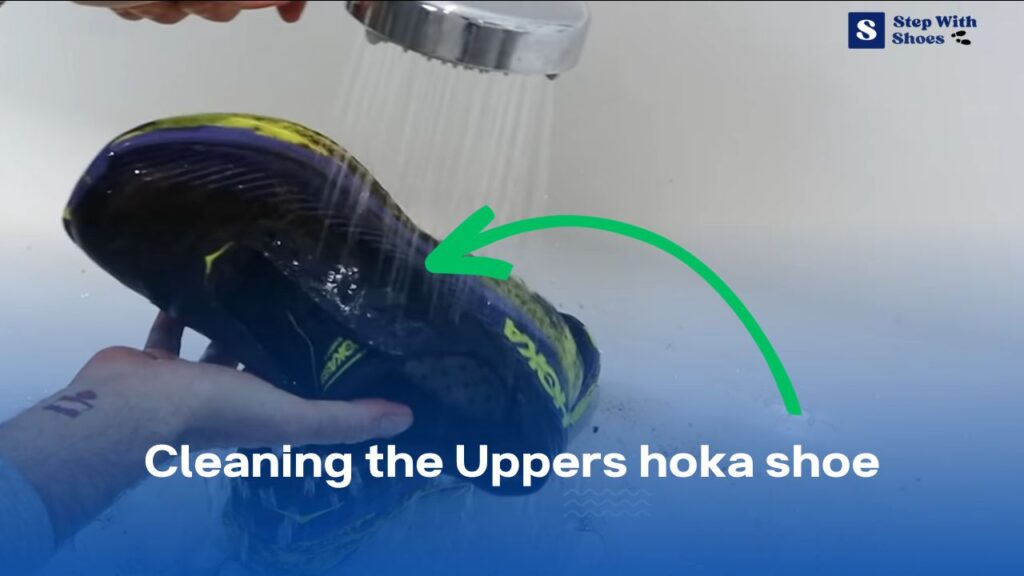
Dip a soft cloth or brush into the solution. Wring it out so it is damp rather than dripping wet.
Clean the upper in small sections. Use light circular motions on stained areas, then wipe away loosened dirt with a clean damp cloth.
Do not force water into the shoe. Try to keep the inside and tongue from becoming fully soaked.
5. Clean the Midsole and Outsole
The midsole is the foam section above the rubber outsole. Use the same mild soap solution and a soft brush on the midsole.
For the outsole, you can use a little more pressure because rubber is more durable than mesh. Focus on the tread, where small stones and mud can collect.
Do not use abrasive powders or rough scrub pads. They may dull the surface or leave scratches.
6. Rinse Away Soap
Use a clean cloth dampened with plain water to wipe the shoe. Repeat until no soapy residue remains.
Avoid holding the shoes under a strong stream of water. A quick rinse may be acceptable for some models, but repeated soaking can make drying harder and may stress glued parts.
7. Blot the Shoes
Press the shoes gently with a dry towel. Do not twist, wring, or bend them sharply.
The goal is to remove surface water without changing the shape of the shoe.
How to Know the Cleaning Worked
The shoes should have:
- No visible soap film
- Less dirt on the upper and midsole
- Clear outsole grooves
- No loose threads caused by scrubbing
- No strong chemical smell
- A normal shape after drying
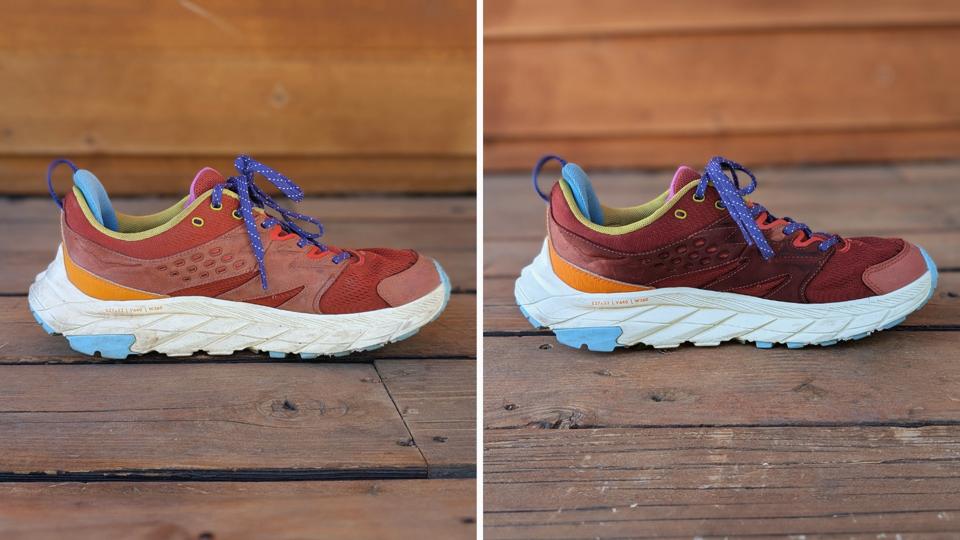
Cleaning can remove dirt and reduce odor, but it will not restore worn foam, peeling material, or permanent dye stains.

How to Dry Hoka Shoes Without Damaging Them
Dry Hoka shoes at room temperature in a place with good airflow. Keep them away from direct heat.
Do not put Hoka shoes in:
- A clothes dryer
- An oven
- A microwave
- A hot car
- Direct sunlight for long periods
- Direct contact with a space heater
- A heated shoe dryer unless the manufacturer permits it
High heat can deform foam, weaken glue, shrink fabric, and change the shape of the shoe.
Use Paper Towels for Wet Shoes
Stuff each shoe loosely with plain paper towels or a clean cloth. This helps absorb moisture and supports the upper.
Replace the paper when it becomes wet. Remove the stuffing after the inside feels mostly dry so air can circulate.
Avoid newspaper if the ink may transfer to light-colored fabric. Do not pack the shoes tightly because dense stuffing slows airflow.
Allow Enough Drying Time
Drying time depends on the amount of water, the shoe’s materials, indoor humidity, and airflow. A lightly damp shoe may dry within several hours. A soaked shoe may need a full day or longer.
Do not wear the shoes while the foam or insole still feels damp. Damp footwear can become a source of odor and may feel less stable.
If the shoes remain wet after a day, move them to a warmer, well-ventilated room. Use a fan nearby, but do not aim strong heat directly at the shoes.
How to Remove Odor, Mud, and Common Stains
Different problems need different levels of cleaning. Start with the mildest method that fits the stain.
| Problem | Best first step | Avoid |
|---|---|---|
| Road dust | Dry brush, then damp cloth | Soaking before brushing |
| Dried mud | Let it dry, brush it away, then wash | Scraping with a knife |
| Sweat odor | Wash insoles and air-dry all parts | Spraying heavy perfume inside |
| Grass stains | Mild soap and repeated gentle wiping | Bleach on colored fabric |
| Salt marks | Damp cloth with plain water | Strong acids or harsh cleaners |
| Grease | Blot quickly, then use mild soap | Rubbing the stain deeper |
| Black scuffs on foam | Soft brush and diluted soap | Abrasive erasers on delicate uppers |
Removing Sweat Odor
Odor often comes from moisture, sweat, and bacteria left inside the shoe. Cleaning the outer fabric alone may not solve the problem.
Remove the insoles and clean them separately. Wipe the inside of the shoe with a damp, soapy cloth, then wipe again with plain water.
Let the shoes, insoles, and laces dry completely before putting them back together. Store them in a dry, ventilated place rather than a closed gym bag.
Cleaning Salt Stains
White salt marks can appear after sweat dries or after contact with winter-treated sidewalks. Wipe them with a cloth dampened with plain water.
Use several light passes instead of one heavy soak. Once the marks are gone, let the shoes dry naturally.
Treating Grease or Oil
Blot fresh grease with a clean towel. Do not rub it across a larger area.
Apply a small amount of mild soap to a damp cloth and dab the stain. Test the method on a hidden area first. Some grease stains may not come out fully, especially after heat has set them.

Can You Put Hoka Shoes in the Washing Machine?
In general, hand washing is the safer choice for Hoka shoes. A washing machine can expose shoes to strong movement, long soaking, heat, and harsh detergent. These conditions may damage mesh, foam, stitching, or adhesives.
Do not assume that a mesh upper makes a shoe machine washable. Mesh describes the fabric, not the complete construction of the shoe.
If the care label or Hoka’s instructions for your exact model allow machine washing, follow those instructions closely. Otherwise:
- Remove the laces and insoles.
- Brush off loose dirt.
- Place washable parts in a mesh laundry bag only if the manufacturer permits it.
- Use cold water and a gentle cycle.
- Use a small amount of mild detergent.
- Skip bleach, softener, and high heat.
- Air-dry the shoes away from direct heat.
When the instructions are unclear, hand cleaning has fewer risks.

Cleaning Hoka Shoes by Material
The main cleaning method stays the same, but pressure and water use should change by material.
Mesh Hoka Shoes
Mesh needs gentle brushing. Use a damp cloth or soft toothbrush and avoid pulling at the threads.
Do not push a brush deep into the fabric. Work from the outside and use repeated light passes.
Knit Hoka Shoes
Knit uppers can stretch or snag more easily than standard mesh. Use a soft cloth rather than a stiff brush.
Do not scrub hard around the toe box, tongue, or heel collar. Blot stains instead of rubbing them aggressively.
Synthetic Leather or Coated Fabric
Wipe these surfaces with a damp cloth and mild soap. Avoid soaking them.
After cleaning, wipe away soap and let the material dry naturally. Do not use leather oil or polish unless Hoka specifically lists the material as suitable for that product.
Rubber Outsoles
Rubber outsoles can handle more brushing than the upper. Use a soft or medium brush to remove mud from the tread.
Check for small stones after cleaning. Removing trapped debris can help restore traction, but cleaning cannot repair worn-down rubber.
Foam Midsoles
Use mild soap and a soft brush on the midsole. Avoid harsh chemicals and rough scrubbing.
A cleaned midsole may still show permanent discoloration. Color change does not always mean the foam is unsafe, but cracks, large cuts, or major separation are signs to stop using the shoe for demanding activity.
Common Mistakes to Avoid
Avoid these cleaning mistakes:
- Washing shoes with bleach
- Using hot water
- Scrubbing mesh with a stiff brush
- Soaking the shoes for hours
- Putting them in a dryer
- Drying them on a radiator or heater
- Reassembling them while they are damp
- Using strong fragrance sprays to hide odor
- Scraping the upper with a sharp tool
- Ignoring damage that affects fit or support
Cleaning cannot fix a worn-out shoe. Replace or stop using a pair if the outsole has lost important tread, the midsole is badly compressed, the upper has a large tear, or the sole is separating.
If you use Hoka shoes for running, hiking, work, or another activity where footing matters, inspect them after cleaning. A clean shoe is not automatically a safe or properly supportive shoe.
How Often Should You Clean Hoka Shoes?
Clean Hoka shoes when dirt builds up, after muddy use, or when odor remains after airing them out. Light cleaning can take only a few minutes.
A simple routine works well:
- Brush off dirt after muddy or dusty use.
- Air out shoes after each workout.
- Wash insoles when odor starts.
- Perform a deeper hand wash when stains or sweat build up.
- Inspect the outsole and upper during each deep clean.
The right schedule depends on use. A daily runner in a wet climate may need more frequent cleaning than someone who wears the shoes indoors.
Store clean, dry shoes in an open or loosely closed area. Avoid leaving them wet in a gym bag or car trunk.

Key Takeaways
- Hand wash most Hoka shoes with cool or lukewarm water and mild soap.
- Remove laces and insoles before cleaning.
- Brush off dry dirt before adding water.
- Use a soft brush on mesh and knit uppers.
- Air-dry shoes at room temperature.
- Avoid bleach, harsh chemicals, hot water, dryers, and direct heat.
- Check the care instructions for your exact Hoka model.
- Cleaning removes dirt and odor, but it cannot repair worn foam, damaged tread, or torn fabric.
Frequently Asked Questions
Can I use dish soap to clean Hoka shoes?
Yes, a small amount of mild dish soap can work for surface dirt. Dilute it in water and rinse away all residue with a clean damp cloth. Do not use a strong degreaser or concentrated soap.
Can I use baking soda inside Hoka shoes?
A small amount of dry baking soda may help absorb odor, but it can leave powder inside the shoe. If you use it, add a little overnight, then shake or vacuum it out carefully. Do not mix baking soda with other cleaners.
How do I clean white Hoka shoes?
Use mild soap, cool water, and a soft brush. Clean the upper in small sections and avoid bleach, which can yellow some materials or damage colored details. Some stains may remain after cleaning.
Can I wash Hoka insoles?
Many removable insoles can be wiped or gently hand washed, but they should not be soaked for a long time. Follow the care label when available and let them dry fully before using them.
Why do my Hoka shoes still smell after cleaning?
The insoles, inner lining, or shoes may still be damp. Clean and dry every removable part, improve airflow, and avoid storing the shoes in a closed bag. If the odor remains with visible mold or damage, replace the affected part or seek guidance from Hoka.
Conclusion
The safest way to clean Hoka shoes is simple: remove the parts, brush away dry dirt, wash gently with mild soap, wipe away residue, and air-dry completely. Avoid heat and harsh cleaners, since they can damage the materials that shape the shoe.
Before cleaning, check the care instructions for your exact model. Afterward, inspect the fit, tread, foam, and upper. If the shoe is clean but worn or damaged, replacement—not deeper cleaning—is the safer next step.