How To Clean Shoe Insoles: Easy Odor-Free Guide

Cleaning shoe insoles is easy when you use the right method for the material. For most removable fabric or foam insoles, brush off dirt, wash with mild soap and cool water, rinse lightly, and let them air-dry fully. Do not put leather, suede, custom orthotics, or glued insoles in water unless the maker says it is safe.
Clean insoles can reduce odor, sweat, and surface dirt. They can also help keep your shoes more comfortable. Cleaning does not fix worn foam, broken support, or a fungal infection, though.

Before You Clean Your Shoe Insoles
Check the insole and shoe care label first. Insoles may contain foam, fabric, leather, suede, rubber, gel, cork, or several materials joined together. Each material reacts to water and cleaners in a different way.
Remove the insoles if you can. Pull them out slowly from the heel. If they feel glued in place, do not force them. Soaking a fixed insole can trap water inside the shoe and weaken glue.
What you need
Gather these items:
- A soft brush or old toothbrush
- Mild liquid soap or laundry detergent
- A clean cloth or sponge
- Cool or lukewarm water
- A dry towel
- Baking soda for odor control, if needed
- A fan or well-ventilated drying spot
Avoid hot water. Heat can warp foam, loosen glue, and change the shape of some insoles.
Check the insole material
| Insole type | Best cleaning approach | Main risk |
|---|---|---|
| Fabric or mesh | Hand wash with mild soap and water | Over-soaking |
| Foam or EVA | Wipe or gently hand wash | Heat and harsh chemicals |
| Rubber | Wash and rinse by hand | Strong solvents |
| Leather | Wipe with a damp cloth | Water stains and drying cracks |
| Suede or nubuck | Brush and spot clean | Flattened nap and water marks |
| Cork | Wipe with a barely damp cloth | Water absorption |
| Gel | Wipe the surface | Damage to the outer layer |
| Custom orthotic | Follow the clinic or maker’s instructions | Loss of shape or support |
Custom orthotics need extra care. Their shell, cover, and cushioning may not tolerate the same treatment as a basic shoe insert. If the care sheet is missing, ask the podiatrist, clinic, or manufacturer before washing them.

How to Clean Removable Fabric or Foam Insoles
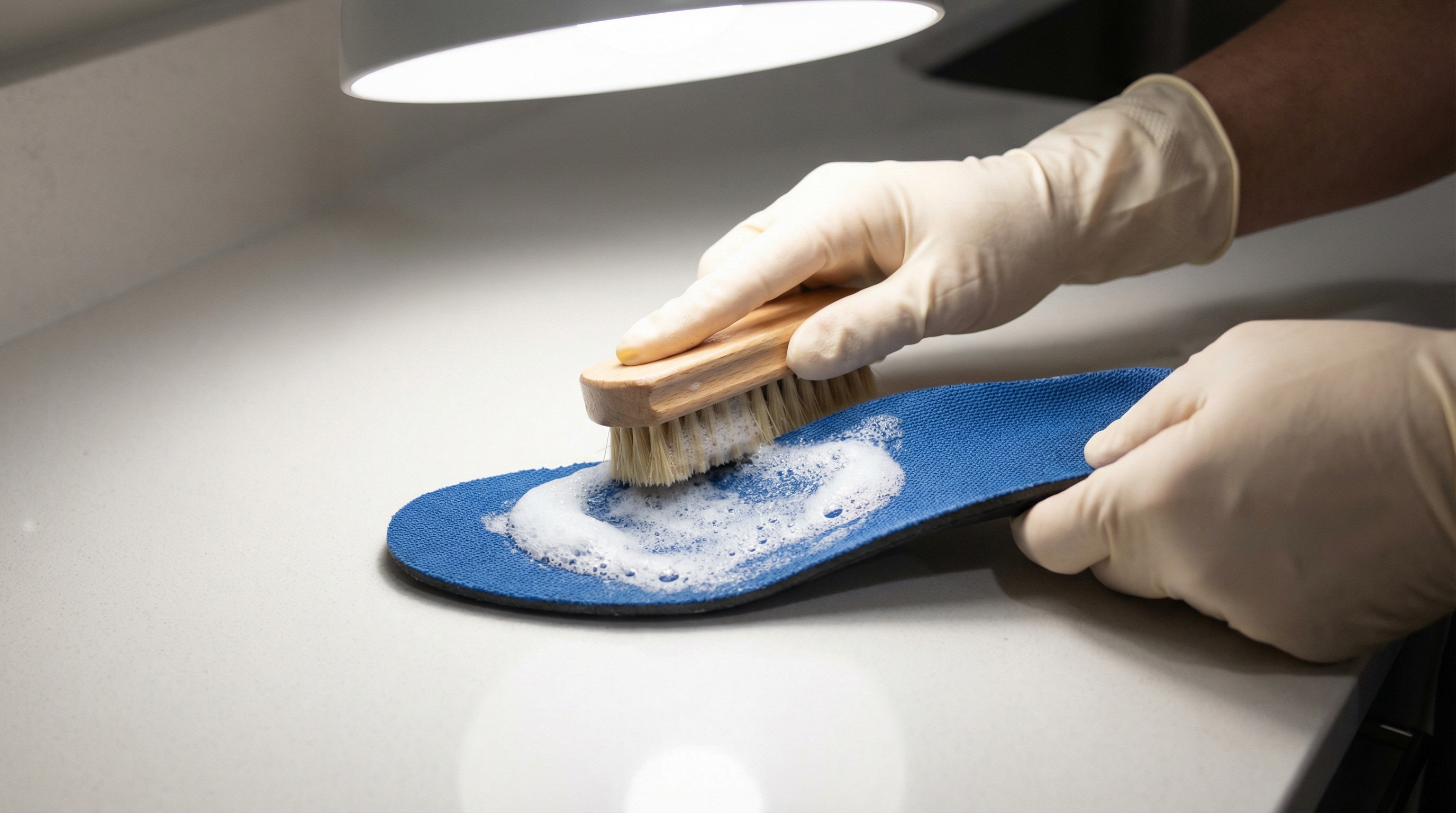
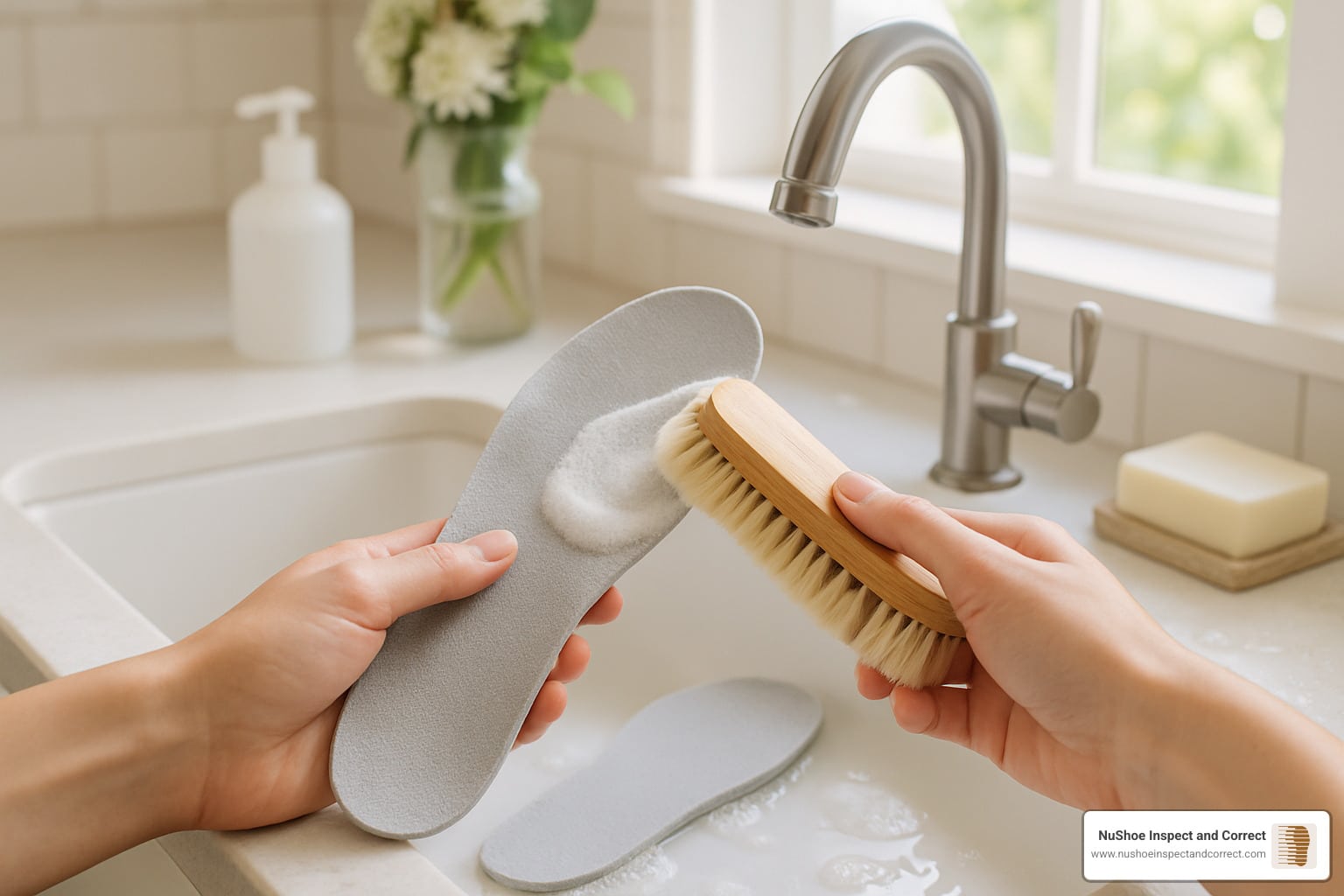
Hand washing is the safest general method for most removable fabric, foam, and rubber insoles. It removes sweat and dirt without the rough movement and heat of a washing machine.
Step 1: Remove loose dirt
Take the insoles outside or over a trash can. Tap them together gently. Brush away dry dirt, sand, and lint.
Do not scrub wet dirt into the fabric. Let heavy mud dry first, then brush it off.
Step 2: Mix a mild cleaning solution
Add a small amount of mild soap to a bowl of cool or lukewarm water. The water should feel lightly soapy, not thick with suds.
A mild laundry detergent can work. Dish soap may also work for light soil, but use only a small amount. Strong cleaners can leave residue and may irritate skin.
Step 3: Test a hidden spot
Dip the cloth or brush into the solution. Test a small area near the heel or edge.
Wait a few minutes. Stop if the color runs, the material becomes rough, or the surface starts to peel.
Step 4: Scrub gently
Clean the top, sides, and heel area with a soft brush or cloth. Use short, light strokes.
Pay extra attention to the heel and ball of the foot. These areas often collect the most sweat and skin oils.
Do not grind the brush into soft foam. Hard scrubbing can create a rough surface that holds more dirt.
Step 5: Wipe away soap
Use a clean cloth dampened with plain water. Wipe the insole several times to remove soap.
Do not hold the insole under running water for a long time. Foam can absorb water deep inside, which makes drying slow.
Step 6: Press out water
Place each insole between clean towels. Press down gently.
Do not twist, wring, or fold the insole. Bending can change its shape.
Step 7: Air-dry completely
Set the insoles upright or flat in a dry, well-ventilated place. A fan can improve air flow.
Keep them away from radiators, clothes dryers, fireplaces, and direct high heat. Strong heat can shrink or warp foam and may loosen adhesive.
Wait until the insoles are fully dry before putting them back in the shoes. Depending on the material and room conditions, this may take several hours or overnight.
Can you wash shoe insoles in a washing machine?
Only use a washing machine if the care label or maker allows it. A gentle, cold-water cycle inside a mesh laundry bag may be suitable for some fabric insoles.
Skip the dryer unless the care instructions clearly allow it. Air-drying is safer for most inserts.
How to Clean Leather, Suede, Cork, and Custom Insoles
Some insoles should not be soaked. The right method is usually surface cleaning, not full washing.
Leather insoles
For leather:
- Brush away dry dirt.
- Dampen a soft cloth with clean water.
- Add a tiny amount of mild soap if needed.
- Wipe the surface without soaking it.
- Wipe again with a clean, damp cloth.
- Let it dry at room temperature.
After drying, a leather conditioner made for footwear may help prevent stiffness. Test it in a hidden spot first. Too much conditioner can make the insole slippery.
Suede or nubuck insoles
Use a suede brush when the surface is dry. Brush in one direction to lift dirt and restore the nap.
For a small mark, use a suede cleaner that matches the product instructions. Avoid soaking suede. Water can leave rings and flatten the surface.
Cork insoles
Cork should be cleaned with a barely damp cloth. Wipe away dirt, then dry it with a towel.
Do not soak cork. Water may cause swelling, cracking, or separation from other layers.
Gel insoles
Wipe gel insoles with mild soap and a damp cloth. Rinse the cloth and wipe away soap.
Inspect the outer covering after cleaning. If it has holes, peeling, or a sticky surface, replace the insole. Damaged gel can rub against the foot and may no longer provide even support.
Custom orthotics
Custom orthotics often have a shaped shell and a bonded top cover. Do not use bleach, alcohol, or a washing machine unless the maker specifically approves it.
Use the cleaning method supplied by the clinic. If there is no guidance, contact the clinic. A wrong cleaning method may change the fit or damage the support surface.

How to Remove Shoe Insole Odor
Cleaning removes much of the sweat, oil, and dirt that cause odor. Drying matters just as much. Microbes grow more easily in warm, damp places.
After cleaning, let the insoles dry all the way. Then sprinkle a thin layer of baking soda over the dry surface. Leave it for several hours or overnight, then shake or brush it off before use.
Baking soda can help absorb odor. It does not replace washing, and it should not be packed into deep foam where it may remain against the skin.
Other ways to reduce odor
- Remove insoles after use when the shoe design allows it.
- Let shoes dry before wearing them again.
- Rotate between two pairs of shoes.
- Wear clean, moisture-wicking socks.
- Wash socks after each wear.
- Keep shoes in a dry, ventilated place.
- Clean the inside of the shoe with a material-safe method.
Do not spray strong perfume into the shoe. Fragrance may cover odor for a short time but does not remove the source.
Do not mix cleaners. In particular, never mix bleach with vinegar, ammonia, or other household products. Dangerous fumes can form.
A household disinfectant is not automatically safe for skin or footwear. If you use one, read the label. The product must list the surface as suitable, and you must follow its dilution, contact time, and ventilation directions. The U.S. Environmental Protection Agency explains that a disinfectant must remain wet for its listed contact time to work as claimed.
How Often Should You Clean Shoe Insoles?
Clean insoles when they smell, feel sticky, show visible dirt, or become damp. People who sweat heavily may need to clean them more often.
A simple routine works well:
- After a sweaty workout: Remove and air-dry the insoles.
- When odor starts: Clean the insoles and dry them fully.
- When visibly dirty: Wash or wipe them based on the material.
- After illness or a foot problem: Clean shoes, socks, and washable inserts according to safe care instructions.
- When support changes: Inspect the insole and consider replacement.
There is no single schedule for every person. A clean-looking insole may still hold sweat. A lightly used insole may need less care.
Replace an insole when it stays compressed, cracks, peels, smells soon after cleaning, or causes new rubbing. If the shoe no longer supports your foot, cleaning will not restore the lost structure.

Common Mistakes When Cleaning Insoles
Using bleach
Bleach may discolor fabric and weaken foam, rubber, glue, or leather. It can also leave residue that irritates the skin. Use it only when the product label and insole maker clearly allow it.
Using too much water
A soaked insole takes longer to dry. Moisture trapped inside foam can cause lasting odor and may damage glue.
Use a damp cloth or controlled hand washing instead.
Drying with high heat
A dryer, hair dryer, radiator, or hot car can deform an insole. Air-drying takes longer but is safer.
Putting wet insoles back in shoes
This traps moisture in a dark, enclosed space. Wait until the insoles and the inside of the shoes are dry.
Using vinegar as a disinfectant
Vinegar is an acid used in some household cleaning tasks. It is not a reliable substitute for an EPA-registered disinfectant when disinfection is needed. It may also affect leather, foam, or glue.
Scrubbing too hard
Hard scrubbing can roughen fabric and wear down foam. Gentle cleaning is usually enough.
Ignoring the shoes and socks
Odor can return if the shoes or socks still hold sweat. Clean the full footwear system, not just the insole.

What to Do If the Odor or Stain Does Not Go Away
First, repeat a gentle cleaning method. Check that you removed all soap and allowed the insole to dry fully.
If the odor returns quickly, inspect the shoe lining and footbed. The smell may come from the shoe itself. Damp shoes, worn foam, and poor air flow can all contribute.
If you see peeling, cracks, deep stains, or permanent compression, replace the insole. A damaged insert cannot be restored by stronger cleaners.
If your feet have itching, scaling, cracking, burning, or a spreading rash, cleaning alone may not solve the problem. The Centers for Disease Control and Prevention and the American Academy of Dermatology provide guidance on common fungal foot conditions. Seek medical advice if symptoms are severe, keep returning, or do not improve with appropriate care.
People with diabetes, poor circulation, reduced feeling in the feet, or a weakened immune system should be cautious with foot problems. Contact a health professional sooner if there are sores, redness, swelling, drainage, or pain.

Key Takeaways
- Check the care label before cleaning.
- Hand wash most fabric, foam, and rubber insoles with mild soap and cool water.
- Wipe leather, suede, cork, gel, and custom orthotics instead of soaking them.
- Air-dry insoles fully and avoid high heat.
- Baking soda may reduce odor, but it does not clean or disinfect.
- Clean socks and shoes as well as the insoles.
- Replace inserts that are damaged, compressed, or still smell after proper cleaning.
Frequently Asked Questions
Can I wash shoe insoles with laundry detergent?
Yes, a small amount of mild laundry detergent can clean many fabric or foam insoles. Dilute it in cool or lukewarm water, rinse away the residue, and air-dry the insoles. Check the care label first.
Can I put shoe insoles in the dryer?
Usually, no. Heat can warp foam, shrink fabric, and loosen glue. Use a dryer only when the insole’s care instructions specifically allow it.
How do I clean insoles that cannot be removed?
Brush away loose dirt. Then wipe the surface with a cloth dampened with mild soapy water. Use a second damp cloth to remove soap. Keep water out of the shoe and allow the shoe to dry in a well-ventilated place.
Does baking soda clean shoe insoles?
No. Baking soda can absorb or reduce some odors, but it does not remove all sweat, dirt, or microbes. Clean the insole first, let it dry, then use a small amount of baking soda if needed.
How do I clean smelly insoles without damaging them?
Use mild soap, limited water, gentle scrubbing, and complete air-drying. Avoid bleach, strong solvents, perfume, and high heat. If the smell returns soon after cleaning, the insole may need replacement.
Can I use rubbing alcohol on shoe insoles?
Rubbing alcohol may discolor or damage foam, leather, printed surfaces, and glue. It can also dry some materials. Use it only if the insole maker approves it and gives clear instructions.
Conclusion
The safest way to clean most shoe insoles is simple: remove loose dirt, use mild soap and cool water, wipe away residue, and air-dry completely. Treat leather, suede, cork, gel, and custom orthotics with less water.
Start by checking the material and care label. If an insole remains smelly, damaged, or uncomfortable after cleaning, replace it rather than using harsher chemicals.