How Many Inches Do Shoes Add: Shoe Height Explained

Shoes in the United States usually add about 0.5 to 2 inches to your height. Most everyday sneakers add around 0.8 to 1.3 inches. Boots, platform shoes, and hidden-lift shoes can add more.
The exact gain depends on the sole, heel, cushioning, your weight, and how the shoe sits on your foot. A shoe with a 2-inch heel does not always make you 2 inches taller.
How many inches do common shoes add?
Most shoes add less height than their full sole or heel measurement suggests. The table below gives useful real-world ranges.
| Shoe type | Typical height added |
|---|---|
| Flat shoes and loafers | 0.3–0.8 inches |
| Dress shoes | 0.5–1 inch |
| Casual sneakers | 0.8–1.3 inches |
| Running shoes | 1–1.6 inches |
| Work boots | 1–1.5 inches |
| Western boots | 1–2 inches |
| Platform shoes | 1.5–4 inches |
| Elevator shoes | 1.5–3 inches |
| High heels | About 1.5–4 inches, depending on design |
These are general estimates, not fixed rules. Brand, size, sole shape, and foot position can change the result.
A thick running shoe may look tall but use soft foam that compresses as you stand. A firm platform may give a result closer to its listed sole height. A high heel also tilts your foot, so part of the heel height changes your foot angle rather than raising your full body by the same amount.
A simple rule of thumb
For most daily shoes:
- Low-profile shoes: less than 1 inch
- Regular sneakers: about 1 inch
- Chunky sneakers: about 1.25–1.75 inches
- Boots: about 1–2 inches
- Platforms or lifts: 2 inches or more
If you need a precise answer, measure the shoe while it is on your foot. Product photos and listed heel heights can be misleading.
What determines how much height shoes add?
The main factor is the shoe’s effective sole height, which is the amount between the bottom of your foot and the ground when you stand in the shoe.
Several parts affect this measurement.
Sole thickness
The outsole is the part that touches the ground. A thick outsole can add height, but it may not account for the whole shoe.
Some shoes have a thin rubber outsole over a thick foam midsole. Others have a solid rubber or leather sole. The full stack may also include an insole.
Cushion compression
Soft foam compresses under your weight. This reduces the height you gain while standing or walking.
A shoe may measure 1.5 inches from the ground to the top of the footbed when empty. Under load, it may provide less than that. Firm foam, rubber, leather, and plastic tend to lose less height.
Heel-to-toe drop
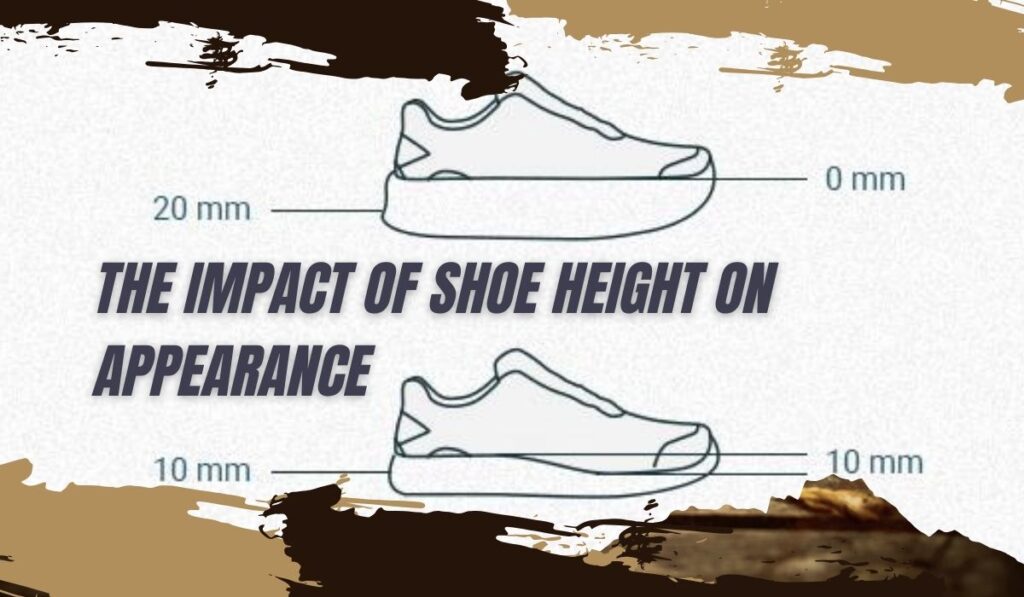
Heel-to-toe drop is the difference in thickness between the heel and the front of the shoe. It is common in running shoes.
For example, a shoe may have:
- A 30-millimeter heel stack
- A 20-millimeter forefoot stack
- A 10-millimeter heel-to-toe drop
The 10-millimeter drop does not mean the shoe adds only 10 millimeters of height. The full sole under your foot affects your height. The drop only describes the slope from heel to toe.
Foot position
your foot does not stand flat in every shoe. High heels raise the heel while the toes stay closer to the ground. This changes your posture and the angle of your ankle.
Because of this, a 3-inch heel does not always create a full 3-inch increase in standing height.
Shoe size
The same shoe model can have small measurement differences across sizes. The sole may become longer or slightly thicker in larger sizes.
For that reason, a measurement from a men’s size 12 may not match one from a women’s size 6. Product listings often give a general specification rather than a size-specific height gain.
Shoe height measurements are not the same
Shoe companies and reviewers may use different terms. Knowing the difference helps you avoid inflated claims.
Heel height
Heel height measures the heel from the ground to the point where it meets the shoe. It is common for dress shoes, boots, and heels.
It does not always equal added body height because:
- The foot may sit at an angle.
- The front of the shoe may also have a platform.
- The heel may compress.
- The measurement method may vary.
Platform height
Platform height measures the raised sole under the front or full length of the foot. A platform usually adds height more directly than a narrow heel.
A shoe with a 2-inch platform often gives a result closer to 2 inches than a shoe with a 2-inch heel and a thin front sole.
Stack height
Stack height describes the total vertical material under the foot. It is often used for running shoes and trail shoes.
Stack height may include the outsole, midsole, and other layers. It can be measured at the heel, forefoot, or both. Always check which part the measurement describes.
Heel-to-toe drop
Heel-to-toe drop shows the height difference between the back and front of the shoe. It is not the same as total shoe height.
A shoe with a 12-millimeter drop may add more than 12 millimeters to your height if it has a thick sole under both the heel and forefoot.

How to measure how many inches your shoes add
You can measure the height gain at home with a wall, a ruler, and a flat surface. Measuring while wearing the shoe gives the most useful result.
Method 1: Measure your height with and without the shoes
- Stand barefoot on a hard, level floor.
- Keep your heels and back close to a wall.
- Look straight ahead.
- Place a flat object on top of your head.
- Mark the wall.
- Measure from the floor to the mark.
- Repeat the process while wearing the shoes.
- Subtract your barefoot height from your shoe height.
Example:
- Barefoot height: 69 inches
- Height in shoes: 70.1 inches
- Estimated height added: 1.1 inches
This method includes the effects of compression, posture, and foot position.
Method 2: Measure the shoe itself
Use a ruler to measure from the floor to the footbed while the shoe sits on a flat surface.
This method is quick, but it is less accurate. It may overstate the height because the shoe is not carrying your weight.
Signs of a useful measurement
A good measurement should:
- Use the same floor and wall each time.
- Measure at the same time of day.
- Keep your head in the same position.
- Use the shoes fully fastened.
- Measure both shoes if they differ.
- Repeat the test at least twice.
People are often slightly taller in the morning because the spine has not yet compressed during the day. For a fair comparison, measure your height at a similar time.

How much height do different shoe types add?
Sneakers
Most sneakers add about 0.8 to 1.3 inches. Minimal sneakers may add less than 0.5 inch. Chunky sneakers may add 1.5 inches or more.
Running shoes can look taller because they use thick foam. Their actual height gain depends on foam firmness and the amount of pressure placed on the heel.
Boots
Most everyday boots add 1 to 1.5 inches. Work boots and western boots may add closer to 2 inches because they often have firm heels and thicker soles.
Boots can feel taller than sneakers even when the measured gain is similar. Their firm structure changes your stance and provides less compression.
Dress shoes
Many dress shoes add 0.5 to 1 inch. Some formal shoes use a raised heel, but the front of the shoe remains thin.
Dress shoes with a stacked heel may give more height than a flat loafer. Comfort can decrease if the heel is high and the toe box is narrow.
High heels
High heels commonly range from 1.5 to 4 inches. The height added to your body may be less than the heel measurement because your foot slopes downward.
A 3-inch heel with a 1-inch platform has a 2-inch “effective heel” for the foot angle. It may still raise the heel by 3 inches, but the body’s overall height gain is not always a simple 3-inch increase.
Platform shoes
Platforms can add 1.5 to 4 inches or more. Since the sole may run under much of the foot, platforms often create a more direct height increase than a narrow heel.
Very tall platforms can affect balance. Walk slowly at first, and avoid them on uneven ground until you know how they feel.
Elevator shoes
Elevator shoes contain an internal lift. They often add 1.5 to 3 inches while keeping the lift less visible from the outside.
The fit matters more than the advertised number. A lift that is too high for the shoe can crowd the heel, reduce ankle movement, and cause rubbing.

Do shoe lifts and insoles add height?
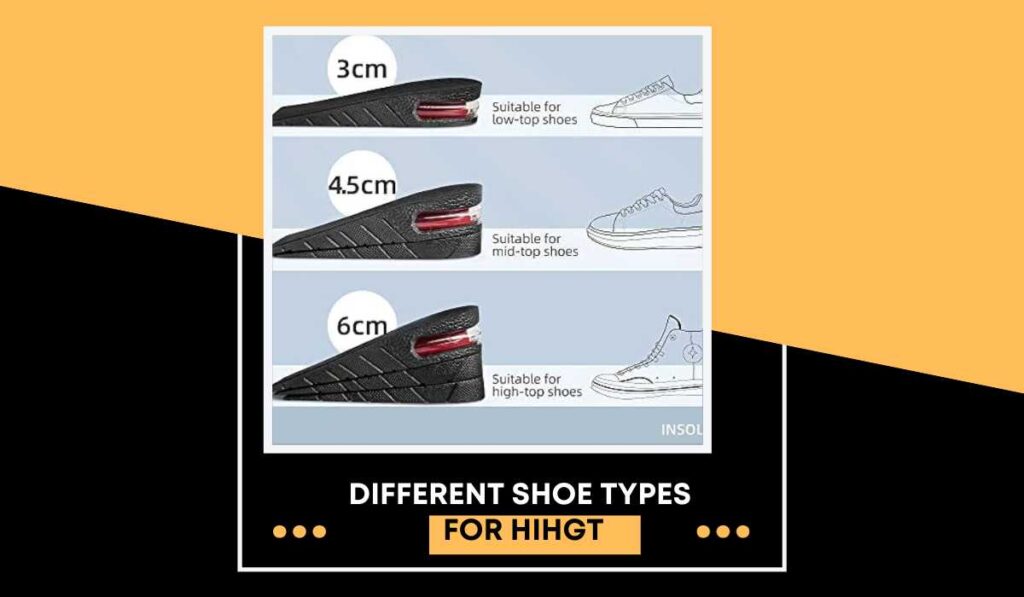
Yes. Shoe lifts can add roughly 0.5 to 2 inches, depending on their design. Some specialized shoes can add more.
A lift works by raising the heel or part of the foot inside the shoe. This differs from a thicker outsole, which raises the whole shoe from the ground.
Start with a small lift. A sudden increase can change your balance and put extra strain on your feet, calves, ankles, or knees. The shoe must also have enough room and a firm heel counter to hold the foot securely.
Do not place a thick lift inside a tight shoe. Pressure on the toes, numbness, blisters, or heel slipping are signs that the setup does not fit well.
Heel lifts versus full-length lifts
- Heel lifts raise only the back of the foot.
- Full-length lifts raise more of the foot and may feel more stable.
- Built-in lifts are designed with the shoe and often fit better.
- Removable lifts are easier to move between shoes but may slide or change the fit.
A lift is not a substitute for a medical insert. If you need an insert to manage pain, limb-length difference, or a foot condition, ask a qualified health professional for advice.

Common mistakes when estimating shoe height
Mistaking heel height for total height gain
A heel measurement describes the heel, not always your full change in standing height. A platform and heel should be considered together.
Measuring an empty shoe
An empty shoe does not show how much the sole compresses under your weight. Measure while wearing the shoes when accuracy matters.
Ignoring the front sole
A 3-inch heel with a 1-inch platform does not feel the same as a 3-inch heel with no platform. The platform reduces the angle under the foot.
Comparing different measurement methods
One brand may report heel stack height. Another may report heel height. A third may measure the shoe without the insole.
Compare measurements only when the method and location are the same.
Assuming more height means better comfort
Thicker soles can add height, but they may also change stability, flexibility, and weight. A tall shoe should still let your toes move and your heel stay secure.
Wearing a lift that is too high
A lift that forces the heel upward can cause slipping or pressure. Increase height in small steps and stop if you feel pain, numbness, or loss of balance.
What height should you choose?
Choose based on the result you want and how often you will wear the shoes.
- For a small, natural increase, look for shoes that add 0.5–1 inch.
- For a visible increase with daily comfort, consider 1–1.5 inches.
- For more height, use a platform or elevator shoe with a stable base.
- For a temporary adjustment, try a low lift before buying a taller one.
- For walking or standing all day, prioritize fit, stability, and cushioning over maximum height.
Check the shoe from the side and inside. A tall outsole may have little usable space inside. A shoe with a hidden lift may require a higher opening around the ankle to keep the foot secure.

Key takeaways
- Most shoes add 0.5 to 2 inches.
- Everyday sneakers usually add 0.8 to 1.3 inches.
- Boots often add 1 to 2 inches.
- Platforms and elevator shoes can add 2 inches or more.
- Heel height, stack height, and actual height gain are different measurements.
- The best home test is to measure your height barefoot and then in the shoes.
- Fit and balance matter more than the largest advertised number.
FAQs
Do shoes really make you taller?
Yes. Shoes raise your feet above the floor, so your standing height increases. The amount depends on the sole, compression, heel angle, and fit.
Do Nike or other sneakers add 2 inches?
Some chunky sneakers may approach 2 inches, but many add closer to 1 inch. The exact gain varies by model, size, sole, and how much the foam compresses.
Do high heels add their full heel height?
Usually not in a simple one-to-one way. High heels tilt the foot, so the heel measurement does not always equal the increase in your full standing height.
Are shoe lifts safe to wear every day?
A low, well-fitted lift may be comfortable for some people. A high or poorly fitted lift can affect balance and cause foot or leg pain. Stop using it if you develop pain, numbness, or repeated blisters.
How can I add height without wearing obvious platforms?
Choose sneakers or boots with a thicker outsole, or use a properly fitted elevator shoe. A low internal lift may look less noticeable than a very tall external sole.
Conclusion
Most shoes add around 1 inch, while thick sneakers and boots may add up to 2 inches. Platforms and elevator shoes can add more, but they also change balance and comfort.
For the most accurate answer, measure your height barefoot and then while wearing the shoes. That simple comparison shows the height you gain in real use, not just the thickness listed in a product description.