Running Shoes For Overweight Runners: Best Picks 2026

Running shoes for overweight runners should offer extra cushioning, strong support, and a stable fit.
If you carry more body weight, your shoes do more than cover miles. They help absorb impact, steady your stride, and protect your joints when the road feels a little less forgiving. I’ve seen this firsthand in fit tests and long easy runs: the right pair can feel like a shock absorber for your whole body, while the wrong pair can turn a simple jog into sore knees, tired feet, and frustration. In this guide, I’ll walk you through what really matters in running shoes for overweight runners, what features to look for, and how to choose a pair that feels supportive from the first step to the last.
Why running shoes matter more when you carry extra weight
Running is high impact for everyone, but body weight changes how that impact feels. More mass means more force with every landing, so the shoe has to do more work. That does not mean you need the most massive shoe on the shelf. It means you need the right mix of cushioning, structure, and comfort.
A good pair of running shoes for overweight runners can help with:
• Reducing harsh impact on feet, ankles, knees, and hips
• Improving comfort on longer runs and walks
• Supporting a smoother stride
• Reducing early fatigue from foot pain or instability
• Building confidence so running feels less intimidating
In practice, I’ve found that many heavier runners start with shoes that are too soft or too flimsy. They may feel great in the store, like a pillow under your feet. But after a few miles, they can bottom out, twist too easily, or feel unstable. The best running shoes for overweight runners usually sit in a sweet spot: cushioned, but still firm enough to guide the foot well.
What to look for in running shoes for overweight runners
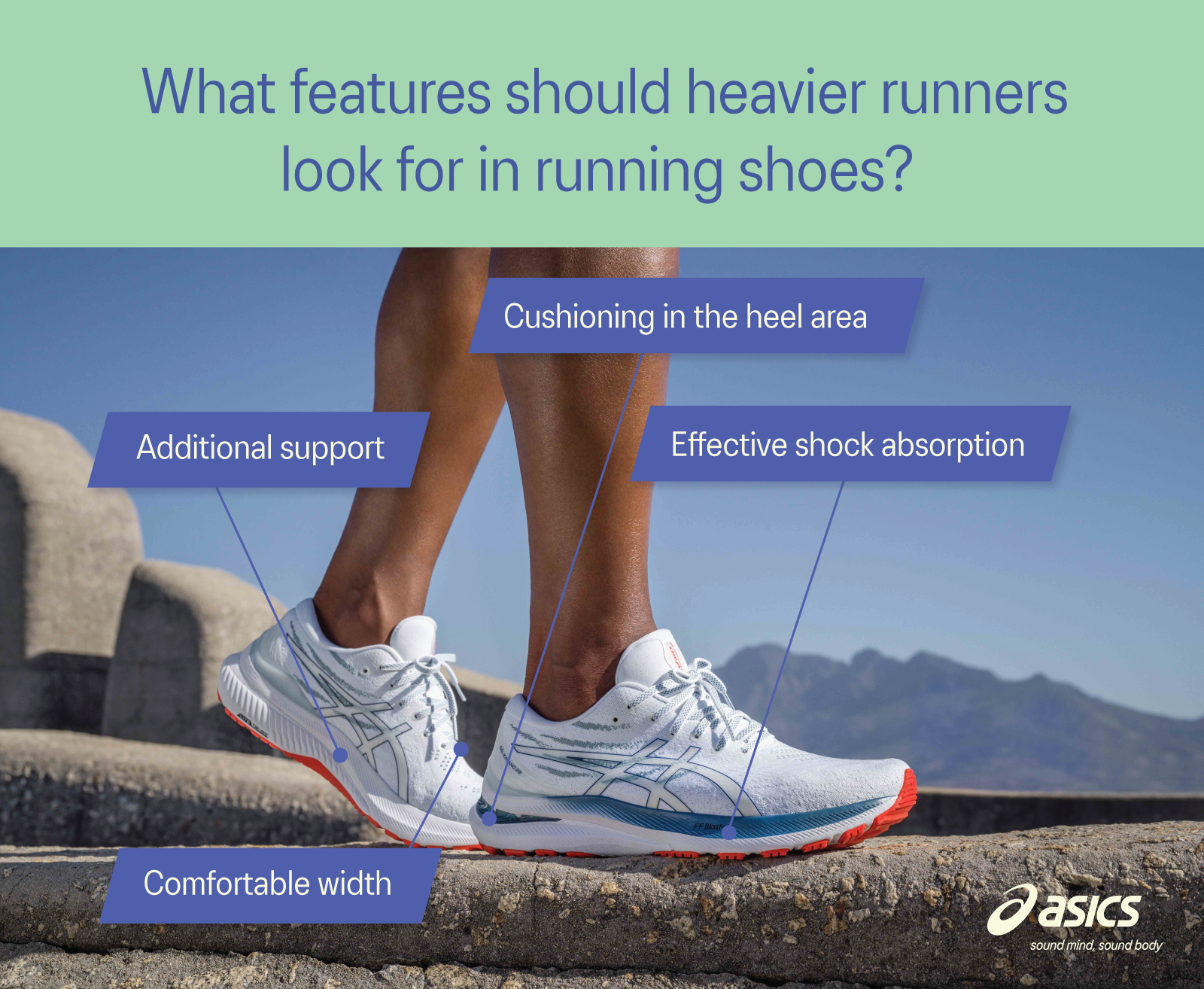
Choosing running shoes for overweight runners is not just about buying the biggest-looking cushion. It is about matching the shoe to your body, your pace, and your running surface. A smart choice can make running feel smoother and safer right away.
Cushioning that stays comfortable, not mushy
Cushioning is one of the most important features. It helps absorb shock and makes each step feel softer. But too much softness can hurt stability, especially if the foam compresses too quickly under extra load.
Look for:
• Responsive foam that does not collapse fast
• A midsole that feels plush but controlled
• Enough stack height for comfort without losing balance
In my experience, the best running shoes for overweight runners feel like a firm mattress, not a sinking couch. You want protection, but you still want the shoe to push back a little.
Wide and stable base
A wider platform gives more balance. This matters because a narrow shoe can feel tippy, especially if your foot lands a little inward or outward. A stable base can help reduce wobble and make the shoe feel safer during turns and longer runs.
A good sign is a shoe that feels planted under the heel and midfoot. If your foot feels like it is spilling over the sides, try a wider model.
Durable outsole and upper
Heavier runners often wear through shoes faster, especially in the heel and forefoot. That is why outsole rubber matters. Durable rubber helps the shoe last longer and keeps traction strong.
The upper matters too. A mesh that stretches too much may feel sloppy over time. A secure upper helps hold the foot in place without rubbing.
Secure fit and enough room in the toe box
A bad fit can ruin even the best shoe. You want enough space for your toes to move, but not so much that your foot slides around. Toe box room is especially important if your feet swell during runs.
A simple test:
• Stand in the shoes
• Wiggle your toes
• Check for heel lift
• Walk and jog a few steps
• Make sure nothing pinches
If you often get hot spots, blisters, or black toenails, fit may be the real problem, not your running form.
Support based on your gait
Some runners need neutral shoes. Others do better with stability shoes that help control overpronation. The right choice depends on how your foot moves when it lands.
If you are unsure, look for:
• Neutral shoes if your stride is fairly even
• Stability shoes if your ankles roll inward a lot
• Guidance features if you want gentle structure without a hard post
A podiatrist or a good running store fit specialist can help, but you do not need to overcomplicate it. Comfort and stability are usually the best first clues.

Best types of running shoes for overweight runners
There is no single best model for every runner. But there are shoe categories that tend to work well for heavier runners.
Cushioned neutral shoes
These are a great choice if you have a neutral gait and want soft, smooth protection. They are often used for daily training and easy miles. Many of the best running shoes for overweight runners fall into this category because they balance comfort and flexibility.
Good for:
• Beginners
• Easy runs
• Road running
• Runners who want a natural feel
Stability shoes
If your foot rolls inward too much, stability shoes can help guide your motion. They usually have support features in the midsole or sidewalls. That support can reduce the feeling of collapse under load.
Good for:
• Mild to moderate overpronation
• Runners who want extra support
• People who feel unstable in neutral shoes
Max-cushion shoes
These shoes have a lot of foam underfoot. They can be very comfortable for walking and running, especially for heavier runners who want more shock absorption. But some max-cushion shoes are very soft, so always check for stability.
Good for:
• Easy pacing
• Long walks
• Recovery runs
• Runners who want a plush ride
Motion-control shoes
These are less common now, but some runners still need them. They are built for strong support and can help if your feet collapse a lot. They are usually best used with expert advice, since not everyone needs that much control.
Why shoe weight and stack height matter
It is easy to think that more cushioning always means better. That is not true. Very tall shoes can feel amazing at first, but they can also feel less stable on uneven ground or when changing direction.
Shoe weight matters too. A lighter shoe can feel easier to move in, but if it sacrifices support or durability, it may not be the right choice. For running shoes for overweight runners, the goal is not the lightest shoe possible. The goal is the most helpful shoe for your body.
A few simple rules:
• More cushioning can help, but it must stay stable
• Heavier shoes may feel more planted and durable
• Very soft foam may feel good early but lose structure faster
• High stack shoes can be great for roads, but less ideal for unstable surfaces
How to know if your current shoes are the problem
Sometimes runners blame themselves when the shoe is the real issue. I’ve seen this many times. People think they “just need better fitness,” but the shoes are already worn out, too narrow, or too unstable.
Signs your shoes may not be right:
• Sore feet after short runs
• Pain in knees, shins, or hips that feels worse in one shoe
• Uneven wear on the outsole
• Slipping at the heel
• Toes hitting the front on descents
• The midsole feels flat or dead
Most running shoes do not last forever. For heavier runners, they may need replacement sooner than the average estimate, especially if you run often. Keep an eye on how the shoe feels, not just how it looks.
How to choose the right size and fit
Fit is huge. A shoe can have the best foam in the world and still fail if the size is off. Feet often swell during exercise, so many runners need a bit more room than they expect.
Use this checklist:
• Leave about a thumb’s width in front of the longest toe
• Make sure the heel feels snug
• Check that the midfoot is secure but not tight
• Try shoes later in the day when feet are slightly larger
• Bring your running socks to the fitting
I always tell people this: if your feet feel squeezed in the store, they will feel worse at mile three. The right fit should feel calm, not dramatic.
Common mistakes to avoid when buying running shoes for overweight runners
A lot of runners waste time and money by chasing the wrong features. The marketing can be loud, so it helps to stay focused on what matters.
Avoid these mistakes:
• Buying a shoe just because it looks cushy
• Choosing the wrong size because your old size “usually works”
• Ignoring width options
• Picking a race shoe for daily use
• Assuming stability shoes are only for “serious” overpronators
• Waiting until the shoe is completely dead
One of the biggest mistakes I’ve seen is buying shoes that are too soft because they feel amazing in the first five minutes. That’s like choosing a lawn chair for your office desk. Nice at first, not so nice after a while.
Helpful features that can make a real difference
These details are not flashy, but they can improve comfort a lot.
• Rocker shape: helps smooth the transition from heel to toe
• Gusseted tongue: keeps the tongue from sliding around
• Extra heel padding: can improve rearfoot comfort
• Wider forefoot: helps with toe splay and swelling
• Breathable upper: keeps feet cooler on longer runs
• Strong rubber coverage: improves life span and traction
If you are shopping for running shoes for overweight runners, these features can add up to a much better daily experience.
How to break in new running shoes
Most modern running shoes do not need a long break-in period, but your body still needs time to adapt. Start small.
Try this:
- Wear the shoes for short walks first
- Do a few easy runs of 10 to 20 minutes
- Check for rubbing, pressure, or hot spots
- Increase distance only if the shoes feel good
- Rotate them with an older pair if needed
This is one lesson I learned the hard way: even a great shoe can feel odd if you jump into a long run too soon. Ease in, and let your feet tell you the truth.
Expert-backed tips for comfort and injury prevention
Research from sports medicine and biomechanics often points to the same big idea: comfort matters, and load management matters even more. That means good shoes help, but they work best when paired with sensible training.
A few practical tips:
• Increase mileage slowly
• Use a mix of run and walk if needed
• Strengthen calves, glutes, and hips
• Replace shoes before they feel totally flat
• Run on softer surfaces sometimes, like tracks or packed dirt
The best running shoes for overweight runners can reduce stress, but they cannot fix a sudden jump in mileage or poor recovery. Think of shoes as support, not magic.

Frequently Asked Questions of running shoes for overweight runners
What makes running shoes good for overweight runners?
Good running shoes for overweight runners usually have strong cushioning, a stable base, and a secure fit. They should absorb impact well without feeling too soft or unstable.
Do overweight runners need stability shoes?
Not always. Stability shoes are helpful if you overpronate or feel your ankles collapse inward, but some runners do well in neutral cushioned shoes. The best choice depends on your gait and comfort.
How often should overweight runners replace their shoes?
Many runners replace shoes every 300 to 500 miles, but heavier runners may need to swap them sooner if the foam feels flat or the outsole wears down fast. Comfort is the best clue.
Are max-cushion shoes better for heavier runners?
They can be, especially for easy runs and long walks, because they reduce impact stress. Still, the shoe should remain stable and not feel overly soft or sloppy.
Should overweight beginners start with walking shoes or running shoes?
If you plan to run, start with real running shoes instead of walking shoes. Running shoes are built for forward motion, better shock absorption, and more secure support during impact.
Conclusion
The best running shoes for overweight runners are the ones that protect your body, feel stable underfoot, and match your stride and goals. Look for cushioning that stays firm enough to support you, a fit that gives your toes room, and a design that feels balanced from heel to toe. Most of all, choose shoes that make you want to keep moving, because comfort builds consistency.
If you are ready to make running feel easier on your joints and more enjoyable overall, start with fit, cushioning, and stability first. Try a few options, trust your feet, and pay attention to how your body responds after a short run. If this guide helped, explore more running tips, compare a few shoe models, and share your experience in the comments.