Great Running Shoes for Shin Splints: Top Picks for Pain Relief

Many runners know the sharp pain of shin splints—a common injury that can stop your training in its tracks. If you’ve ever felt a dull ache or tightness along your shin after a run, you’re not alone. Shin splints can affect both new and experienced runners, often making every step uncomfortable. The good news? The right running shoes can make a world of difference. Choosing shoes designed to support your feet and reduce impact can help prevent shin splints or support recovery if you’re already dealing with them.
But with so many options out there, how do you know which shoes are truly best for shin splints? This guide breaks down what causes shin splints, what features matter most in a running shoe, and reviews some of the top shoes that can help you stay pain-free.
You’ll also find expert tips, comparison tables, and answers to common questions. Whether you’re a new runner or someone returning from injury, this article will help you make a confident choice—so you can get back to running comfortably.
Understanding Shin Splints
Shin splints, or medial tibial stress syndrome, is pain felt along the inner part of the shin bone (tibia). It’s common among runners, dancers, and people who increase their physical activity too quickly. Shin splints can feel like a sharp or aching pain during or after exercise, and sometimes even during daily activities if severe.
What Causes Shin Splints?
Several factors can lead to shin splints:
- Sudden increase in activity: Upping your mileage or intensity too fast.
- Improper footwear: Shoes with poor support, lack of cushioning, or worn-out soles.
- Flat feet or high arches: Both extremes can put stress on the shin muscles.
- Running on hard or uneven surfaces: Concrete, hills, or trails can increase impact.
- Poor running form: Overstriding or landing heavily on your heels.
Many runners overlook the role shoes play. Shoes that lack proper shock absorption or don’t fit your foot shape can make you more likely to get shin splints.
Why Shoes Matter
Running shoes act as the main buffer between your legs and the ground. The right pair:
- Reduces impact on the shins
- Supports your foot’s natural movement
- Improves comfort and efficiency
Wearing the wrong shoes can make pain worse or slow recovery. That’s why picking running shoes suited for shin splints is not just helpful—it’s essential.
Key Features To Look For In Running Shoes For Shin Splints
Not all running shoes are made equal. If you’re prone to shin splints or recovering from them, focus on these features:
1. Excellent Cushioning
Good cushioning absorbs shock, reducing the force that travels up your leg. Look for:
- Soft midsoles (often EVA or gel)
- Layered or “plush” foam underfoot
Too little cushioning means more stress on the shins. Too much can feel unstable, so balance is important.
2. Arch Support
Shoes should match your foot type:
- Flat feet: Need more support to prevent overpronation (foot rolling inward).
- High arches: Need softer midsoles to avoid extra pressure.
Some shoes offer “stability” or “motion control” for flat feet, while others focus on “neutral” support for normal to high arches.
3. Heel-to-toe Drop
This is the height difference from heel to toe. It affects how your foot strikes the ground.
- Higher drop (8–12 mm): Shifts impact away from the shins, good for heel strikers.
- Lower drop (0–6 mm): More natural, but may stress the lower leg if you’re prone to shin splints.
Most people with shin splints do better with a moderate to high drop.
4. Shock Absorption Materials
Look for special materials in the sole:
- Gel pods
- Air pockets
- Proprietary foams (like Nike React, Brooks DNA Loft, ASICS Gel)
These can reduce the pressure on your shins during each stride.
5. Fit And Width Options
Shoes that are too tight or loose can cause problems. Try shoes with:
- Multiple width options (narrow, regular, wide)
- Roomy toe box to prevent squeezing
6. Durability
A shoe that wears out quickly can lose its support. Choose shoes with:
- Sturdy outsoles (rubber, carbon rubber)
- Reinforced high-wear areas
7. Lightweight Construction
Heavy shoes make your legs work harder. Lightweight shoes can help you run more easily and reduce fatigue.
8. Flexibility
The shoe should bend with your foot but not be floppy. Good flexibility helps you transition smoothly from heel to toe.
Two Often-missed Insights
- Shoe Rotation Matters: Using two pairs of running shoes and rotating them gives the foam time to decompress, which can help maintain cushioning and support over time.
- Replace Shoes Regularly: Most running shoes last 300–500 miles. Worn shoes lose their shock absorption and can worsen shin splints, so track your mileage.
Top Running Shoes For Shin Splints (2024)
Choosing the best running shoes for shin splints depends on your foot type, running style, and preferences. Here’s a look at some of the top options, with specific reasons why they help.
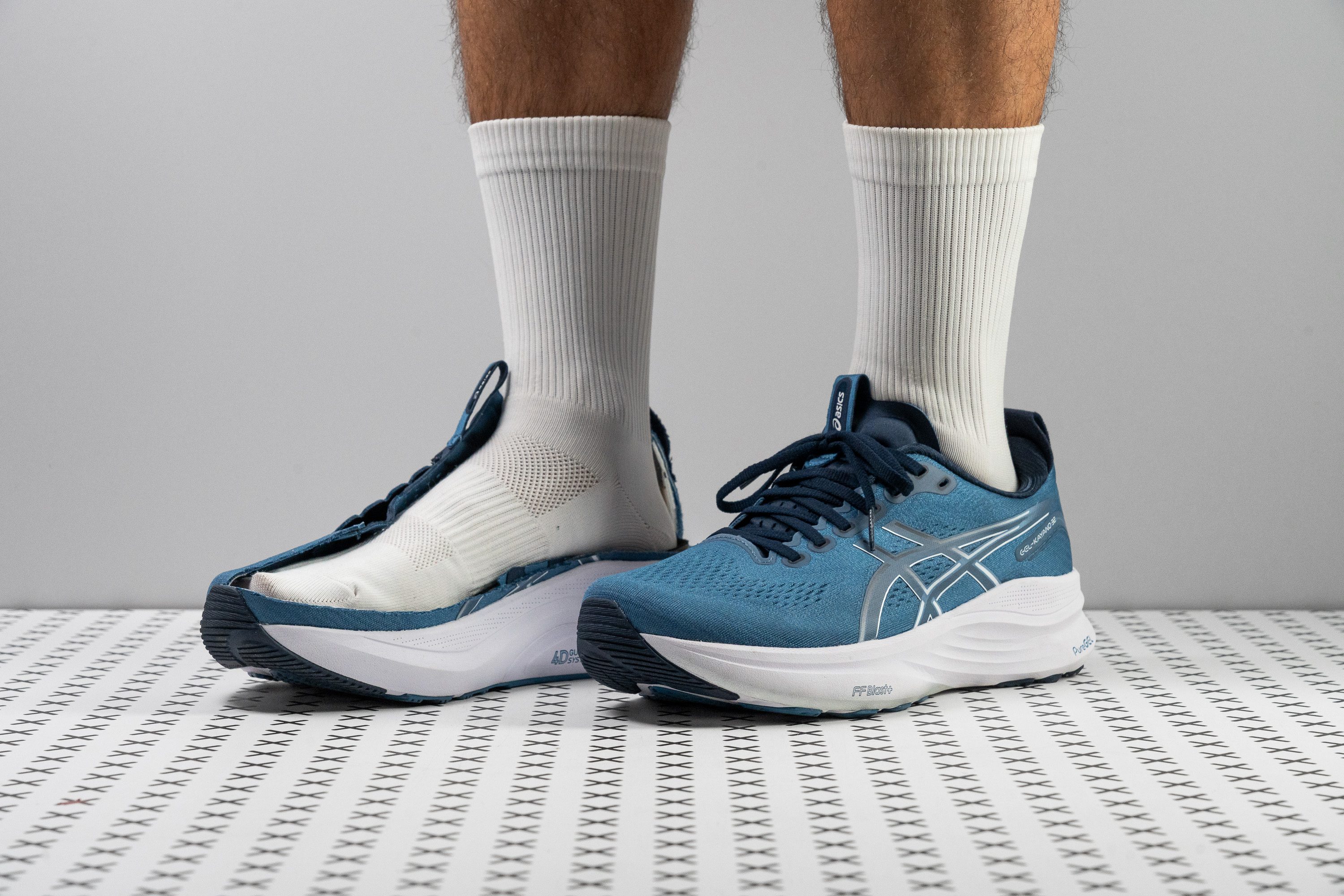
1. Asics Gel-kayano 30
- Best for: Overpronators, flat feet, runners needing stability
- Why it works: Gel cushioning in the heel and forefoot absorbs shock, while the Dynamic DuoMax system prevents excessive inward rolling of the foot.
- Notable feature: 10 mm heel drop, which helps shift impact away from the shins.
2. Brooks Ghost 15
- Best for: Neutral runners, moderate support needs
- Why it works: DNA Loft midsole offers a soft, responsive ride. The segmented crash pad provides smooth heel-to-toe transitions, reducing shin impact.
- Notable feature: Very comfortable for long runs.
3. New Balance 1080v13
- Best for: High arches, cushioned comfort
- Why it works: Fresh Foam X midsole gives plush cushioning. Ortholite sockliner adds extra softness.
- Notable feature: Wide sizes available for different foot shapes.
4. Saucony Guide 16
- Best for: Mild overpronation, runners needing guidance
- Why it works: PWRRUN foam and a medial post support the arch, preventing excess inward rolling.
- Notable feature: Lighter than many stability shoes.
5. Hoka One One Clifton 9
- Best for: Runners seeking maximum cushion, neutral or slightly flat arches
- Why it works: Very thick EVA midsole absorbs lots of impact, while Meta-Rocker geometry helps smooth transitions.
- Notable feature: 5 mm drop—good for midfoot strikers.
6. Nike Air Zoom Pegasus 40
- Best for: Versatile daily training, most foot types
- Why it works: React foam plus Zoom Air units cushion every step. The shoe is lightweight and fits a wide range of feet.
- Notable feature: Reliable and long-lasting outsole.
7. Mizuno Wave Inspire 19
- Best for: Overpronators, runners needing extra structure
- Why it works: Wave Plate technology disperses impact, while U4ic midsole stays responsive but cushioned.
- Notable feature: Durable and stable for high-mileage runners.
8. Adidas Ultraboost Light
- Best for: Comfort lovers, casual runners
- Why it works: Boost foam is soft yet springy, and the Primeknit upper hugs the foot without tightness.
- Notable feature: Stylish enough for all-day wear.
9. On Cloudflyer 4
- Best for: Runners who want a unique feel, moderate support
- Why it works: CloudTec pods cushion each step, and the Speedboard gives energy return. Wide base for stability.
- Notable feature: Feels different from traditional running shoes.
10. Brooks Adrenaline Gts 23
- Best for: Those needing guidance and support, overpronators
- Why it works: GuideRails system supports your stride, while the DNA Loft foam gives soft landings.
- Notable feature: Available in narrow to extra-wide widths.
Shoe Comparison Table
Here’s a side-by-side look at key specs for the top shoes:
| Shoe Model | Cushioning | Stability | Heel-to-Toe Drop | Best For |
|---|---|---|---|---|
| ASICS Gel-Kayano 30 | Gel + Foam | High | 10 mm | Overpronators |
| Brooks Ghost 15 | DNA Loft | Neutral | 12 mm | Neutral runners |
| New Balance 1080v13 | Fresh Foam X | Neutral | 8 mm | High arches |
| Saucony Guide 16 | PWRRUN | Moderate | 8 mm | Mild overpronators |
| HOKA Clifton 9 | Thick EVA | Neutral | 5 mm | Max cushion |
| Nike Pegasus 40 | React + Air | Neutral | 10 mm | All types |
| Mizuno Wave Inspire 19 | U4ic + Wave Plate | High | 12 mm | Stability |
| Adidas Ultraboost Light | Boost Foam | Neutral | 10 mm | Comfort |
| On Cloudflyer 4 | CloudTec | Moderate | 7 mm | Unique feel |
| Brooks Adrenaline GTS 23 | DNA Loft | High | 12 mm | Support |
How To Choose The Right Shoe For Your Needs
It’s easy to get overwhelmed by options. Here’s how to narrow down the best shoe for your situation:
1. Know Your Foot Type
- Flat feet: Look for stability or motion control shoes.
- High arches: Choose neutral shoes with soft cushioning.
- Normal arches: Most shoes work, but avoid extremes.
If you’re unsure, try the “wet test”—wet your foot, step on paper, and check your arch shape.
2. Consider Your Running Style
- Heel striker: Higher drop (10–12 mm) helps reduce shin stress.
- Midfoot/forefoot striker: Lower drop (5–8 mm) may feel better but can put more stress on calves and shins.
3. Try Before You Buy
Fit matters more than brand or looks. Try shoes on at the end of the day (feet swell) and wear the socks you’ll run in.
4. Look For Return Policies
Many specialty stores and online retailers offer 30–90 day trials. Use them to test your shoes on real runs.
5. Compare Key Features
Use the following comparison to help you focus on what matters most:
| Feature | Why It Matters | Top Brands/Models |
|---|---|---|
| Cushioning | Reduces impact, lessens shin pain | HOKA Clifton, NB 1080, Brooks Ghost |
| Stability | Prevents overpronation, supports arches | ASICS Kayano, Brooks Adrenaline, Saucony Guide |
| Drop | Shifts impact, affects stride | Nike Pegasus, Brooks Ghost, Mizuno Inspire |
| Fit/Widths | Reduces rubbing, improves comfort | Brooks, New Balance, ASICS |
6. Don’t Ignore Your Body
If a shoe feels wrong—even if it’s “best rated”—trust your comfort.
Common Mistakes To Avoid
- Buying by looks or brand only: Focus on fit and features for shin splints, not just style.
- Wearing old shoes: Old, worn-out shoes lose their shock absorption quickly.
- Ignoring pain: If a new shoe causes discomfort, don’t “push through it.” Return or exchange.
- Skipping socks: Good running socks can also reduce friction and help with overall comfort.
- Going too minimal: Barefoot or minimalist shoes can stress the shins if you’re not used to them.
Expert Tips For Preventing Shin Splints
Great shoes help, but they’re only part of the solution. Here are extra steps you can take:
1. Warm Up And Cool Down
Spend 5–10 minutes warming up with dynamic stretches or a brisk walk. After your run, stretch your calves and shins.
2. Increase Mileage Gradually
The “10% rule” is useful—don’t add more than 10% to your weekly mileage.
3. Strengthen Your Lower Legs
Exercises like toe raises, calf raises, and ankle circles build muscle to protect your shins.
4. Run On Softer Surfaces
Grass, rubber tracks, or treadmills are easier on your legs than concrete sidewalks.
5. Listen To Your Body
If shin pain starts, reduce your intensity and rest. Ice, elevation, and compression can also help recover.
6. Replace Shoes Regularly
Track your shoe mileage (apps like Strava or Runkeeper can help). Most shoes last 300–500 miles.
7. Use Orthotics If Needed
Custom or off-the-shelf orthotic insoles can provide extra arch support, especially for flat feet.
Two Overlooked Solutions
- Form Check: A running gait analysis at a specialty store or physical therapist can spot problems with your stride that shoes alone can’t fix.
- Cross-Training: Adding swimming, cycling, or elliptical workouts reduces shin stress and boosts overall fitness.
Real-world Example: Recovering From Shin Splints
Anna, a recreational runner, developed shin splints while training for her first half marathon. She wore old shoes with thin soles and increased her weekly mileage from 10 to 20 miles too quickly. After seeing a physical therapist, she switched to the Brooks Adrenaline GTS, started doing calf raises, and ran on softer trails.
Within six weeks, her shin pain faded. She replaced her shoes every 400 miles and used the 10% rule. Anna finished her half marathon without shin pain—a reminder that shoes, training habits, and strength work all matter.
Credit: runrepeat.com
When To See A Doctor
Sometimes, shin pain is more than just shin splints. If you notice:
- Pain that doesn’t improve with rest
- Swelling or numbness in the lower leg
- Severe pain with every step
You may have a stress fracture or another injury. See a sports medicine doctor for a full evaluation. Don’t try to “run through” serious pain.
Caring For Your Running Shoes
To get the most from your shoes (and protect your shins), follow these care tips:
- Rotate shoes: Alternate two pairs to let the midsoles recover.
- Air them out: After a run, take out the insoles and let shoes dry.
- Clean gently: Use a soft brush and mild soap. Don’t throw them in the washing machine.
- Store properly: Keep shoes in a cool, dry place—avoid hot cars or damp basements.
- Check for wear: Look for flat spots, creased midsoles, or worn treads. These are signs it’s time for a new pair.
Credit: runrepeat.com
Latest Innovations In Running Shoes For Shin Splints
Brands continue to improve shoe technology for injury prevention and comfort. Here are some of the latest trends making a difference:
1. Super Foam Midsoles
Materials like Fresh Foam X, DNA Loft v3, and Boost foam offer better energy return and softer landings. These foams are lighter and more durable than older EVA foams.
2. Adaptive Stability Systems
Features like GuideRails (Brooks) and Dynamic DuoMax (ASICS) adapt to your stride, offering support only when you need it. This helps prevent overcorrection, which can cause other problems.
3. Lightweight, Breathable Uppers
Engineered mesh and knit fabrics allow for a snug fit without pressure points. This reduces rubbing and hot spots, keeping your runs comfortable.
4. Smart Shoe Tech
Some brands now include sensors in the shoes to track stride, impact, and wear patterns. This information helps you understand when to replace shoes or change your running form. For more on the science of running shoe technology, visit Runner’s World.
Comparing Popular Models: Cushioning And Stability
For a quick view of how popular models stack up in terms of cushioning and stability:
| Shoe | Cushioning Level | Stability Rating | Weight (Men’s US 9) |
|---|---|---|---|
| ASICS Gel-Kayano 30 | High | High | 10.7 oz |
| Brooks Ghost 15 | Medium-High | Neutral | 9.8 oz |
| New Balance 1080v13 | High | Neutral | 9.2 oz |
| HOKA Clifton 9 | Max | Neutral | 8.7 oz |
| Brooks Adrenaline GTS 23 | Medium-High | High | 10.1 oz |
:max_bytes(150000):strip_icc()/vwt-asics-running-shoes-jun-24-test-novablast-4-joelle-hernandez-13_crop-79fb420bfcce4a7d89624b061eb780d5.jpeg)
Credit: enabling.ch
Frequently Asked Questions
What Is The Best Running Shoe Drop For Shin Splints?
Most runners with shin splints do well with a moderate to high heel-to-toe drop (8–12 mm). This helps shift impact away from the shins. However, the best drop can depend on your running style and foot structure. If you’re unsure, start with a classic drop (around 10 mm) and adjust based on comfort.
How Often Should I Replace Running Shoes To Prevent Shin Splints?
Replace your shoes every 300–500 miles (480–800 km). If you notice decreased cushioning, flat spots, or increased shin pain, switch earlier. Rotating between two pairs can help shoes last longer.
Can Insoles Or Orthotics Help With Shin Splints?
Yes, custom or over-the-counter orthotic insoles can add arch support and help align your foot. This reduces stress on the shins, especially for runners with flat feet or overpronation.
Are Minimalist Or Barefoot Shoes Good For Shin Splints?
Minimalist shoes can increase stress on the shins and calves, especially if you’re not used to them. If you want to try them, transition very slowly and listen to your body. For most people with shin splints, cushioned and supportive shoes are a safer bet.
Do Compression Sleeves Or Socks Help With Shin Splints?
Compression sleeves can increase blood flow and reduce muscle vibration, which may help with pain and recovery. They are not a substitute for good shoes or proper training but can be a helpful addition.
Finding the right running shoes for shin splints can change your running experience completely. While shoes alone won’t fix every problem, they’re the foundation for comfort and injury prevention. Focus on cushioning, arch support, and the right fit. Pair your shoe choice with smart training, strength work, and regular shoe checks. With these steps, you can keep shin pain in the past and enjoy every mile ahead.