Difference Between Tennis Court and Pickleball Court: Key Facts 2026

Tennis and pickleball are both popular racquet sports, but their courts look very different and serve unique purposes. If you have ever seen a tennis court and a pickleball court side by side, you probably noticed the size difference first.
But there’s much more to these courts than just their dimensions. Whether you’re planning to play, build, or convert a court, understanding the difference between tennis court and pickleball court is essential. This article will break down every major aspect, from measurements to materials, so you can confidently tell these courts apart and understand how their design impacts the game.
Court Size And Dimensions
The most obvious difference is the court size. Tennis courts are much bigger than pickleball courts, and this size affects everything from movement to strategy.
Tennis Court Dimensions
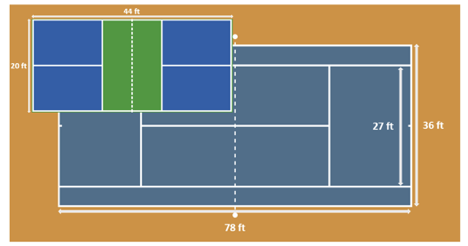
A standard tennis court measures 78 feet long and 36 feet wide for doubles. Singles courts are slightly narrower, at 27 feet wide. The net stretches across the middle, standing 3 feet high at the center.
Pickleball Court Dimensions
Pickleball courts are much smaller. They measure 44 feet long and 20 feet wide. The net is 34 inches high at the center, a bit lower than tennis.
Side-by-side Comparison
Here’s a simple table showing the main differences in size:
| Court Type | Length | Width | Net Height |
|---|---|---|---|
| Tennis (Doubles) | 78 ft | 36 ft | 3 ft (36 in) |
| Tennis (Singles) | 78 ft | 27 ft | 3 ft (36 in) |
| Pickleball | 44 ft | 20 ft | 2.83 ft (34 in) |
Impact Of Size
Because tennis courts are bigger, players run farther and hit harder. Pickleball courts are compact, making rallies shorter and footwork less demanding. Many beginners don’t realize that pickleball’s smaller court is not just for convenience—it’s designed for a slower, more strategic game.
Surface Materials
The surface material affects how the ball bounces and how players move.
Tennis Court Surfaces
Tennis courts use three main types:
- Hard court: Usually made from asphalt or concrete, covered with acrylic. Offers fast play and predictable bounce.
- Clay court: Made from crushed brick or stone. Slower game; the ball bounces higher and players slide more.
- Grass court: Classic surface, like Wimbledon. Fastest play, but maintenance is expensive.
Pickleball Court Surfaces
Most pickleball courts use hard surfaces like asphalt or concrete, similar to tennis hard courts. Some indoor courts use wood or synthetic materials.
Surface Comparison
| Surface Type | Tennis Court | Pickleball Court |
|---|---|---|
| Hard | Yes | Yes |
| Clay | Yes | No |
| Grass | Yes | No |
| Wood/Synthetic | Rare | Sometimes (Indoors) |
Practical Insight
Many pickleball courts are built on old tennis courts, simply by painting new lines. However, the bounce of the pickleball (a plastic ball with holes) is different from a tennis ball, so surfaces that work well for tennis might not suit pickleball as perfectly.
Court Lines And Markings
Court markings guide gameplay and rules. Their layout is very different between tennis and pickleball.
Tennis Court Lines
Tennis has many lines:
- Baseline (back edge)
- Sideline (side edges)
- Service boxes (where serves must land)
- Center service line
- Singles sideline (for singles games)
- Doubles sideline (for doubles games)
Pickleball Court Lines
Pickleball has fewer lines:
- Baseline
- Sideline
- Non-volley zone line (7 feet from the net, also called the “kitchen”)
- Service boxes
- Center line (divides the service area)
The “kitchen” In Pickleball
One unique feature is the non-volley zone (the kitchen). Players cannot volley (hit the ball in the air) while standing in this area. This rule doesn’t exist in tennis, making pickleball play more tactical near the net.
| Line Type | Tennis Court | Pickleball Court |
|---|---|---|
| Baseline | Yes | Yes |
| Sideline | Yes | Yes |
| Service Box | Yes | Yes |
| Non-volley Zone | No | Yes (Kitchen) |
| Center Line | Yes | Yes |
| Singles/Doubles Sidelines | Yes | No |
Line Colors
Tennis lines are usually white. Pickleball lines can be white, but are often yellow or other colors for visibility, especially when painted over tennis courts.
Net Differences
Both courts use nets, but they vary in height, construction, and placement.
Tennis Net
- Height: 3 feet (36 inches) at the center, 3.5 feet (42 inches) at the posts
- Length: Spans court width (27 feet for singles, 36 feet for doubles)
- Material: Strong mesh, often with a white band at the top
Pickleball Net
- Height: 34 inches at the center, 36 inches at the posts
- Length: 22 feet, matches the width of the court
- Material: Similar mesh, but lighter
Net Placement
Pickleball nets are shorter and lower. The difference in height changes how balls are hit and how players approach the net. Many beginners miss that the lower pickleball net allows for more aggressive play near the net, but also makes “dinking” (soft shots) more common.
Court Surroundings And Space
The area around the court affects play and safety.
Tennis Court Surroundings
Tennis courts need a lot of space. The recommended total area is about 120 feet by 60 feet. This extra room lets players chase wide shots and prevents injuries.
Pickleball Court Surroundings
Pickleball courts require less space. The recommended total area is 60 feet by 30 feet. This makes pickleball a good choice for smaller parks, gyms, or backyards.
Multiple Courts
You can fit up to four pickleball courts in the space of one tennis court. This is why many communities convert tennis courts to pickleball courts as the sport grows.
Game Play Differences Related To Courts
The court design shapes the game itself.
Movement And Footwork
- Tennis: Players run much more, often covering over 3 miles in a match.
- Pickleball: Movement is limited. Most points happen within a few steps of the starting position.
Ball Bounce
- Tennis ball: High bounce, travels faster.
- Pickleball: Lower bounce, slower speed.
Strategy
- Tennis courts encourage power and speed.
- Pickleball courts favor precision and placement.
Example
On a tennis court, you might hit a strong serve and rush to cover the baseline. On a pickleball court, you often try to “dink” the ball just over the net into the kitchen, forcing your opponent to make a mistake.
Equipment And Accessories
Court differences require different equipment.
Tennis Equipment
- Racquet: Larger, heavier
- Ball: Pressurized felt ball
- Shoes: Special grip for different surfaces
- Net posts: Heavy duty
Pickleball Equipment
- Paddle: Smaller, lighter (made of wood, composite, or graphite)
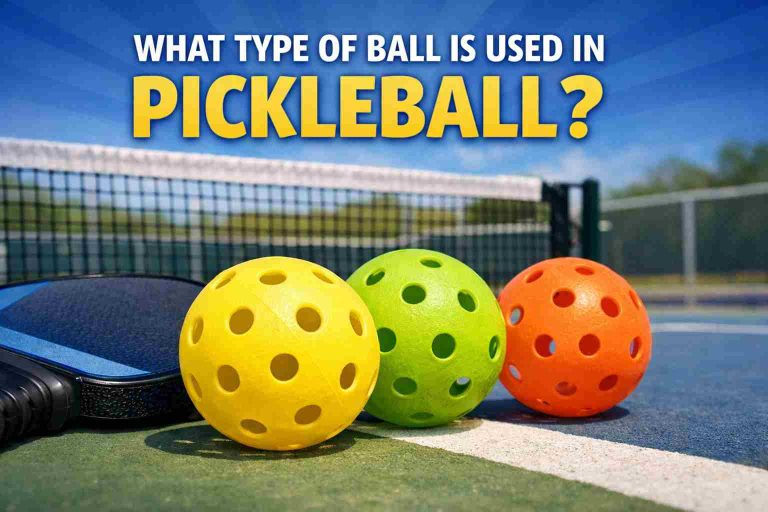
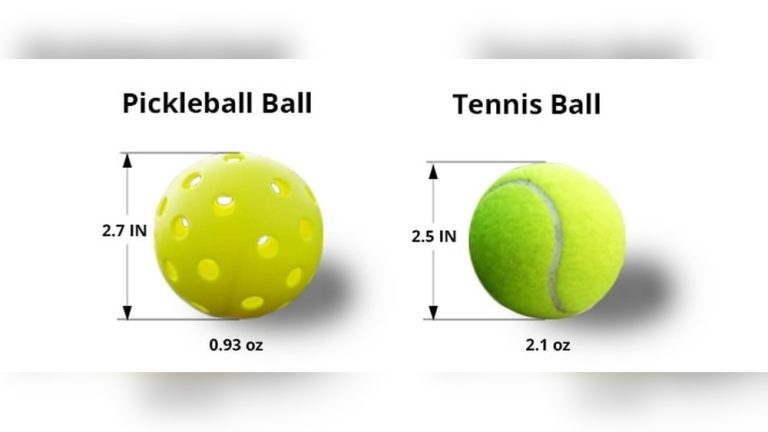
- Ball: Plastic, with holes (similar to a wiffle ball)
- Shoes: Indoor or outdoor court shoes
- Net posts: Portable or permanent, lighter
Shared Accessories
Both courts may have:
- Benches
- Scoreboards
- Wind screens
- Lights (for night play)
Building And Converting Courts
If you want to build or convert a court, knowing the details is key.
Building A Tennis Court
- Requires large area (at least 120×60 feet)
- Needs strong foundation and proper drainage
- Expensive: Costs range from $25,000 to $80,000 depending on surface and location
Building A Pickleball Court
- Smaller area needed (60×30 feet)
- Easier and cheaper to build: Usually $15,000 to $30,000
- Often built on existing tennis courts by painting new lines
Converting Tennis Courts
Many cities convert tennis courts to pickleball courts. You can:
- Paint pickleball lines over tennis lines (usually in a different color)
- Use portable pickleball nets
- Divide one tennis court into two or four pickleball courts
Common Mistakes
- Not checking for proper surface bounce for pickleball
- Failing to align pickleball courts with tennis net posts (may cause awkward net placement)
- Ignoring local regulations or accessibility standards
Maintenance And Longevity
Maintenance keeps courts safe and playable.
Tennis Court Maintenance
- Hard courts: Clean debris, repaint lines every few years, resurface every 5-8 years
- Clay courts: Water daily, roll and brush often
- Grass courts: Mow, fertilize, and repair regularly
Pickleball Court Maintenance
- Hard courts: Sweep and clean, repaint lines as needed
- Indoor courts: Mop and inspect for damage
Durability
Pickleball courts generally require less maintenance because the game is less demanding on the surface. Tennis courts, especially clay and grass, need more attention.
Accessibility And Popularity
The growth in pickleball has changed how communities use their courts.
Accessibility
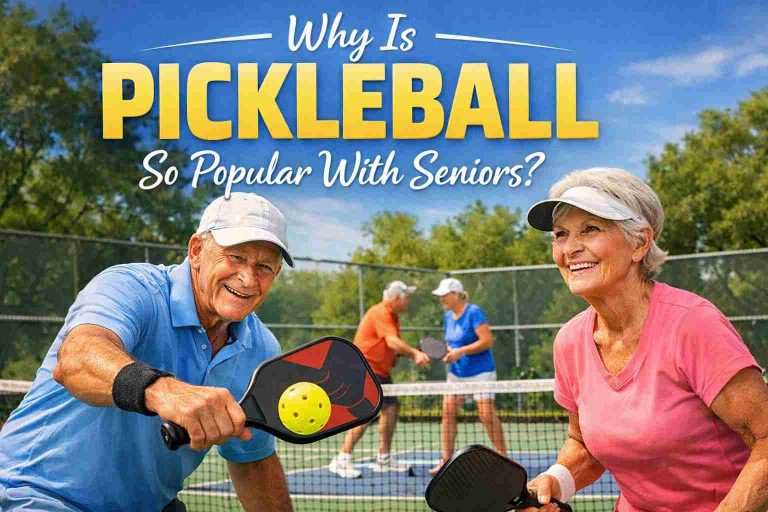
Pickleball courts are more accessible due to their smaller size, lower cost, and easier maintenance. They are popular among older adults and beginners because movement is limited and the learning curve is gentle.
Popularity Data
- Over 4.8 million people played pickleball in the US in 2022 (according to the Sports & Fitness Industry Association)
- Tennis remains more global, with over 87 million players worldwide
Why Pickleball Courts Are Rising
- Can fit more courts in the same space
- Easy to learn
- Lower injury risk
- Less expensive to build and maintain
Many cities report that pickleball courts are booked more often than tennis, a trend that keeps growing.
Credit: www.playpickleball.com
Visual Differences And Court Appearance
It’s easy to spot the difference visually.
Tennis Court Appearance
- Large, rectangular
- White lines
- Often surrounded by high fences
- Net covers wide area
Pickleball Court Appearance
- Compact, often inside tennis courts
- Distinctive kitchen line
- Colored lines (yellow, blue)
- Lower net, sometimes portable
Example: Multi-use Courts
Some schools and parks paint pickleball lines over tennis courts, leading to a “multi-use” look. The extra lines can confuse new players, so it’s important to check which lines match your sport.
Rules Shaped By Court Design
The court itself shapes the rules.
Tennis Rules
- No restriction near the net
- Players serve from behind baseline
- Singles and doubles use different sidelines
Pickleball Rules
- Cannot volley in kitchen
- Serve underhand, behind baseline
- Only one set of sidelines (no singles/doubles difference)
Impact
These rules make pickleball more tactical, especially near the net. Tennis allows for more freedom, which makes power shots common.
Health And Safety Differences
Safety is important, and court design plays a role.
Tennis Court Safety
- Risk of running injuries (ankle, knee)
- Slippery surfaces after rain
- Fences keep balls in play
Pickleball Court Safety
- Lower risk of running injuries
- Kitchen rule reduces collisions near net
- Smaller court, fewer obstacles
Practical Tip
If you’re older or new to racquet sports, pickleball courts offer a safer, less demanding environment.
Cost And Community Impact
Building and maintaining courts affects budgets and communities.
Tennis Court Costs
- Higher construction and maintenance costs
- Need more land
- Often built in dedicated facilities
Pickleball Court Costs
- Lower costs
- Can repurpose existing tennis courts
- More courts per space
Community Impact
Pickleball courts bring more people together. Four families can play at once on one tennis court converted to pickleball. This increases participation and makes parks more lively.
Environmental Considerations
How courts are built and used affects the environment.
Tennis Courts
- Grass and clay need water and maintenance
- Hard courts use chemicals for resurfacing
Pickleball Courts
- Often built on existing surfaces, less new construction
- Lower water and chemical use
Green Insight
Pickleball’s smaller footprint and ability to repurpose old tennis courts make it a greener option for cities and schools.
Unique Features And Innovations
Each court type has unique innovations.
Tennis Court Innovations
- Adjustable net posts for singles/doubles
- LED lighting for night play
- High-tech surfaces that reduce injury
Pickleball Court Innovations
- Portable nets for pop-up courts
- Colorful, non-slip surfaces
- Quick-dry coatings for outdoor play
Example
Some communities use modular pickleball courts, which can be set up in hours and used in gyms or parking lots. This flexibility is not common with tennis courts.
Weather And Location Factors
Court design responds to weather and location.
Tennis Courts
- Grass and clay not suitable for wet climates
- Hard courts work everywhere
Pickleball Courts
- Mostly hard surface, but can play indoors
- Smaller size lets them fit into gyms, community centers
Practical Insight
Pickleball courts are easier to install indoors, making the sport playable year-round regardless of weather.
Noise And Social Differences
Court design affects noise and social activity.
Tennis Court Noise
- Tennis balls are soft, less noise
- Large space, less social interaction
Pickleball Court Noise
- Plastic balls make a “pop” sound
- Smaller court, more conversation
- Some neighborhoods complain about noise, leading to court restrictions
Social Insight
Pickleball courts encourage more social play because players are closer together. This is a key reason for their popularity.
Age And Skill Levels
Court size and features affect who plays.
Tennis Courts
- Requires more athleticism
- Appeals to competitive players
Pickleball Courts
- Welcomes all ages, especially seniors
- Easier for beginners
Example
A study in Florida showed that pickleball players are, on average, 10 years older than tennis players in the same community. The smaller court and lighter paddle make it accessible.
Locations And Usage Patterns
Where and how courts are used reflects their design.
Tennis Courts
- Found in clubs, schools, parks
- Often reserved for tournaments or leagues
Pickleball Courts
- Popping up in community centers, retirement homes, churches
- Used for casual play, group events
Unique Insight
Some cities now offer “open court hours” for pickleball, where anyone can drop in and play. Tennis courts rarely offer this due to lower demand and higher space needs.
Credit: sportsedtv.com
Court Conversion Trends
The conversion trend is strong.
Data
- In 2022, over 10,000 tennis courts in the US were repurposed for pickleball, according to the USA Pickleball Association.
- Demand for pickleball courts grows by 20% per year in many cities.
Reason
People want social, easy-to-learn sports. Pickleball fits this need, and its small court size makes conversions cost-effective.
Expert Tips For Choosing The Right Court
If you’re choosing which court to build or use, consider these points:
- Space available: Pickleball needs less room.
- Budget: Pickleball is less expensive.
- Audience: Pickleball suits older or beginner players.
- Maintenance: Tennis courts need more work.
- Community demand: Check which sport is more popular locally.
Many beginners miss that tennis courts can be shared with pickleball—just add new lines and portable nets.

Credit: pickleballsuperstore.com
Non-obvious Insights Beginners Miss
- Court orientation matters: Tennis courts are usually built north-south to avoid sun glare. Pickleball courts, due to their smaller size, can be placed east-west more often.
- Drainage is more important for tennis: Because tennis courts are larger, poor drainage leads to more puddles and longer delays after rain.
- Multi-sport court confusion: Painting both tennis and pickleball lines can cause confusion, especially for beginners. Always clarify which lines to use before playing.
Real-life Example
In Seattle, city parks converted four tennis courts into sixteen pickleball courts. After conversion, park usage doubled, and more families participated in sports together. This led to higher community satisfaction and less demand for new facilities.
Where To Learn More
For official court measurements and construction guidelines, visit the Wikipedia Tennis Court page. It provides detailed diagrams and history.
Frequently Asked Questions
What Is The Main Difference Between Tennis Court And Pickleball Court?
The main difference is size. Tennis courts are much larger (78×36 feet) than pickleball courts (44×20 feet). This affects movement, strategy, and the number of courts you can fit in a space.
Can You Play Pickleball On A Tennis Court?
Yes, you can play pickleball on a tennis court by painting pickleball lines and using a portable net. Many parks do this to offer both sports in one location.
Why Do Pickleball Courts Have A Kitchen?
The kitchen (non-volley zone) prevents players from volleying too close to the net. It adds a tactical element and reduces injuries, making pickleball more strategic.
How Much Does It Cost To Build Each Court?
Building a tennis court costs $25,000–$80,000 due to size and materials. Pickleball courts cost $15,000–$30,000, and you can often convert existing tennis courts for less.
Are Pickleball Courts Easier To Maintain?
Yes. Because they are smaller and use hard surfaces, pickleball courts require less maintenance than tennis courts, especially compared to clay or grass tennis courts.
Understanding the difference between tennis court and pickleball court helps you choose the best option for your needs. Whether you’re a player, builder, or community organizer, knowing these details will guide your decisions and improve your experience with both sports.