How is Pickleball Different Than Tennis? Key Differences 2026

Pickleball has quickly become one of the fastest-growing sports in the United States, attracting players of all ages and skill levels. Many people who love tennis or are curious about racquet sports wonder: How is pickleball different than tennis? While both games share some similarities, their differences go much deeper than just the size of the court or the equipment used. If you want to understand these two sports better, this article will guide you through every important detail—from rules and gameplay to physical demands and culture. By the end, you’ll know exactly what sets pickleball apart from tennis, and why so many people are switching courts.
The Origins And Growth Of Each Sport
Pickleball and tennis both have rich histories, but their origins are quite distinct.
Tennis dates back to the late 19th century in England, with roots even further back in earlier racquet games. It quickly became an international sport, featured in the Olympics, and played by millions worldwide. The sport is known for its formal competitions, traditions, and professional athletes.
Pickleball, on the other hand, was invented in 1965 near Seattle, Washington. Its creation was almost accidental: three dads (Joel Pritchard, Bill Bell, and Barney McCallum) wanted to entertain their kids with a new game, using whatever equipment they had lying around. The sport grew slowly at first, mostly among older adults and in retirement communities, but in the last decade, pickleball has exploded in popularity. It’s now played by over 4.8 million Americans, according to the Sports & Fitness Industry Association (SFIA).
The accessibility and fun nature of pickleball attract all age groups, but especially those looking for a social, less physically demanding sport. Tennis, meanwhile, has a longer history, more global reach, and a well-established professional scene.
Court Size And Layout: The Playing Field
One of the most obvious differences is the size and layout of the courts.
| Feature | Pickleball Court | Tennis Court |
|---|---|---|
| Dimensions | 20 x 44 feet | 27 x 78 feet (singles), 36 x 78 feet (doubles) |
| Net Height | 34 inches at center | 36 inches at center |
| Surface Types | Hard, grass, indoor | Clay, grass, hard, carpet |
| Key Zones | No-volley zone (“kitchen”) | Baseline, service boxes |
The pickleball court is much smaller—less than one-fourth the size of a doubles tennis court. This makes the game more accessible for beginners and those with limited mobility. One unique feature in pickleball is the “kitchen” or no-volley zone. This area extends 7 feet from both sides of the net, and players cannot volley (hit the ball in the air) while standing inside it.
Tennis courts are large, with several zones: baseline, service boxes, and alleys (for doubles play). The size of the court means tennis players must cover more ground, which increases the physical demands of the game.
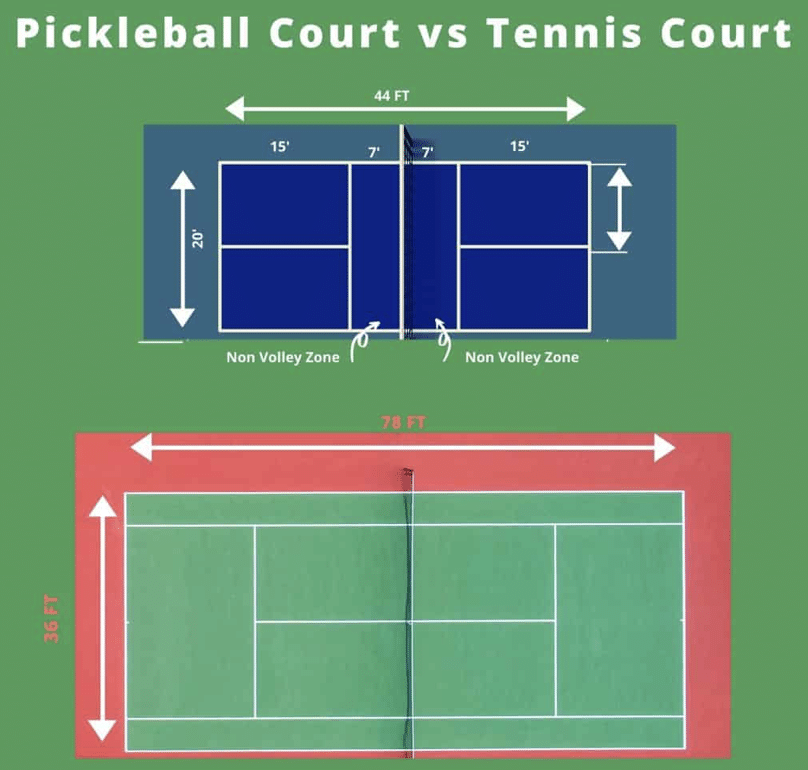
Credit: topspinpro.com
Equipment: What You Hold And Hit
The equipment used in both sports changes the way the game feels and plays.
Racquets Vs Paddles
- Tennis racquets are typically made of graphite or composite materials, strung with nylon, polyester, or natural gut. They are larger, heavier, and require more skill to handle.
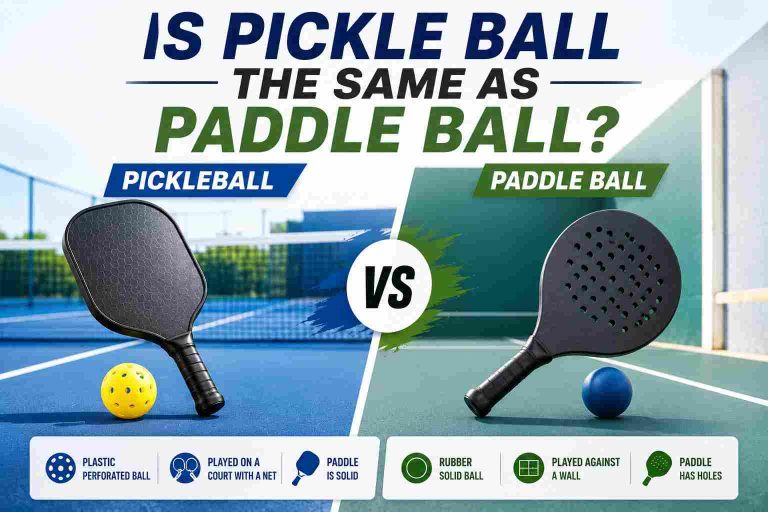
- Pickleball paddles are solid, with no strings. They’re made from materials like wood, composite, or graphite, and are smaller and lighter than tennis racquets.
Balls
- Tennis balls are pressurized, covered in felt, and bounce high and fast. The standard yellow ball is about 2.7 inches in diameter.
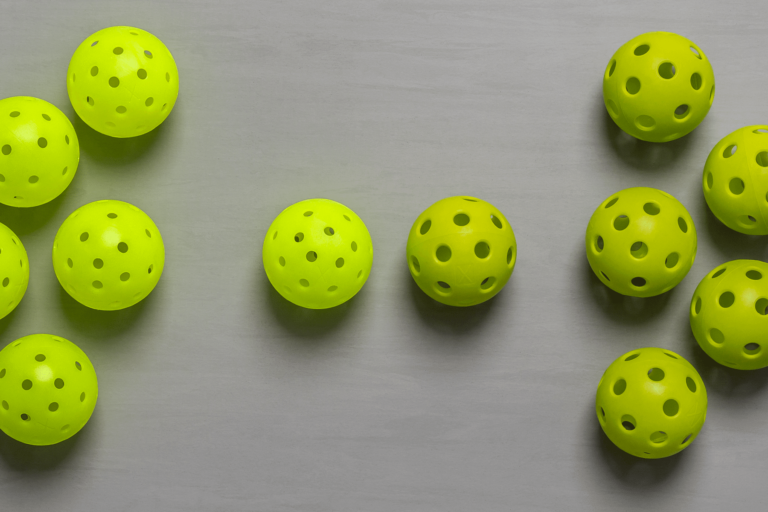
- Pickleball balls are plastic, with holes (like a wiffle ball). They’re lighter, less bouncy, and slower. There are indoor and outdoor versions, with slight differences in hole size and weight.
Comparison Table
| Item | Pickleball | Tennis |
|---|---|---|
| Paddle/Racquet Length | 15-16 inches | 27-29 inches |
| Ball Diameter | 2.87-2.97 inches | 2.57-2.70 inches |
| Ball Material | Plastic | Rubber/felt |
| Weight | Paddle: 7-9 oz, Ball: 0.8 oz | Racquet: 9-11 oz, Ball: 2 oz |
Pickleball paddles are easier for beginners to handle, while tennis racquets require more wrist and arm strength. The balls in pickleball move slower, so rallies last longer and are more about placement than speed.
Rules And Scoring: How Each Game Is Played
The rules and scoring systems in pickleball and tennis are quite different, even though both use a net and basic racquet skills.
Pickleball Rules
- Serve must be underhand, and the ball must bounce before each player hits it in the first two shots (the “double bounce rule”).
- Points are only scored by the serving team.
- Games are usually played to 11 points (win by 2), though tournament games may go to 15 or 21.
- No-volley zone prevents players from smashing the ball at the net.
Tennis Rules
- Serve is overhand, with the ball tossed above the head.
- Players can score points whether serving or receiving.
- Games are scored in “15, 30, 40, game” format, and sets usually go to 6 games (win by 2).
- No restriction for volleying at the net, but players must not touch the net.
Scoring Comparison
| Aspect | Pickleball | Tennis |
|---|---|---|
| Points per Game | 11 (win by 2) | Game: 4 points, Set: 6 games |
| Who Scores | Serving team only | Both teams |
| Serve Type | Underhand | Overhand |
| Unique Rules | No-volley zone, double bounce | No unique net restrictions |
The pickleball scoring system is simpler, which helps beginners keep track of the score. Tennis scoring is more complex, with games, sets, and matches, which can confuse new players.
Physical Demands: Movement, Speed, And Endurance
Pickleball and tennis both offer a good workout, but the physical demands differ due to the court size and playing style.
Tennis
Tennis requires:
- Endurance: Players run long distances, especially in singles matches. A typical match can last several hours.
- Speed: Quick sprints, lateral movement, and sudden direction changes are common.
- Power: Shots like the serve and forehand require strong arm and core muscles.
- Flexibility: Players often stretch for wide balls, jump for overheads, and bend for low shots.
Professional players can burn 600–1,000 calories per hour. Even amateur tennis is demanding, especially for older adults.
Pickleball
Pickleball is:
- Less physically demanding: The smaller court means less running.
- Low impact: Most players can play comfortably without risking injury.
- Quick reflexes: Since rallies are close to the net, players need fast reactions.
- Agility: Short, fast movements are more important than long runs.
Players typically burn 350–500 calories per hour. Because it’s easier on the body, pickleball attracts many older adults, beginners, and people recovering from injury.
Non-obvious Insight
One thing beginners often miss: pickleball’s smaller court doesn’t mean the game is always slower. Because players are closer together, rallies can be very fast and intense, especially in doubles. The quick exchanges at the net challenge your reflexes and hand-eye coordination just as much as tennis does.
Skill Development: What Each Sport Teaches
Both sports improve coordination, but the skills needed are slightly different.
- Tennis builds strength, speed, and stamina. Players learn powerful strokes, complex spins, and strategic movement.
- Pickleball focuses on placement, precision, and quick decision-making. The kitchen rule requires soft touches, clever angles, and patience.
Beginners often think pickleball is just a simpler version of tennis, but advanced pickleball strategies (like dinking, stacking, and third-shot drops) are unique and require practice. Tennis rewards athleticism, while pickleball rewards smart shot selection and teamwork.
Social Culture And Community
The culture around each sport is another big difference.
Tennis Culture
- Well-established clubs and tournaments
- Strong tradition and etiquette (dress codes, formal rules)
- Professional leagues (ATP, WTA, Grand Slams)
- More individual competition, with intense rivalries
Pickleball Culture
- Welcoming and friendly, with a focus on fun and social play
- Many local clubs, senior centers, and community groups
- Fewer formal leagues, but fast-growing tournament scene
- Players often mix levels, and “open play” is common
Pickleball’s community is known for being inclusive and supportive, making it easy for new players to join. Tennis can feel more competitive and formal, especially at higher levels.
Accessibility And Learning Curve
Pickleball is often recommended for beginners, families, and older adults due to its accessibility.
- Easier to learn: Simple rules, smaller court, slower ball.
- Lower equipment cost: Paddles and balls are cheaper than tennis racquets and balls.
- Quick games: Matches are shorter, so players can play more games in less time.
Tennis is more challenging for beginners because:
- The court is larger, requiring more stamina.
- The scoring system is complex.
- The serve and stroke mechanics take longer to master.
A study from the SFIA shows that over 60% of new pickleball players had never played racquet sports before, but they learned quickly and stuck with the game. Tennis, meanwhile, sees higher dropout rates among beginners.
Age And Demographics
Pickleball’s popularity among older adults is well-known, but the sport is growing across all age groups.
- Pickleball: About 52% of players are aged 55 and above, but younger players are joining rapidly. The sport is popular in schools, colleges, and youth programs.
- Tennis: Most players are under 50, with strong youth development programs worldwide.
The smaller court and lower impact make pickleball attractive for retirees and those with joint issues. Tennis remains more popular with younger athletes who want a challenge and competitive opportunities.
Doubles Vs Singles: Game Formats
Both sports offer singles and doubles formats, but doubles is much more common in pickleball.
- Pickleball: Over 80% of games are doubles. The small court and fast rallies make doubles exciting and social.
- Tennis: Singles and doubles are equally popular. Singles matches are longer and more physically intense.
Pickleball doubles require teamwork, communication, and strategy. Players often use “stacking” (switching sides with partners) to gain an advantage. Tennis doubles focus more on strong serves and volleys at the net.
Strategies And Tactics
The strategies in pickleball and tennis reflect their unique rules and court sizes.
- Tennis: Power, spin, and baseline rallies dominate. Players often use topspin and slice to control the ball. Serve-and-volley is less common in modern tennis, but still used.
- Pickleball: Soft shots, called “dinks,” are used to move opponents out of position. The third-shot drop is crucial, allowing the serving team to get to the net. Players must avoid volleys in the kitchen and focus on placement.
A common mistake for tennis players new to pickleball is hitting the ball too hard. In pickleball, soft shots and patience win points, not brute force.
Injuries And Health Impact
Both sports have risks, but pickleball is generally safer.
- Tennis injuries: Sprains, strains, tennis elbow, and knee problems are common due to high-impact movements and long matches.
- Pickleball injuries: Most injuries are minor—ankle twists, falls, or paddle-related bumps. Because play is slower and courts are smaller, injury risk is lower.
Doctors often recommend pickleball for people who want to stay active but have joint problems or are recovering from injury.

Credit: pickleballsuperstore.com
Cost And Accessibility
Pickleball wins when it comes to cost and accessibility.
- Pickleball paddle: $20–$150
- Pickleball balls: $10–$25 per dozen
- Court rental: Many public courts are free or low-cost
- Tennis racquet: $50–$250
- Tennis balls: $5–$15 per can (3 balls)
- Court rental: Tennis clubs can be expensive, and some public courts charge fees
Pickleball is affordable and easy to start, which is one reason for its recent boom.
Popularity And Global Reach
Tennis is a global sport, played in over 200 countries and featured in the Olympics. The ATP and WTA tours attract millions of viewers worldwide.
Pickleball is growing fast in the US and Canada, with interest spreading to Europe, Asia, and Australia. According to the SFIA, pickleball participation in the US grew 39% in just two years (2021–2023).
For up-to-date stats and trends on pickleball’s growth, check out this USA Pickleball history page.
Professional Scene
Tennis has a well-established professional circuit. Players compete for millions in prize money, major titles, and Olympic medals. Famous athletes include Serena Williams, Roger Federer, and Rafael Nadal.
Pickleball’s professional scene is still developing. There are national tournaments and pro tours, but the sport is mostly recreational. Top players are gaining recognition, but the sport is not yet as lucrative or famous as tennis.
Weather And Location
Tennis can be played outdoors or indoors, but weather often affects play. Rain, wind, or extreme heat can stop matches.
Pickleball is more flexible. Many courts are indoors, and the game is less affected by weather. Outdoor pickleball is popular, but indoor venues make the sport accessible year-round.
Non-obvious Insights: What Beginners Miss
- Pickleball’s kitchen rule changes tactics completely. Tennis players often rush the net for volleys, but in pickleball, stepping into the kitchen while volleying is a fault. This forces players to use soft shots and patience.
- Pickleball’s double bounce rule (each team must let the ball bounce once before volleying) stops players from dominating with aggressive net play. Tennis players who try to attack right away often lose points.
Choosing Between Pickleball And Tennis
Which sport is right for you? Here are some practical considerations:
- If you want a challenging, athletic game: Tennis is best. It requires speed, stamina, and power.
- If you prefer a social, accessible, less demanding sport: Pickleball is ideal. It’s easier to learn and play, especially in doubles.
- If you have joint or mobility issues: Pickleball’s low-impact style is safer.
- If you enjoy tradition and professional competition: Tennis offers more opportunities.
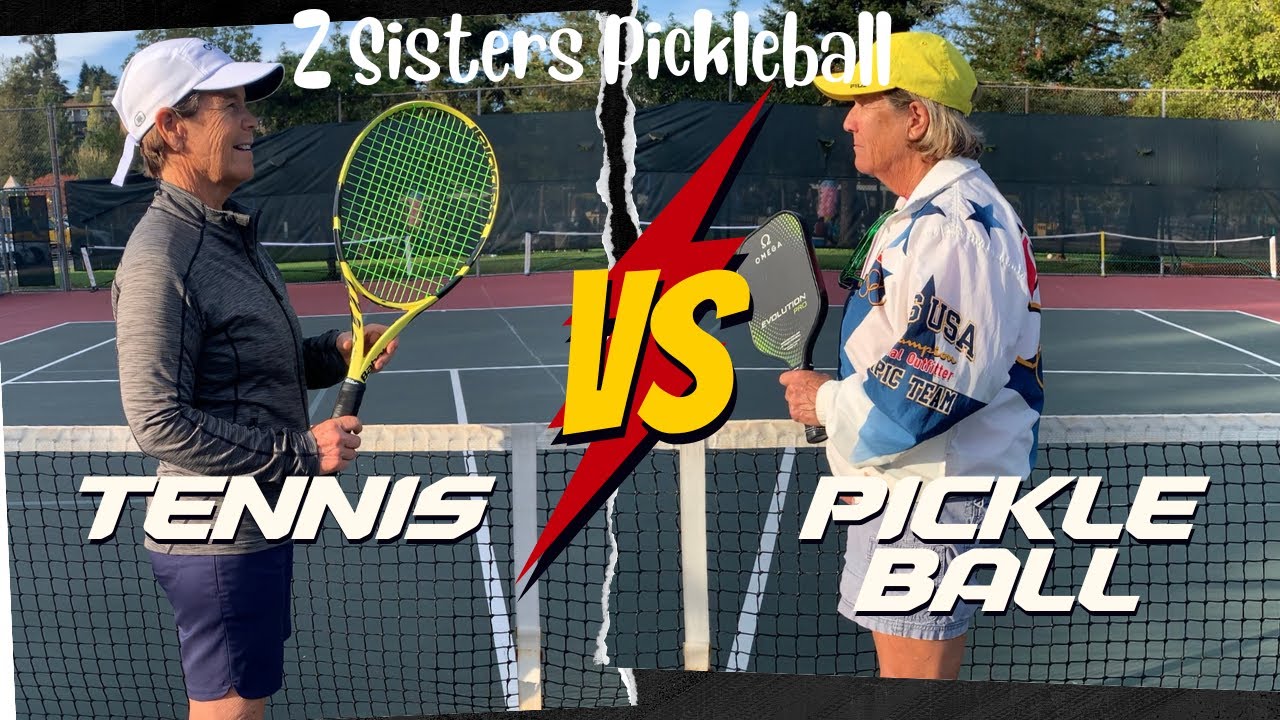
Try both! Many players switch between the two, enjoying the unique skills and benefits each sport offers.
Credit: www.youtube.com
Frequently Asked Questions
What Is The Kitchen In Pickleball?
The kitchen is the no-volley zone in pickleball. It’s a 7-foot area on each side of the net where you cannot volley (hit the ball in the air). Players must let the ball bounce before hitting it if they are inside this zone.
Can You Play Pickleball On A Tennis Court?
Yes, you can set up pickleball lines on a tennis court. Portable nets and tape are used to mark the smaller pickleball court. Many public tennis courts now have permanent pickleball lines, allowing both sports to share space.
Is Pickleball Easier To Learn Than Tennis?
Most people find pickleball easier to learn. The rules are simple, the court is smaller, and the ball moves slower. Beginners can rally and enjoy the game quickly, while tennis takes more time to master basic skills.
What Are The Main Injuries In Pickleball?
Common injuries include ankle sprains, falls, and minor paddle bumps. Pickleball is low-impact, so serious injuries are rare. Warm up, wear proper shoes, and play safely to avoid problems.
Why Is Pickleball Growing So Fast?
Pickleball’s growth is due to accessibility, fun gameplay, and a friendly community. It’s affordable, easy to learn, and welcoming to players of all ages. The sport also adapts well to indoor and outdoor venues, making it available year-round.
Pickleball and tennis both offer great experiences, but each fits different needs and lifestyles. Whether you’re seeking competition or fun, you’ll find a sport that works for you—so grab a paddle or racquet and start playing.