How to Play Pickleball Doubles: Tips for Winning Every Match

Pickleball doubles is a fun and exciting game that combines elements of tennis, badminton, and ping-pong. It’s played with a paddle and a plastic ball with holes.
Learning to play pickleball doubles can be a great way to enjoy time with friends and stay active. Pickleball doubles is growing in popularity. It’s easy to learn and suitable for all ages. The game offers both physical exercise and social interaction.
In this blog post, you will discover the basics of pickleball doubles, including rules, strategies, and tips. Whether you are a beginner or looking to improve your game, this guide will help you understand how to play pickleball doubles effectively. Get ready to have fun and enhance your skills on the court!
Contents
Introduction To Pickleball Doubles
Pickleball doubles is a fun and fast-paced sport. It combines elements of tennis, badminton, and ping-pong. Playing doubles means you team up with a partner. Together, you play against another pair. This makes the game more dynamic and strategic.
Brief History
Pickleball was invented in 1965. Three dads, Joel Pritchard, Bill Bell, and Barney McCallum, created it. They wanted to entertain their kids during summer. The game started with simple rules and equipment. Over time, it evolved and gained popularity. Today, millions of people play pickleball worldwide.
Basic Rules
The game is played on a court similar to a badminton court. The net is slightly lower than a tennis net. Each side starts with two players. Here are some basic rules:
- The game begins with a serve.
- The serve must be underhand.
- The ball must land in the opposite diagonal court.
- Players must let the ball bounce once on each side before volleys.
- The serving team can only score points.
- The game is usually played to 11 points.
Pickleball doubles require teamwork and communication. Each player has a role. One player often covers the net while the other stays back. This strategy helps cover more ground and makes it harder for opponents to score.
To win, practice is key. Learn the rules and strategies. Play often with different partners to improve your skills. Enjoy the game and have fun!
Essential Equipment
Playing pickleball doubles requires some essential equipment to ensure a great game. Whether you’re a beginner or a seasoned player, having the right gear can make a difference. In this section, we will cover the fundamental equipment you need to play pickleball doubles.
Paddles
Paddles are crucial for playing pickleball. They come in various materials like wood, composite, and graphite. Each type offers different levels of control and power. Beginners often start with wood paddles because they are affordable. Composite paddles provide a balance between power and control, while graphite paddles are lightweight and offer high control.
| Material | Advantages |
|---|---|
| Wood | Affordable, durable |
| Composite | Good balance of power and control |
| Graphite | Lightweight, high control |
Balls
Pickleball balls are similar to wiffle balls but are designed specifically for the game. They come in two types: indoor and outdoor. Indoor balls have larger holes and are lighter. Outdoor balls are heavier and have smaller holes to withstand wind. Make sure to choose the right ball for your playing environment.
- Indoor balls: Larger holes, lighter
- Outdoor balls: Smaller holes, heavier
Court Gear
The court gear includes the net, boundary lines, and posts. The net should be 36 inches high at the sidelines and 34 inches high in the middle. Boundary lines mark the court dimensions, which are 20×44 feet for doubles. Ensure the net is taut and the lines are clearly visible.
- Net: 36 inches high at sidelines, 34 inches high in middle
- Boundary lines: 20×44 feet for doubles
- Posts: Should be sturdy and well-anchored
Court Positioning
Understanding court positioning in pickleball doubles is key to winning matches. Good positioning helps you and your partner cover the court efficiently. This section will guide you through the basics.
Starting Positions
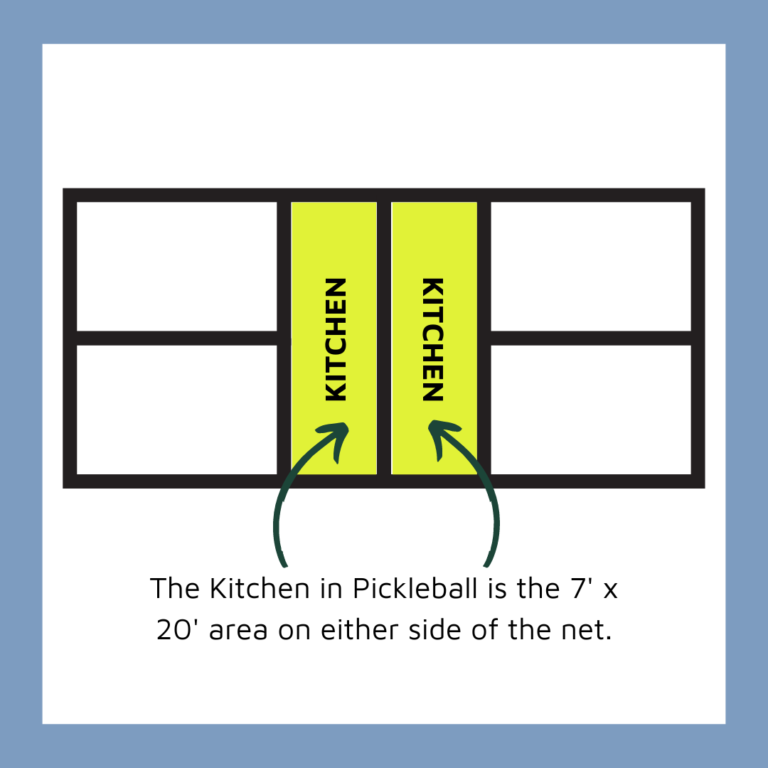
At the start of the game, players line up on opposite sides of the net. The server stands behind the baseline. The partner stands near the kitchen line. The receiving team follows a similar setup. One player stands behind the baseline to receive the serve. The other player stands near the kitchen line. This setup ensures that players are ready to cover different areas of the court.
Movement Strategies
Effective movement is crucial in pickleball doubles. Both players should move together, like a well-coordinated dance. Always maintain a distance of about 10-12 feet between you and your partner. If one player moves forward, the other should follow. If one moves to the side, the other should do the same. This keeps your formation tight and avoids gaps.
Communicate with your partner. Call out when you go for the ball. This helps avoid confusion. Stay alert to your opponents’ positions. Adjust your positioning based on their movements. This proactive approach helps you stay one step ahead.
Serving Techniques
Mastering the serve in pickleball doubles is key to winning matches. A good serve can set the tone and give you an early advantage. In this section, we will explore effective serves and common mistakes to avoid.
Effective Serve
To execute an effective serve, follow these steps:
- Position yourself behind the baseline.
- Hold the paddle with a firm grip.
- Focus on your target area within the opponent’s service box.
- Use an underhand motion to serve the ball.
- Ensure the ball clears the net and lands in the correct service box.
Practicing these steps can improve your consistency and effectiveness. An effective serve is not only about power but also about placement. Aim for the corners of the service box to make it harder for your opponents to return the ball.
Common Mistakes
Many players make common mistakes when serving. Here are some mistakes to avoid:
- Foot faults: Stepping over the baseline before hitting the ball.
- High serves: Serving the ball too high, allowing opponents an easy return.
- Weak serves: Hitting the ball without enough force, making it easy for opponents to attack.
- Poor aim: Failing to place the ball accurately within the service box.
To avoid these mistakes, focus on proper technique and practice regularly. Remember to stay relaxed and confident while serving. Consistency and accuracy are more important than power.
Communication With Partner
Effective communication with your partner is essential in pickleball doubles. It helps ensure coordination and improves your chances of winning. Let’s explore the key aspects of verbal signals and non-verbal cues.
Verbal Signals
Verbal signals are crucial for clear and instant communication on the court. Here are some common verbal signals to use:
- “Mine”: Use this word to claim a shot.
- “Yours”: This indicates your partner should take the shot.
- “Switch”: Call this out when you need to change positions.
- “Out”: Let your partner know the ball is going out of bounds.
Using these simple words can prevent confusion and ensure both players know their roles.
Non-verbal Cues
Non-verbal cues are equally important in pickleball doubles. They help convey messages without interrupting the flow of the game. Consider these common non-verbal cues:
- Eye Contact: Make eye contact with your partner before serving or receiving.
- Hand Signals: Use hand signals to indicate your intended move.
- Body Position: Adjust your body position to signal readiness or direction.
- Gestures: Simple gestures, like pointing, can direct your partner’s attention.
Implementing these non-verbal cues can enhance your teamwork and game performance.

Credit: theartofpickleball.net
Offensive Strategies
Offensive strategies are crucial in pickleball doubles. Effective tactics can provide your team with a significant advantage. By focusing on key offensive plays, you can control the game and put pressure on your opponents. This section delves into vital offensive strategies to help you win more points.
Net Play
Net play is a powerful offensive strategy. Position yourselves close to the net to dominate the game. This allows you to intercept shots and execute quick volleys. Fast reflexes and sharp coordination are essential. Stay alert and be ready to move rapidly.
Communicate with your partner during net play. Clear and concise communication helps you cover the court effectively. Decide who takes which shots to avoid confusion. Practice together to build a strong understanding of each other’s movements.
Targeting Opponents
Targeting opponents can disrupt their rhythm. Observe their weaknesses and exploit them. Aim your shots at their less dominant side. This forces them to make errors and lose points.
Use strategic placement of shots. Aim for areas that are difficult for your opponents to reach. Target the gaps between players or hit the ball at their feet. This creates opportunities for your team to score.
Maintain a consistent offensive approach. Keep your opponents under pressure. Vary your shots to keep them guessing. Mix up your strategies to stay unpredictable and challenging.
Defensive Tactics
In pickleball doubles, defensive tactics are crucial for keeping the ball in play and forcing your opponents to make mistakes. Effective defense can turn the tide of the game, giving you and your partner the advantage. Below, we will discuss two essential defensive strategies: blocking shots and court coverage.
Blocking Shots
Blocking shots is an essential skill in pickleball doubles. It helps you control the pace of the game. When your opponents hit a strong shot, you can block it to send the ball back softly and accurately.
- Hold your paddle firmly but not too tight.
- Keep your paddle angle neutral to guide the ball back.
- Stand with your knees slightly bent for better balance.
- Watch the ball closely and anticipate its trajectory.
- Use a short, controlled motion to absorb the ball’s impact.
By mastering blocking shots, you can reduce your opponents’ attacking opportunities and keep the ball in play.
Court Coverage
Effective court coverage requires teamwork and communication. Both players must understand their roles and move efficiently.
| Player Position | Responsibilities |
|---|---|
| Net Player | Cover short balls and quick volleys. Communicate with your partner. |
| Baseline Player | Cover deep shots and lob returns. Provide backup to the net player. |
Both players should move as a unit, maintaining a balanced court position. Here are some tips for better court coverage:
- Stay on your toes for quick movements.
- Communicate with your partner using simple signals.
- Adjust your positions based on the ball’s location.
- Rotate roles as needed to keep the pressure on your opponents.
Good court coverage helps you defend against various shots and keeps your team in control.
Credit: www.aarp.org
Mental Preparation
Mental preparation is key for playing pickleball doubles. It helps you stay calm and focused during the game. This guide covers important aspects of mental preparation, such as staying focused and handling pressure. These tips can improve your performance and enjoyment of the game.
Staying Focused
Staying focused during a pickleball doubles game is crucial. Concentrate on the ball and your opponent’s movements. Avoid distractions and keep your mind on the game. Communicate with your partner regularly. This helps you both stay in sync. Take deep breaths to clear your mind and maintain focus.
Handling Pressure
Pressure can affect your pickleball performance. Learn to handle it calmly. Stay positive and encourage yourself and your partner. If you make a mistake, shake it off quickly. Focus on the next point instead of dwelling on errors. Visualize successful shots and strategies. This mental practice can build confidence.
Practice Drills
Practicing drills is vital in improving your pickleball doubles game. Regular drills help enhance coordination, teamwork, and overall performance. Focus on different aspects of the game to become a better player. Here are some effective practice drills for pickleball doubles.
Warm-up Routines
Start with basic stretching exercises. Loosen your muscles and increase flexibility. Perform dynamic stretches like arm circles and leg swings. These help prepare your body for more intense activities. Next, engage in light jogging around the court. This increases your heart rate and improves blood circulation. Finally, practice gentle hitting with your partner. Use soft strokes to get a feel for the paddle and the ball.
Skill-building Exercises
Begin with dinking drills. Stand at the non-volley zone and gently hit the ball back and forth. Focus on control and placement. Next, practice volleys. Stand closer to the net and hit the ball before it bounces. This sharpens your reflexes and quick decision-making. Then, move on to third-shot drops. Serve the ball, and on the return, aim to drop it softly into the non-volley zone. This drill helps improve accuracy and strategy. Lastly, work on your serves. Practice different types of serves like deep serves and short serves. This enhances your serving skills and keeps your opponent guessing.
Common Mistakes To Avoid
Pickleball doubles can be fun. But, players often make common mistakes. These errors can change the game’s outcome. By avoiding these mistakes, you can play better and win more games. Let’s explore some frequent errors and how to prevent them.
Foot Faults
Foot faults are a common error in pickleball. This happens when players step into the non-volley zone while hitting the ball. To avoid this, always watch your feet. Practice keeping your feet behind the line. This helps you avoid foot faults and play legally.
Poor Communication
Communication is key in doubles. Poor communication can lead to missed shots. Always talk to your partner. Use simple words like “mine” or “yours”. This helps you know who will hit the ball. Good communication leads to better teamwork.
Advanced Tips
Playing pickleball doubles requires more than basic skills. To excel, you need advanced strategies. These tips will help you stay ahead.
Anticipating Shots
Great players anticipate their opponent’s next move. Watch their paddle angle. This gives clues about the shot’s direction. Stay alert to their body position. It often indicates the shot’s speed and spin.
Practice reading your opponent’s tendencies. Some players favor certain shots. Knowing this can help you predict their moves. Improve your reaction time with drills. This sharpens your ability to respond quickly.
Adapting To Opponents
Each opponent is different. Adapt your strategy to their playing style. Aggressive players need a different approach than defensive ones. Recognize their strengths and weaknesses. Use this information to your advantage.
Change your shots and positioning to keep them guessing. Mix up your serves and returns. This prevents them from settling into a rhythm. Stay flexible and ready to adjust your game plan. This adaptability will keep you competitive.

Credit: www.bigdillpickleballcompany.com
Frequently Asked Questions
What Are The Basic Rules Of Pickleball Doubles?
In pickleball doubles, each team has two players. The game begins with an underhand serve. Points are scored only by the serving team. Teams switch sides after each game.
How Do You Serve In Pickleball Doubles?
To serve in pickleball doubles, hit the ball underhand from behind the baseline. The serve must land in the diagonal service court. Only one serve attempt is allowed per player.
What Is The Double Bounce Rule In Pickleball?
The double bounce rule requires the ball to bounce once on each side after the serve. This rule ensures fair play and longer rallies.
How Do You Score Points In Pickleball Doubles?
In pickleball doubles, only the serving team can score points. Points are scored when the opposing team commits a fault, such as hitting the ball out of bounds.
Conclusion
Playing pickleball doubles is fun and engaging. Remember to communicate with your partner. Focus on teamwork and strategy. Stay alert and move quickly. Practice regularly to improve skills. Keep the game enjoyable and fair. Encourage each other and stay positive.
With these tips, your pickleball doubles experience will be rewarding and fun. Enjoy the game and keep playing!