What is Stacking in Pickleball: Master This Winning Strategy

Stacking in pickleball is a strategic positioning technique. It helps teams optimize their strengths.
Pickleball is a fast-growing sport that combines elements of tennis, badminton, and table tennis. With its easy-to-learn rules and smaller court size, it’s attracting players of all ages. One advanced strategy used by many competitive players is called stacking. This technique involves partners positioning themselves in specific ways to gain an advantage.
Stacking can help teams maximize their strengths, cover the court more effectively, and confuse opponents. Understanding and mastering stacking can elevate your game, making you a more formidable player on the court. Ready to learn more about this intriguing strategy? Let’s dive into the details and see how stacking can improve your pickleball performance.
Credit: www.ppatour.com
Introduction To Stacking
Stacking in pickleball is a strategy used by doubles teams to improve court positioning. By switching sides after serving, players can maximize their strengths and cover weaknesses. This technique helps in better communication and team coordination.
Stacking in pickleball is a strategy used by doubles teams. It helps players maintain their preferred positions on the court. This technique is common among advanced players. The goal is to optimize player strengths and cover weaknesses.Basics Of Stacking
In stacking, players start on the same side of the court. One player serves or returns while the other player stands near the baseline. After the serve or return, players quickly move to their preferred positions. This movement can confuse opponents and create advantages. Communication is key in stacking. Both players must know their roles and movements. Proper coordination ensures smooth transitions and effective gameplay.Importance In Pickleball
Stacking can significantly impact a team’s performance. It allows players to use their strengths more effectively. Right-handed and left-handed players can position themselves optimally. This reduces weak spots and increases the team’s overall defense. Stacking also helps maintain a strong net presence. Players can cover the court more efficiently. This leads to better shot opportunities and reduces unforced errors. In summary, stacking is a valuable strategy in pickleball. It requires practice, communication, and teamwork. Mastering stacking can give teams a competitive edge. “`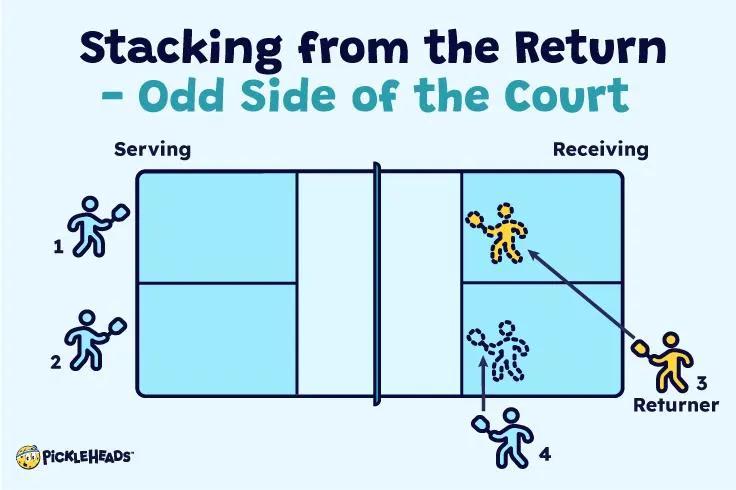
Credit: www.pickleheads.com
How Stacking Works
Understanding stacking in pickleball can significantly improve team strategy. It involves positioning players in a way that maximizes their strengths and minimizes weaknesses. This technique is particularly useful in doubles play, where coordination is key. Let’s dive into how stacking works.
Player Positioning
Player positioning is crucial in stacking. The goal is to place players in their optimal positions. Typically, one player prefers the left side while the other prefers the right. This preference is based on their stronger hand. For example, a right-handed player might prefer the left side to use their forehand more effectively.
During stacking, players start on the same side of the court. This allows them to switch quickly and get into their preferred positions. Proper positioning helps players cover the court more efficiently and play to their strengths.
Court Coverage
Court coverage improves with effective stacking. When players are in their preferred positions, they can cover their areas more effectively. This reduces gaps and makes it harder for opponents to find weaknesses.
Consider the following table for a quick overview of court coverage benefits:
| Player Position | Coverage Area | Benefits |
|---|---|---|
| Left Side | Forehand Dominant | Stronger shots, fewer errors |
| Right Side | Backhand Dominant | Better defense, strategic play |
Effective court coverage ensures that players can return shots more efficiently. It also helps in maintaining a strategic advantage during the game.
Benefits Of Stacking
Stacking in pickleball is a unique strategy. It can provide significant advantages to your team. By adjusting positions, players can play to their strengths. This method can also enhance overall team performance. Below are some key benefits of stacking in pickleball.
Maximizing Strengths
One of the main benefits of stacking is maximizing strengths. Each player has a dominant side. Stacking allows players to use their strong side more often. This can lead to better shots and more effective play.
For instance, if a player has a strong forehand on the right side, stacking can position them to use this strength. This can help in scoring more points. It can also make it difficult for opponents to defend.
Improving Team Coordination
Improving team coordination is another significant benefit of stacking. When players know their positions well, they can anticipate each other’s moves. This leads to better communication and fewer mistakes.
Teams can develop signals and strategies that work best for them. For example, knowing when to switch positions or cover a shot. This level of coordination can be crucial during intense matches.
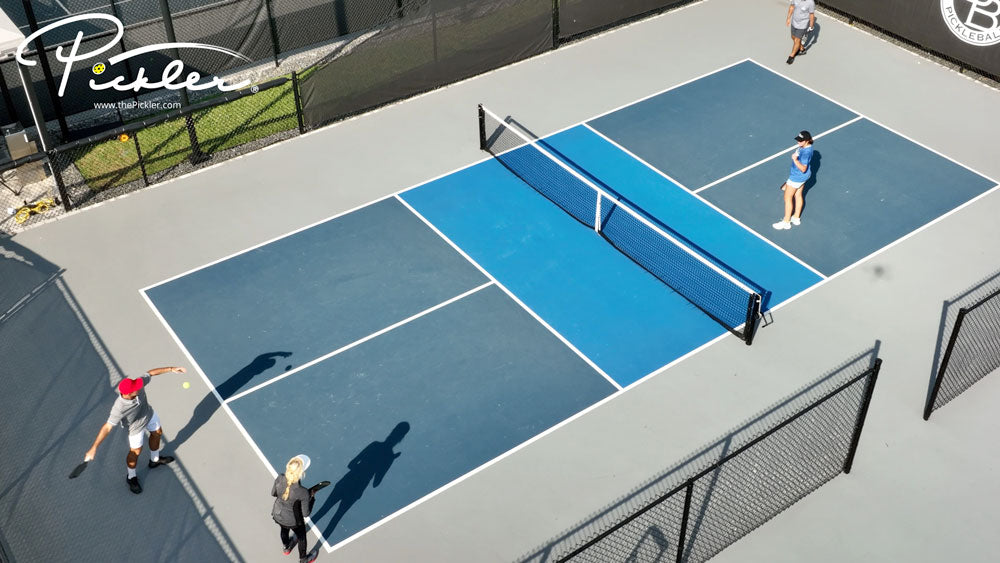
Overall, stacking promotes a better understanding between teammates. It ensures that each player is in the best position to succeed. This can give your team a competitive edge.
Credit: thepickler.com
Common Stacking Formations
Stacking in pickleball is a strategy to keep players in their preferred positions. It helps maximize strengths and cover weaknesses. There are several stacking formations, each with its benefits. Let’s explore two common ones: Traditional Stacking and Progressive Stacking.
Traditional Stacking
Traditional stacking is the most basic form. In this formation, players switch places after serving or receiving. The goal is to keep the stronger player on their preferred side. This method is straightforward and easy to execute. Here’s how it works:
- Player A serves from the right side.
- Player B stands on the left side.
- After serving, Player A moves to their preferred position.
- Player B adjusts to complement Player A’s position.
This setup ensures each player stays in their comfort zone. It minimizes weaknesses and maximizes strengths. Traditional stacking is best for beginners and intermediate players. It requires less coordination and is easy to remember.
Progressive Stacking
Progressive stacking is more dynamic. It allows players to switch positions based on the game situation. This formation is flexible and adaptable. Players must communicate well and think quickly. Here’s a typical progressive stacking scenario:
- Player A serves from the right side.
- Player B stands on the left side.
- After serving, Player A moves to the middle.
- Player B shifts to the right or left, depending on the return.
In progressive stacking, players adjust their positions constantly. This keeps opponents guessing and creates confusion. It also allows players to exploit openings and weaknesses in the opponent’s formation. Progressive stacking is best for advanced players. It requires excellent communication and quick decision-making.
To summarize, both traditional and progressive stacking have their unique advantages. Traditional stacking is simple and effective for maintaining positions. Progressive stacking offers flexibility and adaptability for complex situations. Choose the formation that suits your team’s strengths and strategy. Practice and communication are key to mastering these formations.
When To Use Stacking
Stacking in pickleball is a strategic technique used to gain an advantage during a match. The idea is to position players in a way that maximizes their strengths. But when should you use stacking? Let’s explore different scenarios where stacking can be beneficial.
Offensive Scenarios
Stacking can give you an edge in offensive situations. If one player has a strong forehand, position them to use it frequently. This can help control the game and apply pressure on opponents. If both players are right-handed, stacking can place their forehands in the middle. This creates a powerful zone for attacking shots.
Defensive Scenarios
Stacking is also useful in defensive plays. If you face a team with strong cross-court shots, stacking can help counteract this. Position the stronger defensive player to cover these shots. If one player excels at net play, stacking can place them closer to the net. This can help block and return difficult shots effectively.
Tips For Effective Stacking
Stacking in pickleball can be a powerful strategy. It allows players to maximize their strengths and cover weaknesses. To use stacking effectively, you need some key skills. These tips will help you improve your stacking technique.
Communication Skills
Good communication is vital in stacking. Talk with your partner before each point. Decide your positions and movements. Use clear and simple terms. During play, keep talking. Give quick updates on ball placement and opponent movements.
Practice Drills
Practice makes perfect. Set up drills to work on stacking. Focus on positioning first. Ensure you and your partner know where to go. Then, add movement. Practice shifting quickly from one position to another.
Include game-like scenarios in your drills. Simulate real matches. Practice stacking in different situations. This will help you stay prepared during a game.
Common Mistakes In Stacking
Stacking in pickleball can offer a strategic advantage. But players often make mistakes. These errors can lead to confusion and lost points. Understanding common mistakes helps players improve their game.
Poor Positioning
Positioning is crucial in stacking. Many players stand in the wrong spot. This makes it hard to cover the court effectively. Players should stand slightly behind the baseline. This allows quick movement forward.
Another common mistake is not adjusting to the opponent’s shots. Players need to reposition based on where the ball is going. Staying static can leave gaps. These gaps are easy targets for opponents.
Lack Of Coordination
Coordination between partners is key in stacking. Miscommunication leads to confusion. Both players might go for the same shot. Or, they might leave the ball to each other. Clear signals and practice can help.
Another issue is not practicing switching positions. Players need to switch roles smoothly. This takes practice. Without it, players can bump into each other or miss shots. Practicing coordinated movements can reduce these mistakes.
Advanced Stacking Strategies
Advanced stacking strategies in pickleball can elevate your game. These strategies require coordination and precise timing. Let’s delve into some key techniques that will help you master advanced stacking.
Switching Techniques
Switching techniques are crucial in advanced stacking. They allow players to cover the court efficiently. Here are some common switching methods:
- Signal Switching: One player signals the switch before the serve.
- Verbal Cues: Players use specific words to indicate a switch.
- Visual Cues: A hand gesture or nod can prompt a switch.
Using these methods helps players stay in sync. Consistent practice will make switching second nature.
Dynamic Movement
Dynamic movement is key to effective stacking. It involves moving seamlessly across the court. Here are some tips for enhancing dynamic movement:
- Stay Low: Keep your center of gravity low for better balance.
- Quick Steps: Use short, quick steps to adjust your position.
- Anticipate: Read your opponent’s moves and adjust accordingly.
Dynamic movement ensures you are always in the right spot. It minimizes the gaps that opponents can exploit.
| Technique | Benefit |
|---|---|
| Signal Switching | Prevents confusion during the game |
| Verbal Cues | Enhances communication between players |
| Stay Low | Improves balance and agility |
| Quick Steps | Allows rapid adjustments |
Incorporating these advanced stacking strategies can significantly improve your pickleball game. Remember to practice regularly to achieve seamless coordination and movement.
Frequently Asked Questions
What Is Stacking In Pickleball?
Stacking in pickleball is a strategy to keep players in their preferred positions. It involves partners standing on the same side during the serve. This helps in maintaining advantageous positioning throughout the game.
Why Do Players Stack In Pickleball?
Players stack in pickleball to optimize their strengths and cover weaknesses. This strategy helps maintain favorable positioning and ensures players stay in their preferred roles during the game.
Is Stacking Legal In Pickleball?
Yes, stacking is completely legal in pickleball. It is a common strategy used by many players to gain a competitive edge. The rules allow this positioning as long as players follow the serving and receiving guidelines.
How Do You Stack In Pickleball?
To stack, players start on the same side of the court. After the serve, they quickly move to their preferred positions. This strategy helps teams maintain advantageous positioning and play to their strengths.
Conclusion
Stacking in pickleball enhances team strategy and positioning. It allows players to maximize strengths on the court. By understanding and practicing stacking, teams can improve their performance. This technique isn’t complicated once you get the hang of it. Start incorporating stacking into your games.
You’ll see improved coordination and better results. Remember, practice makes perfect. Keep playing, keep learning. Happy pickleball!