Padel Vs Pickleball Racket: Key Differences Explained

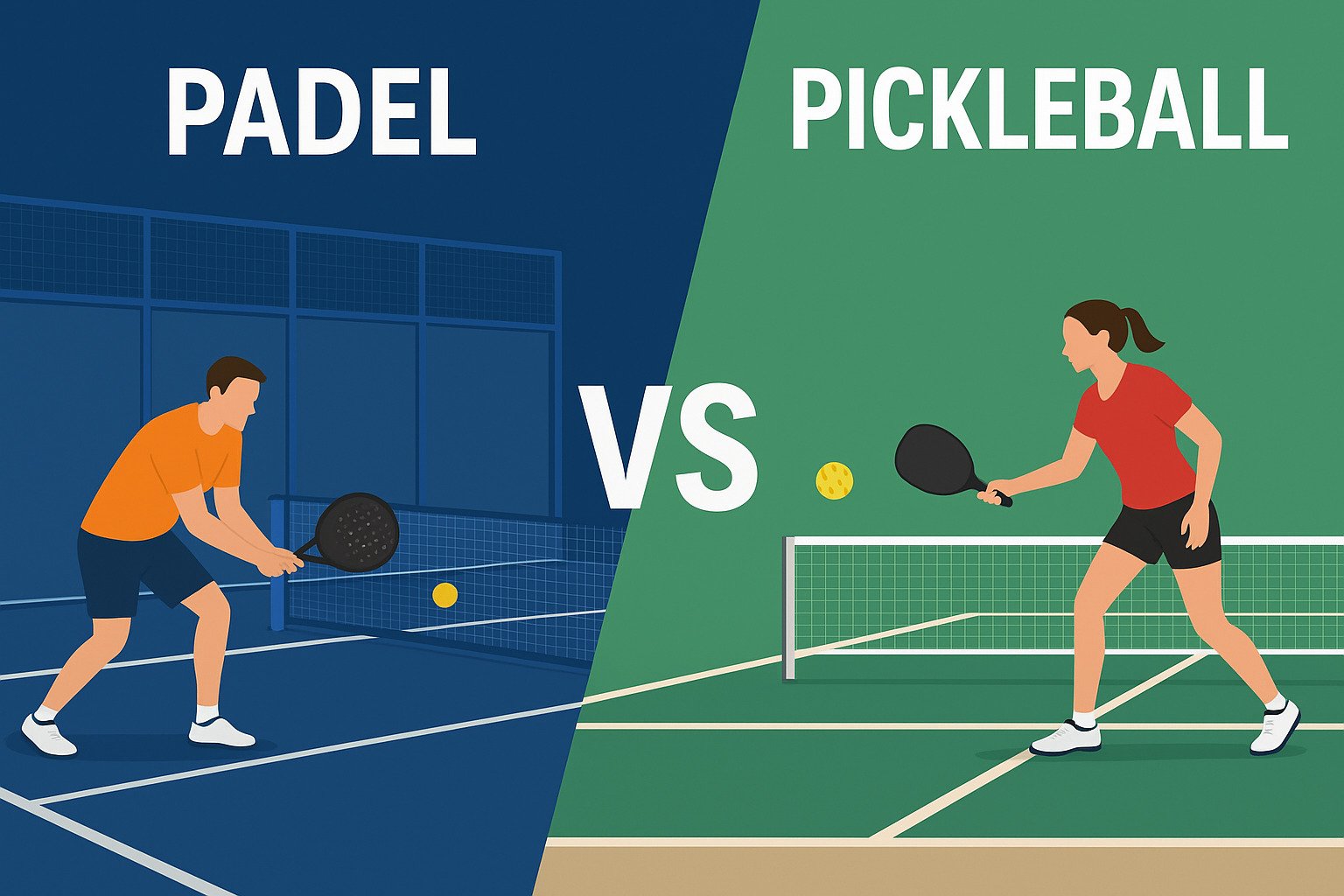
Padel and pickleball are two of the world’s fastest-growing racket sports. Both are fun, social, and easy to learn, but they each use very different rackets. If you’re new to these sports, you may wonder: what’s really the difference between a padel racket and a pickleball racket? Is one better for beginners? How do their designs affect your game?
This article is your complete guide to understanding the differences, similarities, and important details about padel and pickleball rackets. Whether you’re choosing your first racket or just curious about these sports, you’ll find clear answers here.
What Is A Padel Racket?
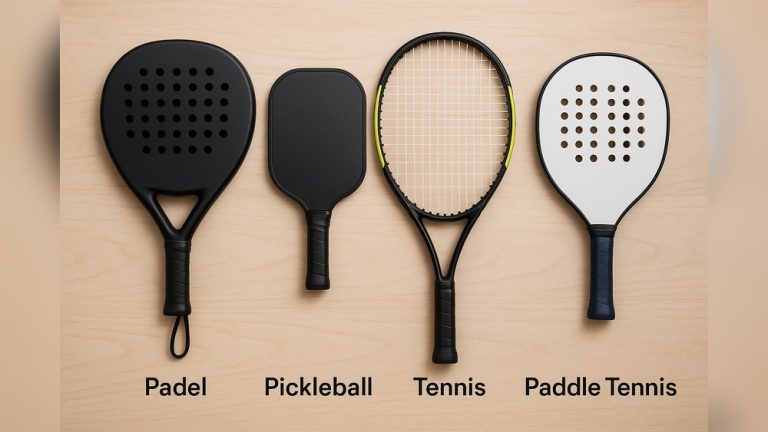
A padel racket is specially designed for the sport of padel, which is played on an enclosed court with walls. Padel rackets do not have strings. Instead, they are made from a solid piece of material with holes drilled through the face.
Design And Shape
Padel rackets are usually:
- Solid-faced (no strings)
- Perforated with many holes
- Shorter than tennis rackets
- Made from materials like carbon fiber, fiberglass, or foam
- Shaped like a teardrop, round, or diamond
The holes reduce air resistance and make the racket easier to swing. The shape affects power and control. For example, round shapes are easier for beginners, while diamond shapes offer more power for advanced players.
Size And Weight
- Length: Up to 45.5 cm (about 18 inches)
- Width: Up to 26 cm (about 10 inches)
- Thickness: Up to 38 mm (about 1.5 inches)
- Weight: Usually between 340 and 390 grams (12-14 ounces)
These rackets are compact, which helps with fast reactions near the wall and net.
Materials
Padel rackets use a mix of carbon fiber, fiberglass, and EVA foam for the core. Carbon fiber gives more power and durability, while fiberglass is softer and provides more control. The foam core helps absorb shock and gives a bit of bounce.
Handle And Grip
Padel rackets have a short handle, designed for quick wrist movement. The grip is usually padded and about the same thickness as a tennis racket grip.
Unique Features
- No strings at all
- Holes on the face for aerodynamics
- Solid construction (not hollow)
- Wrist strap for safety
Padel rackets are designed for close, fast rallies and frequent wall bounces.
What Is A Pickleball Racket?
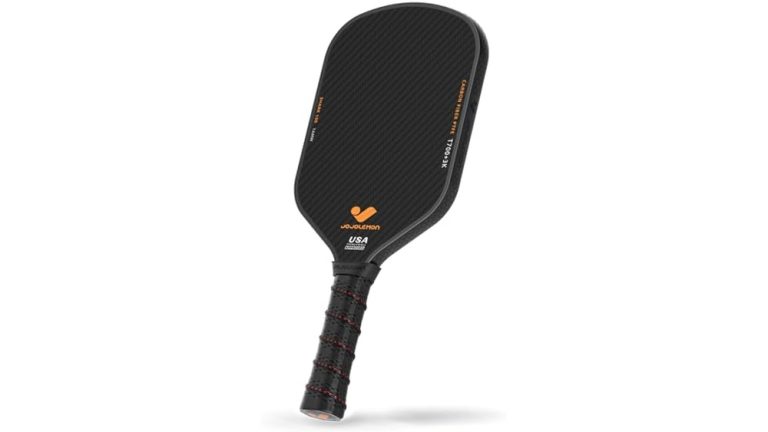
A pickleball racket (commonly called a “paddle”) is designed for pickleball, a sport played on a court about one-third the size of a tennis court. Like padel rackets, pickleball paddles are also stringless, but their design and construction are quite different.
Design And Shape
Pickleball paddles are:
- Flat-faced and solid (no strings)
- Usually rectangular or slightly oval
- Often have squared-off edges
- Made from plastic, composite, or graphite materials
The face is smooth, sometimes textured to add spin.
Size And Weight
- Length: Up to 43.2 cm (17 inches)
- Width: Up to 21.6 cm (8.5 inches)
- Thickness: Usually 10-16 mm (0.4-0.6 inches)
- Weight: Usually between 200 and 255 grams (7-9 ounces)
Pickleball paddles are lighter and thinner than padel rackets.
Materials
Most modern paddles use:
- Polymer or aluminum honeycomb core
- Graphite, carbon fiber, or fiberglass faces
The honeycomb core reduces weight while keeping the paddle strong. Graphite and carbon fiber faces give quick response and more ball feel.
Handle And Grip
Pickleball paddles have longer handles (sometimes up to 6 inches) than padel rackets. The grip is similar in size to a tennis racket, and some models let you adjust the grip size.
Unique Features
- No holes in the paddle face
- Lighter than padel rackets
- Many come with edge guards to prevent chipping
Pickleball paddles are made for a fast-paced game where the ball rarely bounces off a wall, and control is key.

Credit: kansascitymag.com
Side-by-side Comparison
A direct comparison makes the differences even clearer.
| Feature | Padel Racket | Pickleball Paddle |
|---|---|---|
| Face | Solid, with holes | Solid, no holes |
| Material | Carbon fiber, fiberglass, foam | Polymer/aluminum core, graphite/carbon face |
| Weight | 340-390g (12-14oz) | 200-255g (7-9oz) |
| Length | Up to 45.5cm (18in) | Up to 43.2cm (17in) |
| Thickness | Up to 38mm (1.5in) | 10-16mm (0.4-0.6in) |
| Handle | Short | Longer |
| Grip | Padded, fixed | Padded, adjustable size |
| String Pattern | None | None |
| Edge Guard | Rare | Common |
| Wrist Strap | Yes | Sometimes |
How Racket Design Affects Game Play
The differences in racket design have a direct impact on how each sport is played. Let’s explore how each key feature influences your experience on the court.
Power And Control
- Padel rackets are heavier, which means you can hit with more power. The foam core helps absorb shock, making it easier to control volleys near the wall.
- Pickleball paddles are lighter, which allows for faster wrist action and quick reaction at the net. However, the lighter weight means less mass behind your shots, so hitting powerfully often requires good technique.
Spin
- Padel rackets can generate spin thanks to their textured surface and the friction from the holes. This is important for advanced padel play, especially on serves and lobs.
- Pickleball paddles often have a textured face to help with spin, but the effect is less dramatic than in padel. Spin is still useful for dinks and drop shots.
Maneuverability
- The compact size and short handle of padel rackets make them easy to maneuver in tight spaces, which is essential when playing near the glass walls.
- Pickleball paddles are even lighter and can be swung very quickly. Their longer handle allows for more reach but less wrist snap.
Sweet Spot
- Padel rackets have a larger sweet spot, especially in round and teardrop shapes. This makes it easier for beginners to hit the ball consistently.
- Pickleball paddles have a smaller sweet spot, especially on elongated models. Hitting off-center can result in less control.
Durability
- Padel rackets are more likely to chip or crack if they hit the wall hard, since they are made of layered materials. However, the solid face is strong under normal use.
- Pickleball paddles with edge guards are very durable. The honeycomb core can get dead spots over time, but most paddles last for years with proper care.
Rules And Regulations For Racket Sizes
Both sports have strict rules about racket size and materials.
Padel Racket Regulations
According to the International Padel Federation, padel rackets must:
- Not exceed 45.5cm in length, 26cm in width, and 38mm in thickness
- Have a flat surface with holes
- Have no sharp edges or dangerous materials
- Include a wrist strap for safety
Any racket that does not meet these rules cannot be used in competition.
Pickleball Paddle Regulations
The USA Pickleball organization states that paddles must:
- Not be longer than 43.2cm (17 inches)
- Not be wider than 21.6cm (8.5 inches)
- The sum of length and width must not exceed 60.96cm (24 inches)
- Not have holes or rough surfaces that give an unfair advantage
Some new paddle materials are tested and approved before they can be used in tournaments.
Popular Racket Types And Models
Both sports offer a wide range of rackets for beginners, intermediates, and advanced players. Here are some of the most popular types.
Padel Rackets
- Round Shape – Easy to control, large sweet spot, best for beginners.
- Teardrop Shape – Balanced power and control, popular for intermediate players.
- Diamond Shape – More power, smaller sweet spot, suited for advanced players.
Example Models:
- Bullpadel Vertex (diamond)
- Adidas Adipower Ctrl (round)
- Head Graphene 360+ Alpha Pro (teardrop)
Pickleball Paddles
- Standard Shape – Balanced, easy to use, best for beginners.
- Elongated Shape – More reach, smaller sweet spot, preferred by advanced players.
- Widebody Shape – Larger face, very forgiving, good for control.
Example Models:
- Selkirk Amped S2 (widebody)
- Onix Z5 Graphite (standard)
- Paddletek Tempest Wave Pro (elongated)
How To Choose The Right Racket For You
Choosing the right racket depends on your skill level, play style, and physical needs.
For Beginners
- Padel: Start with a round racket, which is forgiving and easy to control. Look for lighter models (340-360g).
- Pickleball: Choose a standard or widebody paddle under 8 ounces. A polymer core is softer and helps with control.
For Intermediate And Advanced Players
- Padel: Try a teardrop or diamond-shaped racket for more power. Heavier models (370-390g) suit players with good technique.
- Pickleball: Consider an elongated paddle for extra reach and spin. Graphite faces give more feedback but require more accuracy.
Physical Considerations
- Players with wrist or elbow pain should pick lighter rackets/paddles with softer cores.
- If you have a smaller hand, look for rackets with thinner grips or adjustable grip sizes.
Try Before You Buy
The feel of a racket is very personal. If possible, test different models at a local club or borrow from friends before making a purchase.
Price Ranges And What You Get
The cost of a racket or paddle depends on materials, brand, and design.
| Type | Entry-Level Price | Mid-Range Price | Pro-Level Price |
|---|---|---|---|
| Padel Racket | $50-$100 | $100-$200 | $200-$400+ |
| Pickleball Paddle | $30-$60 | $60-$120 | $120-$250+ |
- Entry-level rackets use basic materials and are fine for casual play.
- Mid-range rackets add better materials and construction for improved feel and performance.
- Pro-level rackets use the latest technology and are designed for competitive play.
Pro tip: For most recreational players, a mid-range racket offers the best balance of quality and price.
Common Mistakes When Choosing A Racket
- Going Too Heavy or Too Light: Heavier rackets give more power but can tire your arm. Lighter ones are easier to swing but may lack power.
- Ignoring Grip Size: A grip that’s too big or small can cause blisters or injury. Always check the grip size.
- Buying for Looks Only: Fancy designs don’t always mean better quality. Focus on materials and comfort.
- Not Considering Play Style: Power players need different rackets than control players. Know your strengths.
- Skipping Research: Read reviews or ask experienced players before buying. A good racket lasts for years.
Differences In Maintenance And Care
Both types of rackets are low-maintenance, but there are some differences.
Padel Racket Care
- Avoid hitting the walls hard with the edge.
- Store in a cool, dry place to prevent foam core damage.
- Clean with a damp cloth; do not soak.
- Check the wrist strap regularly for wear.
Pickleball Paddle Care
- Avoid dropping the paddle on hard surfaces.
- Do not leave in direct sunlight or a hot car (can warp the core).
- Wipe with a soft, damp cloth after play.
- Replace edge guards if they become loose.
Credit: pacecourt.com
Impact On Learning And Progression
The racket you choose can affect how quickly you improve.
- Padel: Beginners learn faster with a round, lighter racket that forgives mistakes. Advanced rackets help with power and spin as your skills grow.
- Pickleball: A lighter, standard paddle helps develop control and accuracy. As you improve, moving to a heavier or textured paddle can add power and spin.
One insight many new players miss: the wrong racket can slow your improvement or even cause injury. It’s better to start with a forgiving racket and upgrade as your skills and confidence grow.
Environmental Impact Of Racket Materials
As sports equipment becomes more advanced, the materials used can affect the environment.
- Padel rackets use carbon fiber and plastic, which are not biodegradable. Some brands are experimenting with recycled materials.
- Pickleball paddles also use composites and plastics. A few companies now offer eco-friendly options, but most paddles are still not recyclable.
When your racket is worn out, check if there’s a local recycling program or consider donating it to beginners or a local club.
Which Is Easier For Beginners?
Many people want to know which sport is easier to start.
- Pickleball is often seen as the easier sport for total beginners. The smaller, lighter paddle and lower ball speed make it less physically demanding.
- Padel can be easier than tennis but requires learning to use the walls and a heavier racket.
Both sports can be learned quickly, but the right racket makes a big difference in your early experience.
Global Popularity And Trends
Padel is most popular in Spain, Argentina, and parts of Europe. Pickleball’s popularity is growing fastest in the United States, Canada, and Asia.
- In Spain, there are over 20,000 padel courts and millions of regular players.
- In the US, pickleball grew from 3.5 million players in 2019 to over 8.9 million in 2023, according to the Sports & Fitness Industry Association.
Both sports are adding new players every year, which means more innovation and better rackets to choose from.
The Role Of Technology In Modern Rackets
Recent years have seen big advances in racket technology.
- Padel rackets now use 3D-printed faces, shock-absorbing layers, and better foam cores.
- Pickleball paddles feature vibration-dampening cores, UV-resistant coatings, and even smart sensors to measure your swing.
These innovations can help reduce arm fatigue, improve performance, and make the game more enjoyable. However, new technology often comes with a higher price tag.
Expert Tips For Buying And Using Your Racket
- Demo several rackets before buying if possible. The feel in your hand matters more than brand or price.
- Change grips regularly to avoid slipping, especially in hot or humid weather.
- Don’t chase trends—a classic, well-reviewed model is often better than the latest “pro” design.
- Store your racket carefully. Extreme heat or cold can damage even the best materials.
- Ask for advice from club players or coaches. They often know what works best for your skill level.
Real-world Experiences: What Players Say
Many players find that their first racket choice doesn’t always match their needs after a few months. A few common lessons:
- Several beginners report wrist pain from using a racket that’s too heavy.
- Advanced players often upgrade to a more powerful or specialized racket as their skills improve.
- Some people prefer the feel of a heavier padel racket for stability, while others love the quickness of a light pickleball paddle.
Trying out different rackets at your club or asking to borrow a friend’s paddle can save you from making a costly mistake.
The Bottom Line: Padel Vs Pickleball Racket
Both padel and pickleball offer unique and enjoyable sports experiences, but their rackets are built for different challenges. A padel racket is heavier, solid-faced, and designed for wall play and power. A pickleball paddle is lighter, thinner, and built for quick reactions and control.
Neither is “better”—it all depends on your sport, skill level, and personal preference. The best racket is the one that feels comfortable, matches your play style, and helps you enjoy the game.
If you want to learn more about official rules and specifications for both sports, visit the Padel Wikipedia page for further reading.
)
Credit: playtomic.com
Frequently Asked Questions
What’s The Main Difference Between A Padel Racket And A Pickleball Paddle?
The main difference is in the design and weight. Padel rackets are heavier, have holes in the face, and are used for a game with wall bounces. Pickleball paddles are lighter, have a solid face, and are used for a faster, net-based game.
Can You Use A Padel Racket To Play Pickleball, Or Vice Versa?
No. Each racket is designed for its own sport and court. Using the wrong racket will make play difficult and is not allowed in official matches.
Which Racket Is Better For People With Arm Or Wrist Pain?
A lighter pickleball paddle is usually better for those with arm or wrist pain. Look for models with a soft core and a comfortable grip to reduce impact.
How Long Does A Padel Or Pickleball Racket Last?
With regular use, a quality padel racket or pickleball paddle can last 1–3 years. Cheaper models may wear out faster, especially if used often. Proper care can extend the lifespan.
Do More Expensive Rackets Make You Play Better?
Not always. Expensive rackets offer better materials and technology, but comfort and fit are more important for most players. Beginners benefit most from a forgiving, mid-range racket.
Padel and pickleball are both welcoming sports, and the right racket can make your experience even better. Remember, the best way to choose is to try different models, focus on comfort, and enjoy your time on the court.