How to Fix a Slice in Golf: Proven Tips for Straight Shots

Golf is a game that looks simple from the outside. You see players swing their clubs, hit a small ball, and walk after it. But anyone who’s played knows one thing—few things are as frustrating as the slice. You line up for a straight shot, swing, and the ball veers right (for right-handed golfers) or left (for left-handers). It’s not just annoying; it can ruin your score, confidence, and enjoyment of the game. The good news? A slice is fixable, even for beginners. But to fix it, you need to understand what causes it, how to identify it, and the steps to correct it. This guide will help you do exactly that, step by step, with clear advice and practical tips.
What Is A Slice In Golf?
A slice is a type of golf shot that curves sharply to the right (for right-handed golfers). For left-handed players, it moves left. It happens because the ball spins sideways in the air. This unwanted spin is called side spin, and it usually starts when the clubface is open (pointing right of the target) at impact.
Many players confuse a slice with a fade. A fade is a gentle curve, often intentional. A slice is much more extreme and usually not on purpose. Slices lose distance, often end up in the rough or out-of-bounds, and can be very discouraging.
Why Does A Slice Happen?
To fix a slice, you need to know why it happens. The main cause is the clubface being open to the swing path at impact. But there are deeper reasons for this, including:
- Grip problems: Holding the club incorrectly.
- Poor setup: Standing wrong at address.
- Swing path issues: Swinging from outside to inside (over the top).
- Clubface control: Not closing the face properly.
- Body movement errors: Upper body dominating the swing.
Let’s look at each cause in detail and how it leads to a slice.
Credit: www.youtube.com
How To Diagnose Your Slice
Before fixing a slice, you need to know exactly what you’re doing wrong. Just guessing will slow your progress. Here’s how to analyze your slice:
Watch Your Ball Flight
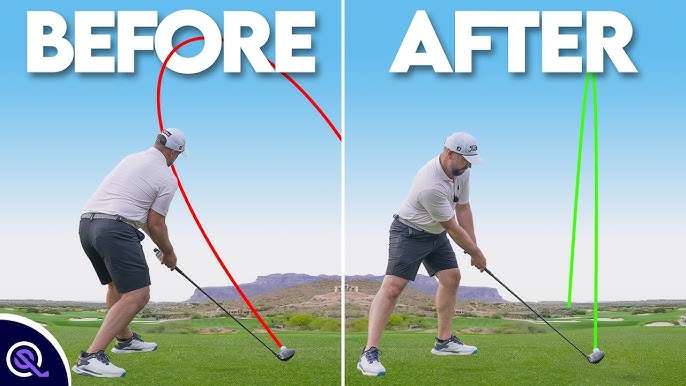
- If your ball starts left and curves right (for right-handers), you have an outside-in swing path with an open face.
- If the ball starts right and keeps going right, your clubface is very open at impact.
- If the ball starts straight and then curves, the clubface is only slightly open.
Check Your Divots
After hitting iron shots, look at the divot on the ground:
- A divot pointing left (for right-handers) often means you’re swinging outside-in.
- A straight divot points to a more neutral swing path.
Video Your Swing
Use your phone to film your swing from the side and behind. Look for:
- Where your club is pointing at the top.
- Whether your hands move over the top on the downswing.
- How your body turns through the shot.
Many golfers are surprised by what they see. Small adjustments become obvious when you watch yourself.
The Essentials: Fixing A Slice Step By Step
Now, let’s break down exactly what you need to change to correct a slice. Each step matters—missing one can keep the slice alive.
1. Fix Your Grip
Your grip is the only contact point with the club. A weak grip (where your hands are rotated too far left on the club for right-handers) leaves the clubface open.
The Correct Grip
- Hold the club in your fingers, not your palms.
- For right-handed golfers, rotate your left hand so you can see 2-3 knuckles when looking down.
- Place your right hand so the “V” between your thumb and forefinger points to your right shoulder.
- The grip should feel firm but not tense.
Non-obvious insight: Many slicers grip the club too tight, which actually makes it harder to release the clubface. Relax your grip pressure to about 5 out of 10.
2. Check Your Setup And Alignment
If you aim your feet or shoulders left of the target, you might swing across the ball, creating a slice.
Proper Alignment
- Lay a club or alignment stick on the ground, parallel to your target line.
- Your feet, hips, and shoulders should all be parallel to the stick.
- The ball should be just inside your left heel for drivers, or in the center for short irons.
Non-obvious insight: Many players think they’re lined up correctly but are actually aimed too far left. Have a friend check your alignment or use mirrors at the driving range.
3. Improve Your Swing Path
Most slices are caused by an outside-in swing path. This means the club moves away from your body on the backswing, then cuts across the ball from outside to inside.
How To Fix Swing Path
- Focus on swinging the club from inside to out. Imagine you’re hitting the ball to right field (for right-handers).
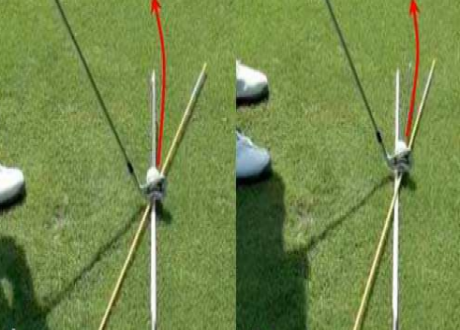
- Practice slow-motion swings with a headcover or tee just outside your ball to avoid swinging over the top.
- Use drills like “pump drills” or “split-hand drills” to feel the correct path.
4. Square The Clubface At Impact
Even with a good path, an open clubface will cause a slice.
- Practice at half speed, focusing on keeping the clubface square (perpendicular) to the target at impact.
- At address, check that the clubface is not pointing right.
- Use impact tape or foot powder spray on your clubface to see where you’re striking the ball.
5. Use Your Body Correctly
Many slicers lead the downswing with their upper body, which opens the clubface and sends the club over the top.
Fixing Body Movement
- Start your downswing with your lower body—hips and legs—turning toward the target.
- Keep your shoulders closed until your hands are near your right leg (for right-handers).
- Practice with a pause at the top of your swing to feel the correct sequence.
Drills To Fix A Slice
Drills are powerful because they help you feel and repeat the right motion. Here are some of the most effective drills for fixing a slice.
1. The Tee Drill
- Place a tee about 2 inches outside the ball, pointing toward the target.
- Try to swing and hit the ball without touching the tee.
- If you hit the tee, your path is too much outside-in.
2. The Headcover Drill
- Put a headcover just outside the ball (on the side closer to your body).
- Take practice swings. If you hit the headcover, your path is incorrect.
- Keep practicing until you miss the headcover every time.
3. The Split-hand Drill
- Grip the club with your hands about 3 inches apart.
- Swing, feeling the clubhead “release” and close naturally.
- This drill helps you train your hands to square the clubface.
4. Pause-and-go Drill
- Swing to the top, pause for one second, then start down slowly.
- This forces your lower body to start first.
- Repeat until the sequence feels natural.
5. Impact Bag Drill
- Use an impact bag (or a heavy pillow).
- Make short swings, focusing on squaring the clubface at the moment of impact.
- This builds muscle memory for a square face.
How Equipment Affects Your Slice
Your clubs can help—or hurt—your chances of fixing a slice. Here are key things to check:
1. Shaft Flex
If your shaft is too stiff, it can be hard to square the clubface. Most beginners do better with a regular or flexible shaft.
2. Clubface Technology
Modern drivers have adjustable weights and faces. Setting the weight to the heel or the face to “closed” can help reduce a slice.
3. Grip Size
A grip that’s too small or too large affects your ability to release the club. Standard size works for most, but test different sizes to see what feels best.
4. Club Length
Clubs that are too long are harder to control. Check if your driver is the right length for your height and swing style.
5. Ball Type
Some balls spin more than others. High-spin balls exaggerate a slice. Try a low-spin ball if you struggle with side spin.
Common Mistakes When Trying To Fix A Slice
It’s easy to make errors when working on your swing. Avoid these common mistakes:
- Over-correcting and hitting a hook. Make small changes, not big ones.
- Changing too many things at once. Work on one fix at a time.
- Ignoring grip pressure. Tension leads to poor release.
- Focusing only on arms. The lower body must drive the swing.
- Not practicing enough. Lasting change takes repetition.
Tracking Your Progress
You’ll want to know if your changes are working. Here’s how to track your improvement:
Ball Flight Tracker
- Record the direction and curve of every shot on the range.
- Draw a simple chart with columns for “straight,” “slice,” and “hook.”
- Over weeks, you should see more straight shots and fewer slices.
Swing Video Comparison
- Film yourself every few weeks.
- Compare your current swing to your first video.
- Look for a more inside-out path and square clubface.
Launch Monitor Data
If you have access to a launch monitor (at a golf store or range), check these numbers:
| Measurement | Slice Swing | Corrected Swing |
|---|---|---|
| Club Path | Outside-In (+3° to +5°) | Inside-Out (0° to -3°) |
| Face Angle | Open (+2° to +5°) | Square (0° to -1°) |
| Side Spin | High Right Spin | Low Right or Neutral |
Mental Game: Confidence And Consistency
Fixing a slice is not just physical. Your mindset matters, too.
- Be patient. Slices are common, and fixing them takes time.
- Stay positive. Celebrate small wins, like one straight drive.
- Trust the process. Changes may feel odd at first, but give them time.
- Practice with purpose. Don’t just hit balls—focus on your drills and the ball flight.
When To Seek Professional Help
Many golfers can fix a slice on their own, but sometimes it helps to see a coach.
- If you’ve tried the steps above for several weeks with no improvement, a PGA teaching pro can spot issues you might miss.
- Lessons often use video, launch monitors, and personalized drills.
- Even one or two lessons can speed up your progress.
Credit: www.shipsticks.com
Advanced Fixes: For Stubborn Slices
If your slice is still there after weeks of practice, try these advanced steps:
1. Check Wrist Position At The Top
- At the top of your backswing, your lead wrist (left for right-handers) should be flat or slightly bowed.
- A cupped wrist opens the clubface.
2. Practice With Different Clubs
- Try fixing your slice with a 7-iron first. It’s easier to control.
- When you can hit straight shots, move to longer clubs and the driver.
3. Use Impact Tape For Feedback
- Impact tape shows exactly where you strike the ball on the face.
- Off-center hits can create sidespin, even with a good swing path.
4. Strengthen Your Forearms
- Forearm strength helps you control the clubface.
- Simple exercises, like squeezing a tennis ball, can make a difference.
Real-life Example: How A Golfer Fixed His Slice
John, a mid-handicap golfer, sliced his driver 40 yards right. He tried changing his stance but didn’t improve. After filming his swing, he noticed he was swinging over the top and had a weak grip.
John focused on:
- Strengthening his grip (seeing 2.5 knuckles)
- Using the tee drill to fix his swing path
- Practicing with a headcover outside the ball
Within a month, his slice turned into a slight fade. He gained 20 yards of distance and started enjoying golf more.

Credit: swingtrainer.com
Data: How Common Is A Slice?
Slicing is one of the most common problems in golf. Studies show:
- Over 70% of amateur golfers struggle with a slice.
- The average slice loses 20-30 yards compared to a straight shot.
- Fixing a slice can lower scores by 3-5 strokes per round.
| Skill Level | % Who Slice | Avg. Slice Distance Lost |
|---|---|---|
| Beginner | 80% | 30 yards |
| Intermediate | 65% | 22 yards |
| Advanced | 30% | 10 yards |
This shows that almost every golfer faces this problem. The sooner you address it, the faster your game will improve.
Practice Plan: Your Path To A Slice-free Swing
A structured plan helps you make steady progress. Here’s a week-by-week guide:
Week 1: Analyze And Adjust Grip
- Film your swing.
- Change your grip to see 2-3 knuckles.
- Hit 50 balls focusing only on grip.
Week 2: Work On Alignment And Path
- Use alignment sticks for every shot.
- Do the tee drill for 20 balls each session.
- Notice ball flight changes.
Week 3: Clubface Control
- Use impact tape to check face position.
- Practice the split-hand drill.
- Swing at half speed, focusing on squaring the clubface.
Week 4: Combine All Elements
- Warm up with drills.
- Play a simulated round, tracking every shot.
- Review your videos and notes.
Ongoing: Review And Adjust
- If you start slicing again, revisit the drills.
- Book a lesson if you plateau.
FAQs (How to Fix a Slice in Golf)
How Long Does It Take To Fix A Slice?
For most golfers, it takes 2 to 4 weeks of focused practice to see real improvement. If you work with a coach, progress can be even faster. The key is regular, mindful practice—not just hitting balls without purpose.
Can A Slice Be Fixed Permanently?
Yes, a slice can be fixed for good. But like any skill, you must maintain good habits. If you return to old grip or swing patterns, the slice can come back. Consistent practice and checking your fundamentals are important.
Is It Harder To Fix A Slice With A Driver Or An Iron?
It’s usually harder with a driver because it has less loft and a longer shaft. Many players start fixing their slice with a mid-iron (like a 7-iron) first. Once you can hit straight iron shots, move to the driver.
Should I Buy A Special Club To Fix My Slice?
Special “anti-slice” drivers or offset clubs can help, but they are not a long-term solution. Fixing your grip, path, and face control will give better results. Equipment can help reduce a slice, but technique matters more.
Where Can I Find More Resources On Fixing A Slice?
There are many high-quality resources online. For detailed swing mechanics, check out the USGA’s golf swing basics.
A slice doesn’t have to ruin your game. With the right steps, drills, and patience, you can hit straighter, longer shots—and have more fun on the course. Every golfer has faced a slice at some point. What matters is taking action to fix it.
Stick with the plan, and your next round will be your best yet.