How To Play Back Row Defense In Volleyball: Expert Tips & Strategies

Playing back row defense in volleyball is crucial. It requires agility and strategic thinking.
Back row defense is the backbone of any volleyball team. It ensures that the opposing team’s attacks are countered effectively. Mastering this skill can significantly enhance your team’s performance. In this blog post, we will explore the essential techniques and tips to excel in back row defense.
Whether you are a beginner or an experienced player, understanding these strategies will improve your defensive game. So, let’s dive in and learn how to become a reliable back row defender in volleyball.
Introduction To Back Row Defense
Back row defense in volleyball is crucial for the team’s success. It involves preventing the ball from hitting the floor after the opponent’s attack. Understanding back row defense can significantly improve your overall gameplay. This section will introduce you to the fundamentals and importance of back row defense.
Importance In Volleyball
Back row defense is key in volleyball. It helps in countering the opponent’s attacks. A good defensive strategy can turn the game around. It allows your team to regroup and launch a strong counter-attack. Effective back row defense boosts team morale. It shows resilience and determination.
Basic Principles
Understanding the basic principles is essential. Positioning is the first principle. Always be ready to move. Anticipate the opponent’s moves. Keep your knees bent and stay on your toes. This helps in quick movements. Use your forearms to pass the ball to the setter. Communication is another principle. Always talk to your teammates. Let them know where you are and where the ball is going.
Reading the hitter is also crucial. Watch their body language. It gives clues about where they will hit. React quickly and adjust your position. Stay focused and keep your eyes on the ball. Practice these principles regularly. They will become second nature.
Positioning And Footwork
Hey friends, today we’re diving into the fundamentals of playing back row defense in volleyball. This is key to keeping the ball in play and setting up your team for success. One of the most important aspects? Positioning and footwork. Let’s get right into it, shall we?
Optimal Positions
First things first, let’s talk about where you should be on the court. Being in the right position makes all the difference. Imagine trying to catch a ball with your eyes closed. Tough, right? The same goes for volleyball. You need to be in the right spot to make those crucial saves.
- Left Back: This player covers attacks from the opponent’s right side.
- Middle Back: This player is like the safety net. They cover the whole back court.
- Right Back: This player is ready for attacks from the opponent’s left side.
Each position has its own role, so it’s important to understand where you fit in. When I first started playing, I often found myself out of position. I quickly learned that knowing where to stand was half the battle.
Effective Footwork Techniques
Now that you know where to stand, let’s talk about how to move. Footwork is everything. Think of it like dancing. If you don’t move your feet right, you’re going to step on some toes.
- Split Step: This is your ready position. Stand with your feet shoulder-width apart. Be on the balls of your feet, ready to move in any direction.
- Shuffle Step: Keep your feet low to the ground and take small, quick steps. This helps you stay balanced and ready.
- Crossover Step: Use this when you need to cover a lot of ground quickly. Cross one foot over the other to push off and move fast.
When I started practicing these steps, I noticed a huge improvement. I was quicker and more agile. And it made me a better player. Remember, the key is to always keep moving. Stay light on your feet and always be ready.
The good news? These techniques are simple to practice. And the more you practice, the better you get. So get out there, and start moving those feet!
Reading The Opponent
Hey friends, today we’re diving into an exciting part of volleyball: playing back row defense. One of the key skills you need is reading the opponent. This means understanding what the other team is going to do before they do it. It’s like trying to guess what your friend is thinking, but with more action and excitement. Let’s break it down step by step.
Analyzing Attacker’s Movements
First up, let’s talk about analyzing the attacker’s movements. When you watch the attacker, you can learn a lot from their body language. Here are some things to look for:
- Positioning: Where is the attacker on the court? Are they close to the net or further back?
- Body Angle: Which way is their body facing? This can tell you where they might hit the ball.
- Arm Movement: How is their arm moving? A fast swing might mean a powerful hit, while a slower one could be a soft touch.
By watching these signs, you can start to guess what the attacker is planning. It’s a bit like being a detective, putting together clues to solve a mystery.
Anticipating Shots
Now, let’s move on to anticipating shots. This is all about being one step ahead. Here’s how you can do it:
- Know Common Plays: Get familiar with common attacking strategies. Teams often repeat the same types of shots.
- Watch the Setter: The setter’s position and body language can give clues about where the ball is going.
- Communicate with Teammates: Talk to your team. Share what you see and listen to their observations.
Think of it like a game of chess. You’re always trying to think a few moves ahead. The better you get at anticipating, the more balls you’ll be able to stop.
Let me tell you a quick story. When I first started playing volleyball, I had a hard time reading the opponent. I remember one game where I missed almost every shot. My coach pulled me aside and said, “Watch their eyes, not just the ball.” It was a game-changer for me. I started to see the patterns in how attackers moved, and soon, I was making some amazing saves.
So, friends, keep practicing these tips. Watch the attacker, anticipate the shots, and communicate with your team. You’ll be a back row defense pro in no time!

Credit: www.youtube.com
Digging Techniques
Hey friends, today I’ll share some useful tips on how to play back row defense in volleyball, focusing on digging techniques. Digging is like the art of saving the ball. It’s the skill that keeps the game alive. If you can dig well, your team has a better chance to win. Let’s dive into some basic and advanced techniques. Ready?
Basic Digging Methods
First, let’s start with the basics. These are simple techniques anyone can learn:
- Stay Low: Always bend your knees. Think of sitting in a chair. This helps you move quickly.
- Hands Together: Keep your hands together. Your arms should form a platform. This makes it easier to control the ball.
- Watch the Ball: Keep your eyes on the ball. Focus on where it’s going. This helps you react faster.
When I first learned digging, I had to remind myself to stay low. It felt weird at first, but it really helps you move quickly. Just like riding a bike, once you get the hang of it, it becomes second nature.
Advanced Digging Skills
Ready to take it up a notch? Let’s talk about advanced techniques. These are for players who want to improve their game:
- Reading the Hitter: Learn to read the hitter’s body. Watch their shoulder and arm. This gives you clues about where the ball will go.
- Angle Your Platform: Adjust your arms to direct the ball to your setter. This makes it easier for your team to set up an attack.
- Roll Shots and Dives: Sometimes you need to dive or roll to save the ball. Practice these moves. They can be game-changers.
One time, I watched a pro player dive and save a ball that seemed impossible to reach. It was inspiring. So, I practiced diving in my backyard. Eventually, I got better. Now, I can make those saves too.
Remember, practice makes perfect. Start with the basics, and as you get comfortable, move to the advanced skills. Happy digging!
Communication And Teamwork
Hey there, volleyball enthusiasts! Today, let’s dive into an essential aspect of playing back row defense in volleyball: communication and teamwork. In any sport, especially volleyball, effective communication can make or break your game. Just like how a well-oiled machine functions smoothly, a team that communicates effectively will perform at its best. So, let’s explore how we can improve our verbal and non-verbal communication on the court.
Verbal Cues
When you’re playing back row defense, verbal cues are crucial. Think of it as talking with your teammates in real-time to ensure everyone knows what’s happening. Simple words can make a big difference. Here are some common verbal cues you should use:
- “Mine!” – Use this when you’re going for the ball. It tells your teammates that you’ve got it covered.
- “Help!” – If you can’t reach the ball, call for help. Your teammates will know to step in.
- “Out!” – Shout this if the ball is going out of bounds. It helps avoid unnecessary touches.
- “Switch!” – If you need to change positions, a quick “switch” lets your teammates know.
Using these cues can prevent confusion and improve coordination on the court. Trust me, it’s like having a secret language that only your team understands.
Non-verbal Signals
Sometimes, you can’t rely on words alone. That’s where non-verbal signals come into play. Think of it as a silent code that can be just as effective. Here are some ways you can communicate without speaking:
- Hand signals – A simple hand gesture can indicate a specific play or strategy. For example, showing a fist might mean you’re ready to block.
- Eye contact – Making eye contact with your teammates can signal readiness or agreement on a strategy.
- Body positioning – Your stance and movement can tell a lot. For instance, moving towards the net can indicate you’re preparing for a block.
These signals are like a backup plan when words aren’t enough. They help maintain the flow of the game and ensure everyone is on the same page.
In volleyball, just like in life, working together is key. Whether it’s through verbal cues or non-verbal signals, effective communication can elevate your team’s performance. So, next time you’re on the court, remember to talk to your teammates. Use those cues and signals. Play as one unit. And most importantly, have fun!
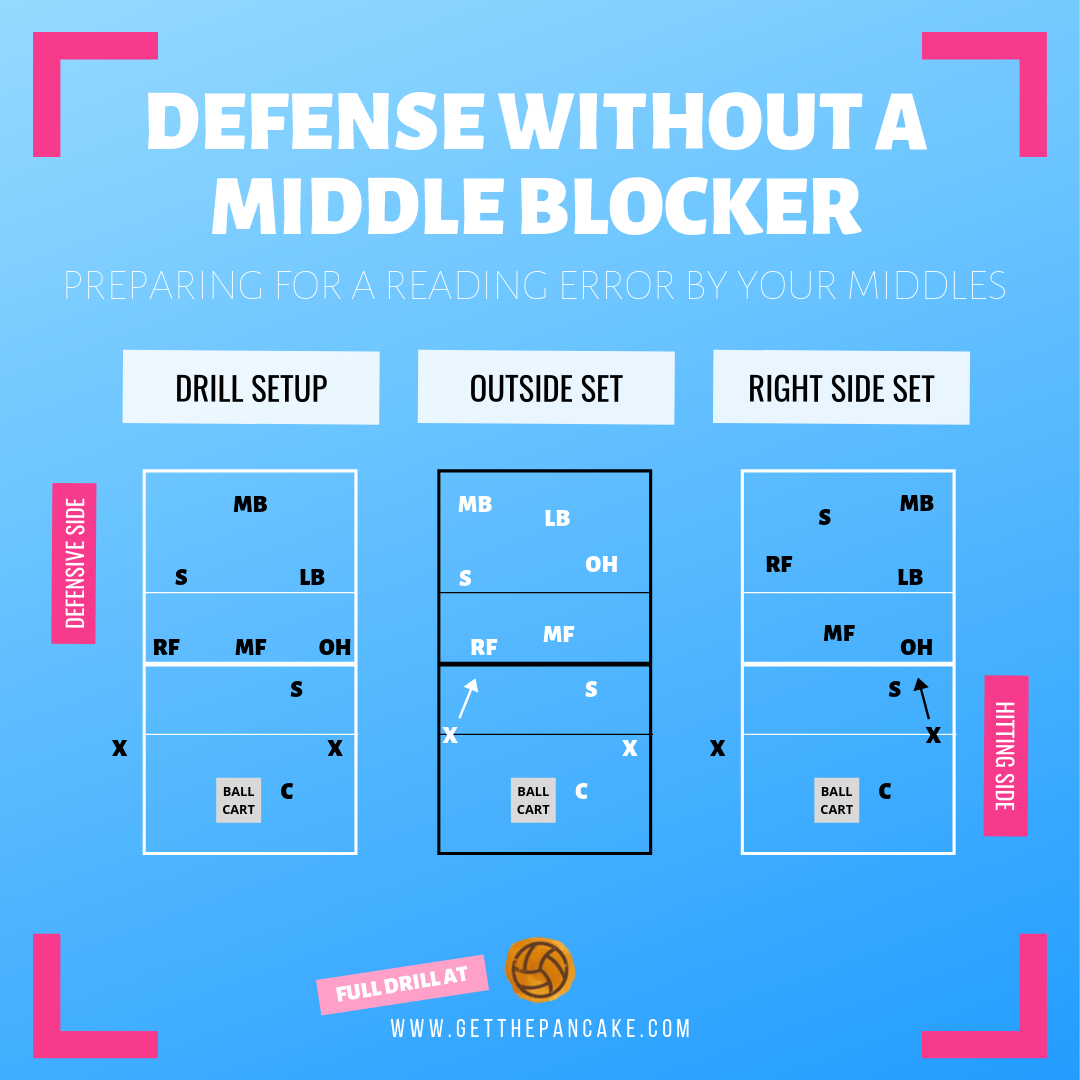
Credit: getthepancake.com
Drills For Improvement
Improving back row defense in volleyball requires dedication and practice. Specific drills can help you enhance your skills and become more effective on the court. There are solo drills you can do on your own and team drills to practice with your squad. Each type of drill focuses on different aspects of back row defense.
Solo Drills
Practicing alone helps you focus on individual skills. Try wall passing. Stand a few feet from a wall and pass the ball against it. This drill helps improve your reaction time and control. Another drill is the lateral shuffle. Move side to side quickly, mimicking defensive movements. Use a ball to simulate receiving serves. This enhances footwork and agility.
Team Drills
Team drills focus on coordination and communication. Set up a drill where players take turns hitting balls to each other. This drill emphasizes quick reactions and teamwork. Partner drills also help. Pair up and practice passing and setting. This builds trust and improves defensive techniques.
Use scrimmages to simulate game conditions. Split the team and play short matches. Rotate players to ensure everyone gets practice. Scrimmages help apply skills in real-time. They also highlight areas needing improvement.
Common Mistakes To Avoid
Playing back row defense in volleyball requires skill and awareness. Many players make common mistakes that can be easily avoided. Understanding these mistakes can improve your game significantly. Let’s dive into some of the most frequent errors players make.
Positional Errors
Positional errors are common in back row defense. Players often stand too close to the net. This limits their reaction time for deep shots. Staying too far back can also be a problem. It creates gaps that opponents can exploit. Proper positioning is key. Always stay balanced and ready to move. Know your teammates’ positions too. This helps in covering the court effectively.
Footwork Mistakes
Footwork mistakes can hinder your defensive abilities. Many players rely too much on their arms. This makes it hard to reach fast-moving balls. Quick and efficient footwork is essential. Avoid crossing your feet while moving. It slows you down and makes you unstable. Practice side-to-side movements. Stay light on your toes. Always be prepared to shift direction quickly. Good footwork keeps you agile and ready for any shot.

Credit: www.youtube.com
Expert Tips From Professional Players
Playing back row defense in volleyball requires skill, agility, and quick decision-making. Learning from professional players can give you an edge. They share valuable insights from years of experience. These tips help you improve your defensive game and make you a more reliable player.
Advice From Top Defenders
Top defenders emphasize the importance of anticipation. Know where the ball is going. Read the hitter’s body language. Understand their tendencies. This helps you position yourself correctly.
Communication is key in back row defense. Talk to your teammates. Let them know what you see. This creates a strong defensive line.
Stay low and be ready to move. A low stance improves your balance. It also makes it easier to react quickly. Professional players always stay on their toes, ready to dive or jump.
Training Regimens
Professional players follow rigorous training regimens. These regimens include drills to improve speed and agility. Ladder drills and cone drills are common. They help with quick direction changes.
Strength training is also crucial. Strong legs and core muscles support better movement. Plyometric exercises build explosive power. This is essential for sudden movements.
Practicing with a partner can improve your reaction time. Have them hit balls at you from different angles. This simulates game situations. It helps you react faster and more accurately.
Conditioning is another part of training. Professional players maintain high levels of endurance. This ensures they can perform consistently throughout a match. Running and interval training are effective methods.
Video analysis is a valuable tool. Review your games and practices. Identify areas for improvement. See what top defenders do differently. Learn from their techniques and strategies.
Mental Preparation And Focus
Mental preparation and focus are crucial when playing back row defense in volleyball. It’s not just about physical skills. Your mental state can make or break your performance. In this section, we’ll discuss how to stay concentrated and handle pressure effectively.
Staying Concentrated
Concentration is key in volleyball defense. You need to be alert and ready to react at any moment. Here are some tips to help you stay focused:
- Visualize Success: Before the game, take a few minutes to close your eyes and imagine yourself making great plays. This can boost your confidence.
- Stay in the Moment: Don’t think about the last play or the next one. Focus on the current moment. This helps you react quickly and accurately.
- Positive Self-Talk: Encourage yourself with positive thoughts. Simple phrases like “I got this” or “Stay ready” can keep your mind sharp.
- Breathing Techniques: Deep breaths can calm your nerves. Try breathing in slowly through your nose and out through your mouth.
When I first started playing, I often got distracted by the crowd or the scoreboard. But then I learned to block out those distractions. I started practicing mindfulness and it made a huge difference in my game.
Handling Pressure
Pressure is inevitable in sports. How you handle it can determine your success. Here’s how to manage pressure on the court:
- Practice Under Pressure: During practice, simulate high-pressure situations. This prepares you for the real thing.
- Stay Positive: Pressure can bring negative thoughts. Counter them with positive affirmations.
- Trust Your Training: Remember all the hours you’ve put into practice. Trust that you know what to do.
- Stay Calm: If you feel overwhelmed, take a deep breath and calm your mind.
One time, I was playing in a big match and felt the pressure mounting. My heart was racing. But I remembered my training. I took a deep breath, stayed calm, and made the play. Trusting myself was the key.
So, mental preparation and focus are just as important as physical skills in volleyball. Stay concentrated and handle pressure well. And you’ll be a stronger back row defender.
Conclusion And Final Thoughts
Playing back row defense in volleyball is crucial for your team’s success. It requires anticipation, quick reflexes, and strategic positioning. As we wrap up, let’s review the key points and encourage further practice.
Summary Of Key Points
First, focus on your stance. Stay low and keep your weight balanced. This helps with quick movements.
Second, watch the hitter’s body language. This gives clues about the type of hit coming your way.
Third, communicate with your teammates. Always call for the ball to avoid collisions.
Fourth, practice your footwork. Quick and efficient movements are crucial for effective defense.
Fifth, stay mentally alert. Keep your eyes on the ball and be ready to adjust your position.
Encouragement For Practice
Practice makes perfect. Spend time on drills that improve your reaction time and agility.
Work with teammates. Simulate real game scenarios to enhance your defensive skills.
Stay patient and persistent. Improvement takes time and dedication.
Remember, every play is an opportunity to learn and grow. Enjoy the process and keep pushing your limits.
Frequently Asked Questions
How To Play Back Row In Volleyball?
To play back row in volleyball, focus on defense and passing. Stay low, ready to dig and receive serves. Communicate with teammates and cover your area. Practice quick footwork and anticipation.
What Is The Back Row Defensive Position In Volleyball?
The back row defensive position in volleyball is called the “libero. ” The libero specializes in defensive skills, particularly receiving serves and digging. They wear a different jersey and cannot attack the ball above the net. This position enhances team defense and passing accuracy.
Can A Back Row Player Block In Volleyball?
No, a back row player cannot block in volleyball. Only front row players are allowed to block at the net.
What Is The Best Defense Position In Volleyball?
The best defense position in volleyball is the middle back. It provides optimal coverage for digs and blocks.
Conclusion
Playing back row defense in volleyball requires skill and awareness. Stay alert and move quickly. Positioning is key, so always be ready. Practice reading your opponent’s moves. Communication with teammates enhances your defense. Remember, consistency builds confidence. So, keep practicing these techniques.
Your defense will improve over time. Enjoy the game and keep pushing your limits. Happy playing!