Pickleball Lessons for Beginners: Master the Game Quickly!

Pickleball is a fun, fast-paced sport that anyone can enjoy. It’s perfect for beginners who want to stay active and have fun.
Are you new to pickleball and eager to learn? This blog is the perfect place to start. Pickleball combines elements of tennis, badminton, and ping-pong. Its simple rules make it easy to pick up. In recent years, pickleball has gained popularity among all age groups.
This guide will help you understand the basics. You’ll learn essential skills and tips to get you started. Soon, you’ll be playing with confidence. Ready to dive into the exciting world of pickleball? Let’s begin your journey with some beginner lessons.
Credit: www.cityofnampa.us
Introduction To Pickleball
Welcome to the wonderful world of Pickleball! If you’re new to this sport, you’re in for a treat. Pickleball is easy to learn, fun, and a great way to stay active. In this section, we’ll introduce you to the basics of Pickleball, including what it is and its fascinating history.
What Is Pickleball?
Pickleball is a paddle sport that combines elements of tennis, badminton, and ping-pong. It is played on a court with a net, similar to tennis, but it is smaller in size. Players use a paddle and a plastic ball with holes, known as a wiffle ball.
The game can be played as singles or doubles. The objective is to score points by hitting the ball over the net and into the opponent’s court without them returning it. Pickleball is known for its friendly and social nature, making it perfect for beginners of all ages.
History And Origin
Pickleball was invented in 1965 on Bainbridge Island, Washington. Three dads – Joel Pritchard, Bill Bell, and Barney McCallum – created the game to entertain their children. They improvised with a badminton net, ping-pong paddles, and a perforated plastic ball.
The name “Pickleball” has an interesting origin. According to one story, it was named after Pritchard’s dog, Pickles, who loved to chase the ball. Another account suggests it was named after the “pickle boat” in rowing, where oarsmen were chosen from the leftovers of other boats.
Pickleball has grown rapidly since its humble beginnings. Today, there are thousands of courts and millions of players worldwide. It has become one of the fastest-growing sports in the United States.
| Feature | Description |
|---|---|
| Combines Sports | Tennis, Badminton, Ping-Pong |
| Equipment | Paddle, Plastic Ball |
| Play Style | Singles or Doubles |
| Origin | 1965, Bainbridge Island |
| Inventors | Joel Pritchard, Bill Bell, Barney McCallum |
Ready to start your Pickleball journey? Stay tuned for more tips and lessons designed specifically for beginners!

Credit: www.facebook.com
Essential Equipment
Starting your pickleball journey requires some basic equipment. The right gear ensures you have the best experience on the court. This section covers the essential equipment for beginners. We will discuss paddles, balls, the court, and the net.
Paddles And Balls
Paddles are crucial for playing pickleball. They come in different materials like wood, composite, and graphite. Each material has its advantages. Wood paddles are affordable but heavy. Composite paddles offer a balance of power and control. Graphite paddles are lightweight and provide excellent control.
Consider your playing style and budget when choosing a paddle. Beginners often prefer composite paddles for their balance of features.
Balls are another vital piece of equipment. Pickleball balls have holes and are made of plastic. There are two types: indoor and outdoor. Indoor balls have larger holes and are softer. Outdoor balls are harder and have smaller holes. Choose the ball that suits your playing environment.
Court And Net
The pickleball court is similar in size to a badminton court. It measures 20 feet wide and 44 feet long. The court is divided into two halves by the net. The net is 36 inches high at the sidelines and 34 inches at the center.
| Equipment | Description |
|---|---|
| Paddle | Choose from wood, composite, or graphite based on your needs. |
| Ball | Select indoor or outdoor balls depending on where you play. |
| Court | 20 feet wide and 44 feet long, similar to a badminton court. |
| Net | 36 inches high at the sidelines, 34 inches at the center. |
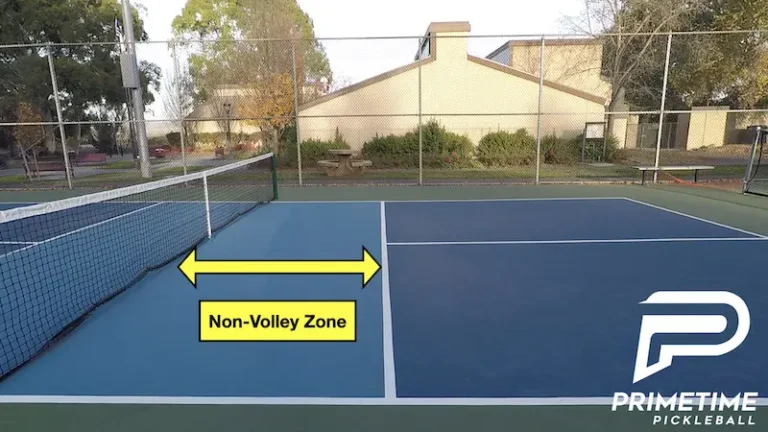
Ensure your net is set up correctly. This ensures fair play and helps you practice proper techniques. Mark the non-volley zone, also known as the “kitchen,” which is seven feet from the net on both sides. This area is important for game strategy.
With the right equipment, you can enjoy learning and improving your pickleball skills. Stay tuned for more tips and tricks in our beginner’s guide.
Basic Rules
Pickleball is a fun and easy-to-learn sport. Understanding the basic rules is essential for beginners. This section covers the key rules you need to know.
Scoring System
The scoring system in pickleball is straightforward. Games are played to 11 points, and you must win by 2 points. Only the serving team can score points. Here is a breakdown of the scoring system:
| Points | Description |
|---|---|
| 0-10 | Game continues until one team reaches 11 points |
| 11 | Win if leading by 2 points |
Serving Rules
Serving is a critical part of pickleball. Here are the key rules for serving:
- Serve underhand and below the waist.
- Stand behind the baseline.
- Serve diagonally to the opposite court.
- Only one serve attempt is allowed (except for a let).
Remember, practice makes perfect. Following these rules will help you get started on the right foot.
Fundamental Techniques
Learning the fundamental techniques in pickleball is essential for beginners. These techniques form the foundation of your game. Mastering them will improve your skills and confidence on the court. Let’s dive into the key techniques, starting with grip and stance, followed by basic strokes.
Grip And Stance
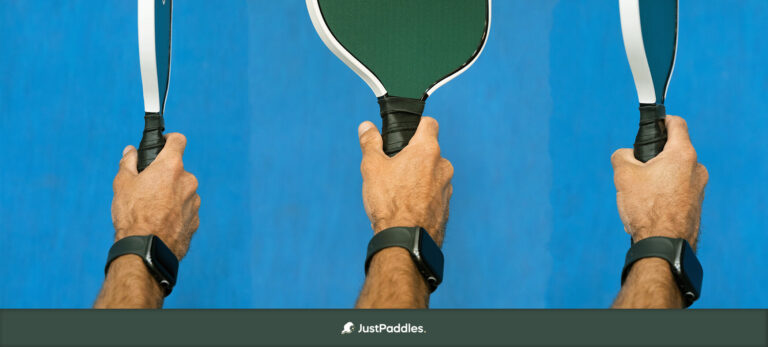
The grip is the first step in playing pickleball. A proper grip ensures control and power during the game. There are two main types of grips:
- Continental Grip: Hold the paddle as if you are shaking hands with it.
- Eastern Grip: Place your hand slightly behind the paddle face.
Choose a grip that feels comfortable and natural.
Next, focus on your stance. A good stance provides balance and readiness to move. Follow these steps:
- Stand with your feet shoulder-width apart.
- Bend your knees slightly.
- Keep your weight on the balls of your feet.
This stance allows quick movements and stability during play.
Basic Strokes
Understanding the basic strokes is crucial for beginners. Here are the main strokes you need to learn:
- Forehand Stroke: Swing the paddle from low to high on your dominant side.
- Backhand Stroke: Swing the paddle from low to high on your non-dominant side.
- Serve: Start with an underhand stroke to initiate play.
- Volley: Hit the ball before it bounces, using a short stroke.
Practice these strokes to improve your accuracy and control. Consistent practice will help you develop a strong foundation in pickleball.
Court Positioning
Understanding court positioning is crucial for beginners in pickleball. Whether playing singles or doubles, correct positioning can greatly impact your game. This section will guide you through the basics, ensuring you feel confident on the court.
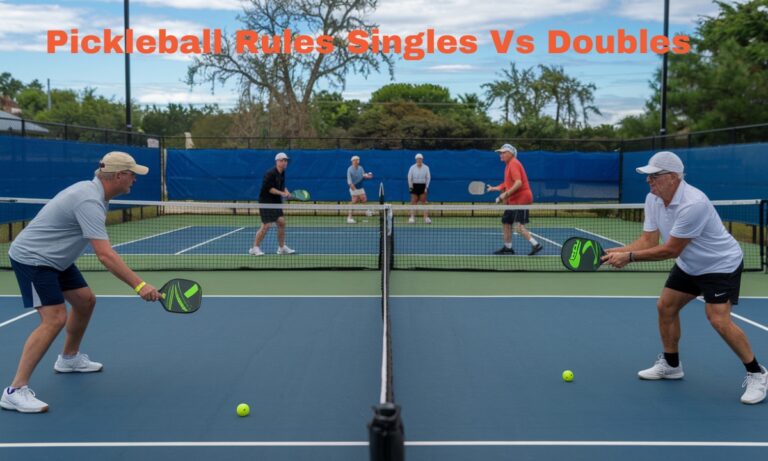
Singles Vs Doubles
In pickleball, court positioning varies between singles and doubles play.
- Singles: The player needs to cover the entire court alone. Focus on staying near the centerline to reach all areas efficiently.
- Doubles: Two players share the court. Communication and coordination are key. Players typically divide the court into left and right halves.
In doubles, players should avoid crowding each other. This ensures better coverage and minimizes gaps. Stick to your side, but be ready to support your partner.
Movement And Footwork
Proper movement and footwork are essential for effective court positioning.
- Stay on your toes: Always be ready to move quickly. Avoid standing flat-footed.
- Side-to-side movement: Shuffle sideways instead of crossing your legs. This maintains balance and readiness.
- Forward and backward: Move forward to attack and backward to defend. Keep your knees slightly bent for quick reactions.
Good footwork involves short, controlled steps. Avoid long strides as they can slow you down. Practicing these movements can help you maintain optimal positioning.
| Aspect | Singles | Doubles |
|---|---|---|
| Coverage | Entire court | Half court |
| Positioning | Near centerline | Left or right half |
| Key Focus | Speed and agility | Coordination and communication |
By understanding these aspects of court positioning, beginners can improve their pickleball skills. Practice regularly to become more confident and efficient on the court.

Credit: pickleballnovascotia.com
Beginner Drills
Starting with the basics is crucial for any new pickleball player. Drills help build skills and confidence on the court. This section covers some essential drills for beginners. These drills focus on improving control, accuracy, and consistency.
Wall Practice
Practicing against a wall is a great way to improve. Find a flat wall with no obstacles around. Stand a few feet away from the wall. Hit the ball against the wall, aiming for a specific spot. Try to keep the ball in play for as long as possible. This helps with hand-eye coordination and control.
Change the distance from the wall to work on different shots. Practice forehand and backhand shots. Focus on hitting the ball at a consistent height. This drill is easy to do alone and helps build muscle memory.
Partner Drills
Partner drills are fun and effective. Grab a friend or join a beginner class. Start with simple rallying. Stand at the baseline and hit the ball back and forth. Keep the rally going as long as possible. This helps improve timing and reaction speed.
Practice dinking with your partner. Stand at the non-volley zone and hit soft shots. Aim to land the ball in the kitchen. This helps develop touch and control. Another great drill is the “three-shot drill.” One player serves, the other returns, and then both rally. This simulates a real game situation.
Communication with your partner is key. Encourage each other and give feedback. Partner drills help build teamwork and understanding of the game.
Common Mistakes
Starting pickleball can be exciting. But beginners often make common mistakes. These errors can slow your progress. Knowing these mistakes helps you improve faster.
Avoiding Foot Faults
Foot faults are common in pickleball. Many beginners step over the line when serving. This results in a fault. To avoid this, keep your feet behind the baseline. Practice serving without stepping forward too soon. Focus on your foot placement. It will become a habit.
Improving Accuracy
Accuracy is key in pickleball. Beginners often hit the ball too hard. This leads to out-of-bounds shots. Start by practicing gentle hits. Aim for specific spots on the court. Control over power is important. Keep your eye on the ball. This helps you hit it cleanly. With time, your accuracy will improve.
Tips For Improvement
Pickleball is fun and simple to learn, but improving your skills takes effort. Beginners can significantly enhance their game with the right tips. Below are some effective tips for improvement.
Consistent Practice
Practicing regularly is vital. Consistency helps you develop muscle memory and improves your skills over time. Here are some ways to practice effectively:
- Set a Schedule: Aim to practice at least three times a week.
- Focus on Basics: Work on your serve, return, and volley.
- Drills: Use specific drills to improve footwork and hand-eye coordination.
Consistent practice builds confidence and prepares you for real matches.
Joining A Community
Being part of a pickleball community can greatly enhance your learning experience. Here are some benefits of joining a community:
| Benefit | Description |
|---|---|
| Social Interaction: | Meet fellow players and make new friends. |
| Learn from Others: | Observe different playing styles and techniques. |
| Friendly Matches: | Play games in a relaxed, supportive environment. |
Engaging with a community keeps you motivated and offers valuable feedback on your game.
Implement these tips to see noticeable improvement in your pickleball skills. Remember, practice and community support are key to becoming a better player.
Frequently Asked Questions
What Are The Basics Of Pickleball?
Pickleball basics include understanding the court, equipment, and rules. Start with learning how to serve, score, and perform basic strokes.
How Do You Serve In Pickleball?
To serve in pickleball, stand behind the baseline, and hit underhand. The ball must land in the opposite diagonal court.
What Equipment Do Beginners Need?
Beginners need a pickleball paddle, balls, and proper court shoes. Comfortable athletic clothing is also recommended.
How Do You Score In Pickleball?
Points are scored when the serving team wins a rally. Games are typically played to 11 points, winning by 2.
Conclusion
Starting pickleball can be fun and easy. Lessons help build solid foundations. Practice regularly to improve skills. Enjoy the game with friends and family. Stay patient and consistent. Remember, every expert started as a beginner. Join local clubs for more practice.
Keep learning and stay active. Pickleball is a wonderful sport for all ages. Ready to play? Grab your paddle and start today!