
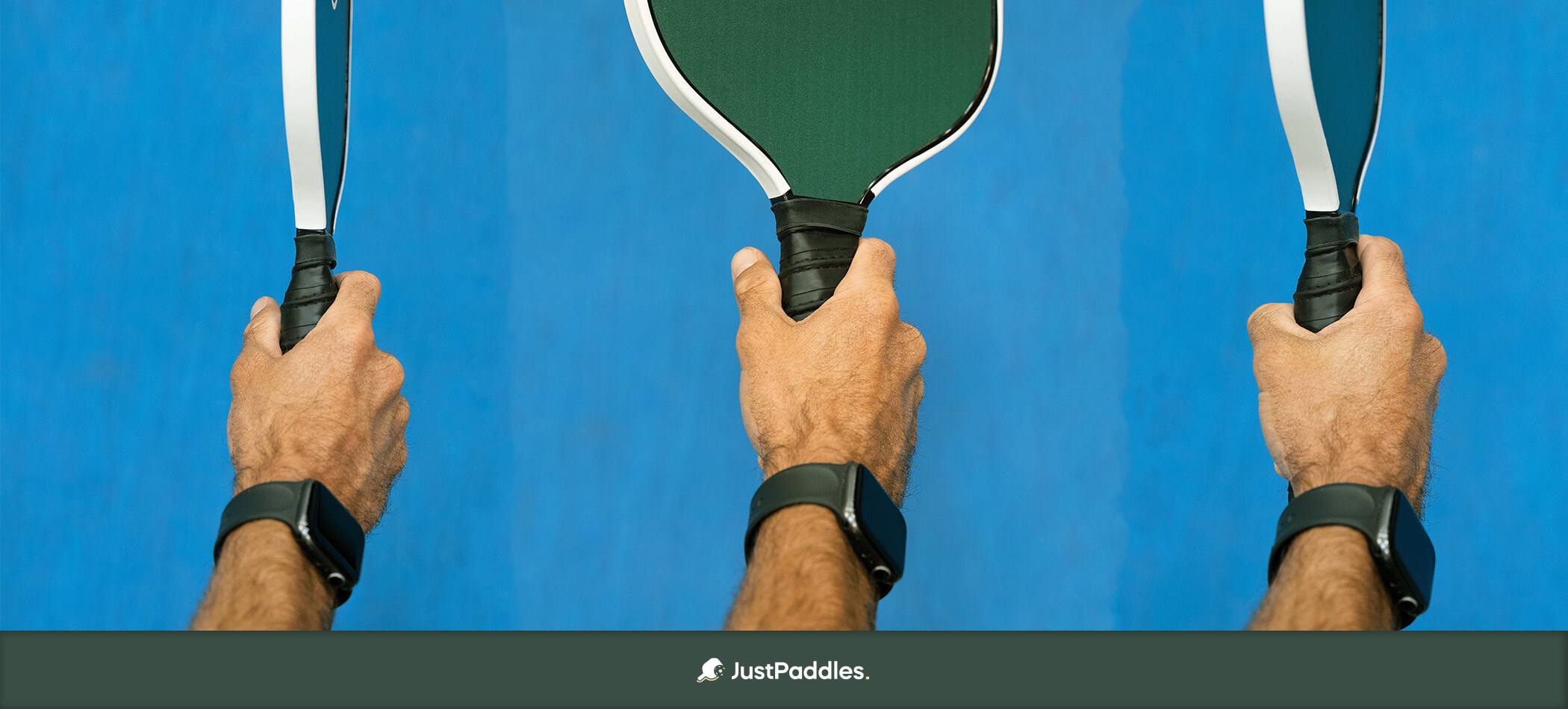
Holding the pickleball paddle correctly when serving is crucial. It impacts your game performance significantly.
Pickleball, a fast-growing sport, combines elements of tennis, badminton, and ping-pong. The serve is a critical part of the game, setting the pace and direction of play. A proper grip on the paddle can improve your serve consistency and control.
Whether you are a beginner or a seasoned player, understanding the right way to hold your paddle can make a big difference. In this guide, we’ll explore the best techniques for holding your pickleball paddle when serving. By mastering these techniques, you’ll enhance your game and enjoy playing even more. Ready to improve your serve? Let’s dive in!
Contents
Grip Basics
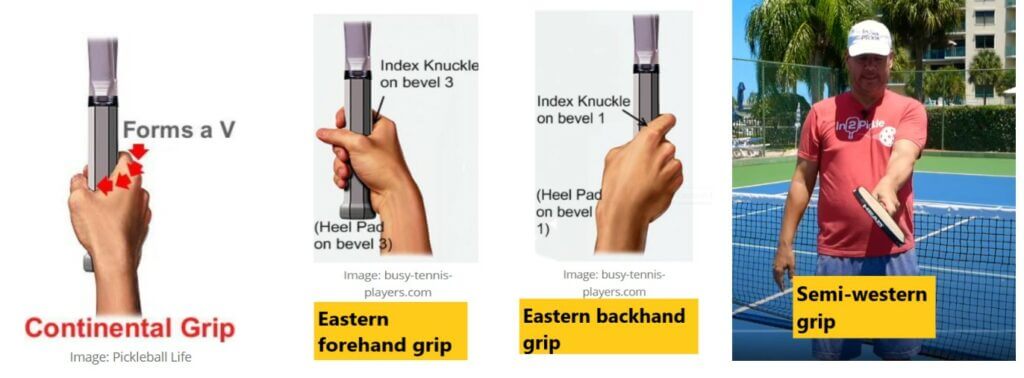
Understanding how to hold your pickleball paddle when serving is crucial. The right grip can improve control, accuracy, and power. Here, we’ll explore the two most common grips: Continental and Eastern. Each grip has its benefits, so let’s dive in.
Continental Grip
The Continental Grip is popular among players. It’s versatile and works for different shots. To use this grip, imagine shaking hands with the paddle. Hold the paddle at a slight angle. Your index finger should be on the bevel of the paddle. This grip gives you control and stability.
With the Continental Grip, you can easily switch between forehand and backhand shots. It allows quick adjustments during play. Practice this grip to gain confidence and improve your serve.
Eastern Grip
The Eastern Grip is another excellent choice. It focuses on the forehand. To use this grip, place your palm against the flat side of the paddle. Your fingers should wrap around the handle comfortably. This grip provides more power for forehand serves.
The Eastern Grip is easy to learn and suits beginners. It offers a firm hold on the paddle. Practice the Eastern Grip to enhance your forehand serves and overall game.

Credit: www.youtube.com
Choosing The Right Paddle
Selecting the right pickleball paddle is crucial for a good serve. Your paddle affects your control, power, and comfort. This guide will help you understand the key factors to consider.
Paddle Weight
Paddle weight is a major factor in pickleball. Paddles range from 6 to 14 ounces. Lightweight paddles (6-8 ounces) offer better control. They are ideal for players who value precision.
Medium weight paddles (8-10 ounces) provide a balance of power and control. Heavier paddles (10-14 ounces) give more power but less control. They can cause fatigue during long games. Choose the weight that suits your play style.
| Weight Category | Weight Range | Best For |
|---|---|---|
| Lightweight | 6-8 ounces | Control and Precision |
| Medium Weight | 8-10 ounces | Balance of Power and Control |
| Heavyweight | 10-14 ounces | Power |
Paddle Material
Paddle material influences durability and playability. Paddles are made from different materials. Common materials are wood, composite, and graphite.
Wood paddles are durable and affordable. They are heavier and less responsive. Composite paddles are lighter and offer good control. They are made from a mix of materials. Graphite paddles are the lightest and most expensive. They provide excellent control and power.
- Wood: Durable, affordable, heavier.
- Composite: Lightweight, good control, balanced play.
- Graphite: Lightest, best control, high cost.
Consider your skill level and budget when choosing a paddle material. The right paddle can improve your serve and overall game.
Hand Positioning
Proper hand positioning is key to a successful pickleball serve. It can enhance control, power, and accuracy. Understanding how to hold the paddle correctly can make a big difference in your game. This section will cover the proper hand positioning for holding a pickleball paddle during a serve.
Dominant Hand Placement
Your dominant hand should grip the paddle firmly but not tightly. A relaxed grip helps in maintaining control. Place your hand at the base of the handle. This gives you a solid foundation. Ensure your fingers wrap around the handle comfortably. Your thumb should rest against the handle’s side. This provides extra support and stability. Avoid holding the paddle too high or too low. The middle of the handle is the sweet spot.
Non-dominant Hand Support
Your non-dominant hand also plays a role. It helps in balancing and positioning the paddle before the serve. Use it to hold the top of the paddle lightly. This support hand helps you to aim and control the paddle’s angle. Before the serve, your non-dominant hand can guide the paddle to the correct position. Then, let go just before you serve. This ensures you have full control with your dominant hand.
Stance And Body Alignment
To serve effectively in pickleball, stance and body alignment are crucial. Proper stance and alignment ensure balance and power in your serve. This section will guide you through the key elements of stance and body alignment.
Feet Position
Stand with your feet shoulder-width apart. This position gives you stability. Your weight should be on the balls of your feet. This allows quick movements. Your front foot points towards the net. The back foot angles slightly outward. This setup helps in generating power.
Knees And Hips
Bend your knees slightly. This creates a solid base. It also helps in absorbing impact. Keep your hips square to the net. This ensures your body aligns correctly. Avoid twisting your hips during the serve. This maintains your balance and focus.
Swing Mechanics
Understanding swing mechanics is essential to improve your pickleball serve. It involves how you move your arm and wrist while holding the paddle. This affects both the power and accuracy of your serve. Let’s break it down into two main parts: backswing and follow through.
Backswing
The backswing is the first part of your serve. Begin with a relaxed grip on the paddle. Your paddle should start low, near your waist. As you prepare to swing, bring the paddle back. Keep your elbow slightly bent. This helps maintain control. Avoid swinging too high. A low and controlled backswing sets a strong base. It also helps you generate power. Stay balanced on your feet. This ensures a smooth transition to the next phase.
Follow Through
The follow through is just as important as the backswing. After striking the ball, continue your paddle’s motion. Your arm should move forward naturally. Extend your arm fully. This ensures the ball travels accurately. A proper follow through also reduces strain on your arm. Keep your eye on the ball. Your body should face the net. Finish the swing with your paddle pointing forward. This completes a controlled and effective serve.
Credit: pickleballmastercourse.com
Common Mistakes
Holding the pickleball paddle correctly during a serve is crucial. Many players often make common mistakes that affect their game. Understanding these mistakes can help improve performance and avoid errors.
Grip Pressure
One common mistake is gripping the paddle too tightly. A tight grip reduces flexibility and control. It can also cause wrist fatigue. Hold the paddle firmly but not too tight. Imagine holding a tube of toothpaste without squeezing it.
Wrist Movement
Excessive wrist movement during a serve is another mistake. This can lead to inaccurate serves. Keep your wrist stable and firm. Use your arm and shoulder for most of the motion. This ensures a more consistent and accurate serve.
Practice Drills
Practice drills are essential to improve your pickleball serve. They help you refine your grip and control. Drills also build muscle memory, ensuring consistent performance during games. Below are some simple practice drills to help you.
Wall Drills
Wall drills are effective for solo practice. Stand a few feet away from a wall. Hold the paddle with a firm, yet relaxed grip. Serve the ball against the wall. Focus on the paddle’s angle and your wrist’s motion. Repeat this motion several times. Adjust your grip to find the most comfortable position. This drill helps you understand the paddle’s impact on the ball’s direction.
Partner Drills
Partner drills add a dynamic element to your practice. Pair up with a friend or fellow player. Stand opposite each other on the court. Serve the ball to your partner. Ask them to return the serve. Focus on keeping a consistent grip. Communicate with your partner for feedback. Adjust your grip and stance based on their observations. This drill helps you practice in a game-like setting.
Credit: ecosports.com
Expert Advice
Serving in pickleball is an essential skill to master. How you hold the paddle can impact your game significantly. Expert advice can help improve your technique and consistency. Let’s dive into some key aspects.
Consistency
Consistency in your grip is crucial for serving well. Hold the paddle with a firm, yet relaxed grip. This balance helps you control the ball better. A consistent grip reduces errors and improves your confidence. Practice holding the paddle the same way each time. This habit leads to better performance in the long run.
Adaptability
Adaptability in grip is also important. Different situations may require slight adjustments. For a deep serve, hold the paddle more firmly. For a softer serve, relax your grip a bit. Being adaptable helps you respond to different opponents and game scenarios. Practice different grips to become comfortable with adjustments. This flexibility will enhance your overall game strategy.
Frequently Asked Questions
How Should I Hold A Pickleball Paddle When Serving?
Hold the paddle with a firm grip. Use the handshake grip for control. Keep the paddle face slightly open.
What Is The Correct Way To Grip The Paddle?
Use a relaxed, yet firm grip. The handshake grip is recommended for beginners. It provides better control.
Why Is The Grip Important When Serving In Pickleball?
A proper grip ensures control and accuracy. It helps generate power and spin. It also prevents injuries.
Can I Use A Different Grip For Serving?
Yes, advanced players may experiment with grips. However, beginners should start with the handshake grip for consistency.
Conclusion
Holding the pickleball paddle correctly is essential for effective serving. Focus on your grip. Practice makes perfect. A consistent grip improves your serve’s accuracy. Position your fingers comfortably. Keep your wrist relaxed. Pay attention to your paddle’s angle. Experiment with different grips.
Find what feels best for you. Remember to stay calm. Confidence in your grip leads to better serves. Enjoy the game. Happy playing!
