
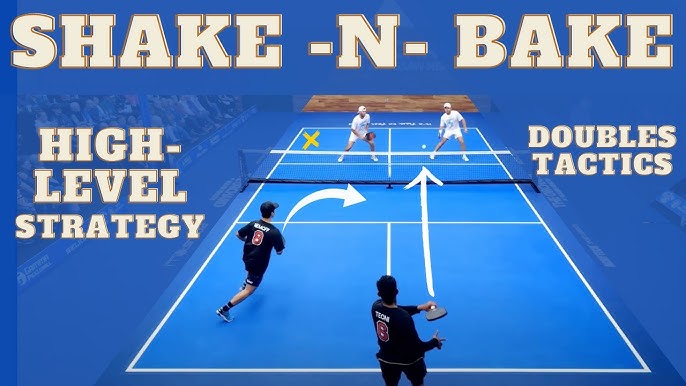
Pickleball is more than just a fun game; it’s a strategic sport. Understanding advanced tactics can elevate your play significantly.
In high-level pickleball, strategy plays a crucial role. Knowing where to place the ball, anticipating your opponent’s moves, and executing shots with precision can make a big difference. Experienced players use a mix of techniques to outsmart their opponents. They focus on shot placement, court positioning, and communication with their partners.
It’s all about thinking ahead and staying one step ahead. This blog will dive into these advanced strategies, helping you refine your skills and play smarter. Whether you’re aiming to compete or just enjoy the game more, mastering these tactics will give you an edge. Ready to up your pickleball game? Let’s get started!
Contents
Introduction To Pickleball Strategy
Understanding pickleball strategy can significantly improve your game. Strategy helps players make smart decisions on the court. It involves planning, positioning, and shot selection. This section will cover why strategy matters and the basic principles of pickleball strategy.
Why Strategy Matters
Strategy gives players a clear plan during matches. It reduces mistakes and increases the chance of winning. Good strategy helps control the pace of the game. It allows players to anticipate their opponent’s moves.
Without strategy, players often react rather than plan. This can lead to poor shot choices and missed opportunities. A solid strategy makes play more predictable and manageable.
Basic Principles
Positioning on the court is crucial. Staying near the net gives players an advantage. This position allows for quicker responses and more aggressive shots. Players should aim to move their opponents around the court. This creates openings and forces errors.
Communication is another key principle. Doubles partners must talk to avoid confusion. Clear communication helps coordinate movements and shot choices. Consistent practice of these principles will improve overall performance.
Serving Techniques
Serving in pickleball is crucial. It’s the first step in every rally. Mastering serving techniques gives you an edge. This section covers key aspects of serving in pickleball.
Power Vs. Placement
Two main strategies for serving are power and placement. Both have their strengths.
| Power Serve | Placement Serve |
|---|---|
| Hit the ball hard | Aim for a specific spot |
| Fast speed | Target opponent’s weak areas |
| High risk of faults | Higher consistency |
A power serve uses speed. It forces quick responses from your opponent. This can cause errors. Placement serves focus on accuracy. Aim for the opponent’s weak spots. This creates difficult returns. Both methods are effective. Choose based on your opponent and your skill level.
Spin Serves
Spin serves add complexity. They make the ball move unpredictably. This can confuse opponents.
- Topspin serve: The ball dips quickly. It bounces higher after hitting the court.
- Backspin serve: The ball stays low. It may skid or stop suddenly.
- Sidespin serve: The ball curves left or right. This forces opponents to adjust.
Adding spin takes practice. Start with basic serves. Gradually incorporate spin. Focus on control. Topspin serves are good for high bounces. Backspin keeps the ball low. Sidespin disrupts the opponent’s rhythm. Spin serves are strategic. They keep your opponent guessing.
Return Of Serve Tactics
Effective return of serve tactics can make a big difference in pickleball. A strong return puts pressure on the server and sets you up for the next shot. Let’s break down two key aspects: positioning and shot selection.
Positioning
Good positioning helps you prepare for the serve. Stand close to the baseline, but not too close. Keep your feet shoulder-width apart. Bend your knees slightly for better balance. Watch the server closely. Be ready to move quickly in any direction.
Positioning yourself correctly can help you return serves more accurately. If the server has a strong serve, move back a bit. This gives you more time to react. For weaker serves, stand closer to the baseline. Adjust your position based on the server’s skill level.
Shot Selection
Selecting the right shot is crucial for a good return. Aim for the middle of the court. This reduces the risk of hitting the ball out. It also limits the angles your opponents can use.
Use a deep return to push your opponents back. This gives you more time to set up your next shot. If your opponents are slow, try a drop shot. This forces them to move forward quickly. Mix up your shots to keep your opponents guessing.
Remember, consistency is key. Focus on making solid, reliable returns. This will improve your overall game and help you win more points.
Net Play Mastery
Welcome to the exciting world of Net Play Mastery in pickleball! The net is where the action happens, and understanding how to dominate this area can make or break your game. This section will guide you through effective approaches and essential volleying tips to elevate your net play.
Approach Shots
Approach shots are your ticket to the net. Executing them well can set you up for easy volleys. Here are some key points:
- Placement: Aim for the corners to push your opponent out of position.
- Depth: Hit deep to reduce your opponent’s reaction time.
- Speed: Vary your shot speed to keep your opponent guessing.
Consider using a drop shot for a surprise element. The aim is to make the ball land just over the net.
Volleying Tips
Volleying is crucial for controlling the net. Let’s break it down:
| Tip | Description |
|---|---|
| Stance | Maintain a balanced stance with your knees slightly bent. |
| Grip | Use a continental grip for versatility and control. |
| Eyes | Keep your eyes on the ball, not your opponent. |
Remember to stay low and keep your paddle up. Quick reflexes and a good stance are your best friends.
Always be ready to move and adjust your position. Anticipation is key to successful volleying.
Dinking Strategies
Dinking is a key part of pickleball strategy. It involves playing soft shots to control the game. These strategies can help you outplay your opponent.
Soft Game Importance
The soft game is crucial in pickleball. It slows down the pace and makes it hard for your opponent to hit powerful shots. By mastering the soft game, you can force errors from your opponent. It also helps in setting up winning shots.
Here are some benefits of a strong soft game:
- Control the pace of the game
- Force your opponent to make mistakes
- Set up for powerful shots
Effective Dink Shots
Effective dink shots are vital. They keep the ball low and unattackable. Here are some tips for executing them:
- Use a soft grip on your paddle.
- Bend your knees to stay low.
- Keep your paddle angle open.
- Focus on placement over power.
- Mix up the direction and depth of your dinks.
Practice these tips to improve your dinking game. Remember, consistency is key. The more you practice, the better you will get.

Credit: www.pickleheads.com
Third Shot Strategies
Pickleball players often focus on developing effective strategies to gain an edge. One crucial area is the third shot. This shot can set the tone for the rest of the rally. Understanding the best third shot strategies can make a significant difference in your game.
Third Shot Drop
The third shot drop is a soft shot intended to land in the opponent’s kitchen. This tactic helps you move up to the net. It also makes it hard for your opponents to hit a strong return.
To execute the third shot drop:
- Use a smooth, controlled swing.
- Focus on aiming for the kitchen.
- Keep the ball low over the net.
Practice this shot to improve your accuracy and control. A successful third shot drop can change the rally in your favor.
Drive Vs. Drop Decision
Choosing between a drive and a drop depends on several factors. Both shots have their own advantages.
Third Shot Drive:
| Advantages | Disadvantages |
|---|---|
| Can surprise opponents | Risk of hitting the ball out |
| Good for windy conditions | Can lead to a high return |
Third Shot Drop:
| Advantages | Disadvantages |
|---|---|
| Forces opponents to hit up | Requires more precision |
| Helps you approach the net | Harder in windy conditions |
Consider your skill level and the current game situation. If your opponents are at the baseline, a drop might be better. If they are at the net, a drive could be more effective.
Experiment with both shots during practice. This will help you make better decisions during games.
Defensive Positioning
Defensive Positioning is crucial in pickleball. It helps players protect their side of the court and counter the opponent’s attacks. By mastering defensive positioning, players can stay in control of the game and increase their chances of winning. Let’s dive deeper into some key aspects of defensive positioning.
Court Coverage
Proper court coverage is essential for effective defense in pickleball. Players must position themselves to cover the maximum area of their side. Here are some tips for better court coverage:
- Stay near the center of your side.
- Move side-to-side to cover wide shots.
- Communicate with your partner to avoid gaps.
By staying centered and moving efficiently, players can cover more ground and reduce the chances of missing a shot.
Anticipation
Anticipation plays a key role in defensive positioning. Reading the opponent’s body language and shot patterns can give clues about their next move. Here are some ways to improve anticipation:
- Observe the opponent’s paddle angle.
- Watch their footwork and body positioning.
- Note any patterns in their play.
By anticipating the opponent’s shots, players can position themselves better and react faster to any incoming ball.

Credit: www.pickletip.com
Advanced Doubles Tactics
Advanced doubles tactics in pickleball can elevate your game significantly. These strategies require both players to work in sync. This section covers advanced doubles tactics, focusing on team coordination and effective communication.
Team Coordination
Coordination between partners is crucial in doubles pickleball. Players should move as a unit. One player moves left, the other follows. This keeps the court covered.
Positioning is also key. Stand side by side at the net. This allows you to attack and defend together. Stay close but not too close. Maintain a comfortable distance for quick reactions.
Practice switching positions. If one player moves forward, the other should cover the back. This fluid movement confuses opponents and keeps you in control.
Communicating With Partner
Effective communication with your partner is vital. Use simple, clear words. Call out shots like “mine” or “yours” to avoid confusion. This ensures you cover the right areas.
Develop hand signals for silent communication. This helps in noisy environments. Simple gestures can indicate strategies and tactics. Practice these signals regularly.
Discuss strategies before the game. Decide on formations and plays. Adjust tactics based on opponents’ weaknesses. Keep the dialogue open during the match.
Mental Game Techniques
High-level pickleball strategy goes beyond physical skills. The mental game is crucial. Players need to stay focused, handle pressure, and maintain a strong mindset. These mental game techniques can elevate your performance on the court.
Staying Focused
Focus is key in pickleball. Distractions can lead to mistakes. Keep your mind on the game. Watch the ball closely. Stay aware of your surroundings. Concentrate on each shot. Avoid thinking too far ahead. Stay in the moment. Use deep breathing to calm your mind. Visualize successful plays. This keeps your focus sharp. Routine helps too. Develop a pre-serve ritual. It prepares your mind for action.
Handling Pressure
Pressure situations are common in pickleball. Handle them with a calm mind. Breathe deeply to stay relaxed. Positive self-talk is helpful. Encourage yourself with simple phrases. “I can do this.” “Stay calm.” Confidence grows with practice. Play practice games under pressure. Simulate match conditions. Experience helps you stay composed. Focus on the process, not the outcome. Stay in control of your actions. Avoid worrying about the score. Play each point with determination. Remember, pressure is just a part of the game.

Credit: www.youtube.com
Analyzing Opponents
Analyzing opponents is a key part of high-level pickleball strategy. Understanding your opponent’s strengths and weaknesses can give you a significant edge. This insight helps you adjust your game plan to exploit their vulnerabilities.
Identifying Weaknesses
Start by observing their playing style. Do they favor their forehand or backhand? Watch their footwork. Slow footwork often means they struggle with quick direction changes. Notice if they miss shots in certain areas. Target those spots.
Pay attention to their serve and return techniques. Are they consistent? Do they make unforced errors? These observations help you plan your moves. Also, watch their positioning. Players who stay too close to the baseline may have weaker net play.
Adapting Strategies
Once you’ve identified weaknesses, adjust your strategy. If they have a weak backhand, aim for that side. If their footwork is slow, use drop shots to make them move. Change your pace to keep them off balance.
Use lobs if they struggle with overheads. Mix up your serves to exploit their return errors. Stay flexible. Your opponent may adapt, so be ready to change your plan. Analyzing and adapting keeps you in control of the game.
Frequently Asked Questions
What Is High Level Pickleball Strategy?
High level pickleball strategy involves positioning, shot placement, and anticipating opponents’ moves. It focuses on control and precision.
How Can I Improve My Pickleball Positioning?
Improve your pickleball positioning by staying alert, maintaining balance, and moving efficiently. Anticipate your opponent’s shots.
Why Is Shot Placement Important In Pickleball?
Shot placement is crucial as it can control the pace and direction of the game. It forces errors.
How Do I Anticipate Opponents’ Moves In Pickleball?
Anticipate opponents’ moves by observing their body language, positioning, and shot patterns. Stay focused and adaptable.
Conclusion
Mastering high-level pickleball strategy can greatly improve your game. Focus on positioning and shot selection. Communicate effectively with your partner. Stay calm under pressure. Practice consistently to refine your skills. Remember, patience and smart play win games. Embrace these strategies to elevate your pickleball experience.
Enjoy the process and have fun on the court!
