What Is Width B In Women’s Shoes: Width Guide

Width B in women’s shoes usually means a medium, standard, or regular width in the United States. It is the most common women’s shoe width, but the fit can vary by brand, shoe shape, material, and size.
In men’s shoes, B often means a narrow width. This difference is why the word “women’s” matters when you read a width label. A women’s size 8B is not the same width as a men’s size 8B.
What Does B Width Mean in Women’s Shoes?
A women’s shoe marked B is made for a foot with an average width for that shoe length. Many US shoe brands use B as their standard width for women.
You may see B written in several ways:
- B
- M
- Medium
- Regular
- Standard
These labels often describe the same general width category. Still, brands do not use one perfectly uniform sizing system. A B-width shoe from one brand may feel slightly wider or narrower than a B-width shoe from another.
The width letter describes the shoe’s side-to-side fit. It does not describe:
- The length of the shoe
- The height of the toe box
- The amount of arch support
- The depth over the top of the foot
- The shape of the heel
A shoe can have a standard B width but still feel tight if it has a pointed toe, shallow upper, or narrow heel.
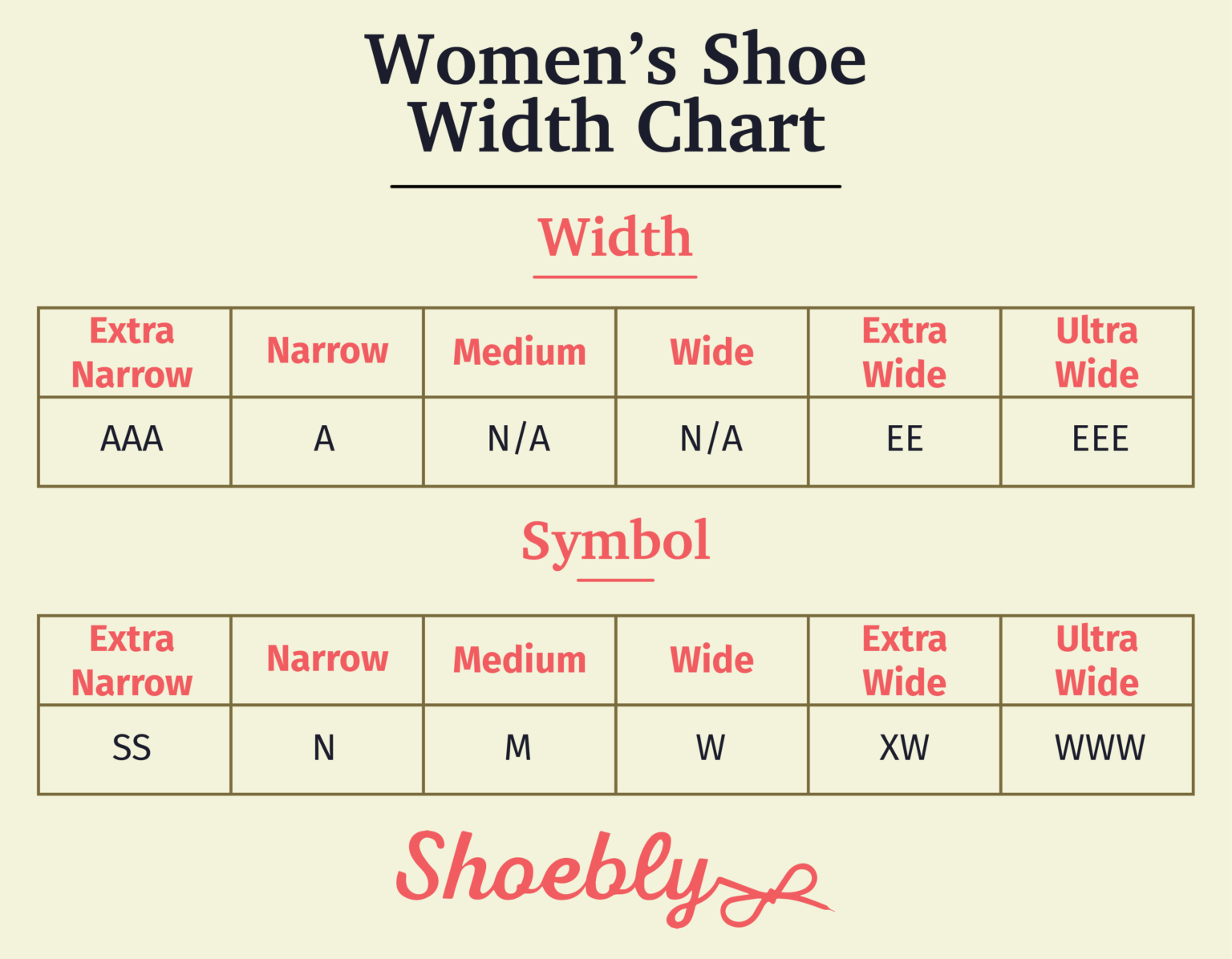
Women’s Shoe Width Chart
The chart below shows common US width labels for women’s shoes. These labels are general guides, not exact rules for every brand.
| Width label | Common meaning | Typical fit |
|---|---|---|
| AAA | Extra narrow | Very slim foot |
| AA | Narrow | Narrow foot |
| A | Narrow to very narrow | Slim foot, depending on brand |
| B | Medium or standard | Average-width foot |
| C | Medium-wide or wide | Wider-than-average foot |
| D | Wide or extra wide | Wide foot |
| E or EE | Extra wide | Very wide foot |
| 2E, 3E, or 4E | Extra wide categories | Very wide foot, often in specialty lines |
Some brands use only part of this chart. For example, one brand may offer B, D, and 2E, while another may use medium, wide, and extra wide instead.
The key point is simple: B is normally the regular women’s width in US sizing.

How Is Women’s Shoe Width Measured?
Shoe width is measured across the foot and the shoe’s interior at its widest area. This area is often called the ball of the foot, where the big-toe joint and little-toe joint sit.
A professional shoe-fitting device, such as a Brannock Device, measures foot length and width. It may also measure the position of the arch and the length of the toes. The result helps match your foot to a shoe size and width.
However, a width letter is not a universal inch measurement. Several factors affect the actual fit:
- Shoe size
- Foot length
- Shoe shape
- Toe-box design
- Upper material
- Sole construction
- Brand sizing system
- Foot swelling during the day
A larger shoe size is usually made wider in proportion to its length. As a result, a size 10B is not the same physical width as a size 5B, even though both are labeled B.
This is why foot width should be judged with shoe length and shape together. A width label gives you a useful starting point, not a full fit guarantee.
Is B Width the Same as Medium Width?
Yes, B width usually means medium width for women’s shoes in the United States.
A product page may list the same fit as:
- Women’s medium
- Regular width
- Standard width
- B width
- M width
The letter and the word may differ, but they usually point to the same general category.
There are exceptions. A brand may use “medium” based on its own shoe last, which is the mold used to shape the shoe. A narrow-looking design may feel tight even when it is labeled B. A soft knit or leather upper may feel more forgiving than a firm synthetic upper with the same B label.
When buying online, check the brand’s own width chart and return policy. Do not rely only on the letter.

How Do You Know Whether You Need a B Width?
You may need a B-width women’s shoe if your foot fits comfortably in most standard women’s shoes and you do not have regular pressure at the sides.
Signs that a B width may fit include:
- Your toes can spread without being squeezed.
- The widest part of your foot rests over the widest part of the shoe.
- The shoe does not press into your little toe.
- Your foot does not slide side to side.
- The upper does not bulge over the sole.
- You have about a thumb’s width of space in front of your longest toe.
- Your heel stays in place without painful rubbing.
Try shoes while standing and walking. Feet can lengthen and widen slightly when they bear weight. They may also swell later in the day, especially after long periods of standing or walking.
Wear the socks, inserts, or braces you plan to use with the shoes. A shoe that fits over bare feet may feel too tight with everyday socks.
A simple at-home check
For a rough comparison:
- Place a sheet of paper on a hard floor.
- Stand on it while wearing the socks you plan to use.
- Trace around your foot, or ask someone else to trace it.
- Measure the longest part for length.
- Measure across the widest part for width.
- Repeat with the other foot.
- Compare the measurements with the brand’s size chart.
This method is only an estimate. Do not press the pencil inward under the foot. Also, measure both feet because one foot is often slightly larger.
B Width vs. Narrow and Wide Women’s Shoes
B width is a middle point between narrow and wide options. The right choice depends on where the shoe feels tight or loose.
| Fit issue | Width that may help | What to look for |
|---|---|---|
| Sides feel loose and the foot slides | Narrow width | Less space across the forefoot |
| Most standard shoes feel comfortable | B or medium | Regular width and secure heel |
| Little toe feels squeezed | Wide width | More room across the forefoot |
| Ball of foot presses against the sides | Wide or extra wide | A broader toe box |
| Foot spills over the sole edge | Wider width | A shoe with a wider base |
| Heel slips but the front fits | Same width with a better heel shape | Avoid sizing down only for heel fit |
Do not solve a width problem by changing length alone. Going up a half size may give more room, but it also makes the shoe longer. Your foot may slide forward, and the heel may become loose.
If the shoe is long enough but tight across the front, a wider width is usually a better solution than a longer size.

What Is the Difference Between Women’s B and Men’s B Width?
Women’s B is usually a standard or medium width. Men’s B is commonly a narrow width.
This difference comes from separate width scales used in US footwear. A women’s B shoe and a men’s B shoe may have the same letter but a different actual fit.
A common comparison looks like this:
| Shoe category | Common standard width |
|---|---|
| Women’s shoes | B |
| Men’s shoes | D |
This is a general US convention. It is not a promise that every brand uses the same measurements.
When shopping in unisex, men’s, or women’s styles, read the product’s width description carefully. A women’s shoe labeled D may be wide, while a men’s shoe labeled D may be regular.
Common Problems With B-Width Shoes
A B-width label does not always mean the shoe will feel comfortable. The most common problems come from shoe shape, not just width.
The toe box is too narrow
A pointed toe can squeeze the toes even when the shoe is technically a B width. Look for a rounded or anatomical toe shape if your toes need more room.
The shoe is wide in front but loose at the heel
Some shoes have a broad upper and a shallow heel cup. Try a different shoe shape before choosing a smaller size. A smaller size may reduce heel slip but create toe pressure.
The shoe feels tight only on one foot
This may happen because one foot is larger or wider. Fit the larger foot first. You can use a suitable insole or heel adjustment for the smaller foot if needed.
The upper does not stretch enough
Leather and some fabric uppers may soften with wear, but they should not cause pain while you wait. Firm synthetic materials often give less. Do not assume that a painful shoe will become a good fit.
Your foot is wide at the toes but narrow at the heel
Look for shoes with adjustable laces, straps, or separate forefoot and heel shaping. A wide shoe with a secure heel may fit better than a standard shoe stretched across the front.

Are B-Width Shoes Good for Wide Feet?
Usually, no. B-width women’s shoes are designed for average-width feet, not distinctly wide feet.
A B shoe may work for a slightly broad foot if the shoe has:
- A soft, flexible upper
- A rounded toe box
- Stretch material
- An adjustable closure
- A roomy design
But if your toes are squeezed, your little toe rubs, or the sides of your foot sit over the sole, choose a wide option. Width labels such as D, 2E, or “wide” may provide more room, depending on the brand.
Do not use shoe stretching as the main solution for a major size mismatch. Stretching may add limited room in one area, but it cannot change the shoe’s full structure or create more length.
Do Width Letters Change by Brand?
Yes. Width letters are useful, but they are not fully standardized across all US brands.
Brands may differ in:
- The measurement assigned to each width
- The shape of the toe box
- The height of the upper
- The width of the heel
- The amount of internal cushioning
- The way a shoe stretches over time
A running shoe, dress shoe, boot, and sandal may also fit differently in the same labeled width. A sandal may allow the foot to spread, while a structured pump may hold the foot more tightly.
For the best result, use this order:
- Check the brand’s width chart.
- Compare your foot measurements with the chart.
- Read the product’s fit notes.
- Check whether the shoe runs narrow, wide, or true to size.
- Buy from a seller with a clear return policy.
- Try both shoes on a clean indoor surface.
The brand’s chart is more useful than converting B width into one fixed number of inches.

What Should You Do If B Width Does Not Fit?
If a B-width shoe feels wrong, first identify where the problem occurs.
- Tight across the ball of the foot: Try a wider width.
- Tight only at the toes: Look for a wider or rounder toe box.
- Loose across the whole foot: Try a narrow width or a different style.
- Loose only at the heel: Look for a more secure heel design.
- Too short: Try a longer size, but check width again.
- Pain, numbness, or tingling: Stop wearing the shoe and reassess the fit.
A shoe should feel secure but not painful. It should not cause ongoing rubbing, pressure, numbness, or loss of balance. If foot pain continues even in well-fitting shoes, a podiatrist or qualified foot-care professional can help assess the cause.
Key Takeaways
- B width usually means medium or standard width in women’s US shoes.
- A women’s B is not the same as a men’s B.
- Width letters vary by brand and shoe design.
- A B shoe should not squeeze the toes or allow the foot to spill over the sole.
- Choose width based on fit, not the label alone.
- Measure both feet and check the brand’s own chart when buying online.
- If a shoe causes pain, pressure, or numbness, do not rely on break-in time to fix it.
FAQs
Is B the normal width for women’s shoes?
Yes. In most US women’s shoe sizing systems, B is the regular, medium, or standard width.
Is women’s B width narrow?
Usually not. Women’s B is generally medium. Narrow women’s shoes are often labeled A, AA, or AAA, although labels vary by brand.
Is women’s B width the same as men’s D?
They are both commonly used as standard widths for their respective categories, but they are not identical measurements. Women’s B and men’s D belong to different width scales.
Is women’s B width good for wide feet?
Usually, no. If your feet regularly feel squeezed in standard shoes, try a wide width or a shoe with a roomier toe box.
Does a B width shoe fit every size the same way?
No. Shoe width changes with shoe length, and the shape may differ between sizes. A size 5B and a size 10B will not have the same physical width.
How can I check my shoe width at home?
Trace each foot while standing, measure across the widest area, and compare the result with the shoe brand’s chart. Treat the result as a guide, because shoe shape also affects fit.
Conclusion
Width B in women’s shoes means medium or standard width in most US sizing systems. It is a useful starting point for shoppers whose feet fit comfortably in regular women’s shoes.
The best fit depends on more than the letter. Check the shoe’s length, toe-box shape, heel fit, materials, and brand chart. If a B shoe causes pressure or pain, try a different width or design rather than forcing your foot to adapt.