Best Stability Running Shoes Overpronation: Top Guide

The best stability running shoes for overpronation combine steady support, soft cushioning, a secure fit, and smooth daily comfort.
Your feet may roll inward as you run, walk, or stand. That motion is called overpronation. It can make your ankles, knees, or lower legs feel tired after a few miles. The right stability shoe can guide your stride without feeling stiff. I reviewed these Brooks, ASICS, and Dr. Scholl’s options for support, comfort, fit, daily use, and value. My top shoe pick is the Brooks Adrenaline GTS 25, while the ASICS GT-1000 models offer a lighter, more budget-friendly running option.
See the differences between my top picks at a glance.
Brooks Adrenaline GTS 25

The Brooks Adrenaline GTS 25 is my strongest all-around pick for runners who want steady support without a harsh, corrective feel. Its design suits daily road runs, treadmill sessions, walks, and long hours on your feet. The shoe uses Brooks’ familiar GuideRails support approach to help limit excess movement around the knees and lower legs. It also has the cushioned, smooth ride that makes the Adrenaline line easy to use every day.
I like this model for runners who do not want an extreme motion-control shoe. It offers guidance while still letting the foot move in a fairly natural way. The medium-width listing works best for average feet, but shoppers should still check the fit before ordering. If you need a dependable pair for regular miles and daily walking, this is one of the best stability running shoes overpronation shoppers can consider.
Pros:
- Balanced support for mild to moderate overpronation
- Comfortable cushioning for daily runs and walks
- Useful for both running and general use
- Secure heel and stable feel through the stride
- Good choice for runners who dislike rigid support
- Versatile design for roads, treadmills, and sidewalks
Cons:
- May feel more structured than a neutral running shoe
- Medium width may not suit very wide feet
- Not the lightest choice for speed workouts
What Amazon Buyers Are Saying
Amazon review patterns for Adrenaline shoes often focus on comfort, support, and the ability to wear them for long walks or workdays. Buyers commonly like the steady ride and the familiar Brooks fit. Some shoppers report that the shoe feels firm at first or that the toe box does not suit every foot shape. As with any running shoe, comments about sizing can vary by foot width and personal preference, so I recommend checking the size chart and return terms.
My Recommendation
I recommend the Adrenaline GTS 25 for the buyer who wants one shoe for running, walking, and daily support. It is worth buying when you prefer a cushioned ride with gentle guidance rather than a stiff correction. This is my best overall choice in this group.
Brooks Adrenaline GTS 24 Weatherized

The Brooks Adrenaline GTS 24 Weatherized targets runners and walkers who need the Adrenaline support platform in a more weather-ready package. The black, gray, and coral colorway gives it a simple look for daily wear. Its support system aims to keep the stride controlled while the midsole provides a comfortable base. This makes it a practical choice for wet sidewalks, cool mornings, and normal road miles.
The weatherized build is the main reason to choose this model over a standard version. It can add confidence when the ground is damp, though it should not be treated as a waterproof hiking boot. The shoe still needs to fit your foot well, and weather protection can reduce airflow compared with a highly breathable mesh shoe. For wet-weather walking and steady training, it remains a strong option among stability shoes for overpronation.
Pros:
- Supportive Adrenaline platform for daily use
- Weatherized design suits damp conditions
- Cushioned feel for walking and easy runs
- Stable base helps reduce a loose, rolling sensation
- Neutral-looking color works for casual wear
- Good option for runners who train outdoors year-round
Cons:
- May feel warmer than a regular mesh version
- Weatherized materials can require more break-in time
- Not designed for deep water or technical trails
What Amazon Buyers Are Saying
Customer review patterns for weatherized running shoes often praise the dry-feeling upper, comfort, and stable platform. Buyers tend to value the ability to use the shoes for errands, walks, and outdoor activity in changing weather. A common point to consider is warmth, since protection from wet conditions may reduce ventilation. Fit comments can also differ, especially for buyers who switch between Brooks models or need extra room.
My Recommendation
I recommend this model for walkers and runners who face damp streets and want more protection than a standard running shoe provides. It is worth considering if weather matters as much as support. I would choose the regular Adrenaline for hot conditions and this version for cooler, wet days.
Dr. Scholl’s Stability Support Insoles

Dr. Scholl’s Stability Support Insoles offer a different way to manage foot support. Instead of replacing your running shoes, you place the insole inside a compatible pair. The product listing targets overpronation, low arches, fallen arches, ankle alignment, and lower-body stress. The size range shown here covers men’s sizes 8 through 14, so buyers should confirm that their shoe size matches the product range.
I see these insoles as a useful add-on for roomy walking shoes, work shoes, or older shoes that still have a sound outsole. They cannot turn an unstable or worn-out shoe into a proper running shoe. They also may feel firm under the arch during the first few wears. If your current shoes have enough volume, this can be a low-cost way to test added support before buying a new pair.
Pros:
- Lower-cost way to add arch support
- Designed for people with overpronation or low arches
- Can work across more than one compatible pair of shoes
- Useful for walking, work, and casual footwear
- May improve the feel of shoes with weak factory insoles
- Easy to remove and replace when testing fit
Cons:
- Does not replace a true stability running shoe
- May feel too firm for sensitive arches
- Needs enough room inside the shoe
- Men’s size range does not cover every buyer
What Amazon Buyers Are Saying
Review themes for support insoles often include better arch contact, improved comfort in work shoes, and a more supported feeling while standing. Some buyers like that they can move the insoles between shoes. Others mention that the arch feels too high or firm, especially during the adjustment period. Results depend heavily on shoe shape, foot structure, and the amount of space left after removing the original insole.
My Recommendation
I recommend these insoles for buyers who need extra support in shoes they already own. They are not my first choice for serious running, but they can add value for walking and daily standing. Buy them only if your shoes have enough room and you are comfortable with a firmer arch feel.
ASICS Men’s GT-1000 14

The ASICS GT-1000 14 is a good fit for runners who want stability in a lighter daily trainer. The black colorway gives it a clean look, and the GT-1000 line is known for combining support with a less bulky feel than many traditional stability shoes. It suits road running, gym use, walking, and short to medium training sessions. The shoe may appeal to runners who find heavily cushioned models too large or slow.
ASICS builds this kind of shoe around guided support and a secure platform. The exact feel depends on your gait, pace, and foot shape, so I would not assume it will suit every overpronator. Runners with wider feet should pay close attention to the available width and recent fit feedback. For a controlled and fairly nimble ride, this is one of the best stability running shoes overpronation buyers can place on their shortlist.
Pros:
- Light daily-training feel
- Supportive design for mild to moderate overpronation
- Works for running, walking, and gym sessions
- Clean black colorway hides everyday marks
- Less bulky than many maximum-support shoes
- Good option for runners who want a more responsive ride
Cons:
- May feel narrow for broad feet
- Less plush than a heavily cushioned trainer
- Some runners may need a short break-in period
What Amazon Buyers Are Saying
Buyers of GT-1000 shoes commonly mention the light feel, stable ride, and usefulness for everyday walking or running. Many shoppers value the secure fit and simple appearance. The most important caution in review patterns is sizing, since some feet need more toe or forefoot room than the standard shape offers. Cushioning opinions also vary, with some buyers enjoying the firmer response and others wanting a softer shoe.
My Recommendation
I recommend the men’s GT-1000 14 for runners who want support without a large, soft shoe. It offers good value for daily miles and gym use. Choose it over the Brooks if you prefer a lighter, firmer, and more responsive feel.
ASICS Women’s GT-1000 14
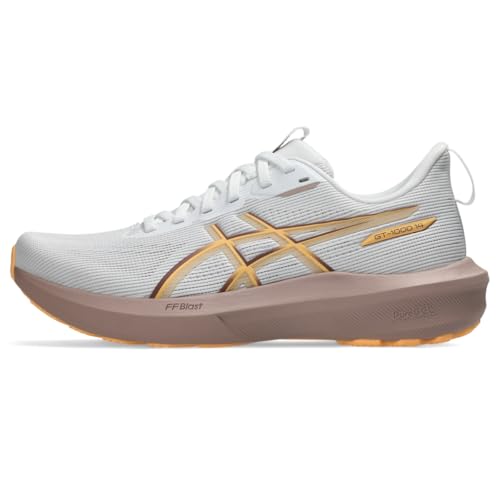
The women’s ASICS GT-1000 14 gives female runners the same basic idea as the men’s version: a light, supportive shoe for daily movement. The white and red colorway has a bright look, while the stability platform helps create a more controlled landing. It can suit road miles, walking, and general training. I would view it as a practical choice for runners who dislike heavy stability shoes.
The key buying step is fit. A women’s shoe may use a different shape and width from the men’s model, so do not select a size by guesswork alone. Leave enough room at the toes, but keep the heel secure. If the shoe matches your foot shape, its lighter ride can make everyday training feel easier without giving up support.
Pros:
- Light design for daily training
- Guided support for inward foot rolling
- Useful for running, walking, and gym workouts
- Bright colorway adds a sporty look
- Good choice for runners who dislike bulky shoes
- Secure platform for steady road miles
Cons:
- White upper may show dirt quickly
- Standard width may not suit wide feet
- May not provide enough softness for runners who want plush cushioning
What Amazon Buyers Are Saying
Common buyer feedback for women’s GT-1000 models centers on support, light weight, and comfort during walking or everyday workouts. Shoppers often like the stable feel without a large sole. Some comments raise concerns about width, toe-room, or the firmness of the midsole. Those points show why foot measurements and a careful comparison with your current shoe matter before purchase.
My Recommendation
I recommend this shoe for women who want a light stability trainer with a controlled ride. It is a strong value when the standard width fits well. If you need a very soft ride or a roomy toe box, consider a different model or width.
ASICS Men’s GT-1000 15

The ASICS GT-1000 15 is the newest-looking option in this comparison and suits men who want a supportive daily running shoe with a firm, responsive character. The Prussian blue and white colorway gives it a clean athletic style. Like the other GT-1000 models, it aims to guide the foot while keeping the shoe useful for regular training. It may work well for runners who want a step up from a basic neutral trainer.
I would choose this model when support and a more active ride matter more than maximum softness. It may suit easy runs, moderate workouts, and walking, but buyers should confirm the listed size and width. A newer model does not automatically mean it fits every foot better. Comfort comes from the match between the shoe, your stride, and your training surface.
Pros:
- Supportive platform for daily road running
- Responsive feel for runners who dislike soft, slow shoes
- Modern colorway with easy athletic appeal
- Useful for running, walking, and light training
- Good choice for mild to moderate overpronation
- May feel more nimble than a heavier stability shoe
Cons:
- May feel firm to runners who prefer plush cushioning
- Fit should be checked carefully before ordering
- May not offer enough support for severe foot-control needs
What Amazon Buyers Are Saying
Early buyer feedback for a newer model should be read with care because review volume can change over time. The usual GT-1000 themes include a secure fit, light feel, and useful support for daily activity. Some runners may prefer more cushion, while others like the firmer response. I suggest comparing the size chart, checking current buyer photos when available, and starting with short runs.
My Recommendation
I recommend the GT-1000 15 for runners who want an updated, responsive stability shoe. It is worth considering if you prefer firm support and a lighter ride. Choose the Brooks Adrenaline instead if soft comfort and long-walk versatility come first.
How to Choose Best Stability Running Shoes Overpronation
Choosing the best stability running shoes overpronation requires more than picking the shoe with the strongest support label. Overpronation differs from person to person. Some runners need only mild guidance. Others need a firm base, a wider platform, or help from a podiatrist. Use the points below to narrow your choice without guessing.
1. Match the Support to Your Stride
Stability shoes should guide your foot, not force it into an unnatural position. Look for terms such as stability, guided support, medial support, or a structured platform. The Brooks Adrenaline offers a balanced feel for many daily runners. The ASICS GT-1000 models feel lighter and more direct.
Do not assume that more support is always better. A shoe that feels too rigid may cause pressure under the arch or make your stride feel awkward. If pain continues, stop running and seek advice from a qualified health professional. Shoes can improve comfort, but they cannot diagnose or treat an injury.
2. Check Fit, Width, and Running Use
Fit matters as much as support. Your heel should stay in place without tight lacing. Your toes should have room to spread and move. Try shoes later in the day, when feet may be slightly larger. Wear the socks you plan to use for running.
Also match the shoe to the task. A daily trainer needs comfort and durability. A walking shoe may need extra room and a stable base. An insole needs space inside the shoe. The Dr. Scholl’s option can help, but it cannot fix a shoe that is too short, too narrow, or badly worn.
3. Compare Cushioning, Surface, and Value
Think about where you run. Road shoes work well on pavement and treadmills. They may not offer the grip or protection needed for rocky trails. A weatherized shoe can help on damp sidewalks, but it may feel warmer than a breathable mesh shoe.
Compare the full value, not just the sale price. A shoe that feels good for several types of use may save you from buying separate pairs. The Brooks Adrenaline is a strong all-purpose choice. The GT-1000 models may suit buyers who want a lighter feel. Replace shoes when the cushioning, outsole, or support feels worn and your stride changes.
Final Verdict: Which Should You Buy?
For most runners, I recommend the Brooks Adrenaline GTS 25 as the best stability running shoes overpronation pick in this group. It offers the best mix of support, cushioning, and daily use. Choose the ASICS GT-1000 14 or 15 if you want a lighter, firmer ride.
Use the weatherized Brooks for damp days and Dr. Scholl’s insoles for compatible walking shoes. The right fit matters more than the brand name, so start slowly and pay attention to comfort.
FAQs Of best stability running shoes overpronation
What are the best stability running shoes for overpronation?
The Brooks Adrenaline GTS 25 is my top overall pick because it balances support, cushioning, and daily comfort. The ASICS GT-1000 models suit runners who prefer a lighter, firmer ride.
Can stability shoes correct overpronation?
Stability shoes can guide the foot and improve comfort, but they do not permanently correct overpronation. Persistent pain needs assessment from a qualified health professional.
Are stability running shoes good for walking?
Yes. Models such as the Brooks Adrenaline can work well for walking, standing, and daily errands when the fit feels comfortable.
Should I use insoles with stability running shoes?
Only if the shoe has enough room and the added arch support feels comfortable. Do not stack insoles if they make the shoe tight or change your stride.
How should overpronation running shoes fit?
Your heel should feel secure, your midfoot should not feel squeezed, and your toes should have free space. Check the brand size chart and test the shoes with your usual running socks.