
Heel Drop on Running Shoes: Boost Performance and Prevent Injury

Running shoes are more than just a piece of sports gear—they affect your comfort, performance, and injury risk. One technical term often seen in shoe reviews and product descriptions is heel drop. For many runners, this term can feel confusing. What does heel drop really mean? Why does it matter? And how do you choose the right heel drop for your running needs? This article will break down the concept, explain its impact, compare popular options, and help you make smart decisions. Whether you’re new to running or looking to upgrade your shoes, understanding heel drop is a key step toward better runs.
What Is Heel Drop?
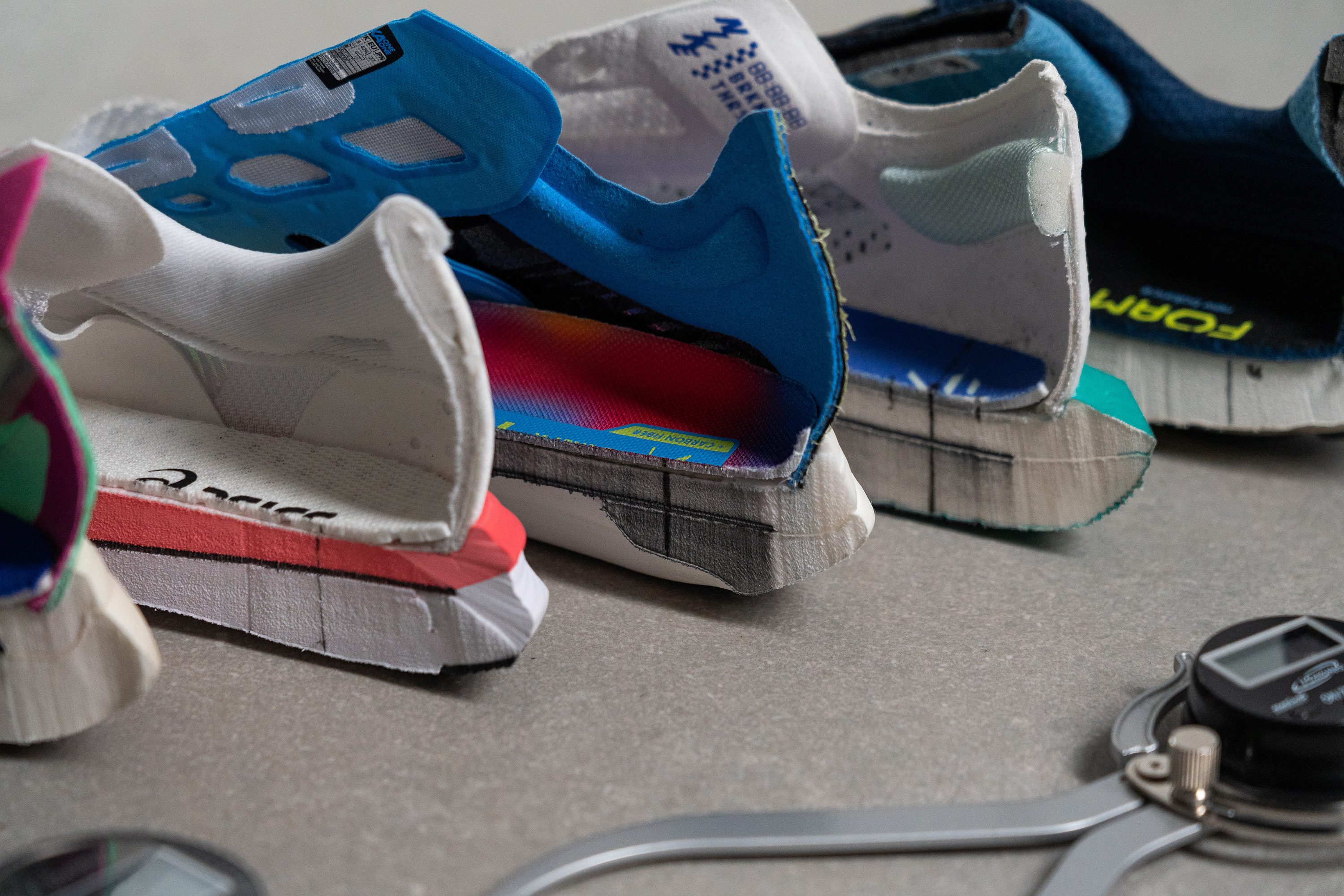
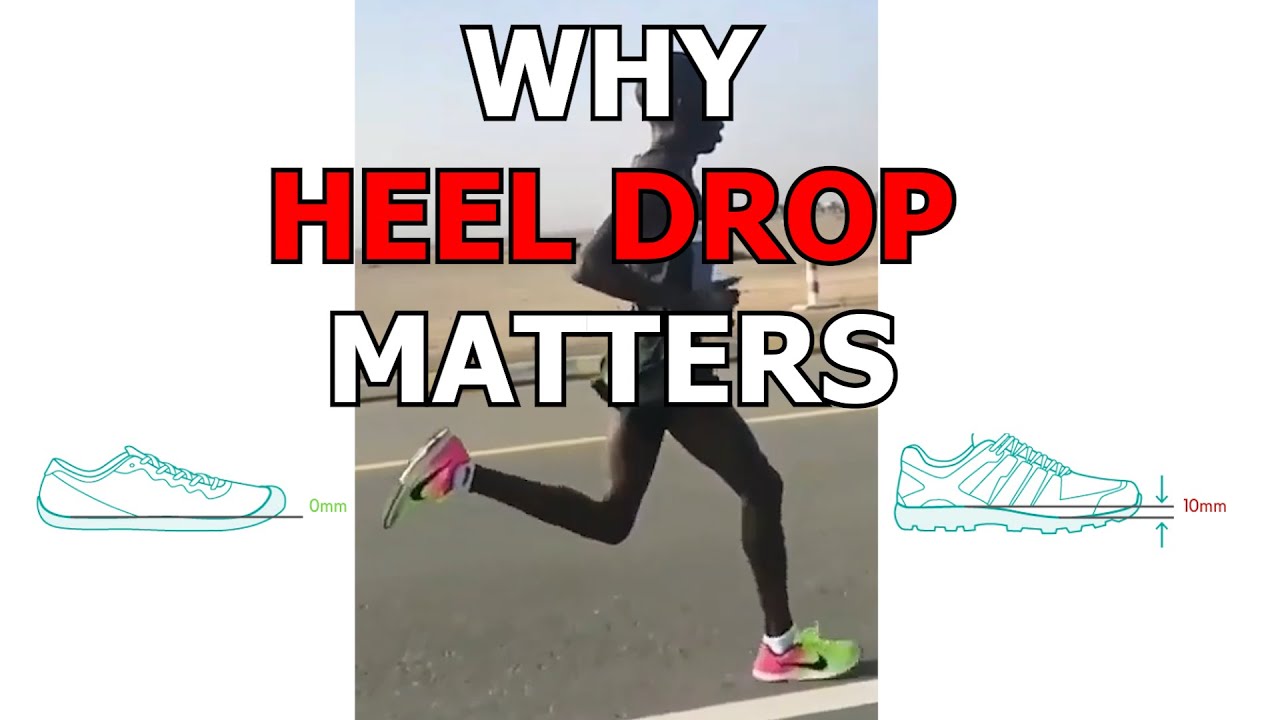
Heel drop, sometimes called offset or ramp angle, is the difference in thickness between the heel and the forefoot of a shoe’s midsole. If the heel is higher than the forefoot, there’s a positive heel drop. It’s measured in millimeters (mm).
For example, a shoe with a heel height of 24mm and a forefoot height of 16mm has a heel drop of 8mm. Most running shoes have a drop between 0mm and 12mm, but you’ll find exceptions.
Heel drop affects how your foot strikes the ground. A higher heel drop means your heel is lifted, while a lower drop keeps your foot more level.
Why Does Heel Drop Matter?
Heel drop isn’t just a technical detail—it affects your running form, muscle use, and injury risk.
- Running mechanics: Shoes with high heel drops encourage heel striking, where your heel hits the ground first. Low drops promote forefoot or midfoot striking.
- Muscle activation: Lower heel drop shifts more work to your calves and Achilles tendon. Higher drops reduce this load.
- Injury risk: Changing heel drop can impact stress on your knees, ankles, and Achilles. Runners with certain injuries may benefit from a specific drop.
Beginners often overlook heel drop, focusing only on cushioning or style. But choosing the right heel drop can improve comfort and help prevent injuries.
Credit: runrepeat.com
Common Heel Drop Ranges
Manufacturers use several heel drop ranges. Here’s how they break down:
- Zero Drop (0mm)
- No height difference between heel and forefoot.
- Mimics barefoot running.
- Example: Altra shoes.
- Low Drop (1–4mm)
- Slight lift in the heel.
- Often seen in minimalist and trail shoes.
- Moderate Drop (5–8mm)
- Balanced for most runners.
- Used in many standard trainers.
- High Drop (9–12mm)
- Significant heel lift.
- Common in traditional running shoes.
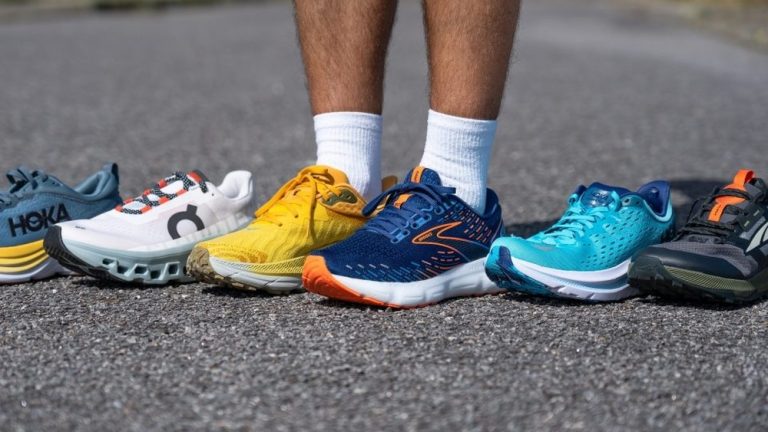
You can see how different brands compare in the table below:
| Brand | Popular Model | Heel Drop (mm) | Category |
|---|---|---|---|
| Altra | Escalante | 0 | Zero Drop |
| Hoka One One | Bondi | 4 | Low Drop |
| Brooks | Ghost | 12 | High Drop |
| New Balance | Fresh Foam 1080 | 8 | Moderate Drop |
| Asics | Gel-Kayano | 10 | High Drop |
How Heel Drop Affects Running Form
Heel drop changes how your foot lands and rolls during a run. Here’s what happens with different drops:
- Zero/Low Drop: Your foot is almost flat. This can encourage a forefoot or midfoot strike, which some experts believe leads to a more natural running form. However, it places more strain on the calves and Achilles tendon.
- High Drop: Your heel is raised. This encourages heel striking, which is common among beginners and recreational runners. It can reduce stress on the Achilles but may increase force on the knees.
Not everyone benefits from the same heel drop. Your running style, anatomy, and injury history all play roles.

Credit: www.celutionseducation.com
Who Should Choose Each Heel Drop Range?
Selecting the right heel drop depends on your personal needs. Here’s a guide:
Zero Drop (0mm)
- Best for: Experienced runners, those wanting a barefoot feel, or people with strong calves and Achilles.
- Not recommended for: Beginners or those with Achilles problems. Switching too quickly can cause injury.
Low Drop (1–4mm)
- Best for: Trail runners, those who want a bit of heel lift but still a natural form.
- Not recommended for: People with weak calves or history of Achilles injuries.
Moderate Drop (5–8mm)
- Best for: Most runners, including beginners and intermediates. Good balance between comfort and natural form.
- Not recommended for: Those who need very high support or are transitioning from high drop shoes.
High Drop (9–12mm)
- Best for: Heel strikers, people with knee issues, or runners who prefer traditional shoes.
- Not recommended for: Runners seeking a barefoot feel or those wanting to strengthen their calves.
Key Factors To Consider When Choosing Heel Drop
Heel drop is not the only factor in shoe selection. Here are the main points to weigh:
- Your running style
- Are you a heel striker, midfoot striker, or forefoot striker? Heel strikers may prefer higher drops.
- Injury history
- If you have Achilles tendon problems, avoid low or zero drops.
- Transitioning
- Switching from high to low drop too quickly can cause injury. Gradual transition is important.
- Terrain
- Trail shoes often use lower drops for stability on uneven surfaces.
- Shoe cushioning
- Heel drop interacts with cushioning. High cushioning with low drop can feel unstable.
- Training goals
- For speed work, some runners prefer lower drops. For long-distance, moderate or high drops can offer comfort.
Below is a comparison of heel drop effects by runner type:
| Runner Type | Recommended Drop | Reason |
|---|---|---|
| Beginner | Moderate to High (8–12mm) | Comfort, injury prevention |
| Experienced | Low to Moderate (4–8mm) | Natural form, performance |
| Trail Runner | Low (1–4mm) | Stability |
| Athlete with Achilles History | Moderate to High (8–12mm) | Reduced tendon strain |
| Speed Racer | Low (0–4mm) | Quick turnover, agility |
The Science Behind Heel Drop
Research shows that heel drop affects biomechanics and injury risk. A study published in the British Journal of Sports Medicine found that runners with lower heel drop shoes had more calf and Achilles injuries, while those with higher drops had more knee problems.
- Lower drop: More muscle activation in calves and Achilles. Good for strengthening, but risky for beginners.
- Higher drop: Less strain on lower leg, but more force on knees.
Interestingly, shoe companies rarely agree on the “best” drop. Each runner’s unique body mechanics mean there is no single solution.
Common Mistakes When Choosing Heel Drop
Many runners make errors when picking heel drop:
- Ignoring heel drop: Beginners focus on looks or brand, not drop. This can lead to discomfort or injury.
- Rapid transition: Switching from high to low drop overnight can cause calf pain or Achilles injuries.
- Assuming lower drop is always better: Minimalist shoes are trendy, but not ideal for everyone.
- Not testing in store: Walking or jogging in the shoe before buying helps you feel the drop difference.
- Forgetting about socks and insoles: These can slightly change the effective heel drop.
Real-world Examples Of Heel Drop Choices
Let’s look at some runners and their heel drop decisions.
- Maria, beginner, knee pain: Tried high drop shoes (12mm) and felt less knee pain. Lower drop aggravated her injury.
- Jake, trail runner, strong calves: Prefers low drop (4mm) for stability and agility on uneven surfaces.
- Priya, marathoner, transitioning: Used moderate drop (8mm) while gradually lowering drop over months. Avoided injury by slow transition.
Non-obvious insight: Some runners find their ideal drop only after trying several options. Listening to your body is key.
How To Transition To A Different Heel Drop
If you want to change your heel drop, do it slowly. Here’s a step-by-step approach:
- Start with short runs: Use the new shoes for easy runs or walks.
- Increase gradually: Add distance over weeks, not days.
- Strengthen calves: Do exercises like calf raises to prepare muscles for lower drop.
- Monitor soreness: If you feel pain in Achilles or calves, slow down the transition.
- Alternate shoes: Use your old shoes for longer or harder runs until fully adapted.
Many runners miss the importance of calf strength during transition. Weak calves make adjustment harder.
Heel Drop And Injury Prevention
Heel drop can help prevent certain injuries, but it can also cause new ones if not chosen carefully.
- High drop: Good for those with Achilles or calf issues. Reduces strain on lower leg.
- Low drop: Better for those with knee problems, but increases load on calves.
If you have a history of plantar fasciitis, moderate to high drop may help. For runners with shin splints, lower drop can sometimes reduce pain, but not always.
No shoe can guarantee injury prevention. Proper running form, strength training, and gradual increases in distance are all important.
Heel Drop In Trail Vs Road Running Shoes
Trail and road running shoes often use different heel drops.
- Trail shoes: Lower drop (0–6mm) is common. It gives stability and helps runners feel the ground. For steep descents, some prefer higher drop to protect Achilles.
- Road shoes: Moderate to high drop (8–12mm) is typical. It cushions impact and supports heel strikers.
Some trail shoes use rock plates or extra protection, which changes how drop feels. Always try shoes in your running environment.
Heel Drop And Shoe Cushioning
Heel drop and cushioning interact. You can have a low drop with high cushioning, but it may feel unstable. High drop with lots of cushioning can feel plush and comfortable.
Here’s a comparison of cushioning and heel drop:
| Heel Drop | Cushioning Level | Typical Feel |
|---|---|---|
| Zero | Minimal | Firm, ground feel |
| Low | Medium | Responsive, stable |
| Moderate | Medium to High | Balanced, comfortable |
| High | High | Soft, plush |
Some runners assume cushioning can replace heel drop for comfort. But both affect how your foot moves.
Heel Drop And Performance
Performance runners often choose heel drop based on race goals.
- Sprinters: Prefer low or zero drop for quick turnover and agility.
- Long-distance runners: Choose moderate drop for comfort over time.
- Older runners: Often select high drop to reduce strain on lower leg.
Data from elite marathons shows most runners use shoes with a 5–8mm drop. However, some world records are set in shoes with higher drops.
Credit: www.youtube.com
Heel Drop And Shoe Lifespan
Heel drop does not change much as shoes age, but worn out midsoles can compress unevenly. This makes drop feel different and can affect your stride.
- Inspect your shoes for wear.
- Replace them after 300–500 miles, depending on usage.
Neglecting shoe replacement is a common mistake, especially for runners who focus only on drop.
Heel Drop And Foot Shape
Foot shape can influence heel drop preferences.
- Flat feet: Often need more support, which can be paired with moderate to high drop.
- High arches: May benefit from low to moderate drop, but cushioning is important.
Some brands offer wide or narrow options, but heel drop remains consistent within each model.
Heel Drop And Running Efficiency
Some studies suggest that lower heel drops can increase running efficiency by reducing braking forces. However, this only works for runners with strong calves and good technique.
Beginners may lose efficiency by struggling with a low drop. Experienced runners sometimes use low drop for speed work, high drop for recovery runs.
How To Measure Heel Drop
Manufacturers list heel drop in product specs, but you can measure it yourself:
- Place the shoe on a flat surface.
- Use a ruler to measure from the ground to the highest point of the heel.
- Measure from the ground to the highest point of the forefoot.
- Subtract forefoot height from heel height.
For more information on shoe measurements and biomechanics, visit Wikipedia.
Brands Known For Specific Heel Drops
Some brands specialize in certain heel drops:
- Altra: All models are zero drop.
- Hoka One One: Most models are low to moderate drop, with high cushioning.
- Brooks: Offers a range, but many shoes are high drop.
- Saucony: Mix of moderate and low drop.
- Nike: Range from low to high, depending on model.
Try several brands to find your best fit. Brand loyalty can sometimes limit your options.
Heel Drop And Shoe Price
Heel drop does not directly affect price, but certain drops are more common in premium shoes. High-tech materials or advanced cushioning often come with moderate to high drop.
- Zero drop shoes may be less expensive, but not always.
- High drop shoes with advanced features can be pricey.
Don’t assume price equals quality for heel drop.
Tips For Testing Heel Drop In Store
When shopping for running shoes:
- Wear your usual running socks.
- Walk and jog in the store.
- Try shoes with different heel drops—notice how your foot lands.
- Ask staff for advice, but trust your own comfort.
- Check if you feel strain in calves or knees.
Non-obvious tip: Your foot adapts quickly, so spend at least 10 minutes in each shoe.
Is Heel Drop Important For Walking Shoes?
Heel drop matters less for walking shoes, but it still affects comfort. Moderate to high drop can help walkers with heel pain. For fitness walking, lower drop may encourage a more natural stride.
Heel Drop In Kids’ Running Shoes
Most kids’ running shoes use moderate heel drops. Children’s feet are flexible, and too low a drop can cause strain. For young runners, focus on comfort and fit over drop.
Heel Drop And Orthotics
Orthotic inserts can change the effective heel drop. If you use orthotics, measure the drop with the insert in place. Consult a podiatrist for advice.
Frequently Asked Questions
What Is Heel Drop And Why Does It Matter?
Heel drop is the difference in height between the heel and forefoot of a running shoe, measured in millimeters. It affects running form, muscle use, and injury risk. Choosing the right heel drop can improve comfort and help prevent injuries.
Can Changing Heel Drop Help Prevent Injuries?
Yes. High heel drop can reduce strain on the Achilles and calves, while low drop can lower knee stress. However, rapid changes can cause new injuries, so transition slowly.
How Do I Know Which Heel Drop Is Right For Me?
Consider your running style, injury history, foot shape, and comfort. Test different drops in store and listen to your body. Beginners usually do best with moderate to high drops.
Is Heel Drop Only Important For Running?
Heel drop matters most for running, but it also affects walking, hiking, and other activities. For walking shoes, focus on comfort and fit first.
Can Heel Drop Change Over Time As The Shoe Wears Out?
Heel drop itself doesn’t change much, but worn midsoles can compress unevenly, affecting the feel. Replace shoes regularly to maintain proper support and drop.
Finding the right heel drop is a personal journey. It’s not just about numbers—it’s about how the shoe feels when you run. Test options, listen to your body, and make changes slowly. With the right knowledge, you’ll enjoy safer, more comfortable, and more effective runs.

One Comment