
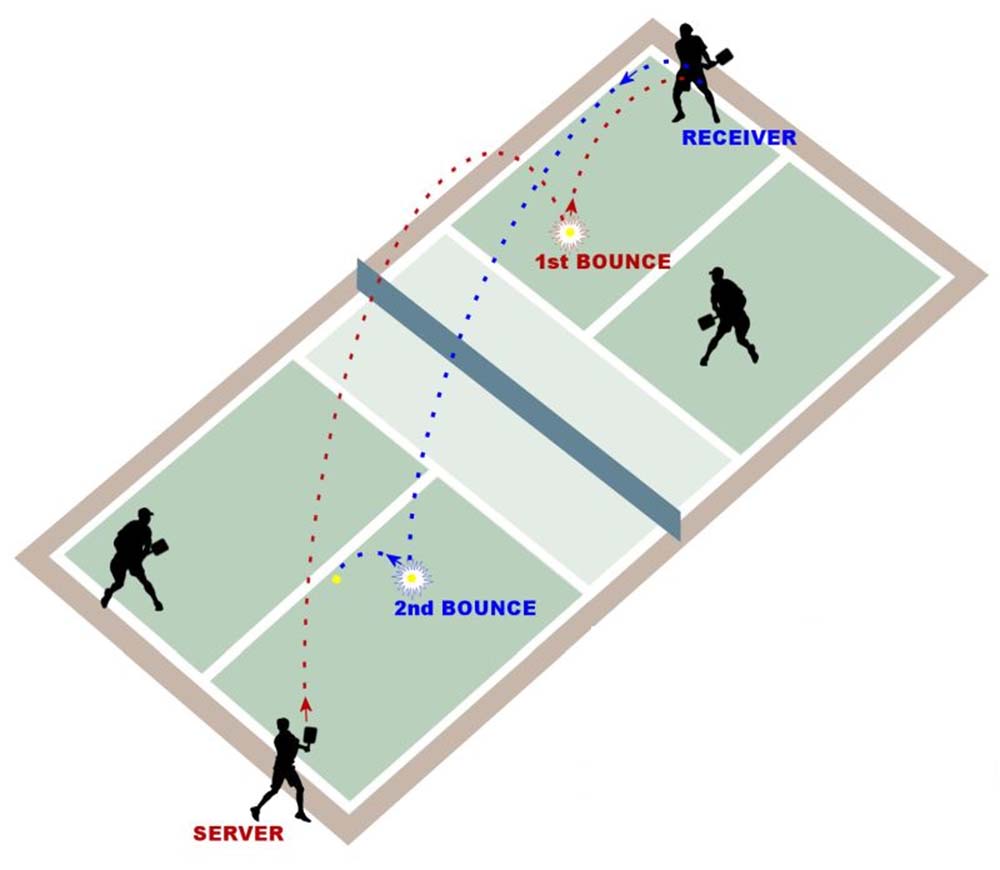
In pickleball, the ball can bounce once per side during a rally. This means after the initial serve, each team has one bounce to return the ball.
Pickleball is a sport that combines elements of tennis, badminton, and ping-pong. Understanding the rules is key to enjoying and excelling at the game. One important rule concerns how many times the ball can bounce. Whether you’re a beginner or a seasoned player, knowing this can improve your strategy and gameplay.
So, how many bounces are allowed per side in pickleball? Let’s dive into this essential rule and see how it impacts the game.

Credit: www.youtube.com
Contents
Introduction To Pickleball
Pickleball is a fast-paced game. It combines elements of tennis, badminton, and ping pong. Players of all ages and skill levels enjoy it. This article explores the basics of pickleball. Let’s start with a brief history and its growing popularity.
Brief History
Pickleball began in 1965. It was created by Joel Pritchard, Bill Bell, and Barney McCallum. They wanted to invent a new game for their families. They used a badminton court, ping pong paddles, and a perforated plastic ball. The game quickly caught on. Soon, many people were playing it across the United States.
Popularity And Growth
Pickleball’s popularity has surged. People of all ages love the sport. Schools, parks, and recreation centers now have pickleball courts. Its quick learning curve and low cost attract many new players. Tournaments and leagues are growing worldwide. Enthusiasts form clubs and communities. This growth shows no signs of slowing down.

Credit: www.youtube.com
Basic Rules Of Pickleball
Pickleball is a fun and engaging sport that combines elements of tennis, badminton, and ping-pong. Understanding the basic rules is essential to enjoying the game. Let’s dive into the essential aspects of Pickleball, including court layout, the equipment needed, and the number of times the ball can bounce.
Court Layout
The Pickleball court is similar to a badminton court. It measures 20 feet by 44 feet. The court is divided into two halves by a net. The net is 36 inches high at the sidelines and 34 inches high in the middle. Each half of the court is further divided into three sections:
- The right service area
- The left service area
- The non-volley zone, also known as the kitchen
The non-volley zone is a 7-foot area on both sides of the net. Players cannot volley the ball in this zone.
Equipment Needed
Playing Pickleball requires some basic equipment. Here’s what you’ll need:
| Equipment | Description |
|---|---|
| Paddle | A lightweight paddle made from wood, composite, or graphite. |
| Pickleball | A plastic ball with holes, similar to a wiffle ball. |
| Net | A net that is 36 inches high at the sidelines and 34 inches in the middle. |
Appropriate athletic shoes and comfortable clothing are also recommended.
Serving Rules
Serving rules in pickleball are crucial for fair play. They ensure the game starts correctly. Understanding these rules helps improve your game. Knowing the serve technique, faults, and violations is essential.
Proper Serve Technique
The serve must be underhand. The paddle must contact the ball below the waist. The serve should go diagonally across the court. The ball must land in the opposite service box. Feet must stay behind the baseline until after the serve. A good serve sets the tone for the rally.
Faults And Violations
Faults happen if the serve is incorrect. The ball must not touch the net on the serve. The ball must not land outside the service box. The server must not step on or over the baseline. These are common faults to avoid.
Violations can lead to losing serve. Serving out of turn is a violation. Serving before the opponent is ready is another. Double hits or carrying the ball are violations too. Awareness of these rules helps avoid penalties.
The Double Bounce Rule
Pickleball is a fun and engaging sport that combines elements of tennis, badminton, and table tennis. One unique aspect of pickleball is the Double Bounce Rule. This rule impacts how the game is played and adds an interesting twist to the game. Let’s dive into the details of the Double Bounce Rule.
Explanation Of The Rule
The Double Bounce Rule is simple. When the ball is served, it must bounce once on the receiver’s side. After the receiver returns the ball, it must bounce once on the server’s side. Only after these two bounces can players hit the ball before it bounces again.
This means that both teams must let the ball bounce once before hitting it back. This rule applies only to the first two shots of each rally. After these two bounces, players can hit volleys (hitting the ball before it bounces).
Impact On Gameplay
The Double Bounce Rule ensures fair play. It prevents either team from dominating the game right from the serve. It also encourages longer rallies and strategic play.
With this rule, players need to be ready to move quickly. The first two bounces give both teams a chance to get into a good position. This leads to more exciting and dynamic gameplay.
In summary, the Double Bounce Rule makes pickleball unique. It adds strategy and fairness to the game, making it enjoyable for players of all levels.
Volleying In Pickleball
In pickleball, volleying is an essential skill. A volley occurs when you hit the ball before it bounces on the court. This can be a powerful way to gain an advantage over your opponent. Yet, knowing when and how to volley is crucial for success.
When To Volley
Volleying is often used at the non-volley zone, also known as the kitchen. Players need to be strategic about timing their volleys. The ball must not bounce before you hit it.
Consider these key moments to volley:
- When your opponent is out of position.
- To finish a point quickly.
- To keep the ball low and fast.
Volley Techniques
Using the right technique can make your volleys more effective. Here are some techniques to consider:
- Forehand Volley: Use your dominant hand for control and power.
- Backhand Volley: Useful when the ball comes to your non-dominant side.
- Block Volley: Keep your paddle still to block fast balls.
Practice each technique to improve your skills. Focus on footwork and paddle position.
| Volley Type | Best Used For |
|---|---|
| Forehand Volley | Control and power on dominant side |
| Backhand Volley | Non-dominant side shots |
| Block Volley | Blocking fast shots |
Remember, practice is key to mastering volleying. Use these tips to enhance your game.

Credit: www.paddletek.com
Scoring In Pickleball
Pickleball scoring can be quite simple once you understand the basics. Knowing how points are earned and how to win the game is key. Below, we break down these essential parts of the game. Understanding these aspects will help you enjoy pickleball even more.
How Points Are Earned
Points in pickleball are earned by the serving team. The receiving team cannot score points. A point is earned when the serving team wins a rally. Winning a rally means the ball lands in the opponent’s court without being returned, or the opponent commits a fault.
- Faults include hitting the ball out of bounds.
- Faults also include not clearing the net.
- Another fault is stepping into the non-volley zone and volleying the ball.
Each game starts at 0-0, often called “zero-zero start.” The server’s score is always called first. For example, if the serving team has 3 points and the receiving team has 2, the score is called “3-2”.
Winning The Game
To win a game of pickleball, a team must score at least 11 points. They must also be ahead by at least 2 points. If the score is tied at 10-10, the game continues until one team leads by 2 points.
Pickleball games can also be played to 15 or 21 points. This is usually for tournaments or special matches. The same 2-point lead rule applies.
Here is a summary in a table format for better understanding:
| Points Needed to Win | Point Lead Required |
|---|---|
| 11 Points | 2 Points |
| 15 Points | 2 Points |
| 21 Points | 2 Points |
Knowing these rules helps you play better. You will also enjoy the game more. Now, get out there and have fun with pickleball!
Common Mistakes
Common mistakes in pickleball can affect your game performance. Understanding these errors and how to avoid them is key. Here, we discuss two frequent mistakes: breaking the double bounce rule and improper serves.
Breaking The Double Bounce Rule
The double bounce rule is crucial in pickleball. It ensures fair play and rallies. Many players break this rule unknowingly. This rule states the ball must bounce once on each side before volleys start. Violating it leads to penalties.
Here’s a quick reminder:
- The serve must bounce once in the opponent’s court.
- The return must bounce once in the serving team’s court.
- After these two bounces, volleys are allowed.
Many beginners forget this sequence. They attempt to volley too soon. Practice patience and wait for the two bounces. This will improve your game significantly.
Improper Serves
Another common mistake is improper serves. The serve sets the tone for the rally. A bad serve gives advantage to your opponent. Follow these guidelines for a proper serve:
| Requirement | Explanation |
|---|---|
| Underhand Serve | The ball must be hit below the waist. |
| Foot Placement | Both feet behind the baseline. |
| Diagonal Serve | Serve diagonally into the opponent’s service court. |
| No Spin Serve | Avoid spinning the ball with your hand. |
Improper serves often result in faults. This means the opponent gets a point or serve. Focus on your serving technique to avoid these errors. Practice serves regularly to perfect your form.
Tips For Beginners
Pickleball is a fun and engaging sport. For beginners, understanding the basic rules is crucial. One key rule is how many times the ball can bounce. This can help in improving your gameplay. Here are some tips to get you started.
Practice Drills
Start with basic drills. Practice hitting the ball over the net. Focus on keeping the ball in play. Let the ball bounce only once on each side. This will help you get a feel for the game. Work on your hand-eye coordination. Use different types of shots. Try forehand, backhand, and volleys. Consistent practice will improve your skills.
Common Strategies
Learn some common strategies. Keep the ball low. This makes it harder for your opponent to return it. Aim for the corners of the court. This will make your opponent move more. Use the two-bounce rule to your advantage. Remember, the ball can bounce once on each side. Keep the game slow and controlled at first. As you get better, you can play faster. Watch experienced players. Learn from their techniques and strategies. Adapt them to your own style.
Advanced Strategies
Advanced Strategies in pickleball can make a big difference in your game. Understanding how many times the ball can bounce and using advanced techniques can help you outplay your opponents. Let’s dive into some effective strategies to enhance your serve and master the volley.
Enhancing Your Serve
A strong serve sets the tone for the game. Focus on placement and spin to keep your opponent on their toes. Try these tips:
- Vary the Speed: Mix up fast and slow serves to confuse your opponent.
- Add Spin: Use topspin or backspin to make the ball harder to return.
- Aim for Corners: Serving to the corners of the service box can limit your opponent’s options.
By using these techniques, you can gain an upper hand right from the start.
Mastering The Volley
The volley is a crucial part of pickleball. It requires quick reflexes and precise control. Here are some strategies to master the volley:
- Stay Low: Bend your knees to maintain balance and react quickly.
- Soft Hands: Use a gentle touch to control the ball’s direction and speed.
- Watch the Ball: Keep your eyes on the ball to anticipate its movement.
Practicing these tips will help you become more consistent and effective at the net.
Frequently Asked Questions
How Many Times Can The Ball Bounce In Pickleball?
In pickleball, the ball must bounce once on each side. After that, players can hit it in the air or let it bounce.
What Is The Double Bounce Rule In Pickleball?
The double bounce rule states that the ball must bounce once on each side before players can volley.
Can The Ball Bounce Twice In Pickleball?
No, the ball cannot bounce twice. If it does, the point goes to the opposing team.
When Does The Ball Have To Bounce In Pickleball?
The ball must bounce on the serve and the return. After these, players can volley or let it bounce.
Conclusion
Understanding how many times the ball can bounce in pickleball is crucial. It helps improve your game and strategy. Remember, the ball can bounce once on each side. Mastering this rule will enhance your gameplay. Practice regularly to get comfortable with the bounce.
Enjoy the game and have fun on the court. Keep these tips in mind and you’ll do great. Happy playing!
