
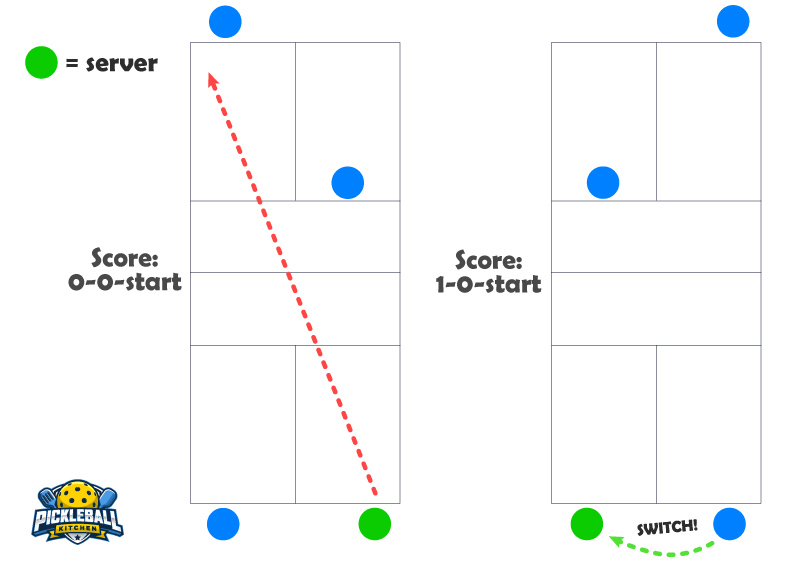
Pickleball is a fast-growing sport that blends elements of tennis, badminton, and ping-pong. Scoring in pickleball can be tricky for beginners.
Understanding the ways to score is crucial for enjoying the game and improving your skills. Pickleball is not just about hitting the ball over the net; it’s also about strategy and knowing the rules. Scoring can seem confusing at first, but once you grasp the basics, the game becomes much more enjoyable.
In this blog, we will explore the three main ways to score in pickleball. This will help you gain a better understanding and make your next game more competitive and fun. Whether you are new to the sport or looking to refine your skills, knowing these scoring methods is essential.

Credit: pickleballkitchen.com
Contents
Introduction To Pickleball Scoring
Pickleball is a fast-growing sport that combines elements of tennis, badminton, and ping-pong. Understanding how to score in pickleball is crucial for every player. In this blog post, we will discuss the three ways to score in pickleball. First, let’s dive into an introduction to pickleball scoring.
Brief History
Pickleball was invented in 1965 by three dads. They wanted to create a fun activity for their kids. The game quickly gained popularity across the United States. Today, pickleball is played by millions worldwide.
Basic Rules
Pickleball is played on a court similar to a badminton court. The net is low, and players use paddles to hit a perforated plastic ball. The game can be played in singles or doubles. Scoring in pickleball follows specific rules.
Points can only be scored by the serving team. A game is typically played to 11 points, but a team must win by at least two points. Understanding these basic rules is essential for new players.

Credit: www.youtube.com
Serving Strategies
Serving in pickleball is the first step to scoring points. A good serve can put your opponent on the defensive. To improve your game, you need to understand the right techniques, common mistakes, and how to avoid them.
Proper Serve Technique
The serve is crucial in pickleball. Stand behind the baseline with both feet. Hold the paddle with a firm grip. The ball should be below your waist before you hit it. Use an underhand motion to strike the ball. Aim to land the serve in the diagonal service court. This creates a challenging shot for your opponent.
Here are some key points to remember:
- Keep your feet behind the baseline.
- Hold the paddle with a relaxed grip.
- Strike the ball below waist level.
- Aim diagonally across the court.
Common Serving Mistakes
Many players make mistakes that can be easily avoided. Here are some common errors:
- Foot Faults: Stepping over the baseline before the ball is hit.
- High Hits: Striking the ball above the waist.
- Short Serves: Not reaching the service court.
These mistakes can lead to lost points. Focus on correcting these errors. Practice makes perfect.
In summary, mastering your serve is vital. Use proper technique. Avoid common mistakes. This will help you gain an edge in your game.
Volleying Tactics
Volleying tactics play a crucial role in pickleball. Mastering these tactics can significantly improve your game. Understanding how to effectively use volley shots and positioning can make a big difference.
Effective Volley Shots
Effective volley shots can keep your opponents on their toes. Aim for low, fast shots to make it harder for them to return. Use angles to direct the ball away from your opponents. A quick wrist flick can add speed and surprise. Practice these shots to gain confidence and precision.
Positioning Tips
Good positioning is key in volleying. Stand near the net but not too close. This allows for quick reactions and easy reach. Keep your knees slightly bent for better balance and movement. Always stay alert and ready to move in any direction. Position yourself to cover as much court as possible.
Dinking Techniques
Pickleball has gained popularity as a fun and competitive sport. One of the essential techniques to master is the dink. This soft shot can help you control the pace and positioning of the game. Let’s explore the different aspects of dinking techniques in pickleball.
Mastering The Dink
To master the dink, you need to develop a light touch. Keep your paddle low and close to the net. A gentle push with minimal wrist action will suffice. Focus on control rather than power.
- Hold the paddle loosely.
- Bend your knees slightly.
- Keep your eyes on the ball.
By practicing these elements, you will improve your dinking skills.
When To Use Dinking
Knowing when to use dinking is crucial. Dinking is most effective in the following scenarios:
- Close to the net: When you are near the net, a dink can make it hard for your opponent to return the ball.
- Slowing the game: Use a dink to slow down the pace, especially if your opponent is aggressive.
- Setting up a shot: A well-placed dink can set up an opportunity for a more powerful shot.
Understanding these situations will help you decide the best time to use a dink in your game.
Third Shot Drop
The third shot drop is a crucial skill in pickleball. It involves hitting a soft, controlled shot. This shot lands in the opponent’s kitchen. The kitchen is the non-volley zone near the net. The third shot drop helps players transition from the baseline to the net. It can turn the tide in any game.
Executing The Drop
To execute the third shot drop, start with proper positioning. Stand behind the baseline. Hold your paddle with a relaxed grip. Focus on the ball as it approaches. Aim to hit the ball with a gentle, upward motion. This creates a soft arc over the net.
The ball should land softly in the opponent’s kitchen. Practice is key. Work on controlling the height and speed of the drop shot. Keep your movements smooth and consistent. This will help achieve the perfect drop shot.
Advantages Of The Drop
The third shot drop has many advantages. It forces opponents to move forward. This can disrupt their positioning. It also slows down the game. Slower play can give you more control. This helps in setting up offensive shots.
Another advantage is that it creates opportunities for you and your partner. You can advance to the net. This allows for better positioning. Being closer to the net can increase your chances of winning the point.
Defensive Plays
Defensive plays in pickleball are crucial for maintaining control of the game. While attacking is often the focus, strong defensive strategies can win games. Let’s explore the importance of defensive positioning and counterattacking strategies. These skills can help you score points and keep opponents on their toes.
Defensive Positioning
Proper defensive positioning is key in pickleball. Stay alert and aware of your opponent’s moves. Always be ready to react quickly. Keep your paddle up and stay low to the ground. This stance allows you to move swiftly and block shots effectively. Position yourself in the middle of the court. This provides the best coverage and limits your opponent’s angles.
Communicate with your partner if playing doubles. Ensure that both of you cover different areas. This teamwork can prevent gaps in your defense. Remember, good positioning can turn defense into offense quickly.
Counterattacking Strategies
Counterattacking is a powerful defensive tool. Use your opponent’s aggression against them. Wait for them to make a mistake or hit a weak shot. Then, strike back with precision. Aim for the corners of the court. This forces your opponent to move and creates openings.
Practice soft shots and dinks. These can disrupt your opponent’s rhythm. They also allow you to regain control of the game. Mix up your shots to keep your opponent guessing. A well-timed counterattack can shift the momentum in your favor.
Mental Game
Pickleball is more than just physical skill. The mental game plays a huge role in determining success on the court. Players need to stay focused, handle pressure, and maintain a positive mindset. Here are three key ways to improve your mental game in pickleball.
Staying Focused
Focus is essential in pickleball. Distractions can lead to missed shots and errors. Keep your eyes on the ball. Watch your opponent’s movements. Concentrate on your strategy. Tune out any background noise. By staying focused, you can make better decisions and play more effectively.
Handling Pressure
Pressure situations are common in pickleball. Whether it’s a match point or a close game, staying calm is vital. Take deep breaths to relax. Visualize your successful shots. Remind yourself of your strengths. Handling pressure well can give you an edge over your opponent.
Common Mistakes To Avoid
Playing pickleball can be thrilling, but it’s easy to make mistakes. These mistakes often come from not knowing the rules or proper techniques. Understanding these common errors helps improve your game and boosts your confidence.
Errors In Serving
Serving mistakes can cost you points. Many players step on the baseline during the serve. This is a foot fault and gives the opponent a point. Another common error is serving underhand but not below the waist. The ball must be hit below the waistline to be a legal serve. Also, ensure the ball lands in the correct service court. Serving out of bounds or into the net results in a fault.
Mistakes In Positioning
Proper positioning is crucial in pickleball. Standing too close to the net leaves you vulnerable to lobs. Always be ready to move back quickly. On the other hand, standing too far back makes it hard to reach drop shots. Find a balanced position. Communicate with your partner to avoid collisions. Miscommunication often leads to lost points. Stay alert and ready to adjust your position based on the ball’s movement.
Expert Tips For Improvement
Improving your pickleball skills can be challenging. Expert tips can make a big difference. With the right guidance, you can score more consistently. Focus on practice drills, game analysis, and other strategies to enhance your game. Let’s explore these areas to help you become a better player.
Practice Drills
Practice drills are essential for improvement. Start with basic drills to build your foundation. Work on your serve, return, and volleys. Consistent practice helps develop muscle memory. This makes your shots more accurate. Practice with a partner to mimic real game scenarios. This helps you adapt to different playing styles. Use a variety of drills to keep practice interesting and challenging.
Game Analysis
Analyze your games to identify strengths and weaknesses. Recording your matches can help. Watch the footage to spot areas for improvement. Pay attention to your positioning and shot selection. Notice how your opponents play. This can give you insights into their strategies. Use this information to adjust your game plan. Regular game analysis helps you become more aware of your habits. This awareness is key to making better decisions on the court.

Credit: www.youtube.com
Frequently Asked Questions
What Are The Primary Ways To Score In Pickleball?
The three primary ways to score in pickleball are through serving, rallying, and faults committed by the opponent. Each method requires different strategies and skills.
How Do You Score By Serving In Pickleball?
You score by serving when your serve lands in the opponent’s service area and they fail to return it. A strong, accurate serve increases your chances.
Can You Score On Rallies In Pickleball?
Yes, you can score on rallies. Winning a rally happens when the opponent fails to return the ball within the court boundaries.
How Do Opponent Faults Contribute To Scoring?
Opponent faults, such as hitting the ball out of bounds or into the net, result in points for you. This type of scoring capitalizes on the opponent’s mistakes.
Conclusion
Scoring in pickleball is simple once you know the ways. First, serve well. Second, return serves effectively. Third, play strategically at the net. These three methods help you dominate the court. Practicing these techniques improves your game. Remember, consistency is key.
Keep playing, and you’ll see progress. Enjoy the game and have fun!
